Hello and welcome back to The Best & The Brightest. I’m Leigh Ann Caldwell, and
though I was tapped for jury duty today, I was sadly not chosen. Maybe next year… (Yes, jury duty in D.C. can be an annual ritual.)
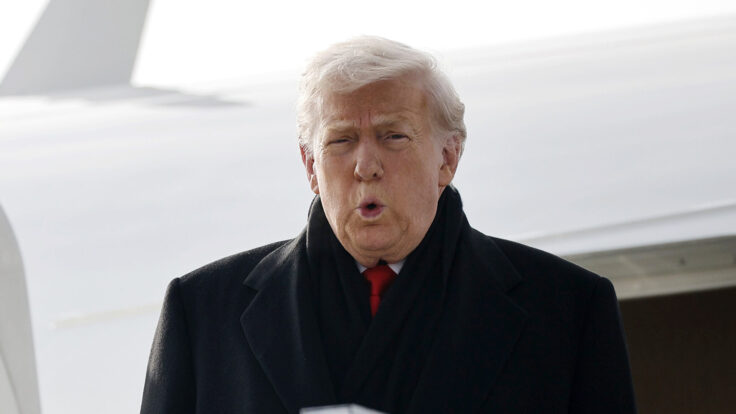
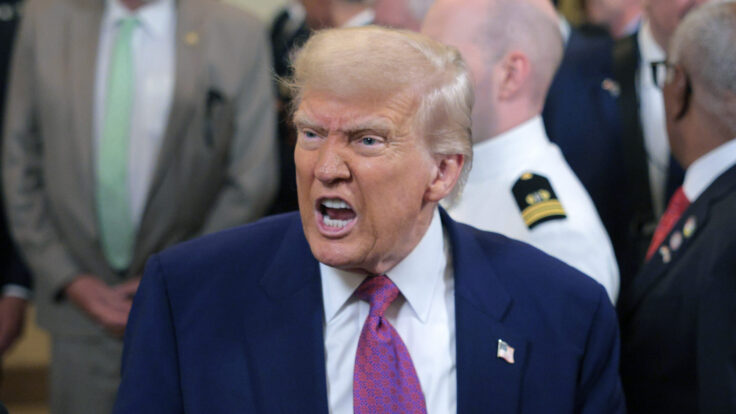
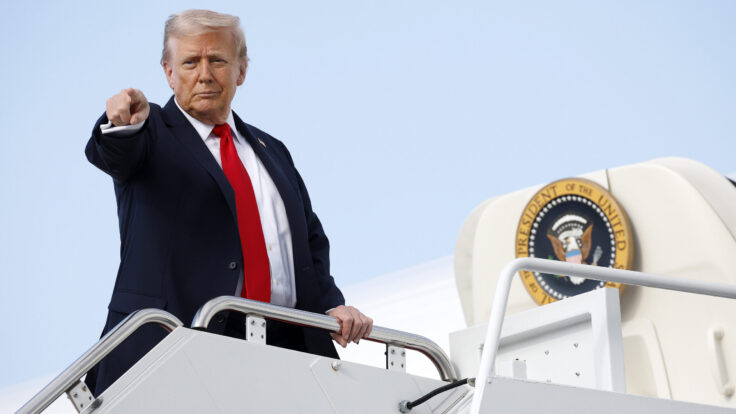
Meanwhile, Donald Trump was basking in what he called Iran’s “unconditional surrender.” He claimed that the country’s leadership had not only agreed to his demands, but made their own secret proposal. I’ve asked around the relevant Hill committees whether anyone has seen that proposal, but have gotten no response. Of course, Congress
has received scant information since the war began nearly 40 days ago. As for that two-week ceasefire: The Islamic Republic has already accused the U.S. of violating its terms (whatever they were); missiles have been raining down across the Gulf; there’s disagreement over whether the Strait of Hormuz is even open; and Israel continues to pulverize Beirut while claiming that Lebanon was excluded from the truce.
In today’s issue, Julia Ioffe has more analysis of the Iran
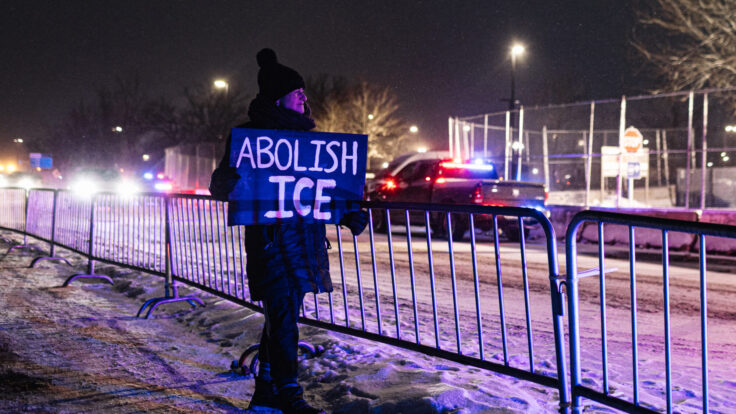
situation, and I’ve got an exclusive on a Trumpily named dark-money group making the case for foreign aid in swing districts. For the main event, John Heilemann sits down with Minneapolis Mayor Jacob Frey to discuss his administration’s response to the ICE raids that traumatized the city this winter—and how Minnesotans have changed since the murder of George Floyd.
Programming note: The Puck Penthouse—Puck’s new,
signature celebration ahead of the White House Correspondents’ Association Dinner—kicks off at a fabulous location near the Washington Hilton on Saturday, April 25. Presented by Amazon, the evening honors the fourth estate in all its forms: fearless journalists, enterprising storytellers, and swashbuckling investigative reporters. Consider it the definitive preparty—an exuberant gathering devoted to bipartisan comity, sharp conversation, and some well-deserved revelry before the main event. Hope
to see you there, if you’re lucky.
Also, some exciting personnel news!: As you may have seen in Status, the incomparable Marianna Sotomayor is joining Puck. A phenomenal Capitol Hill reporter at The Washington Post, Marianna is a major talent and a wonderful person and we can’t wait for her to join the team next month. Stay tuned for more updates in this space.
Also mentioned in this issue: Mariannette
Miller-Meeks, Nate Soule, Mike Lawler, Zach Nunn, Gabe Evans, Juan Ciscomani, Ryan Mackenzie, Julio C. Sosa-Celis, Renee Good, Alex Pretti, Kristi Noem, and more… |
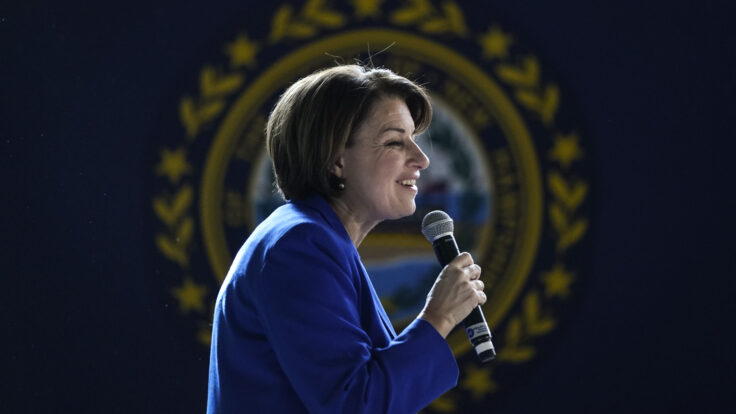
Dark money for soft power: How durable was the America First backlash that manifested in
debilitating cuts to foreign aid last year? Well, according to exclusive new polling from G.O.P. Rep. Mariannette Miller-Meeks’s Iowa swing district, 52 percent of self-identified “very conservative” voters now support international aid to combat diseases like Ebola and malaria, and sustain programs such as Food for Peace. So does the same share of Trump ’24 voters. These are the very kinds of programs that were eliminated or sharply curtailed by DOGE and the
dismantling of USAID—moves conservatives once heartily applauded. |
|
|
|
Al data centers shouldn't raise your bills. Anthropic will cover electricity price increases from its data centers and invest in grid optimization tools, helping keep prices lower for ratepayers. Learn more |
|
|
|
This seeming reversal did not arise organically. It followed a targeted campaign of digital, cable, and text
messaging funded by the Trumpily named dark-money group Campaign for America First International Assistance, which spent $175,000 to influence voters across three swing districts. In Miller-Meeks’s district, the result was that support for international aid rose by 25 points among “very conservative” voters and nearly 12 points among Trump voters, according to Trump’s longtime pollsters, McLaughlin & Associates.
CAFIA hopes to convince voters—then ultimately lawmakers and the White
House—to restore the international assistance that Republicans have gutted. “We are highlighting incumbents who are helping to support international aid programs and are encouraging the administration to make sure funding is there for key programs,” said Nate Soule, former chief of staff to G.O.P. Rep. Mike Lawler and now executive director of CAFIA. To that end, the group has already placed ads in five of the most vulnerable Republican districts—including those
of Miller-Meeks, Zach Nunn (Iowa), Gabe Evans (Colorado), Juan Ciscomani (Arizona), and Ryan Mackenzie (Pennsylvania)—and plans to spend at least a million dollars on ads in a dozen more. |
|
|
|

| Julia Ioffe
|
|
The day after TACO Tuesday: That the deadline for Trump’s threat to annihilate Iranian
civilization fell on a Tuesday should’ve been the tip-off that the day would end not with mushroom clouds over Tehran, but with tacos in Washington. I’m joking, but Trump was always going to fold and declare some kind of victory. It’s what he does. Iran found the perennial American pressure point—the S&P 500—and kept pressing until Trump said “uncle.” That, not the F-word or the Islamophobia, was the core message of his infamous Easter Sunday post: Trump was panicking and desperate for
an off-ramp. Pakistani Prime Minister Shehbaz Sharif provided him one, the White House took it, and markets surged.
But what, really, does the ceasefire entail? Iran has control over the Strait of Hormuz and is now charging vessels for safe passage—to the tune of $1 per barrel of oil, reportedly payable in cryptocurrency to make the
funds untraceable and impervious to sanctions. In a triumphant Truth Social post on Tuesday, Trump said that Iran’s 10-point peace proposal was “a workable basis on which to negotiate.” The public version of that plan includes demands that the U.S. lift sanctions on Iran, withdraw troops from the Middle East, make sure Iranian proxies like Hezbollah remain free from
Israeli attack, and allow Tehran to continue to enrich uranium. (Imagine the response if Barack Hussein Obama said that was a workable list...) Responding to outcry on the right, the very next day, Karoline Leavitt said the plan was “literally thrown in the garbage” by Trump and his negotiating team. On top of that, there’s been disagreement over
whether the Israeli war in Lebanon is part of the ceasefire. Iran says it is, Israel and the U.S. say it isn’t, so Iran has closed the strait once again.
So what did Trump accomplish? Iran retains the capacity to fire missiles and drones at its neighbors, its stockpile of enriched uranium, and its ambition to develop a nuclear weapon. Its new regime is even more hard-line and deeply entrenched, having survived both a popular uprising and a full-on military onslaught by both Great
Satans. The U.S., meanwhile, proved to Russia and China that it couldn’t achieve its stated objectives when squaring off with a far smaller, less technologically advanced foe—even after depleting its stockpiles of Tomahawks and Patriots at a cost of some $1 billion per day. After 38 days of war, we’re looking at a tab of some $40 billion and a whole lot of damaged credibility.
There are those who say, “Great, we’ll take it. It’s better than genocide and nuclear war.” Sure. But I’ll defer
to Spanish Prime Minister Pedro Sánchez, who said today that he “will not applaud those who set the world on fire just because they turn up with a bucket.” |
|
|
|
And now, here’s John with Jacob Frey… |
|
|
|
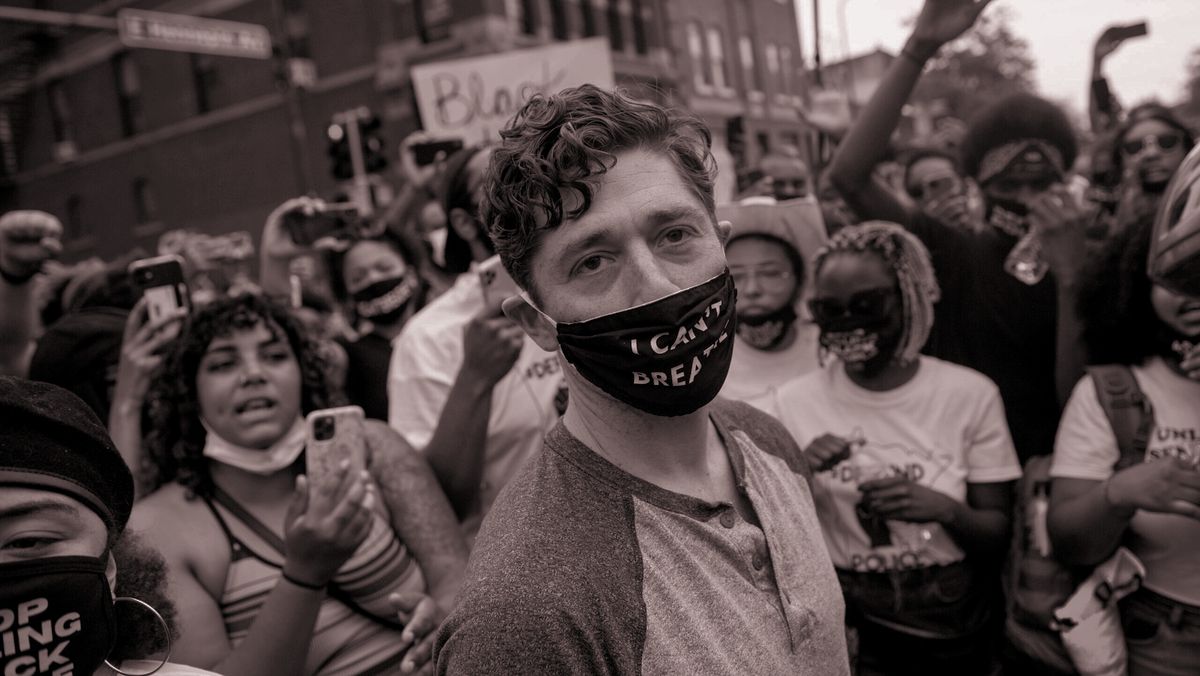
Long before his profane breakout moment after Renee Good’s killing, Minneapolis Mayor Jacob
Frey was navigating the fault lines of policing, immigration, and the art of resisting federal power in the Trump era. |
|
|
|
Minneapolis Mayor Jacob Frey vaulted onto the national stage on January 7, in the chaotic,
mournful hours after Renee Good was killed by ICE agents in his city. Standing at the podium, he delivered a blunt, unsparing directive to federal authorities: “Get the fuck out of Minneapolis.” For many Americans, it was their first encounter with Frey. But what followed in the ensuing weeks and months showed the nation what it actually looks like to stand up to the Trump administration’s authoritarian overreach from the ground up. In Minneapolis, the message
was unmistakable: If you come for one of us, you come for all of us. |
|
|
|
Al data centers shouldn't raise your bills. Anthropic will cover electricity price increases from its data centers and invest in grid optimization tools, helping keep prices lower for ratepayers. Learn more |
|
|
|
But there’s much more to Frey’s story. At 44, now in his third term, he has the profile and résumé of a mover
whose ambitions extend beyond the Twin Cities. A Northern Virginia kid who fell hard for Minneapolis, he got obliterated in his first political race, in 2012, but he regrouped and won a city council seat the following year. Minneapolis elected him mayor in 2017, and he has since steered his city through a succession of crises, any one of which would severely test any officeholder: the murder of George Floyd, the global pandemic, and a months-long federal occupation that left two
people dead and the city shaken.
In the process, Frey has become a central figure at the crossroads of some of the country’s most combustible political fights—immigration enforcement, police reform, the rule of law, and the practical meaning of resistance in the Trump era.
We covered all of it on a recent episode of my Impolitic podcast. As always, this transcript has been lightly edited and condensed for clarity, but you can catch the whole thing
here. |
John Heilemann: Did you ever imagine that the thing people would know you
for nationally is telling ICE to get the fuck out?
Jacob Frey: There are more than a few things that happened over these last five to six years that I would have never imagined. In 2017, when I first ran for mayor, I don’t think anybody even said the word “pandemic” the whole campaign. Perhaps we were wrong in not anticipating it. And perhaps we all should have been raising the flag that Trump was going to do the things that he said he was going to do. Frankly, once
Trump took office again, and the rhetoric was ramping up, and Minneapolis was more and more being discussed as this focal point of Democratic politics and activism, we were prepared for something like that to happen earlier.
So was I surprised when Donald Trump came to town with a whole bunch of federal agents? No. Was I shocked by the conduct? Absolutely. You want to believe in America. You want to believe in this great nation, and to have that kind of conduct on the streets—blatant
violations of the Constitution—we should all expect better.
You mentioned Covid and Trump and ICE, but not George Floyd—whose murder changed the city in pretty profound ways. Every time I saw a Minneapolis cop on television during the ICE occupation, I was impressed. The contrast between your police officers and your police chiefs, and ICE, was so stark. How much did the reforms inspired by George Floyd change the police culture in the city?
We’ve been doing a ton
of work on changing the culture and building trust since George Floyd was murdered—we had a hell of a lot of work to do. The police department has made great strides. The people coming in who want to be cops right now, they want to be in because they want to set an example for others to follow, and they want to be the change. And then these federal agents came in, and people throughout the community were seeing the juxtaposition between the way they were treated by an ICE agent and the way they
were treated by a Minneapolis police officer. But some of the biggest critics of policing in general, and specifically MPD, were praising how Minneapolis police were conducting themselves.
Our chief gives the example of the MPD taking something like 900 or 1,000 guns off the street in sometimes very dangerous circumstances, and the police never shot a single person this last year. ICE was here for a matter of weeks, shot three people. What does that tell you? |
|
|
|
Walk me through how dark that period actually was—the shootings, the threats, all of
it.
You got the shooting of Renee Good after a month and a half of our police chief and me saying, “Somebody’s going to get killed or badly injured based on the way that ICE is conducting themselves.” We warned people about this. We warned the federal government about this. Then you’ve got this second shooting, which has not been covered widely [of Julio C. Sosa-Celis, whom an ICE agent shot and injured,
falsely claiming he’d attacked the agent with a shovel—an account ICE later retracted]. You’ve got this attempted cover-up where they’re changing the narrative entirely. [ICE suspended two agents who lied about the incident in court.]
You’ve got Alex Pretti’s killing where everybody, from people who love the 10th Amendment to people who
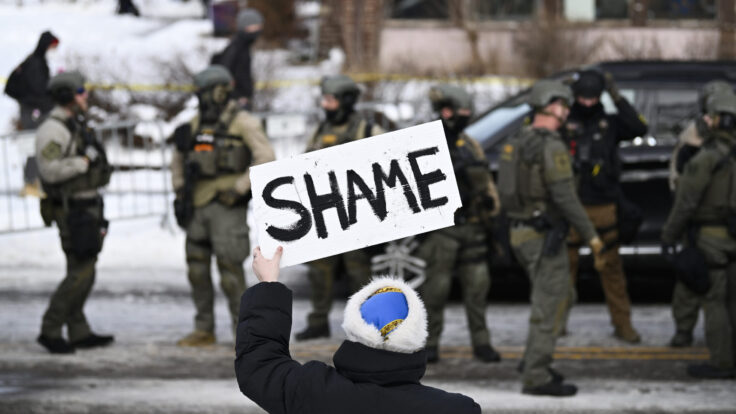
love the Second Amendment, are all standing up and pissed off, rightfully so. But on top of that, you have 1,500 troops stationed in Alaska [who were placed on standby for deployment to Minneapolis after Good’s killing], you have Trump threatening to invoke the Insurrection Act, you’ve got these businesses all through Lake Street that are
shutting down, people terrified to go outside, a potential humanitarian crisis because people aren’t able to either pay the rent or get food. You’ve got the Trump administration going after me criminally, utilizing the Department of Justice as a weapon. Obviously, I know we did nothing wrong. I am proud of the way that we conducted this administration through some of the most difficult circumstances. But I’d be lying if I told you I had no consternation about the federal government coming
directly after me and, indirectly, my family.
Was there ever a moment where you thought Trump and the D.O.J. would actually conduct an honest investigation of the ICE killings?
Very briefly, yes. After Renee Good’s shooting, there was certainly discussion [between state and federal law enforcement] about who is conducting the investigation. Traditionally, when we have an officer-involved shooting, it goes to the B.C.A.—the Bureau of Criminal Apprehension. It’s an
independent entity, I have no control over them—and by the way, this is not some lefty radical organization. It’s basically cops and lawyers and people who have expertise conducting investigations. And they were going to do it, along with the F.B.I. I had some level of at least hope that this would be legit.
But within a very short period of time, you’ve got heads of agencies saying the shooter was acting purely in self-defense. You have Kristi Noem saying Renee Good was
a domestic terrorist. And then you have the F.B.I. boxing out the B.C.A. from important pieces of evidence. So, very quickly, it became apparent that the federal government had no interest whatsoever in conducting a full and fair investigation of the facts.
Do you think ICE is reformable, or does this village need to be burned down and rebuilt from scratch?
You can’t reform it under this leadership. You can’t change it to the extent it needs to be changed with a
Trump administration, where they’re practically cheering for this horrible conduct to take place. On the Democratic side, I think we’re talking [past] each other on this one. If the argument is that you need a top-to-bottom transformation in the way that ICE operates, the answer is yes. If you’re saying we need to get out all of these horrible actors who have treated people unconstitutionally, and with complete lack of human dignity, I’m 100 percent on board. If you’re saying we need to change
out the leadership, change the structure, absolutely. I’ve heard an interesting argument that ICE should be moved from the Department of Homeland Security to the Department of Justice—I think there’s some merit to that.
But if the argument is that we should have immigration laws on the books and not have any immigration enforcement whatsoever, I disagree. The quickest way that you erode trust in government is to pass laws that you’re not going to enforce. I’ve been through a similar
dynamic before, with Defund the Police. There were 2,000 people that came to my home and demanded that I defund the police, and I said no. We had a lot of people who were purporting to speak for communities of color, and then you talk to communities of color, and they are not saying the same thing. |
|
|
|
Join Puck’s chief political columnist, John Heilemann, as he roams the corridors of power and influence in America on this
twice-weekly interview show, taking you beyond the headlines with the people who shape our culture: icons and up-and-comers, incumbents and insurgents, moguls and machers in the overlapping worlds of politics, entertainment, tech, business, sports, media, and beyond. The conversations are rich and revealing, unrehearsed and unexpected… and reliably impolitic. A Puck-Audacy joint, new episodes drop every Wednesday and Friday. |
|
|
|
Unique and privileged insight into the private conversations taking place inside boardrooms and corner offices up and down Wall
Street, relayed by best-selling author, journalist, and former M&A senior banker William D. Cohan. |
|
|
|
Need help? Review our
FAQ page or contact us for assistance. For brand partnerships, email ads@puck.news.
You received this email because you signed up to receive emails from Puck, or as part of your Puck account associated with {{customer.email}}. To stop receiving this newsletter and/or manage all your email preferences, click here.
|
Puck is published by Heat Media LLC. 107 Greenwich St., New York, NY 10006 |
|
|
|
|