{{ 'now' | timezone: 'America/New_York' | date: '%b %d, %Y' }} |
|
|
|
Welcome to The Hidden Layer. I’m Ian Krietzberg.
First off, congrats to
Anthropic for securing a $65 billion Series H round at a $965 billion valuation—surpassing OpenAI as the most valuable A.I. company in the world. Just a quick level-setting reminder: Apple didn’t breach the $1 trillion valuation mark until 2018, when it became the first publicly traded company to do so. Bubblicious?
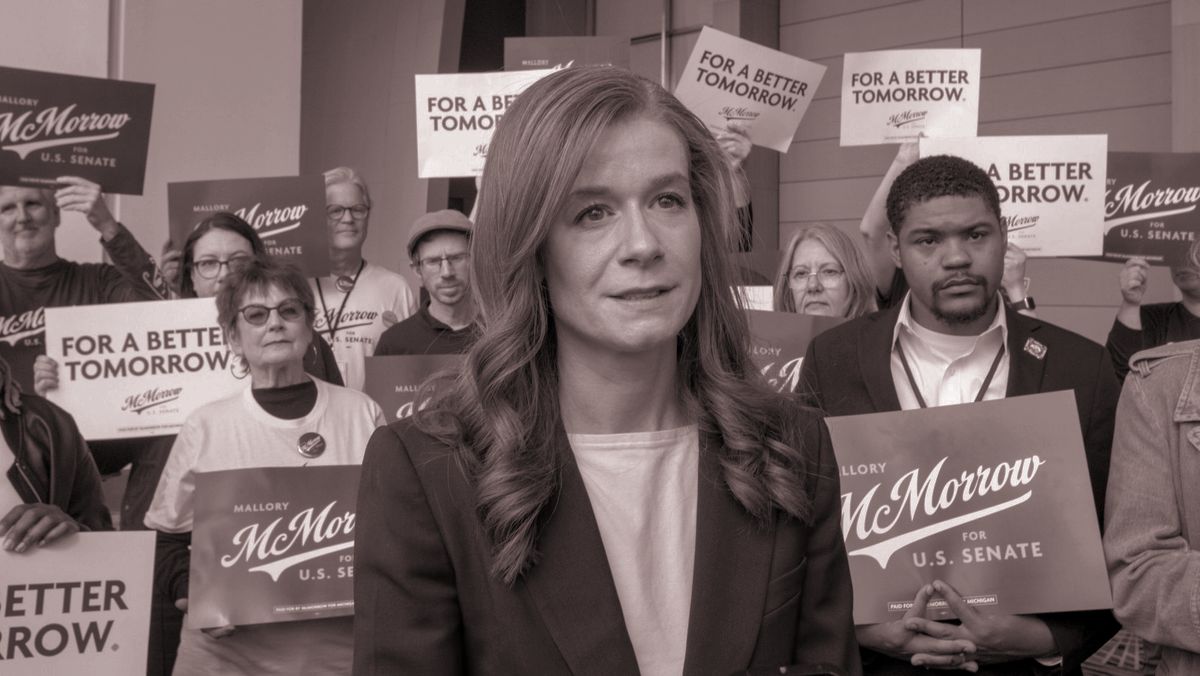
Anyway, a few days ago, I hopped on the phone with Michigan Senate candidate Mallory McMorrow to talk about the A.I. plan she’s been putting together. Today,
we’re digging into the details of her efforts and how they’re resonating with voters. Plus, news and notes on an unexpected risk posed by data centers, and whether Uber’s recent tokenmaxxing is actually paying off.
Also mentioned in this issue: Andrew Macdonald, Douwe Kiela, Elon Musk, A.O.C., Qingsheng Wang, David Sacks, Bernie Sanders, Jared
Polis, Rishi Bharwani, Andy Hall, Mark Zuckerberg, Alex Bores, Elizabeth Warren, Ron DeSantis, and more. |
Three Things You Should
Know…
|
- Tokenmaxxers: As I heard over and over from executives at the HumanX conference in April, some Claude-reliant enterprises are struggling with the high cost of tokens—a business expense that has helped Anthropic achieve 80x annualized revenue growth. Now more companies are beginning to scrutinize Claude’s R.O.I. In a podcast episode over the weekend, Uber C.O.O.
Andrew Macdonald said he had reservations about how much senior engineers at his company have benefitted from Claude Code, noting he was unclear how many projects that were “on the cutting-room floor got moved above the line because of the productivity gains. That link is not there yet.”
At the same time, Microsoft is
reportedly canceling most of its engineering licenses for Claude Code and switching its teams to the company-owned GitHub coding tool, which is substantially cheaper than Anthropic’s skyrocketing usage-based token bills. (Microsoft didn’t return a request for comment.) - YouTube’s disclosures: YouTube announced this week that it’s updating its A.I. labeling approach so that viewers can more easily identify whether a video is A.I.-generated. YouTube said a label would appear above the description on longform videos; for shortform content, it’ll be laid on top of the video itself. In a tacit admission that voluntary disclosures are probably insufficient, YouTube
is also now automatically applying labels to content that its internal systems flag as being A.I.-generated. I’ll be curious to see whether these labels affect viewer patterns at all. We haven’t seen too many platforms take this approach, precisely for that reason.
- All fired up: Finally, and unsurprisingly, the explosive growth in data center construction has led to higher risks of data center fires, according to recent
research from Texas A&M. Given the costly equipment that powers such facilities, these fires can be pretty disastrous: A
report from last year found that two Amazon data centers in a small Ohio town had made 84 calls to firefighters since starting construction in 2021; one 30-hour fire last year caused $50 million
in damages. AWS recently had another incident in Indiana.
The researchers argued that current fire standards are “insufficient to completely prevent a fire-causing event,” whether from an air-conditioning failure that causes chips to overheat, exploding batteries, or anything in between. Data center fire safety,
according to Dr. Qingsheng Wang, a chemical engineering professor at Texas A&M, needs to “evolve alongside data center technology.”
|
Hallucination of the
Week: RoboInvestor
|
On Wednesday, Robinhood rolled out new products that will allow people to make trades and purchases with
their credit cards via agents. I don’t even need to call my cybersecurity sources; I can already hear their screams from my office. This is not investment advice, but when it comes to agentic trading, caveat emptor…
Runner-up: Following a nine-month, error-riddled run, Starbucks is sunsetting an internal A.I. tool it
had deployed to automatically count inventories in its North American stores. Things might have gone better had the tool been able to consistently tell the almond and oat milks apart. Alas. |
- Last
week, Google DeepMind completed a roughly $90 million acqui-hire of Contextual AI, an enterprise A.I. startup founded by Douwe Kiela, one of the authors of the original RAG paper. Kiela and more than 20 of his employees now work for Google, which has obtained a license to Contextual’s
technology.
- Pace, a company that provides A.I. solutions to insurance companies, closed a $46 million Series B round this week, led by Thrive and Sequoia.
- Cognition AI, the startup behind the Devin coding tool,
raised $1 billion in funding at a $26 billion valuation on Wednesday.
|
And now for the main event… |
|
|
|
Michigan Senate candidate Mallory McMorrow is jumping in front of the unstoppable A.I.
freight train, betting that anxious voters are hungry for a pragmatic, informed approach that finds a reasonable sweet spot between Bernie Sanders and David Sacks. Herewith, the details of her plan. |
|
|
|
Mallory McMorrow is clear about one thing: Artificial intelligence is “massively important.”
And not just in her race for Michigan’s open Senate seat, where she’s tied for the lead in the Democratic primary. “This is a technology that’s developing more rapidly than I think even those developing it had anticipated, and it could have dire consequences if policymakers wait,” she told me when we caught up earlier this week. She compared the proliferation of A.I. to that of social media, which vexed unsophisticated and Luddite lawmakers until they fumbled the chance to adequately regulate
it. “Washington completely dropped the ball,” she lamented. “The stakes are much higher with A.I.”
So today, McMorrow released “People Over A.I.,” a 12-point plan intended to stake out a middle ground between Bernie Sanders and David Sacks. The document is one of the more substantial, sophisticated, and balanced political stances on A.I. we’ve seen thus far. “I hear questions about A.I. so much more regularly now than I did a year ago, so this is
clearly happening incredibly quickly, and policymakers can’t afford to wait,” McMorrow said. “I hope this spurs a conversation, and that we encourage our policymakers to act.”
The plan calls for safety testing on predeployment models, transparency disclosures and safety reporting from developers, the construction of a national A.I. lab to enable independent model testing
within the government, and a general push against efforts to preempt state A.I. laws. It also calls for more-stringent global export controls, intended specifically to ensure the U.S.’s edge over China, and for the establishment of global rules on A.I.—including a “binding prohibition” against “putting A.I. inside nuclear weapons decisions.” The plan ends with a series of efforts to “keep humans in charge” by establishing penalties for the use of deepfakes without consent, a right to know when
A.I. is being used in decision-making (for jobs, loans, healthcare, etcetera), a right to challenge those results with a real-life arbitrator, and a law that A.I. cannot “decide on its own to kill a human being.”
McMorrow cast a wide net in writing the plan, talking to developers, employees of the major labs, members of the A.I. safety community, researchers, and constituents. Indeed, there seems to be a little something for everyone in this plan, which builds on a smaller, more focused
manifesto that McMorrow published on Wednesday, intended to “put A.I. on workers’ terms.” That piece proposes establishing a workforce reinvestment fund, federal apprenticeship and retraining program, and stronger safety net for the expected rocky transition; boosting unemployment insurance, TANF, SNAP, and Medicaid “for all workers”; and levying a tax on A.I.
tokens to fund it all.
As far as political considerations go, it’s quite a safe bet. “For someone who’s running statewide in Michigan, I think this is exactly the right approach, and a calculus she’s probably making that she might take on some A.I. PAC money. But she’ll pick up a heck of a lot of voters, or at least pique their interest,” Rishi Bharwani, the U.S. director for Reset Tech, a nonprofit research organization, told me. “It’s the right thing to do.” |
McMorrow, who has previously proposed plans to tackle tech-adjacent issues ranging from surveillance to
online child safety, is planting her flag on A.I. as both parties struggle to define the issue. From California’s Gavin Newsom to Colorado’s Jared Polis and New York’s Kathy Hochul, many governors are intent on trying to protect people while also allowing the industry to thrive. Sen. Bernie
Sanders and Rep. Alexandria Ocasio-Cortez, meanwhile, want to impose a full moratorium on data centers—“a reasonable pause to the development of A.I. to ensure the safety of humanity,” in their words. And you’ve got Sen. Elizabeth Warren, who’s now
interested in “taxing” the technology—a proposal that might find an unlikely ally in OpenAI’s Chris Lehane. Then there are the countless, lesser-known state legislative
efforts—most notably from New York, California, and now Illinois—all while local data center
bans are becoming more and more popular.
Voter concerns are palpable but also somewhat inchoate, manifesting in everything from data center NIMBYism to attempted violent attacks against OpenAI. The unsettled mood is perhaps best encapsulated by one anonymous
commenter on McMorrow’s Wednesday plan, who wrote, “I appreciate your work and thoughtfulness on this but … why on earth would we do ALL OF THIS instead of saying one word, ‘No.’ No to data centers and no to technology that ruins everyone’s lives so the tech bros can be even richer and more powerful… No.”
But McMorrow is convinced that just
saying “no” is insufficient and entirely unsophisticated. “My sense is that people see positive use cases for it, but that humans have to be at the center of it,” she said. “Right now you see some of the A.I. companies, C.E.O.s, and tech billionaires flat-out telling us there’s a world in which 25, 50 percent of jobs could be done by A.I.—in a very rapid period of time—and they’re just kind of saying, ‘Trust us on it.’ That doesn’t leave a lot of confidence with people on the ground.”
Government, in her view, ought to establish guardrails to ensure the technology “is developed for people and not against people.”
On some level, her platform is not entirely dissimilar to that of Alex Bores, the NY-12 House candidate who worked at Palantir and has made sensible A.I. regulations a cornerstone of his campaign. Like Bores, McMorrow has probably painted a super PAC target on her back, though she professes not to be worried. “What I know is that the industry
is so far at odds with where most people are,” she told me. “People get this is happening really fast, and there’s something that feels very off about it. If I am where most people are, then it doesn’t matter how much money is spent. We’ve got to be willing to stand up for people.”
She seems to have caught neither the interest nor ire of the major A.I. PACs so far; sources at both Leading the Future and Public First told me they haven’t gotten involved in the Michigan Senate race. But
even if they do—and even if Michigan becomes a secondary battleground in the war for A.I. regulation—Bharwani thinks there’s a good chance it’ll only help McMorrow raise her profile ahead of the August primary. Bores, he said, is beginning to demonstrate that PAC attacks could well be “offset by a clear demonstration of values and illustration to voters that you’re going to Washington to fight for their interests.” And taking on corporate power is rarely unpopular when elections roll around.
“Folks like this send a really clear signal that they’re going to go to Washington to shake things up,” Bharwani said.
As Stanford political economist Andy Hall wrote recently, we’re in a stage of clear voter anxiety about A.I., if not backlash. Sentiment has been turning more negative, but A.I. is not yet one of the major issues—like cost of
living, inflation, healthcare, and crime—that Americans vote on. Hall posited that if unemployment spikes significantly in a way that is clearly tied to A.I., then we’ll see a shift to “real backlash.” Until that point, policy proposals likely won’t be radical because they won’t need to be.
Still, Bharwani thinks A.I. will be a top five issue come 2028, and is curious whether McMorrow’s efforts will encourage other candidates. “Democrats are obviously largely leaderless,” he said. “This
unique constellation of Democratic leaders taking bold positions on A.I. is the making of a 2028 primary field, and the future of a party that’s much more values-forward in how they approach tech regulation.” The rightward shift of Big Tech C.E.O.s like Elon Musk and Mark Zuckerberg, Bharwani said, was “freeing for a new crop of Democratic candidates to really speak to the public interest on this.” We’ll see what happens in
November. |
That’s all for today. I’ll see you next week.
Ian |
|
|
|
Join Puck’s chief political columnist, John Heilemann, as he roams the corridors of power and influence in America on this
twice-weekly interview show, taking you beyond the headlines with the people who shape our culture: icons and up-and-comers, incumbents and insurgents, moguls and machers in the overlapping worlds of politics, entertainment, tech, business, sports, media, and beyond. The conversations are rich and revealing, unrehearsed and unexpected… and reliably impolitic. A Puck-Audacy joint, new episodes drop every Wednesday and Friday. |
|
|
|
Ace media reporter Dylan Byers brings readers into the C-suite as he chronicles the biggest stories in the industry: the future
of cable news in the streaming era, the transformation of legacy publishers, the tech giants remaking the market, and all the egos involved. |
|
|
|
Need help? Review our
FAQ page or contact us for assistance. For brand partnerships, email ads@puck.news.
You received this email because you signed up to receive emails from Puck, or as part of your Puck account associated with {{customer.email}}. To stop receiving this newsletter and/or manage all your email preferences, click here. |
Puck is published by Heat Media LLC. 107 Greenwich St., New York, NY 10006 |
|
|
|
|