Hello and welcome to The Best & The Brightest. I’m Leigh
Ann Caldwell.
If I’ve seen you in person recently, you know that I’ve been reading Katharine Graham’s memoir, Personal History, about her life and ownership of The Washington Post. Well, I just finished the book. It’s a phenomenally personal and honest autobiography of a nervous but courageous woman—and presents a stark contrast to how the Post is being run today under Will Lewis
and Jeff Bezos. Check it out this August and juxtapose it with my partner Dylan Byers’s serial biography of the new Post. (Sign up for his private email, In the Room, here…)
Tonight, my colleague Abby Livingston is back on the redistricting beat
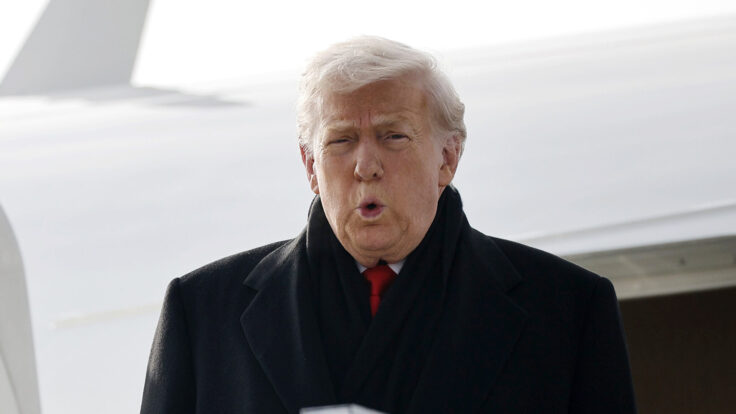
with a deeper look at how Trump’s push to redraw the Texas congressional map could trigger an arms race in New York and California—and why political operatives worry the destabilizing effect could ripple through Washington.
But first…
|
- House
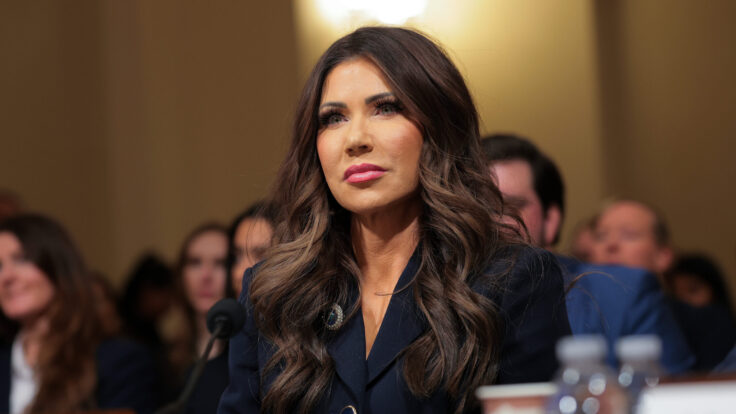
exodus: Rep. Nancy Mace, the South Carolinian who entered Washington as a moderate Trump critic but evolved into a controversy-stirring, Trump-hugging culture warrior, announced her candidacy for governor this morning at the Citadel, the military college where she was the first woman to graduate. Someone close to Mace told me that she hopes to raise $1 million in her first 24 hours—a goal that would separate her in the already crowded
race.
Mace is the latest House Republican to seek higher office, yet another sign that serving in the lower chamber, even in the majority, just isn’t much fun these days. More than half a dozen House members have already launched gubernatorial campaigns: Rep. Ralph Norman, also in South Carolina; Rep. Dusty Johnson in South Dakota; Rep. Byron Donalds in Florida; Rep. Andy
Biggs in Arizona; Rep. John James in Michigan; Rep. Randy Feenstra in Iowa; and Rep. John Rose in Tennessee. Rep. Elise Stefanik is likely to run for governor in New York. Rep. Mike Lawler, who wanted to run, was told by Trump to stay put in the House and defend his competitive seat.
In
the Senate, things aren’t much better. Tommy Tuberville is running for governor in Alabama, and Marsha Blackburn is considering a run in Tennessee.
Democrats are leaving, too: Sen. Michael Bennet is running for governor in Colorado. And Rep. Mikie Sherrill recently won the Democratic nomination for governor in New Jersey.
|
|
|
A MESSAGE FROM OUR SPONSOR |
|
|
- Cassidy
fights on: At least one key senator trying to stay in the Senate is Louisiana Republican Bill Cassidy, who announced his reelection bid last Friday, despite facing what could be a challenging primary race. There had been some speculation—mostly among Democrats—that Cassidy would throw in the towel, given that he’s unlikely to get the president’s endorsement. Cassidy has been reluctant to cross Trump this year, although he raised concerns about the prospect
of Robert F. Kennedy Jr., a vaccine and science skeptic, leading the Department of Health & Human Services, and was attacked online by Trump and his followers. (Cassidy ultimately voted to confirm R.F.K. anyway.)
|
Now, here’s Abby with more from Texas… |
|
|
Washington insiders worry that Trump’s push to slice up the Texas congressional map could
destabilize politics nationwide, sparking an arms race that pits members against members, makes it easier to topple incumbents… and placing Capitol Hill at the mercy of state legislators with their own agendas. |
|
|
In early June, I spoke with a G.O.P. veteran who’d survived a number of political wars over a long career,
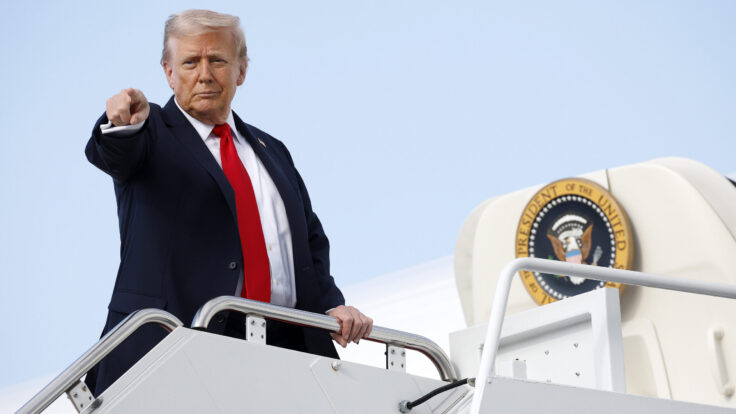
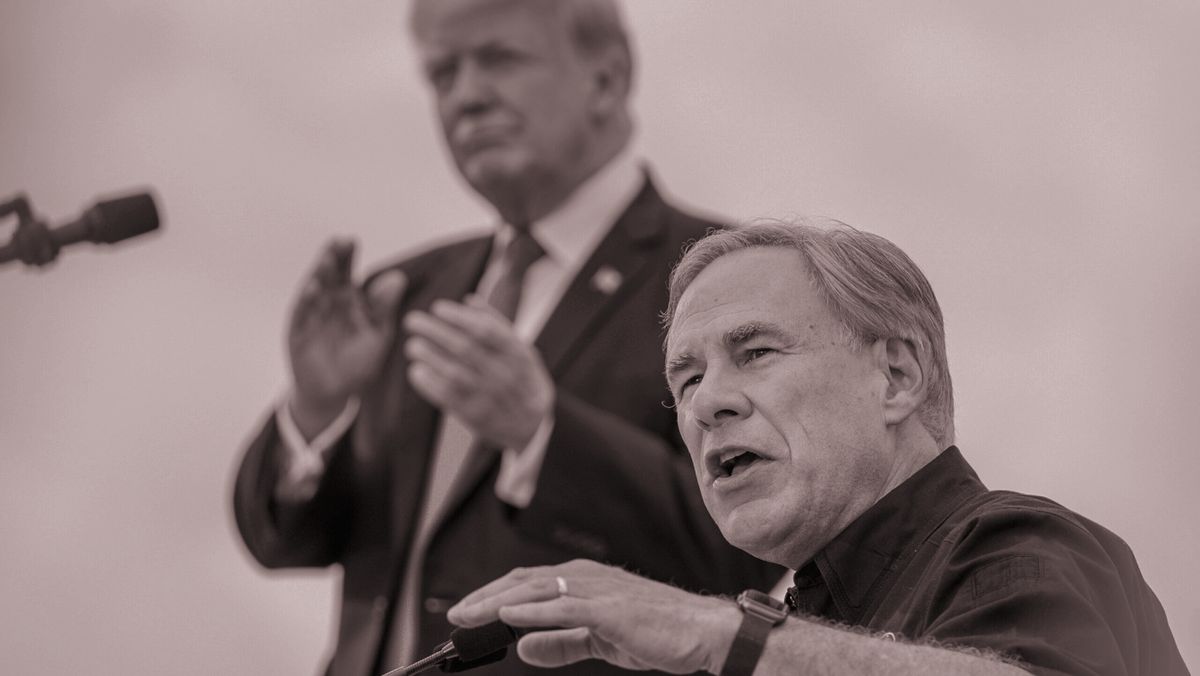
but sounded shaken as he hinted at the “scorched earth” plan the White House was cooking up for Texas. The specifics weren’t clear at the time, but they soon became public after Trump pressured Gov. Greg Abbott to redraw his state’s congressional districts in a rare, mid-decade gerrymander to help Republicans keep the House.
Redistricting, typically a wonky and once-a-decade policy exercise, is now one of the most explosive political dramas roiling the
country—featuring Democratic lawmakers fleeing the state to deny Abbott a quorum, and blue-state governors vowing to match Texas with gerrymanders of their own. After all, the proposed Texas map is indeed a pretty scorched-earth document, which could whittle down the state’s Democratic delegation from 12 to seven, and all but guarantee that some would lose their seats next year. But what’s perhaps most shocking is the willingness of Democrats to go scorched earth themselves. |
|
|
A MESSAGE FROM OUR SPONSOR |
|
|
For years, Democrats have resisted calls to fight fire with fire. But Abbott’s brazen push to eliminate blue
seats has pushed even the party’s most conflict-averse institutionalists to the edge. Democratic governors from New York to California are threatening to redraw their own congressional maps ahead of the next planned redistricting cycle in 2031—something I’ve never heard them threaten before. (Yes, sometimes redistricting litigation means that maps are redrawn by court order mid-decade, but it’s extremely rare to attempt a redraw for such nakedly partisan political
gain.)
Surrounded by Texas Democratic legislators who’d sought refuge in Albany this morning, New York Gov. Kathy Hochul expressed the party’s new ’tude: “I’m tired of fighting this fight with my hand tied behind my back.” She was also gesturing at a larger, lingering problem for blue-state governors in the redistricting wars: In the Bush and Obama eras, there was a push to take mapmaking out of state legislatures’ hands, and a slew of
Democratic states set up independent commissions and rules that tamped down on partisan gerrymandering. But few of these initiatives took hold in red states, which is why they have the edge in the current battle.
Of course, this isn’t the first time Democrats have embraced a once-taboo strategy in response to a G.O.P. escalation. In the early 2010s, after Republicans used super PAC money to devastating effect, and picked up 63 seats in the house, Democrats who previously would have
never considered embracing dark money—owing, largely, to their support for campaign finance reform—put sanctimony aside. Now, they’re using the same logic to justify their embrace of gerrymandering: In short, no unilateral disarmament. The result could soon become a thirteen-state redistricting
war—although not all states are equally likely to see it through. |
There’s a reason this kind of no-holds-barred nationwide gerrymandering arms race hasn’t happened before:
Partisan map renderings have floated around for decades, but state politicians have viewed them as too risky. After all, a redraw that looks favorable from one party’s perspective right now might not withstand the high tide of a wave in 2028 or 2030. Indeed, that’s precisely why Missouri Republicans rejected a map that would have given them a 7-1 advantage in favor of a more stable 6-2 map just three years ago. (They’ve since changed their minds and are likely to join the redistricting fray.)
One of the great ironies of this cycle of violence is that trying to create
more partisan districts now could actually create more competitive districts down the line, as the demographics and politics of a given district shift over time. Moreover, the cost of campaigning could skyrocket: Lawmakers often draw maps to avoid competitive races in expensive media markets, but if everyone’s searching the cupboard for congressional seats in, say, New Jersey, that will mean seriously competing in districts in the New York City media market. |
|
|
There’s also the fact that redistricting is a psychologically brutal process that creates conflicts between members, within delegations, and among neighboring incumbents. At the same time, it puts members of Congress at the perpetual mercy of the state legislators—after all, redistricting is a magnificent way to settle old political scores… or to advance personal ambitions for state-level politicians who are eyeing congressional seats themselves. Should the current redistricting frenzy become the norm, you can expect much more attention on state legislative races,
too.
Meanwhile, back in Texas, there actually isn’t a great deal of enthusiasm for the drama at hand, on either side of the aisle. Texas Republicans liked the map they had: Things had been safe and stable for them over the past few years, after Democrats gave them a scare in 2018. The new map is probably going to be fine for Republican incumbents, but it’s still a royal pain in the ass for a lot of them, because it changes their primary voter constituencies and potentially saddles them
with more Democratic voters in their districts.
Texas Democrats, meanwhile, are likely powerless to stop the map from getting passed: They have temporarily denied Republicans the necessary quorum, but they’ve never had success with the whole flee-the-state tactic. “Eventually it will happen,” a Republican consultant told me of the Texas map. “But I don’t know when, and I don’t know what the fallout is gonna be.” Still, Texas Democrats know their national party’s
base desperately needs to see somebody, somewhere in the party, punch back at Trump. So they packed their bags.
The logic of escalation here is such that there are few political figures trying to stop this runaway train. But there is one. Former California Gov. Arnold Schwarzenegger, one of the faces of the anti-gerrymandering movement, has spent the past few weeks watching his political life’s work evaporate in real time. As his chief of staff Daniel
Ketchell told me: “He believes that no matter which party does it, gerrymandering is evil because it takes the power away from the people and gives it to the politicians. He also said he doesn’t think that two wrongs make a right.”
|
|
|
Unique and privileged insight into the private conversations taking place inside boardrooms and corner offices up and down Wall
Street, relayed by best-selling author, journalist, and former M&A senior banker William D. Cohan. |
|
|
Puck fashion correspondent Lauren Sherman and a rotating cast of industry insiders take you deep behind the scenes of this
multitrillion-dollar biz, from creative director switcheroos to M&A drama, D.T.C. downfalls, and magazine mishaps. Fashion People is an extension of Line Sheet, Lauren’s private email for Puck, where she tracks what’s happening beyond the press releases in fashion, beauty, and media. New episodes publish every Tuesday and Friday. |
|
|
Need help? Review our FAQ page or contact us for assistance. For brand partnerships, email ads@puck.news. You received this email because you signed up to receive emails from Puck, or as part of your Puck account associated with {{customer.email}}. To stop receiving this newsletter and/or manage all your email preferences,
click here. |
Puck is published by Heat Media LLC. 107 Greenwich St, New York, NY 10006 |
|
|
|








_01K1KRHY8S0BDC1N648KE942TA.png "T-Mobile For Business")