 |
|
Hi you,
I hope holiday time has been restorative and not filled by product returns. I’ve been enjoying my time with family… and time with characters on screen. I absolutely loved Cord Jefferson’s American Fiction, one of the sharpest satires in many years. I was also blown away by Bradley Cooper’s writing, directing, and performing in Maestro alongside Carey Mulligan. And I’m currently making plans to see The Color Purple. I asked many of you to recommend your favorite corny Christmas movies, and you delivered. (My surprise favorites: Feast of the Seven Fishes and Four Christmases.)
As with every transition to a new year, it’s worth taking a moment to look back and appreciate the mere fact that we’re here, given that not everyone makes it across the finish line. This year, my reflections revolve around personal goals achieved and missed; how to face the volatility of the world without giving in to despair; and how to update the damn firmware on my webcam. Seriously, it’s been stuck for over a week, and I’m getting worried. Does this mean there’s spyware inside?!
But I also want to use this space to share my thoughts on the year ahead. I don’t need to tell you we’re at an inflection point. We’re all feeling a mix of apprehension, confusion, exhaustion, and some excitement as we face monumental transformations in politics, technology, and culture, plus the wars the capture our attention and the ones we don’t acknowledge. So without further ado, my predictions for 2024…
|
|
|
| Last year was, in a word, wild. We experienced the hottest climate ever, with smoke from Canadian wildfires pouring across the U.S. border. It was a hot labor summer, too, as workers went on strike from Hollywood to Detroit. We witnessed the brutal Hamas attack, the overwhelming Israeli response, and the ripple effects from Washington to our own workplaces. It was a year of severe anti-abortion movement crackdowns—and a powerful backlash. We read Donald Trump’s name on courtroom dockets across the country, and tried not to read his terrifying, authoritarian rants on Truth Social. We saw an explosion of A.I. and the attempted implosion of D.E.I.
Looking back on 2023, I almost forgot this was the year we shot down that Chinese spy balloon, and the year that Kevin McCarthy became Speaker of the House and un-became speaker, a truly remarkable achievement. For me, it was also the year I shared the stage with Barack Obama, Jay-Z, Kerry Washington, and Dwyane Wade (if I don’t brag about it, who will?); made my first-ever second season of a television series; and admitted that my body is, in fact, aging.
Of course, I’m also looking forward, with a mix of confident and cautious prognostication on a few of the topics that will likely define 2024: artificial intelligence, democracy, climate, crypto, and more. And now... |
| I. The Internet Will Get Worse |
|
| The internet, as we’ve known it, is getting worse. Our Google searches, Amazon shopping experiences, and social media feeds feel less relevant and more filled with algorithmically and financially manipulated junk results… because they are. Thanks to Cory Doctorow for introducing the term “enshittification” to describe this phenomenon. On the one hand, generative A.I. can more quickly filter through the noise, and offer up more relevant results. But the explosion of A.I. will also contribute to the problem by flooding the internet with more junk content all while reducing traffic (and ad dollars) that previously flowed to the sites that host genuine, accurate, human-generated information. As quality data becomes more scarce—or expensive—A.I. operators will turn to “synthetic data” to train their models, making the “enshittification” more literal as machines ingest their own digital effluent. With half the world holding national elections in 2024, we’re all in for a rough, disinformation-fueled ride. On the flip-side, this trend will drive up the value of quality data, and send users searching for sources of information and perspective they trust (like Puck). Which leads me to… |
| II. Proprietary Data Will Become More Valuable |
|
| Next year, every savvy business and entrepreneurially minded individual—I’m talking about YouTube creators, podcasters, financial institutions, news and media outlets, telecom operators, healthcare providers, etcetera—will audit their own data to see if they’re sitting on a library of content that can be used to create value in our emerging large language model-dominated world. The big firms that train LLMs need this data, and as a consequence, we will see record numbers of data and I.P. deals. Some will emerge through business relationships, like the one Axel Springer (owner of Business Insider, Politico, and others) struck with OpenAI, or the ones Apple is seeking with news publishers to feed its own LLM ambitions. Others will emerge through lawsuits, like those filed by visual artists, authors, and now The New York Times. A third path will see all kinds of institutions leveraging their data themselves.
We’re used to thinking of data as an asset that large companies extract from all of us, but next year, we’ll look to leverage that data ourselves, and we’ll have more tools available to help us do it. That YouTuber will use their library of videos to generate scripts for their next set of videos more quickly. A local newspaper will turn its archives, and access to public data, into A.I.-augmented reporting. Wealth advisers will offer far more specific recommendations based on each client’s financial history paired with market data. In short, everyone will start to look for data gold in their own backyards, and everyone will also have to wrestle with the responsibilities related to privacy, security, and I.P. rights. Lawyers are going to have a busy year! |
| III. OpenAI Will No Longer Dominate |
|
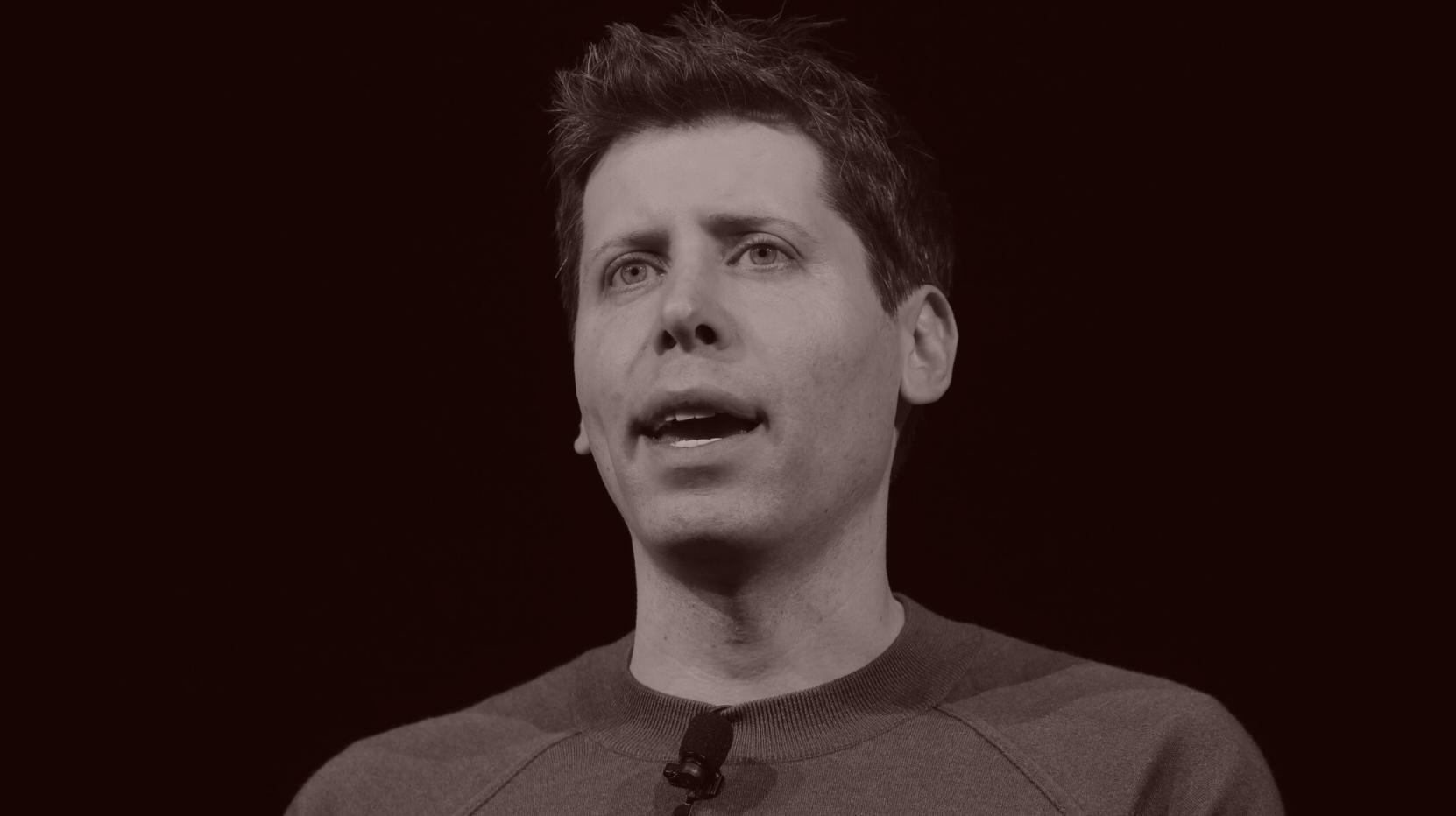
| When OpenAI launched ChatGPT, it quickly became the leading brand for artificial intelligence, and all other competitors seemed left in the dust. That singular reign is about to come to an end. The chaotic executive drama involving C.E.O. Sam Altman reminded customers, competitors, and A.I. talent alike that putting all your A.I. eggs in the OpenAI basket has its risks: legal, technological, competitive, regulatory, you name it. So Microsoft, OpenAI’s biggest backer and partner is moving ahead with its own competitive chatbot offering called Microsoft CoPilot. Meanwhile, Google’s Gemini model is performing much closer to GPT than its previous iteration, and the company is set to upgrade it in 2024. Anthropic, one of the leading OpenAI rivals and a public benefit company focused on trustworthy and safe A.I., expects to exceed its revenue target. And beyond the behemoths, there are smaller LLMs and open-source models gaining ground, from Meta’s LLaMA and LLaMA2, to French startup Mistral’s semi-open model, to models focused on a specific field or task. Apple and Cornell researchers are working on an image-focused open-source model. All this is to say, we are looking at a much more diversified A.I. field in 2024. |
|
|
| As A.I. tools become even easier to use, and their value becomes increasingly difficult to dispute, incorporating A.I. into everything will become the norm. You still need to be a bit of a tech geek to fully utilize these tools, but in the near future, you won’t have to go out of your way to experiment: A.I. will come to you. It will appear in your inbox, editing software, point-of-sale system, CRM, booking platform, and on your existing devices through a term you’ll hear more about: “on-device A.I.” Alexa, Google Assistant, and Siri are poised for massive upgrades as A.I. is integrated, allowing users to find information, launch apps, edit photos, or navigate physical journeys with heretofore unrealized ease. Interacting with user manuals will become a conversation. And we’ll see uses of A.I. that connect you with other people, not just draw you further into the isolating, digital world. (This last one is more of a hope than a prediction.) |
| V. Human Interaction Will Become a Luxury |
|
| We have evolved to need each other. In my first post-college job, as an adviser to telecom operators and investors, I remember a call center manager telling me that older people would sometimes call the company’s support line just to talk to another human. They didn’t have an issue with their bill or phone service; they had an issue with being alone.
Because we are wired for social interaction, it seems inevitable that the rise of plausibly human, A.I.-powered interactions will give rise to a form of companionship to many who lack it. But in part because of this trend, we’ll see a counter-trend: interaction with actual humans will become an increasingly premium experience. Eventually, it might even become a status symbol.
In 2024 and beyond, face-to-face interactions will become an increasingly valuable and differentiated offering—and it’s already begun. Recall that while most children during the pandemic attended school via Zoom, wealthy parents quietly assembled their own in-person learning pods. Or how, as grocery shoppers have been corralled into self-checkout kiosks, a backlash (and, sure, a rise in shoplifting) has led some retailers to return to human cashiers; one Dutch supermarket chain even implemented slow, “chat checkouts” for seniors who want to talk to another person. For luxury retail, this trend looks like a growth in real-life private shopping experiences. For travel, it could mean bespoke planning and more social travel experiences. For banking, it means promoting your customers’ ability to talk to a human, as I’ve seen Palm Springs, California ads. While many businesses will feel pressure to launch their A.I. strategy, smart ones will also launch their “human strategy.” |
| VI. People Will Return to Nature |
|
| In the coming year, climate change will drive more people to seek a connection with nature, and more people will fight to preserve and protect places that they feel attached to. But also driving this impulse are: first, a growing suspicion of and dissatisfaction with a pharmaceutical-heavy approach to health; second, the need to balance out our screen-based, high-speed lives as a result of technological innovation. Time in nature, after all, is proven to help us synchronize with life at the speed of our very own biology.
On my PBS series, America Outdoors, I featured the work of University of Utah postdoctoral researcher Amy McDonnell, who studies the psychophysiological effects of immersion in natural environments on attention and health. You can watch the segment online, which starts around the 28:30 mark. McDonnell is one of many researchers discovering formally what we’ve always known intuitively: Time in nature improves our mental health, life expectancy, and helps us recover from stress, especially from stress created by time with technology. |
|
|
| Now that Sam Bankman-Fried is off to prison, your in-laws have stopped asking you about Dogecoin, and the V.C. community is pretending it never tried to sell us on Web3, it feels like crypto—at least in the culture—is officially dead. But while you were dancing on its grave, Bitcoin’s price jumped more than 150 percent in the past year, and the Securities and Exchange Commission’s plan to approve a Bitcoin ETF has added to its rising price, which is above $42,000 as of today.
My friend Laurence Latimer, co-founder and C.E.O. of Dinara, a company specializing in enterprise financial services for the cryptocurrency market, projects the market will grow from its current $1.6 trillion capitalization to $2.5 trillion by the end of 2025. After the fraudsters and trendline riders abandoned crypto, those who remained kept building. Next year, I believe that the perception of crypto will reverse yet again. I also continue to see hope for the blockchain as a way to help authenticate transactions and verify identity and content—a need that’s grown exponentially given the explosion of generative A.I. |
| VIII. The Climate Business Is About to Explode |
|
| Now that the climate crisis has undeniably arrived, climate solutions have measurable value in the here and now. Waiting 20 years for your home solar installation to pay for itself is no longer a reasonable measure of success; it’s about how we can manage and mitigate floods and fires, secure access to food in times of emergency, and minimize costs and CO2 emissions immediately.
The Inflation Reduction Act infused a lot of financial incentives into climate-oriented business, but in the absence of truly enforceable climate adaptation and mitigation strategies, I believe we will finally see aggressive climate-friendly movement in different pockets of society to limit CO2, and to monetize the shift to a net zero economy. (This also means demanding products and services that don’t accelerate us toward a dystopian hell on Earth.) Expect major areas of progress in energy storage, climate adaptation investment, and A.I.-infused climate solutions involving optimization of just about everything. |
| IX. The D.E.I. Backlash Will Continue Unabated |
|
| Americans seem destined to relive our racialized trauma again and again: There is never any progress without backlash. Reconstruction gave birth to the KKK and Jim Crow; the Civil Rights Movement begat urban white flight and mass incarceration; Barack Obama was followed by Donald Trump; the list goes on and on. Today, the 2020 “racial reckoning” in the wake of George Floyd is over, and many of us decided that reckoning is hard, uncomfortable work. Alas, I’m confident this trend foreshadows that the end of affirmative action in higher education will continue to spread, as well as attacks on diversity, equity, and inclusion efforts in workplaces and schools, and the removal of books and curricula that acknowledge systemic racism.
We see glancing nods at this when Disney’s Bob Iger gives credence to the “go woke, go broke” meme by signaling that the company won’t focus on political “messages” in its content. Then there’s the more overt manifestations: when backup G.O.P presidential candidate Nikki Haley refuses to mention slavery when asked what caused the U.S. Civil War. Let that sink in: A former governor of South Carolina, who was applauded for (eventually) taking down the Confederate flag over the statehouse, is so cowed by “anti-woke” bullies that she can’t bring herself to give the obvious, factual answer to a simple question. Expect to see more cowardly, reactionary moves like this in 2024. But also expect to see some counter-balancing efforts by institutions to reaffirm their commitment to multiracial democracy, or at least help provide workarounds, like the growing coalition of libraries who joined Brooklyn Public Library’s Books Unbanned initiative. |
| X. Democrats Can’t Rely on a “Save Democracy” Message |
|
| Plenty of prognostications have been made about Trump, his legal battles, and his forthcoming electoral performance. Will he or won’t he become America’s first dictator? I don’t know! But I have a hunch about what will make winning versus losing messages during the 2024 election mayhem. Some of the momentum behind the G.O.P. fear-mongering messages—mainly surrounding C.R.T., D.E.I., and immigration—will start to diminish as people focus on results, not provocative rhetoric.
Meanwhile, Democrats who expect to win by promising to “defend our democracy” will be disappointed. Sure, if you’re a democracy scholar, these appeals might work on you. But for most people, unfortunately, “democracy” seems to be too abstract a concept to meaningfully rally around. Democratic Governor Andy Beshear’s recent, successful Kentucky reelection focused on tangible outcomes related to jobs, economic development, public safety, education, infrastructure, and healthcare. Those who focus on the practice of democracy as the way we deliver on these tangible outcomes, instead of just touting the perils to democracy, itself, will be in a stronger position. As faith in institutions continues to crumble, it’s become a fool’s errand to sell people institutional nostalgia or preservation. Instead, the winning message will acknowledge institutional failure, promise to deliver using a message of freedom rather than democracy, and remind people of our own power to effect positive change in our own communities and spheres of influence, in contrast to the unproductive shitshow playing out at the national level. |
|
|
| That’s the last of my major predictions, at least for today. This coming year will be hotter and more challenging than ever, while also delivering some of the most amazing technological advancements we’ve ever seen. It’s going to be head-spinning and intense. At this point, every year feels like this, but an election year is also a time to reset the story we tell ourselves about who we are, and that story is up for grabs in a big way. What that story is and who tells it doesn’t come down to anyone’s prediction. It comes down to everyone’s actions. I hope we can all stay grounded and connected throughout the tumult and look back a year from now feeling proud of how we added to that story. If you have any predictions (or hopes) of your own, share them with me at baratunde@puck.news. |
|
|
|
| FOUR STORIES WE’RE TALKING ABOUT |
|
|
|
|
|
 |
|
|
|
Need help? Review our FAQs
page or contact
us for assistance. For brand partnerships, email ads@puck.news.
|
|
You received this email because you signed up to receive emails from Puck, or as part of your Puck account associated with . To stop receiving this newsletter and/or manage all your email preferences, click here.
|
|
Puck is published by Heat Media LLC. 227 W 17th St New York, NY 10011.
|
|
|
|