 |
|
Happy Sunday, welcome back to Dry Powder.
|
|
The implosion of SVB is a film that we’ve seen before—and recently, too, with FTX—but that doesn’t make it any less wrenching. While regulators decide next steps, and the bank’s customers wait with bated breath, a few early observations about how this happened again, and what might be coming next.
|
|
|
| When you combine a confidence game, fractional banking, and idiotic risk management with the Federal Reserve’s 13-year zero-interest rate policy regime, you get what we saw in recent days with Silicon Valley Bank. SVB can now be added to the list of infamous bank failures over the years, including Washington Mutual, IndyMac, Bear Stearns and Lehman Brothers. It’s the largest bank failure in terms of assets—some $209 billion at the end of 2022—since the 2008 financial crisis.
The SVB failure, which occurred so swiftly over the course of 48 hours, raises many questions, but I am reminded of a couple undeniable truths: It’s amazing how often bank executives fail to comprehend the fragility of their institutions, and the extraordinary risks inherent in borrowing short and lending long.
I don’t mean to make light of what happened at SVB. On Sunday morning, Treasury Secretary Janet Yellen said on CBS that the Treasury was working closely with the FDIC to protect depositors beyond the FDIC-insured $250,000 threshold but that there would be no bailout of SVB. Supposedly some 93 percent of the bank’s $161 billion of deposits are uninsured, which makes sense given that it housed the operating accounts of so many companies, venture capital firms and wealthy individuals. (Why they all did so much business, nearly exclusively, with this bank is a topic for another day.)
According to a note on Friday from Michael Cembalist, at JPMorgan Chase, SVB “carved out a distinct and riskier niche than other banks, setting itself up for large potential capital shortfalls in case of rising interest rates, deposit outflows and forced asset sales.” I get the sense there was a genuine financial earthquake in Silicon Valley this week, especially among privately financed start-ups that banked with SVB and had a need for short-term capital from investors, who also had much of their liquidity in the bank. I have tremendous empathy for what the victims of the Silicon Valley Bank disaster are feeling right now.
But we shouldn’t be surprised by these occasional eruptions. First, banking is a confidence game. We’ve decided as a species that it’s safer to keep our money in a bank rather than say, at home, in our mattresses. Maybe it’s the confidence inspired by the marble bank façade, or the huge, 10-foot-thick steel door to the vault over in the corner. But here’s the fallacy in that logic: in our fractional banking system, one in which banks are only required to hold a fraction of their deposits as reserves, the money—our money—that we think is safe and secure is not even at the bank. And whether it is safe and secure is a matter of a myriad of factors that a depositor has nothing to do with, and no control over. In other words, in our fractional banking system, the mirage of safety and security is a clever and extremely persuasive narrative created to get us all to put our money in a bank thinking that a bank is the safest place to put our money. Even the banks that we perceived to be the most august—Lehman Brothers, Merrill Lynch, Bear Stearns—turned out to be elaborate and highly sophisticated houses of cards. |
|
|
| This hasn’t been a hard formula to perfect in recent years. Thanks to the Fed’s Zero Interest Rate Policy, or ZIRP, most banks generally have been paying us as close to nothing as possible on our checking and savings accounts. Even in the current rising interest rate environment, JPMorgan Chase pays me 1 basis point annually on my checking balance and, twice as much, or 2 basis points, on my savings balance. In other words, basically nothing.
That means JPMorgan Chase, with about $2.5 trillion of deposits, gets its raw material, our deposits, for free and then turns around and uses them, or most of them, to make loans available to corporations, municipalities, individuals, universities, small businesses (everything you can think of) and then charges them a combination of fees and higher interest rates than the banks pay us for using our money. That’s called banking. There’s a reason JPMorgan Chase made $48 billion of net income in 2021. Yes, it’s an incredibly well-run bank, but it also has benefited tremendously from ZIRP.
In any event, it all works just fine until the confidence is lost, until for whatever reason people all want their money at the same time, usually because some rumor somewhere has been started that the bank where you have your money, or your life savings, is having a problem and may be going down the tubes. Then, suddenly, everyone wants their money at the same time and the confidence is lost. Similar rumors are swirling now about the wealthy individuals, venture firms, and their portfolio companies whose decision to withdraw money from SVB may have triggered this panic.
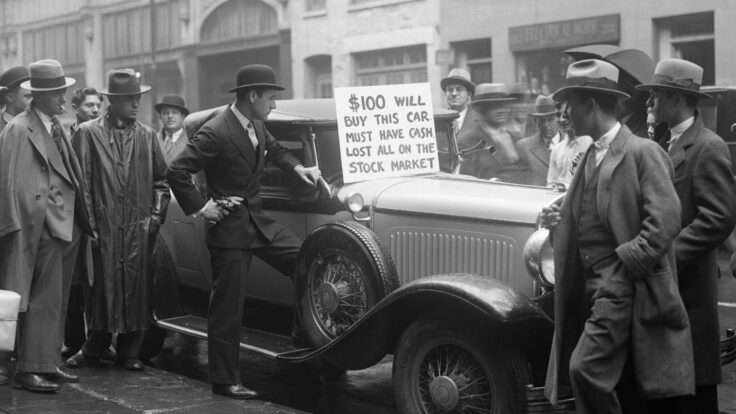
The problem, of course, is that in a fractional banking system your money is not really at the bank, and never has been. Rather, it’s been loaned out to others for some length of time—five years, seven years, ten years—and, contractually, they don’t have to return it until that time period is up, as long as they keep paying the interest on the loan. So in a panic—like 1929, or 2008, or at Silicon Valley Bank this week, or at FTX last November—when lots of people want their money back from a bank or some other kind of financial institution at the same time, they are often surprised to find that it’s not there.
The FDIC was created after the 1929 banking crisis to insure the bank accounts of small or relatively small depositors are safe, and now covers bank accounts up to $250,000. (Some people, notably Mark Cuban, are arguing the limit should be raised.) But sometimes what the FDIC does isn’t enough protection. In 2008, it was institutional investors at Bear Stearns, Merrill Lynch, Morgan Stanley and Lehman Brothers that panicked and wanted their money out pretty much all at the same time and discovered, as ever, that their money was not there and they couldn’t get it, not all at once anyway. The same thing happened at FTX last November.
We don’t think of FTX as a bank, and it was totally unregulated, but it was a place people sent their money, hoping that it would be safe and that they would turn it into more money somehow. The last thing they thought when sending their money to S.B.F. was that they couldn’t get their money when they wanted it or that it was never there at all because S.B.F. & Company had siphoned it off into their own private hedge fund, Alameda Research, and it had gone up in smoke in hundreds of different stupid, illiquid investments.
And the same thing happened last week with Silicon Valley Bank. The bank didn’t do itself any favors when, on Wednesday, it announced that it needed more capital because “we expect continued higher interest rates, pressured public and private markets, and elevated cash-burn levels from our clients as they invest in their businesses.” The stampede for the exits, pretty much at the same time, is always a recipe for financial disaster and so it was again with Silicon Valley Bank, just as it was at FTX, and Bear Stearns and Lehman Brothers, et al.
Once confidence is lost, it’s lost and can’t be restored, not even if, like Lehman Brothers, the bank was around for 158 years before it collapsed. Silicon Valley Bank was founded 40 years ago, in 1983. It took 48 hours, max, to go down the drain.
At Bear Stearns, for instance, when the rumors started flying 15 years ago, the bank kept trying to do what it had been doing since its two related hedge funds had collapsed a year earlier: it kept trying to get the $75 billion it needed on a daily basis to run its business from the overnight repo market, where money can be borrowed on the cheap using the bank’s assets as collateral. That had worked beautifully for Bear Stearns for a long time, until it didn’t during the Ides of March 15 years ago.
Suddenly, the providers of the overnight repo loans to Bear (firms such as Fidelity Investments and Federated Investors) decided they no longer liked Bear’s collateral—the mortgage-back securities that Bear had accumulated on its balance sheet over the years that it couldn’t sell or didn’t want to sell and perfect the losses on them. Better to try to keep using those securities as collateral for the overnight loans. Of course that meant that Bear was allowing Fidelity and Federated a vote every night about whether to keep doing business with Bear Stearns.
That’s a lot of power to put into the hands of your short-term creditors. In March 2008, the overnight repo lenders decided they would no longer roll over Bear’s repo loans. Bear had no other place to turn to satisfy the ongoing run on the bank by its institutional clients or to get the money it needed to keep doing business—trading, underwriting, etcetera—and so the bankruptcy papers were prepared on Friday, March 12 and readied for filing.
Of course, that was when the Fed and the Treasury kicked into gear and decided, correctly in retrospect, that Bear Stearns was too interconnected with the rest of the financial system to allow it to fail. And so for the first time in the history of investment banks in the United States, Bear Stearns was rescued by the feds, and put into the hands of JPMorgan Chase for a song, essentially the price of Bear’s new headquarters building on Madison Avenue. |
|
|
| What colossal mistake did the brain surgeons at Silicon Valley Bank make? Instead of making loans, or as many loans as it probably should have given its increasing deposit base, the bank executives decided to invest a lot of the money deposited with the bank—payrolls, venture capital proceeds—into the bond market, especially into what appeared to be relatively benign mortgage-backed securities and safe U.S. Treasury securities but with long-dated tenures Too many long-term fixed-rates bonds, yielding higher rates of return, and not enough short-term debt. In other words, SVB started chasing yield. And this is where the Fed comes into the equation. As I have written endlessly over the years, the Fed’s ZIRP policy (2009-2022, RIP) manipulated interest rates down to their lowest levels in recorded history, making the bond market essentially uninvestable and mispricing risk throughout the credit markets.
Safe or not safe was not the key variable. The mistake was investing in the bond market at all—especially in long-term debt—in an effort to squeeze out a higher return than just keeping the money in cash, or short-term securities. There were bound to be major consequences when the Fed decided to unwind that policy, as has happened in the past year, and at a rapid pace. Anyone who thought it made sense to, say, invest in the high-yield market when the average yield on a high-yield bond was below 4 percent, as it was in September 2021, needs to have his head examined. That was one of the dumbest trades of all time. The Fed’s extended ZIRP and Quantitative Easing policies made the bond market simply uninvestable.
If you had any sense at all, as a fiduciary for stakeholders or as simply a responsible risk manager, you could not put money into the bond market, or the Treasury market, unless you had the ability to hold that bond to maturity, and didn’t really care that you were missing out on higher yields as the Fed abandoned ZIRP. SVB didn’t have that luxury. (I have smart friends who keep their money in Treasuries and don’t care if they are missing out on yield and don’t have to sell them. They are very happy, thank you very much.)
But of course that’s what Silicon Valley Bank did. It invested something like half of its $160 billion of its depositors money in long-term mortgage-backed securities and Treasury securities at the Fed-induced historically low interest rates, trying to squeeze out some extra yield. This was not only a change in the bank’s historic investing policy but also phenomenally stupid under the circumstances of ZIRP, and was probably a move exacerbated by the departure of the bank’s chief risk officer in May 2022, a position left unfilled until January of this year. How could anyone claiming to be a responsible bank executive possibly decide to invest depositors money into the bond market after years of ZIRP? Anyone with half a brain would know that when interest rates started to return to normal levels —as is happening now of course—the value of the bond portfolio would collapse. And if you needed to sell those bonds in a hurry because your depositors wanted their money, well, then, you would be in a very difficult position and you would get burned.
And that’s what happened to SVB. When the bank sold some $21 billion of its bond portfolio to raise the money it needed to return to its depositors it took a big loss, of around $2 billion. To say this was entirely predictable is an understatement. When SVB announced on Wednesday that it suffered a $2 billion-plus loss on the sale of its debt securities, and then when it also said it intended to try to raise $2 billion of new equity to fill the hole on its capital loss from the sale of the debt securities, all hell broke loose. Les jeux sont faits. The stock was trading at around $270 a share on Wednesday. By 8 p.m. Thursday night, it was down to $82.50 a share, a loss of 69 percent in one day. And on Friday, the FDIC took over the bank and put it into receivership. Lightning fast.
My Twitter feed is filled with the observation that suddenly the libertarians of the world that have backed start-ups—and take a Don’t Tread on Me approach to life—are wanting a bail out from the government. “Just as there are no atheists in fox holes, there are also no Libertarians during a financial crisis,” Barry Ritholtz tweeted, perceptively. Here’s Brad Gerstner, the founder and C.E.O. of Altimeter Capital, a venture capital firm, posting a letter from a variety of venture capital firms, including Accel, Greylock Partners and Kleiner Perkins, among others fairly begging for SVB to be rescued. “The events that unfolded over the past 48 hours have been deeply disappointing and concerning,” he wrote on Twitter on Friday night. “In the event that SVB were to be purchased and appropriately capitalized, we would be strongly supportive and encourage our portfolio companies to resume their banking relationship with them.” Well, good luck with that Brad. As one Twitter user responded, “The chutzpah here beggars belief. The VC ‘community’ literally started the [SVB] run on Thursday, when it urged its portfolio companies to pull their deposits…which they did”—to the tune of $42 billion—“and now they want the Taxpayer to bailout their investments…?! Capitalism, Silicon Valley-style.” |
|
|
| The international law firm K&L Gates, in a briefing on Friday, predicted what might happen from here: On Monday the money in FDIC insured accounts at SVB will be available for withdrawal, on a per-customer basis, not a per-account basis. So $250,000 per customer. The remainder of the money in each account will be held in “certificates,” which will pay out dividends up to the total value of the certificate as the FDIC liquidates the bank, if that’s what happens. The FDIC has said it will pay out an “advanced dividend” next week on those certificates but the amount is unknown. In a previous bank receivership, IndyMac, the FDIC paid out 50 percent of the trapped deposits in an “advanced dividend” but, again, it’s not known how much it will pay out this time. Bloomberg reported over the weekend that figures between 30 and 50 percent were being floated.
Of course, a buyer can come along—Elon? Apollo? JPM for another song?—and pick through the carcass of SVB over the coming days and perhaps announce a deal for some of the assets early this week. On Saturday, the FDIC started an auction for SVB, or parts of it, with bids due later today. Elon tweeted he was “open” to the idea of buying SVB and he has suggested previously that Twitter will get into financial services one way or another. “Everyone is working all weekend to make sure companies are funded next week,” one venture capitalist wrote to me, “and many companies will be hurt by this. Most will recover, some not.”
So what’s the lesson in all this? It’s the same one I thought people had learned after the 2008 financial crisis but apparently not. Fractional banking is a very risky business. It’s highly fragile. It’s wholly dependent on the confidence people have in each and every banking institution. When that confidence is gone, nothing else matters. It doesn’t matter the mistakes that were made along the way. Investing in over priced mortgage-backed securities and Treasuries? Doesn’t matter. Dependent on the overnight repo market for your funding? Doesn’t matter. Siphoning off money from a crypto exchange into a hedge fund? Doesn’t matter. Long Term Capital Management? The Savings and Loan Crisis? Doesn’t matter. In the end, the problem is the same. When you are in the business of borrowing short term and lending long term, you are playing a highly dangerous game, every minute of every day.
Which brings us back to unintended consequences of the Fed’s absurd zero-interest rate policy, which went on way too long and is currently being unwound. What happened at Silicon Valley Bank is an unintended consequence of ZIRP, exacerbated by the bank’s own stupidity and maybe or maybe not by a small group of voracious venture capital firms, looking to deep-six a competitor. Whether there will be knock-on effects remains a big question that will be answered in the coming days and weeks. Is the blast zone just contained to SVB or will it extend to other local and regional banks? Already rumors are afoot about the fates of banks such as First Republic Bank of California and First Third Bank. The hedge fund billionaire Bill Ackman predicted yesterday in a fascinating Twitter Spaces session and also on Twitter, in which he is a small shareholder it turns out, that he “expects” there to be “bank runs,” starting tomorrow, at a “large number of non-SIB [systemically important] banks.” Gary Cohn, the former Goldman executive and former Trump national economic advisor, urged government regulators to be decisive and fast. “History shows if regulators do too little in the beginning, the situation can grow rapidly,” he tweeted. “They can’t be afraid to be bold here.” Time will tell. And, so far, the Fed has said nothing, which may be speaking multitudes through its silence.
Let’s give the final word today to my friend Dennis Kelleher, the founder of Better Markets, a financial watchdog organization in Washington. He emailed me some serious wisdom late Friday night. “To me, the fundamental problem is that the Fed is trying to fix problems mostly of their own making while not admitting they had any role (never mind a decisive role) in creating those problems in the first place which causes more problems that they then have to ‘fix,’” he wrote. “Sooner or later that leads to catastrophe.” |
|
|
|
| FOUR STORIES WE’RE TALKING ABOUT |
 |
|
 |
|
 |
| Tucker’s Troubles |
| Tensions inside Fox News are starting to reflect the same schisms as the party it covers. |
| DYLAN BYERS |
|
 |
| CPACalypse Now |
| Notes on the MAGAficiation of the preeminent conservative political summit. |
| TINA NGUYEN |
|
|
|
|
|
 |
|
|
|
Need help? Review our FAQs
page or contact
us for assistance. For brand partnerships, email ads@puck.news.
|
|
|
|
Puck is published by Heat Media LLC. 227 W 17th St New York, NY 10011.
|
|
|
|