• Washington
  • Wall Street
  • A.I.
  • Hollywood
  • Media
  • Fashion
  • Sports
  • Art
  • Join Puck Newsletters What is puck? Authors Podcasts Gift Puck Careers Events
  • Join Puck

    Directly Supporting Authors

    A new economic model in which writers are also partners in the business.

    Personalized Subscriptions

    Customize your settings to receive the newsletters you want from the authors you follow.

    Stay in the Know

    Connect directly with Puck talent through email and exclusive events.

  • What is puck? Newsletters Authors Podcasts Events Gift Puck Careers
Hello and welcome back to The Best & The Brightest, your daily politics dispatch from D.C. brought to you by Tara Palmeri, Tina Nguyen, Peter Hamby and yours truly.
 ‌ ‌ ‌ ‌ ‌ ‌ ‌ ‌ ‌ ‌ ‌ ‌ ‌ ‌ ‌ ‌ ‌ ‌ ‌  ‌ ‌ ‌ ‌ ‌ ‌ ‌ ‌ ‌ ‌ ‌ ‌ ‌ ‌ ‌ ‌ ‌ ‌ ‌  ‌ ‌ ‌ ‌ ‌ ‌ ‌ ‌ ‌ ‌ ‌ ‌ ‌ ‌ ‌ ‌ ‌ ‌ ‌  ‌ ‌ ‌ ‌ ‌ ‌ ‌ ‌ ‌ ‌ ‌ ‌ ‌ ‌ ‌ ‌ ‌ ‌ ‌  ‌ ‌ ‌ ‌ ‌ ‌ ‌ ‌ ‌ ‌ ‌ ‌ ‌ ‌ ‌ ‌ ‌ ‌ ‌  ‌ ‌ ‌ ‌ ‌ ‌ ‌ ‌ ‌ ‌ ‌ ‌ ‌ ‌ ‌ ‌ ‌ ‌ ‌  ‌ ‌ ‌ ‌ ‌ ‌ ‌ ‌ ‌ ‌ ‌ ‌ ‌ ‌ ‌ ‌ ‌ ‌ ‌  ‌ ‌ ‌ ‌ ‌ ‌ ‌ ‌ ‌ ‌ ‌ ‌ ‌ ‌ ‌ ‌ ‌ ‌ ‌  ‌ ‌ ‌ ‌ ‌ ‌ ‌ ‌ ‌ ‌ ‌ ‌ ‌ ‌ ‌ ‌ ‌ ‌ ‌  ‌ ‌ ‌ ‌ ‌ ‌ ‌ ‌ ‌ ‌ ‌ ‌ ‌ ‌ ‌ ‌ ‌ ‌ ‌ 
The Best & Brightest

Hello and welcome back to The Best & The Brightest, your daily politics dispatch from D.C. brought to you by Tara Palmeri, Tina Nguyen, Peter Hamby and yours truly.

Today is especially exciting because tomorrow, instead of being worse, is the day that we at Puck are throwing a party at the French ambassador’s house, to celebrate our new Washington newsletter as well as the First Amendment. It’s going to be a full house. Personally, I’m excited to show my New York and L.A. colleagues that Washington can have fun, too. Sometimes.

Surviving Putin
Surviving Putin
A gripping conversation with Christo Grozev, lead Russia investigator for Bellingcat, about his role in the Oscar-nominated documentary ‘Navalny,’ sleeper agents in Europe, and why he can’t go home again.
JULIA IOFFE JULIA IOFFE
The Oscars are on Sunday and, while this is normally an event I don’t care about, this year is different. This year, the Academy has nominated Daniel Roher’s film Navalny for best documentary—and it could very well win.

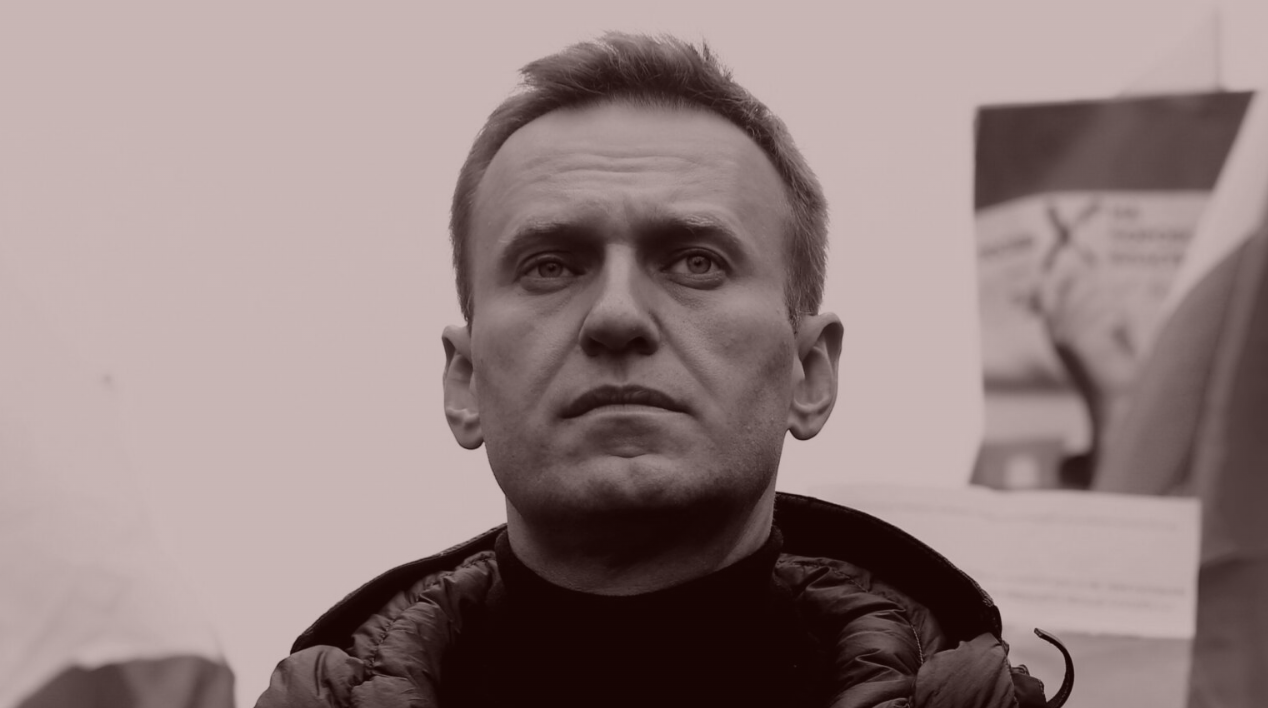
The film follows Russian opposition leader Alexey Navalny around Germany as he recovers from his Novichok poisoning and then on to Russia, where he was arrested on arrival at Moscow’s Sheremetyevo airport on January 17, 2021. Navalny has remained in prison ever since, the state adding more and more years to his sentence, while tormenting him with ever crueler conditions. He has spent several weeks in solitary confinement. When he isn’t there, prison authorities put contagiously ill people in his cell and then don’t provide medical treatment when Navalny inevitably falls sick. In recent court appearances, the previously hardy Navalny looks gaunt and wan, and there’s increasing worry that he may not survive his internment just as the world pays less and less attention to his plight.

Navalny, which was made with the active cooperation of Navalny’s team (Maria Pevchikh, Navalny’s head of investigations, is an executive producer) and it could easily have gone the way of Navalny propaganda. Instead, it presents exactly the man known to us for over a decade: bewitchingly charming, devilishly funny, and, occasionally, prickly as fuck. It also shows his team as incredibly dedicated, idealistic, hardworking—and fiercely protective of their leader’s image, something that continues to rankle the journalists who cover him.

It is also an intensely moving film. Yes, there’s the drama inherent in the events themselves: Navalny surviving his own poisoning with a military-grade nerve agent, then tracking down his would-be murderers, and returning to Russia to face inevitable arrest. It shows the bravery and self-sacrifice not just of Navalny, but of his family.

But to me, it showed something else: a Russia that disappeared in the flames of the war in Ukraine. The throngs of people in the street protesting for Navalny and attending his rallies when he ran for president in 2018, all the people who mobbed the airport to cheer his return to Russia, the people chanting his wife’s name after his arrest—that Russia is gone. More than a million people have fled Russia in the year since Putin invaded Ukraine, and a great number of them were the people who were regulars at protests, the people who fought for the dream of a better, more democratic Russia. The war, Navalny’s arrest, the massive exodus have shown just how impossible that dream has become.

This week, I talked to Christo Grozev, the lead Russia investigator for Bellingcat, who helped Navalny find his assassins and has a starring role in the documentary. Christo, along with Navalny’s wife, Yulia, and daughter, Dasha, will be flying to L.A. this weekend for the Oscars, which, as Christo explained, was not something any of them ever expected to happen. Christo normally lives in Vienna but is now stuck in the U.S. because American law enforcement warned him in January that he would be assassinated on arrival if he returned home. He and I spoke about how the film came about, as well what Russian security forces are up to in the West and whether Navalny will survive Vladimir Putin. I hope you find this conversation, which has been edited for length and clarity, as interesting—and surprising—as I did.

Julia Ioffe: So, you’re heading to the Oscars this weekend.

Christo Grozev: You’re right. It’s something that started almost as a joke. Two years ago, when we were in the Black Forest in Germany [where Alexey was recovering from his poisoning], and after Alexey had agreed to allow my team to start filming, he said, “Well, can you guarantee that the film will be nominated for the Oscars?” And the team said, “Oh, absolutely, sure.” And lo and behold, it’s happening this Sunday.

Wait, I didn’t realize you had already been working with Daniel Roher before he started filming what became Navalny?

Daniel was with me because we were filming another project, which was about a Ukrainian sting operation against [Evgeny] Prigozhin. Daniel happened to be with me on that project, in Vienna, when he saw me actually have the light bulb moment and exclaim, “Oh my God, I think I cracked the case on who poisoned Navalny!” And he started filming. So he just followed me to the Black Forest, together with Odessa Rae, his producer, and the goal was to try to convince Alexey to allow them to continue filming. That was a bit of a project.

How did they convince him? Because Alexey’s team is notorious for how tightly they control his image, how they don’t really let in outsiders. I saw [Navalny’s head of investigations] Maria Pevchikh is an executive producer. But how did you guys get them to agree not just to film him but to grant the team so much access?

Yeah, it was not easy. I had to convince both him and Maria—and they were kind of a good-cop-bad-cop, where she was the bad cop—that, yes, they can do a film of their own and it would be a great YouTube project, something that will definitely get millions and millions, and maybe hundreds of millions of views. But if the goal is to have a long-lasting impact on a worldwide scale, then they have to give up some of the sovereignty over the project and allow somebody else to be a fly on the wall and to make judgment calls of what is real and what is political. And it was a difficult conversation. But Alexey got it. He really got it.

You mention in the film that you spent tens of thousands of dollars of your personal money on buying these police databases on the dark web, the ones that allowed you to crack the case. You said that, if my wife knew, she’d kill me—but she’s not going to see this film. Is that still true? Has she still not seen it?

At the time I said this, I really thought this would be a film for a specialized audience that would be shown at some artsy-fartsy documentary festival and nobody will see it—and thus my wife will never see it. I was sure when I said it. I had no idea that it would become such a hit and that my wife would ultimately end up being at the Copenhagen Film Festival, waiting to see it and I’d be trembling next to her and not knowing what to do. So she did.

So what did you do? Did you have a conversation with her beforehand or did she find out by watching the film?

I was planning to, but she stopped talking to me a few hours before the film for a completely different reason. Because I allowed my daughter to bring a dog into the home without coordinating it with my wife. So she was mum and I had no chance to explain it to her. But then there was a nine minute standing ovation after that, and I think that kind of fixed it.

Did you have a conversation afterwards?

No. Never. And I’d rather keep it this way.

Are you still using your personal money to buy all these databases, or do you have a different way to buy them now?

I’ll plead the fifth. I have a marriage to protect.

What did you think of Alexey’s answer about his past flirtations with nationalism?

It’s honest and unapologetic. And that is what Alexey is. I think he deserves credit for being honest. That’s what makes him also sometimes very controversial. But I understood that side of him when I spent a few months with him, and I understood that that’s why he will never be popular with everybody, because he does not recognize the concept of political correctness and hiding his past or coming up with politically acceptable reasons for what he did in the past. I’m not comfortable with what he did, but I appreciate the directness with which he explains it.

The film ends with some text saying that you and Masha Pevchikh are still looking for Konstantin Kudryavtsev, one of Navalny’s poisoners, whom you and Alexey prank called and got to admit how the operation to kill him went wrong. Is that still the case? Do you know what happened to him?

We believe he’s alive because we found—again, through the leaky Russia personal data market—that he gave a Covid test in late 2021, but it was negative. So he was alive and healthy. I think he paid a price. I would call it the “moron price.” The Russian government cannot afford to kill people for just being morons because otherwise they’ll run out of people in the security services. Putin kills people that oppose him, those people that betrayed them, but not morons. So we think Kudryavtsev was given a desk job somewhere where he was out of sight. And his wife left him.

Oh, wow.

Yes. And his neighbors put up posters with his face in the elevator saying “our neighbor is a killer.” So I think he also paid a social price.

How are you able to find this out, about his wife and his neighbors?

Well, the wife divorcing him, came out through the court case that Kudryavtsev’s wife had against [Navalny colleague] Lyubov Sobol. And the wife showed up in court, and she explained that, actually, the case is going to be brought just by her because her husband was no longer her husband.

Wow. Did she explain why she left him?

No. We just left it at that and said it was not a question you could ask a court.

Back to the question of stupidity. In the U.S., there is still this image, especially after the election interference of 2016, of the Russian security services as not just scary, but very capable and cunning and, well, professional. Whereas I feel like your investigations reveal a different side of them, the stupid, messy, slightly incompetent side. What is the more accurate view on the Russian security services?

These two qualities are not mutually exclusive. When somebody is working on offensive operations, they could be cunning and professional and be stupid on the defensive side. It’s a syndrome that I call “the hunter cannot be hunted syndrome.” They don’t really pay attention to covering their tracks because they think nobody would dare go after them the way they’re going after everyone else. They feel protected as a group, the way a pack of wolves protects one another. That hubris leaves them exposed to anybody who dares look into their own ecosystem. That’s what I exploited. For example, the Kremlin has excellent hackers who are really a threat to any electoral system in the world but these hackers also use their own last name and their birthdate as a password.

Yes, there’s that hilarious moment in the film when you talked about “Moscow four,” where you hack a high ranking security officer because his password is Moscow1, which he then changes to Moscow2, then you hack that and he changes it to Moscow3, etc.

Yes, “Moscow four” is the same thing. Imagine, it’s a deputy chief of the G.R.U., the scariest organization in the world. Would he think that somebody would dare try to social engineer his password? They live in oblivion, thinking that everybody’s too scared to go near them. So of course, he would not take the extra measures to come up with a better password. Instead, it was Moscow1, 2, 3, 4.

You’re in the States because you were warned that you would be assassinated if you went home to Vienna. Can you tell me the story of how you found out?

I cannot be too specific about it, but several law enforcement agencies at the same time addressed me with this recommendation because it became very specific as opposed to abstract all of a sudden, sometime at the beginning of January.

Do you think you’ll ever be able to go back to Europe?

I’m sure there are certain events that can make that decision easier and faster. But definitely nothing is permanent and no dictator is permanent either.

What do you mean, certain things that could make it go faster?

We’ve discussed before how unpredictable the fate of the regime is given the failure in the war. That’s what I mean.

You mean you’ll only be able to go back to Europe if Putin falls in Russia?

Yes.

The C.I.A. and various American intelligence agencies put out a report concluding that they don’t think the Havana syndrome—or Anomalous Health Incidents—is the work of a foreign adversary or of a weapon. I know you’ve done some work on this. What do you think of the report?

I’m still agnostic about it. We’ve been working on this for over a year now, but the report itself does not look convincing to me, and I can see motivation where the Agency would be incentivized to say this. To me, this is not a closed chapter and we continue working on this.

What do you think those motivations could be?

Starting from the fact that no security and intelligence agency would want to admit that another security agency has outsmarted it and has unknown technology, ending with the fact that you don’t want to discourage new recruits or new applicants from joining your service by recognizing there’s such a threat.

Do you think the threat is actually real?

As I said, I’m agnostic, but it’s hard to discard something that has happened to so many people, to adults, children, and animals. Especially the latter two categories have a hard time faking it.

Do you think the war in Ukraine has affected the Kremlin’s ability to strike outside of its borders, to conduct covert operations, say, in Europe or around the world?

It certainly has. Russia has lost a lot of its presence in Europe because of the expulsion of a huge number of their undercover officers who were under diplomatic cover. Take, for example, Bulgaria, which was a breeding ground for Russian spies. Bulgaria kicked out 70 Russian diplomats last year. Seven-zero. On the assumption that most of them were spies. That is a major handicap. We see a decrease in kinetic activity and more mistakes being made, because it seems that Russia is activating sleeper agents, for example, which are not meant for such operations. We saw in the last year, after the war started, several arrests of Russian sleeper agents across Europe. We saw one arrested in The Hague who tried to infiltrate the I.C.C. in a very reckless manner. We saw the arrest of two spies in Slovenia, the arrest of two sleeper spies in Sweden, one in Norway. This is a major acceleration of arrests which can only be explained by the reckless use of these people in the absence of others, for example, “diplomats” that are no longer available.

Is it just that these sleeper agents weren’t trained for this? Or is it that the Western agencies are just better at catching them now?

Both of these are true. It’s not so much that they’re not trained, they’re not meant for this. They’re meant to keep their eyes open, create networks, and then refer their findings to the “diplomats,” who have a cover and who can be extradited but not arrested when they’re caught red-handed. With the absence of some “diplomats,” all these sleeper agents had to do a lot of the work themselves, like meet with and recruit people. This leaves them exposed to counterintelligence. And the second part is completely true. Western agencies are on one hand braver than before, because the war has made them pick a side, and they are better at that because even our investigations have shed light on the tradecraft of these illegals. Each new arrest makes future identifications and arrests easier.

There’s some worry in the West that, as Russia keeps floundering on the battlefield in Ukraine, they’ll step up their active measures campaigns abroad, things like hacking, going after undersea cables, assassinations, etc. Is there good reason to fear that?

There are two opposing trends. One is a lack of time and focus because all of these defensive skills are needed for the war. And the more fronts Ukraine has with Russia, the less resources are available for hybrid attacks on the rest of the world. On the other hand, there is a complete loss of the barrier of reputation cost. That has been sort of used up already, and there’s nothing more that can happen to Putin’s reputation. So unfortunately, previous red lines such as going after foreign journalists, for example, don’t exist anymore.

Why haven’t we seen as much of these active measures yet? It’s been over a year since the war broke out. Since then, in Russia’s mind, the “collective West” has ganged up on it.

Well, we may have not noticed it yet. Still, their capability internationally is being handicapped. Let’s just take as an example the team of about 50 well-trained G.R.U. officers whose mandate was to roam the world and conduct clandestine operations. None of them can travel anymore because they were all exposed. It takes time to train your people, and I think we’re in this slow period.

When do you think we might see an uptick?

I am afraid they will pivot to new methods because, again, Western counterintelligence has become much better than they were. What I expect to see is pivoting to using organized crime groups as proxies. We’ve seen some early evidence of that.

What do you think will happen to Navalny? Will he survive prison? There’s been some talk of swapping him out of Russia in a prisoner exchange. How likely is that?

I think that, if there’s one person who can survive the consistent psychological torture, forced incarceration in solitary confinement, and even biological warfare deployed against him, it’s Alexey Navalny. But I also think that he will survive because it’s very hard to find any member of the security agencies who would be willing to take a chance and poison or assassinate Navalny in jail, given that they cannot be certain of Putin’s longevity. And this is thanks to the idiotic and monstrous war that he started and is now losing. It’s hard for agents of the secret services to carry out unlawful orders that can backfire unless there’s someone to protect them, and they cannot trust that Putin will be there to protect them in a year.

Last, I think, I hope, that there’s some rational thinking remaining, maybe not in Putin’s head but among the people who are part of the decision-making body, who would see that a live Navalny is much more valuable to them than a dead Navalny because he could be used as a bargaining chip in a negotiation with the rest of the world in a postwar settlement—or maybe even to get back some of the many Russian spies who have been lost to arrest abroad. Putin needs to get them back because, if he cannot get them back, he cannot incentivize future spies to take risky orders from him. I’m hopeful that they can be traded for several political prisoners, including Navalny, who are currently in jail in Russia sometime in the near future.

Would Navalny agree to be traded?

I think his family would put pressure on him. The calculus is different now than it was two years ago [when he returned to Russia]. There are so many young Russians outside the country now, working to plan for a post-Putin Russia, and he would be very useful for them outside Russia.

That’s all from me this week, friends. Stay tuned for Tina, tomorrow, and I’ll see you back here next week.

Julia

FOUR STORIES WE’RE TALKING ABOUT
Zaz’s Legal Showdown
On the shareholders slugging it out to challenge Warner Bros. Discovery.
ERIQ GARDNER
Jeff Roe’s Declaration
Discussing the G.O.P.’s early ’24 arms race, dark horse candidates, and more.
TARA PALMERI & PETER HAMBY
Harper vs. The Machine
Outgoing Michigan Sen. Debbie Stabenow is trying to stage manage her succession.
TARA PALMERI
ESPN’s Power Play
ESPN’s Power Play
Can ESPN figure out the puzzle that has eluded Amazon and Apple?
JULIA ALEXANDER
swash divider
Puck
Facebook Twitter Instagram LinkedIn

Need help? Review our FAQs
page
or contact
us
for assistance. For brand partnerships, email ads@puck.news.

Puck is published by Heat Media LLC. 227 W 17th St New York, NY 10011.

SEE THE ARCHIVES

SHARE
Try Puck for free

Sign up today to join the inside conversation at the nexus of Wall Street, Washington, A.I., Hollywood, and more.

Already a member? Log In


  • Daily articles and breaking news
  • Personal emails directly from our authors
  • Gift subscriber-only stories to friends & family
  • Unlimited access to archives

  • Exclusive bonus days of select newsletters
  • Exclusive access to Puck merch
  • Early bird access to new editorial and product features
  • Invitations to private conference calls with Puck authors

Exclusive to Inner Circle only


Latest Articles from Washington

Donald Trump
Julia Ioffe • March 8, 2023
The Greenland Mile
After claiming the “framework of a deal” to expand America’s presence on the world’s largest island, Trump has dropped his threats to invade Greenland. Thank God, because a direct assault on Greenland wasn’t going to be a cakewalk.
Donald Trump
Leigh Ann Caldwell • March 8, 2023
Trump’s G.O.P. Greenlanditis
With his Davos speech, the president reassured jittery Republicans that invading Greenland is, for now, off the table. But conversations on the Hill have escalated, as even Trump’s G.O.P. allies warn that any move that blows up NATO could end his midterm hopes—and lead to impeachment, too.
ICE protest
Peter Hamby • March 8, 2023
Inside the Democratic ICE Storm
A remarkably candid conversation with Adam Jentleson, the founder and president of the Searchlight Institute, about the rhetorical fight over abolishing ICE that’s raging inside the Democratic Party.


Amy Klobuchar
Abby Livingston • March 8, 2023
Klobuchar’s Minnesota Succession Mess
Two days before the killing of Renee Good, news leaked that Senator Klobuchar was weighing a bid to succeed Tim Walz as governor of Minnesota. But while the chatter about Klobuchar has receded from the headlines, Democrats are quietly discussing the political impact of a second open Senate seat in 2026.
Kristi Noem
Leigh Ann Caldwell • March 8, 2023
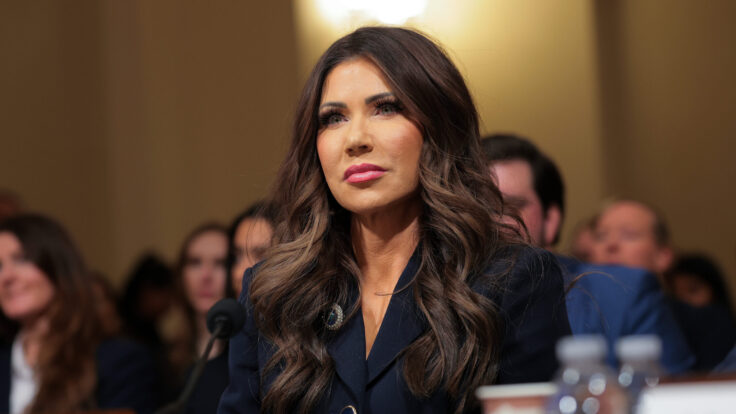
Will Democrats Impeach Kristi Noem?
While House Democrats are divided over how to challenge Trump, leadership is quietly building a case against the Homeland Security secretary—beginning with potential shadow hearings, outside the official committee structure, that would gather the evidence against her.
Tulsi Gabbard
Julia Ioffe • March 8, 2023
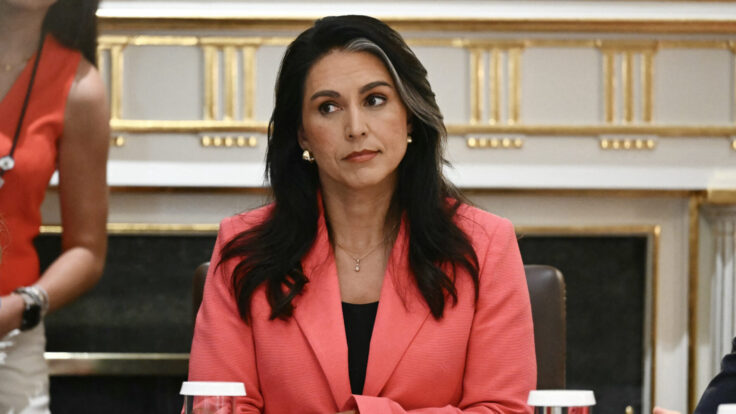
The Havana Hangover
After years of denials, Washington is finally reckoning with new reporting that would seem to confirm the existence of the alleged Russian directed-energy weapon that causes Havana syndrome—or what the U.S. government now calls “anomalous health incidents.” But will Tulsi Gabbard be allowed to release the O.D.N.I.’s own findings?


Donald Trump, John Thune
Leigh Ann Caldwell • March 8, 2023
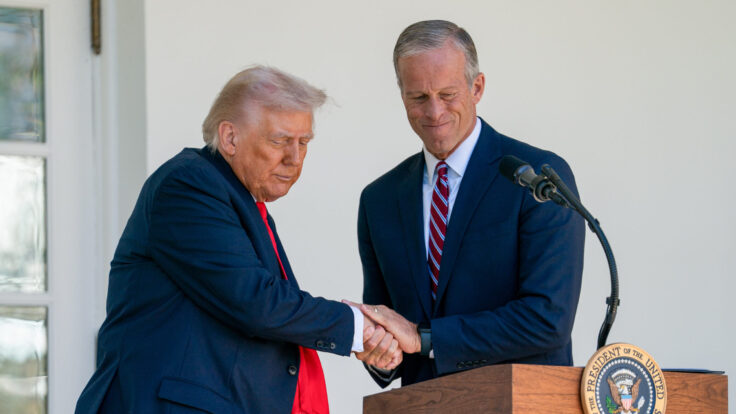
John Thune Has the Hardest Job in Washington
Can the Senate leader preserve his majority, manage his members’ competing agendas, and protect his institution—all while placating the president?


Get access to this story

Enter your email for a free preview of Puck’s full offering, including exclusive articles, private emails from authors, and more.

Verify your email and sign in by clicking the link we just sent.

Already a member? Log In


Start 14 Day Free Trial for Unlimited Access Instead →


Latest Articles from Washington

minneapolis ice shooting protests
Peter Hamby • March 8, 2023
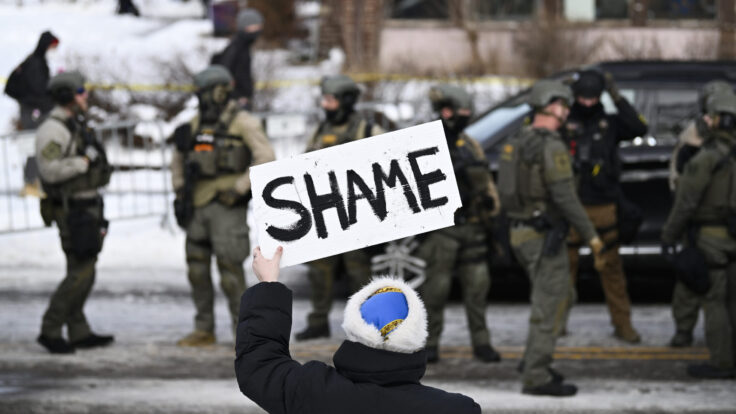
Support for ICE Is Collapsing
Outside the right-wing echo chamber, polls tell the true story of an unprecedented drop in support for Trump’s immigration agency, which has swung 30 points in 12 months.
Nancy Pelosi
Abby Livingston • March 8, 2023
Pelosi Succession Chatter & Gavin-mander Aftershocks
Nancy Pelosi’s retirement in San Francisco, an Obama alum’s generational challenge in L.A., and a redrawn Orange County could end careers and launch new California stars.
Rand Paul, Lindsey Graham
Leigh Ann Caldwell • March 8, 2023
The Ballad of Rand & Lindsey
The changing definition of “America First” has exploded tensions between two senators at opposite ends of the conservative foreign policy spectrum: the libertarian Rand Paul and the interventionist Lindsey Graham. If Paul won the ideological battle in the first term, Graham seems to have Trump’s ear in the second.


Nancy Pelosi, Hakeem Jeffries
Abby Livingston • March 8, 2023
The Wolves of First Street
The once quixotic, bipartisan crusade to ban congressional stock trading is gaining real momentum—but in the least productive Congress in history, getting Washington’s best-informed traders to give up their Robinhood accounts may be a long shot.
Lew Olowski
Julia Ioffe • March 8, 2023
The Big Olowski Has Left the Building
Lew Olowski, the State Department’s wacky, polarizing head of H.R., is said to have imploded at his farewell party when he learned that he wasn’t getting a coveted assignment.
Donald Trump
Leigh Ann Caldwell • March 8, 2023
Trump’s Mile-High Revenge Tour
The president’s bizarre decision to wage a retaliatory political war on Colorado—including the MAGA stronghold that elected Lauren Boebert—could wind up costing him the House.


trump supporters gen z young men voters
Peter Hamby • March 8, 2023
Manospheres of Influence
The disaffected young men who helped elect Trump are fed up with high prices, worried about A.I., and frustrated by the president’s neocon turn. And, according to exclusive new polling data, they’re souring on Trump just as they turned on Joe Biden.
Get access to this story

Enter your email to get access to one article and free previews of our private emails from Puck authors and editors.

OR

Already a Member? Sign in


Latest Articles from Washington

Donald Trump
Julia Ioffe • March 8, 2023
Neocon Don
Trump’s largely consequence-free projection of military power in Iran and elsewhere laid the groundwork for last weekend’s shocking action in Venezuela—and validated a new framework for MAGA-style interventionism. But what happens when Xi starts playing by the same rules?
Mike Johnson chuck schumer Hakeem Jeffries
Leigh Ann Caldwell • March 8, 2023
The Four Horsemen of Capitol Hill’s Apocalypse
A close look at the challenges, opportunities, and curveballs awaiting the Big Four congressional leaders in the new year: the M.T.G. mutiny, G.O.P. majority shrinkage, another shutdown, A.C.A. headaches, and Trump.
Ezra Klein
John Heilemann • March 8, 2023
The World According to Ezra
The Times columnist, podcast impresario, and would-be Democratic Party uber-reformer recaps the past year in politics—and explains why, despite his ongoing sense of alarm, he’s closing out 2025 feeling moderately hopeful.


april McClain Delaney
Abby Livingston • March 8, 2023
The Real House Members of Potomac
Ready or not, the midterm primary season is just days away. And, as analyst Jacob Rubashkin explains, just about anything can happen… including a congressional surprise in Texas and a Senate upset in Michigan.
Republicans
Leigh Ann Caldwell • March 8, 2023
The G.O.P.’s Midterm Polling Paradox
A few months ago, Republicans thought they had the country on autopilot. Now the party is stuck with a souring economy, beholden to Trump for turnout—whether they like it or not—and staring down an increasingly unpredictable midterm map.
Jim McDonnell
Peter Hamby • March 8, 2023
The ICE Storm
A candid conversation with L.A. police chief Jim McDonnell about the complicated reality of ICE raids, hyperbolic crime narratives, and preparing for the World Cup and 2028 Olympics in the second Trump era.


Dan Goldman
Abby Livingston • March 8, 2023
“The Mini Mamdanis Are Coming”
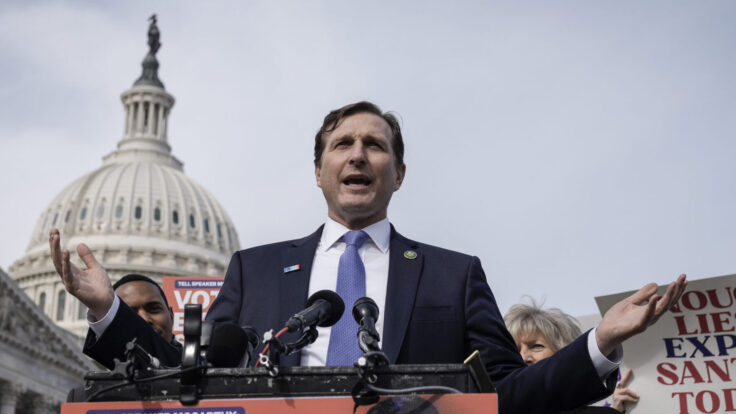
Dan Goldman, the popular resistance-lib congressman repping downtown Manhattan and much of brownstone Brooklyn, was a star on MSNBC. But in a year in which his rival was just endorsed by Mayor-elect Zohran Mamdani, Democrats fear he could be among the biggest names to fall in a Tea Party–style reckoning.


  • Terms
  • Privacy
  • Contact
  • FAQ
  • Careers
© 2026 Heat Media All rights reserved.
Create an account

Already a member? Log In

CREATE AN ACCOUNT with Google
OR YOUR EMAIL

OR

Use Email & Password Instead

USE EMAIL & PASSWORD
Password strength:

OR

Use Another Sign-Up Method

Become a member

All of the insider knowledge from our top tier authors, in your inbox.

Create an account

Already a member? Log In

Verify your email!

You should receive a link to log in at .

I DID NOT RECEIVE A LINK

Didn't get an email? Check your spam folder and confirm the spelling of your email, and try again. If you continue to have trouble, reach out to fritz@puck.news.

CREATE AN ACCOUNT with Google
CREATE AN ACCOUNT with Apple
OR USE EMAIL & PASSWORD
Password strength:

OR
Log In

Not a member yet? Sign up today

Log in with Google
Log in with Google
Log in with Apple
Log in with Apple
OR USE EMAIL & PASSWORD
Don't have a password or need to reset it?

OR
Verify Account

Verify your email!

You should receive a link to log in at .

I DID NOT RECEIVE A LINK

Didn't get an email? Check your spam folder and confirm the spelling of your email, and try again. If you continue to have trouble, reach out to fritz@puck.news.

YOUR EMAIL

Use a different sign in option instead

Member Exclusive

Get access to this story

Create a free account to preview Puck’s full offering, including exclusive articles, private emails from authors, and more.

Already a member? Sign in

Free article unlocked!

You are logged into a free account as unknown@example.com

ENJOY 1 FREE ARTICLE EACH MONTH

Subscribe today to join the inside conversation at the nexus of Wall Street, Washington, A.I., Hollywood, and more.

START 14-DAY FREE TRIAL

  • Daily articles and breaking news
  • Personal emails directly from our authors
  • Gift subscriber-only stories to friends & family
  • Unlimited access to archives
  • Bookmark articles to create a Reading List
  • Quarterly calls with industry experts from the power corners we cover