 |
 |
|
Happy Wednesday, and welcome back to Dry Powder.
|
|
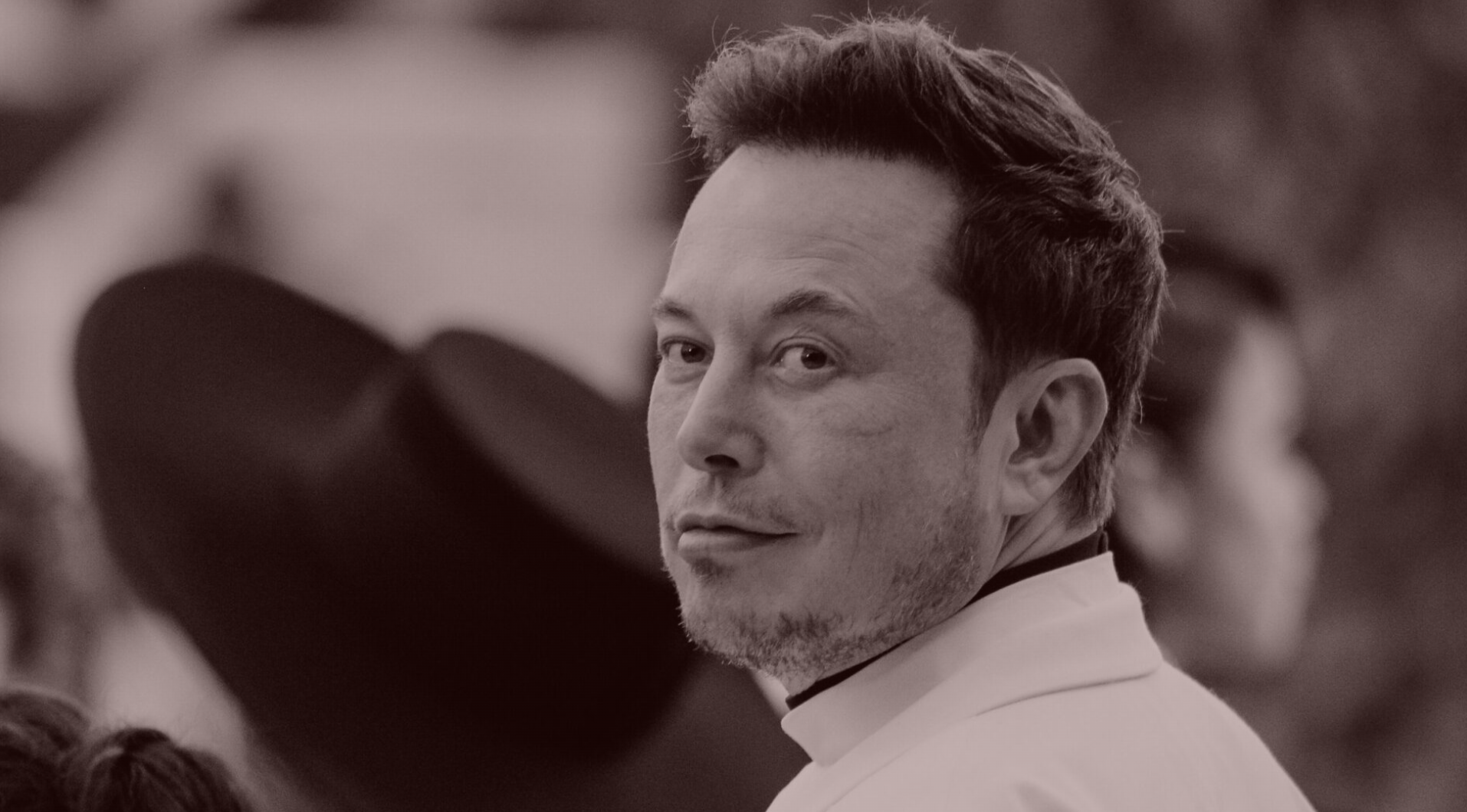
It’s been six long months since Elon Musk, the world’s richest man, agreed to buy Twitter for $44 billion dollars. The intervening period has been, to put it mildly, a massive shitshow, to a degree rarely seen on Wall Street or anywhere else for that matter. But now Musk has ended up back where he started. In today’s email, I tabulate the winners and losers of Elon’s abrupt about-face, and consider what comes next for the social media company. The circus is just getting started.
Bill
|
 |
| Studio $54.20 |
| A close reading of the most insane acquisition of our age: why Musk capitulated, the banks who scored, and who’s left holding the bag. |
|
|
|
| It took Elon Musk six months to get back to exactly where he started: He will now be buying Twitter for the same $44 billion, or $54.20 a share, that he agreed to—legally, morally, and contractually—on April 25. What a long, strange trip it’s been! However Elon came to his senses—did Ari intervene? Or Egon? Or did Alex Spiro, his attorney at Quinn Emanuel, finally get through?—it’s incontrovertible that he was going to lose in the Delaware Court of Chancery, when and if the trial began on October 17. He was wise, in the end, to make this go away before other embarrassing revelations could emerge during his upcoming deposition or at the trial. As Kara Swisher told me late yesterday about Elon, “He may be arrogant, but he’s not dumb.”
That’s right, in my opinion. I do wonder, though, why Elon stuck to his offer of $54.20 when he almost certainly could have bought the company for less, maybe a meaningful amount less, given the overall decline in the financial markets since April 25, and especially given the declines in closely related technology stocks. (Snap’s stock, which had traded pretty much in tandem with Twitter over the past year or so, is down by two-thirds since April 25, when Twitter’s stock price was effectively frozen in a relatively narrow band.) Elon could have easily reduced his price to something in the mid-$40s per share, say, and the Twitter board would probably have had little choice but to accept his lower offer. Even at a valuation of $35 billion, as opposed to $44 billion, the Twitter board would have been hard-pressed to claim a value of 35 times EBITDA for Twitter was not “fair” to Twitter shareholders.
But Elon didn’t do that. By circling back to the original deal, he’s saved himself a boatload of grief—legal, financial and emotional. The Twitter board has already approved $54.20 a share so it does not have to be consulted again. It’s been iced, effectively, at the moment. The judge in the Delaware case, Kathaleen St. Jude McCormick, should have little trouble agreeing to the one stipulation that Mike Ringler, Elon’s attorney at Skadden Arps, put on the table—that the lawsuit between Twitter and Elon be stayed and the trial adjourned—to close the deal on the original terms. I’m not a lawyer or a judge but I think that’s going to be pretty much of a no-brainer for McCormick. So the dueling lawsuits and the trial are likely moot now too. |
| ADVERTISEMENT |
 |
| Future surgeons will get hands-on practice in the metaverse.
Surgeons will engage in countless hours of additional low-risk practice in the metaverse.
The impact: patients undergoing complex care will know their doctors are as prepared as possible.
The metaverse may be virtual, but the impact will be real.
See how Meta is helping build the metaverse. |
|
|
|
|
| It’s impossible to read Elon’s mind, but it seems like his willingness to close on the original terms came down to a fundamental calculation. He was almost certainly going to lose in court, so either he would have had to follow through on the original deal anyway or McCormick’s judgment would have kicked off a convoluted and elaborate effort to try to settle for something less. I have previously posited that it might have been $5 billion, or five times Twitter’s annual EBITDA of around $1 billion. That kind of money would have given Twitter half a decade to try to figure out how to become a real company.
But this ultimate outcome leads me to believe that the potential settlement number would have had to be higher. My friend Scott Galloway has suggested that a more appropriate settlement would have been along the lines of the difference between the roughly $32 billion value that Twitter has been trading for lately (before yesterday’s bombshell) and the $44 billion that Elon agreed to pay on April 25, or some $12 billion, to make Twitter shareholders whole, or nearly so. Perhaps Prof G was closer to being right than I was about the size of the settlement. According to my thinking, Elon probably figured he’d be better off actually owning the company than burning up 30-something percent of its market value without getting anything in return. Better to get an asset, especially when he could also use other people’s money, as well as his own, to buy it.
And that’s one of the underappreciated points of this deal. Of the $44 billion that Elon has agreed to pay for Twitter, $12 billion of it is coming from his Wall Street banks, led by Morgan Stanley (more on this in a minute). Then there’s the $33 billion of equity that Elon has agreed to pony up. That’s a lot of equity, more equity than one individual has ever committed to putting into one deal—a leveraged deal, no less—even for a guy worth an estimated $230 billion these days, according to Bloomberg. But recall that Elon is not putting up the whole $33 billion himself. He corralled some 18 other investors, including Larry Ellison ($1 billion) and Marc Andreesen at a16z ($400 million), to fork over $7.14 billion of the $33 billion he pledged to provide. That leaves a roughly $26 billion check for Elon. And since Elon already owns 73.12 million shares, that’s $9.2 billion of stock he doesn’t have to buy at $54.20 per share. He can just cancel those shares, in one way or another.
So, continuing this math, Elon could either pay the Gallowayian $12 billion-or-so for nothing, with some manageable headaches along the way, or instead pay another $5 billion or so ($33B - $7.14B - $12B - $9.2B) and then own 78.8 percent of a private Twitter and control everything about it, including whether to allow Donald Trump back on the platform, instantly making him someone that world leaders must deal with, which potentially boosts his other businesses. For another two percent of his net worth, Elon probably preferred to control one of the world’s most important social media platforms, however flawed. Why the heck not do that? And by agreeing to pay the original price, the lawsuits go away, the depositions stop, any additional embarrassing texts disappear. |
|
|
| The biggest winners, by far, are Twitter shareholders, the biggest of which (excluding Elon, who is the largest shareholder) appear to be Vanguard, BlackRock, State Street, and Fidelity. They will get $54.20 a share in cash, or 44 times EBITDA. That’s an astounding price in this market, at this time. Given that these four big shareholders are fiduciaries for tens of millions of everyday Americans, this has got to be considered a major victory for many of us, especially given how rocky the stock market has been in 2022.
The other big winner here is the Twitter board of directors, which has acquitted itself in textbook fashion. At the outset of this fiasco, the Twitter board was widely lambasted for letting Jack Dorsey run the company for years on auto-pilot (and abroad, and while running another public company) and having very little economic stake in its financial future. But it has handled itself admirably in these intervening months. Its company wasn’t for sale, but once Elon put the company in play, it managed the situation professionally and nearly flawlessly. Kudos to Bret Taylor, the C.E.O. of Salesforce, who has enhanced his reputation through this process and will no doubt be a highly-sought board member moving forward. Kudos also to the Twitter professionals who guided the board through these rocky shoals: the inevitable Goldman Sachs, as well as JPMorgan Chase and Allen & Co., as well as the law firms, Simpson Thacher; Wilson Sonsini, and Wachtell Lipton.
Twitter’s financial advisors are also going to do fine. Goldman, as always, is the biggest winner. It will pocket $80 million in fees, according to the Twitter proxy statement about the deal, for advising the Twitter board to do the obvious thing and take Elon’s money. Had the deal not closed, Goldman would have only received $15 million. JPMorgan Chase stands to make $53 million upon close. (It would have made only $5 million if the deal collapsed, or somehow dies again.) The Twitter proxy statement only mentions Allen & Co. once and does not mention what the firm did for Twitter or what it will get paid. Law firms, of course, usually get paid for the work they do along the way, regardless of success, so either way they get their millions. It’s possible the more creative Wachtell, which is fashioned more like an M&A boutique than a traditional law firm, might have structured its fee agreement based on winning the Delaware litigation, or making it go away.
The other winners in this saga are the Wall Street arbitrageurs who bought the Twitter stock after the two sides agreed to a deal on April 25 and then held on for the $54.20 in cash, at least the ones who didn’t freak out during this insane roller coaster ride and sell. Assuming they bought in the $49 per share region, which was where the stock sat in the days after April 25, and held on through thick and thin, they’ll make $5 a share for six months of white-knuckling. Not a fortune by any stretch but a positive outcome in a rocky market. And it could have been much, much worse, and until yesterday it was going to be. |
| ADVERTISEMENT |
 |
|
|
|
|
| Among the big losers in the Twitter deal, ironically, are the banks working for Elon that agreed to provide the $13 billion in senior debt financing for the buyout: Morgan Stanley in the lead, followed by Bank of America, Barclays, MUFG, BNP Paribas, Mizuho, and Société Générale, among others. Morgan Stanley, Bank of America, and Barclays will get something like $55 million in advisory fees, according to Refinitiv estimates. Morgan Stanley will get the bulk of that money, and can use that and other underwriting fees on the $13 billion to offset what will likely be the substantial losses they will absorb when they sell the debt.
It won’t be as bad as what many Wall Street banks just absorbed on the Citrix deal, or likely will be facing on the upcoming Neilsen or Tenneco buyout financings, but it won’t be great either. The problem for these big banks, as it was in the Citrix deal, is that the debt was committed when interest rates were much lower than they are now. The interest-rate caps put on the financing back in April are likely much lower than the interest rate that investors will be demanding to buy the debt from the underwriters. That means that the underwriters—the big banks—will have to sell the debt at a discount to get it off their balance sheets, where it will just gum up the works if it remains. So it pretty much has to go. We’ll see what the discount turns out to be…
Fortunately for Morgan Stanley et al., Elon has done them at least a partial favor. This is not a traditional leveraged buyout. Elon and his other investors are ponying up 75 percent of the purchase price. A capital structure comprising 25 percent debt and 75 percent equity smacks more of investment grade than junk. That will help the banks sell the debt at a smaller discount than if Elon had put up less equity. (Citrix was much more levered and the discount out on the senior debt to sell it was about 16 percent.) For giggles and grins, let’s say the senior debt, which will be secured by Twitter assets, has to be sold at 95 cents on the dollar, or a 5 percent discount to par. Five percent of $13 billion is $650 million. That’s going to sting, I’m afraid, especially in what has turned out to be just an awful year for Wall Street in the leveraged loan markets. The irony of losing when supposedly you win has got to be a bitter pill indeed. I doubt there is a lot of rejoicing today over at Morgan Stanley headquarters at 1585 Broadway.
But the biggest losers by far in the Twitter deal, in my estimation, are the executives and employees at Twitter. It’s certain that Parag Agrawal, the C.E.O. will be gone. As for Ned Segal, the C.F.O. and other top executives, only Elon knows. But if I were them, I’d be looking for a new job right about now. Then there are the thousands of Twitter employees—more than 7,000 of them—who have had to endure this drama and await the uncertainties of the Musk regime. Could it be a better Twitter? I guess that’s possible. But absent the guardrails of public ownership—no public shareholders, no board of directors accountable to them, no publicly traded stock—Twitter could become the embodiment of Elon Musk and that’s a fairly scary proposition, all things considered.
The other big losers here are, of course, all of us. One of the best things that Twitter did in the weeks after January 6 was to kick Trump off the service. To be relieved of his constant badgering and mindless drivel has been a blessing in our otherwise challenging era. The return of Trump to Twitter, which Elon previously announced, is the last thing we need. The only silver lining there: while Twitter’s shares shot up more than 20 percent yesterday on the news of Elon’s return to the field, the shares of Digital World Acquisition Corp., the SPAC that supposedly will be acquiring Trump’s Truth Social, his pathetic alternative to Twitter, fell 5 percent, another likely victim of Elon’s long, strange trip. |
|
|
|
| FOUR STORIES WE'RE TALKING ABOUT |
 |
|
 |
|
 |
|
 |
| Trump vs. CNN |
| Dylan joins Peter to discuss Trump’s bizarre new litigation against CNN. |
| PETER HAMBY & DYLAN BYERS |
|
|
|

|
|
|
| You received this message because you signed up to receive emails from Puck
Was this email forwarded to you?
Sign up for Puck here
Sent to
Unsubscribe
Interested in exploring our newsletter offerings?
Manage your preferences
Puck is published by Heat Media LLC
227 W 17th St
New York, NY 10011
For support, just reply to this e-mail
For brand partnerships, email ads@puck.news |
|
|