{{ 'now' | timezone: 'America/New_York' | date: '%b %d, %Y' }} |
|
|
Welcome back to The Hidden Layer. I’m Ian Krietzberg, still in North Carolina,
waking up to the views of the ocean, a bagel and lox, and a rousing game of chess. Nothing quite like a family vacation.
Of course, rust never sleeps in the newsletter game. In today’s issue, I talk to a couple of generative A.I. companies who are selling a more hopeful vision for Hollywood—one where cheaper VFX allows more people to make more movies.
But first… |
Will Smith has decided to restart his rap career, and it looks like he used generative A.I.
to help things along by populating a promo video with legions of cheering fans. Unfortunately, the entire internet caught on pretty quickly (something about all those melting faces must have given it away). Now, he’s got another P.R. crisis to deal with… [Fortune]
Starting next month, Anthropic will begin training its Claude language
models on chat transcripts and coding sessions, unless users specifically opt out by September 28. It marks a pretty significant shift in how Anthropic approaches user data, but is emblematic of the growing pressures to consistently release better models—and the constant hunt for new inputs. [The Verge]
Nvidia, perhaps
the most significant bellwether of this A.I. investment cycle, reported earnings last night that, yet again, beat expectations—though margins have gotten a lot thinner than they were in 2023. Still, investors viewed it as a moment of validation for the A.I. boom, and the S&P 500 rose to a new record high on Thursday—despite some possible red flags. For one, data center revenue slightly missed expectations. Also, just two customers accounted for 39 percent of its revenue for the quarter. (Nvidia declined to disclose who they were, though the company does much of its business with Microsoft, Amazon, Google, and Oracle.) Nvidia’s P/E ratio, meanwhile, is creeping nearer to 60, more than double the S&P average.
[CNBC] |
|
|
Amid all the hyperventilating and legitimate fears over generative A.I., a new wave of
entrepreneurs is creating more specialized, A.I.-fueled VFX tools to empower directors, lower effects budgets, and maybe even help the industry embrace its future. |
|
|
Hollywood, a notoriously labor-intensive creative industry, is experiencing every conceivable emotion over
generative A.I.: fear and loathing, curiosity, cautious optimism, even some twinges of genuine excitement. After all, not every tech entrepreneur is waxing poetic about replacing human moviemaking. Some, like Fable Studio C.E.O. Edward Saatchi, whom I interviewed last month, want to expand the entertainment universe with new forms
of personalized content. Others are looking at how A.I. can make VFX workflows faster and more efficient, dramatically reducing costs so that studios can start releasing more movies theatrically again. (Although, clearly, VFX costs are not the only barrier there.)
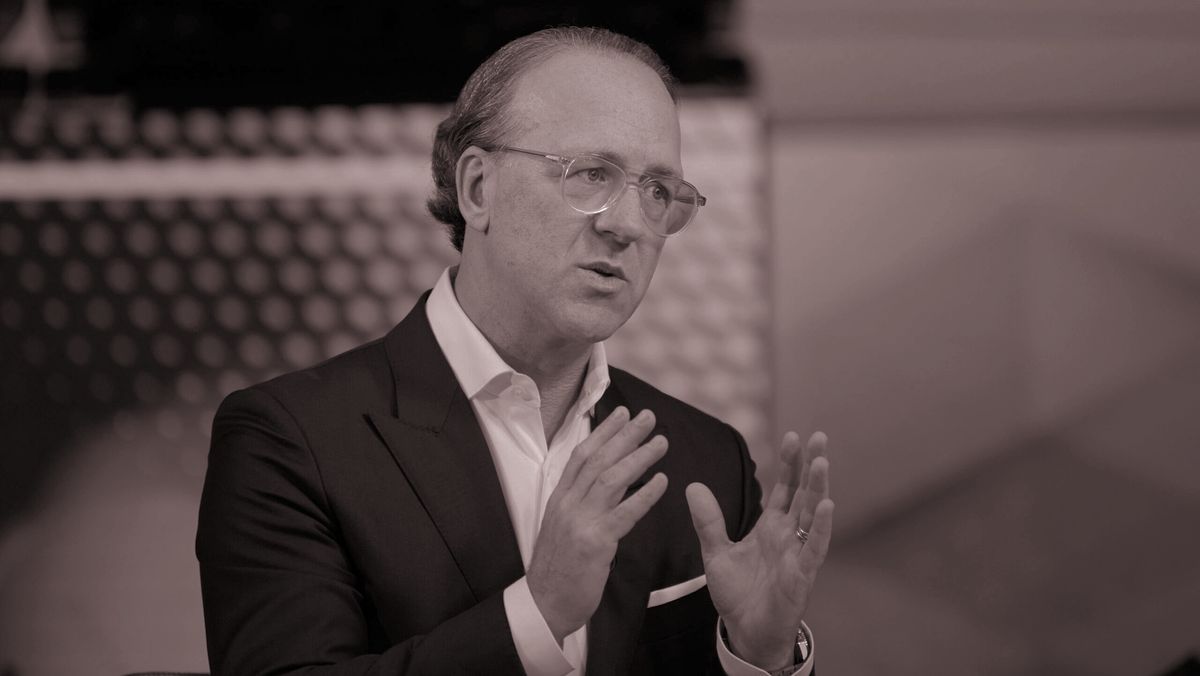
I recently spoke with three executives who say their goal is to help, not hurt, Hollywood: Prem Akkaraju, the C.E.O. of Stability AI, best known for creating one of the first text-to-image A.I. systems; and
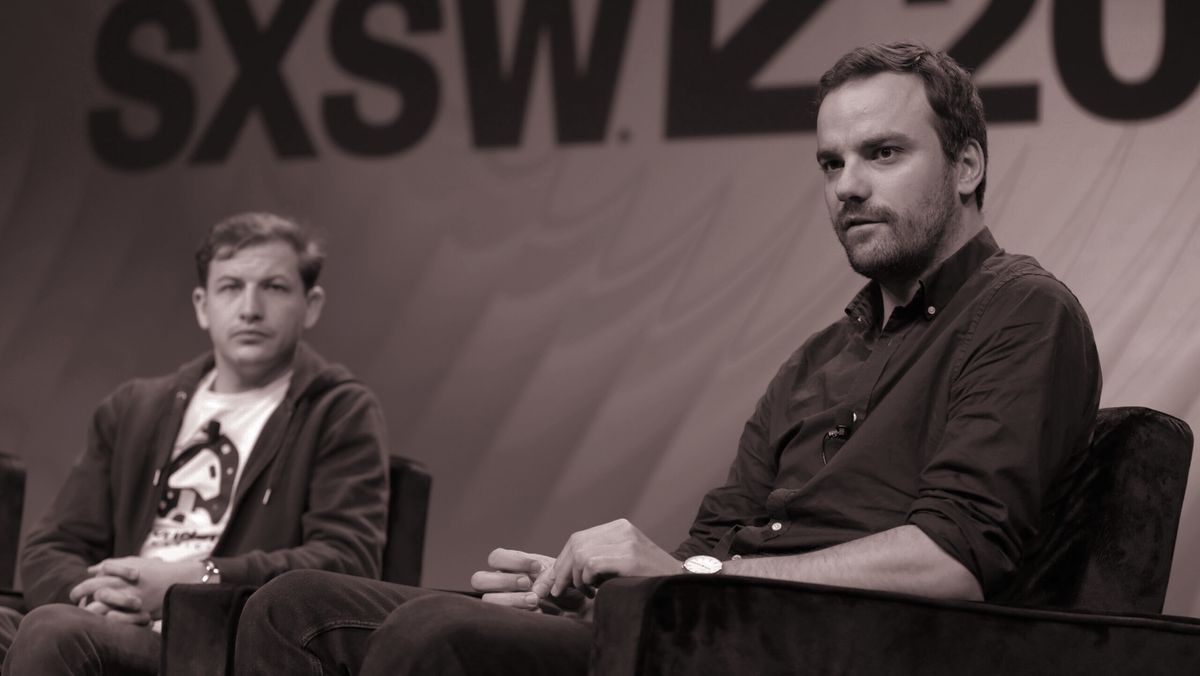
Nikola Todorovic and Tye Sheridan, the co-founders of Wonder Dynamics, which is developing new 3D animation and VFX tools for the industry. Perhaps unsurprisingly, they all offered up a somewhat rosy perspective on the future prospects of the challenged entertainment industry.
Stability AI has endured its own share of challenges. The company is currently embroiled in two landmark copyright
lawsuits—one from Getty and one from a consortium of artists—that are emblematic of broader frustrations in the industry. (Stability has
decided to only train its models on licensed or free-to-use data going forward.) It is also in the process of recovering from years of extraordinary cash burn, which nearly crippled the company and led to the exit of founder and former C.E.O. Emad Mostaque last year. Since then, the company has raised $80 million in fresh funding, secured a $400 million bailout from an investor group led by Sean Parker, and replaced Mostaque with Akkaraju—the former C.E.O. of Weta, the VFX studio best known for its groundbreaking work on the Lord of the Rings trilogy and the Avatar movies. (Filmmaker
James Cameron also joined Stability AI’s board of directors.)
Wonder Dynamics has a Hollywood pedigree, too. Todorovic is a former VFX artist and Sheridan is an actor who starred in Ready Player One. The company, whose A.I. tools are designed to help automate things like motion capture, character animation, and lighting, has
received millions of dollars in funding from the likes of Epic Games, Founders Fund, and directors Steven Spielberg and the Russo brothers. Last year, the company was acquired by Autodesk for an undisclosed sum.
Both interviews, which were conducted separately, touched on a number of intersecting issues regarding the future of VFX and the entertainment industries, so I paired them together. The following, as usual, has been lightly edited for length and
clarity. |
Ian Krietzberg: Often in this industry, we hear that the larger the model
is, the better it will perform. At this stage of the “A.I. revolution,” I’m curious how that observation is panning out for Stability, and what that means for the business.
Prem Akkaraju: What’s interesting is that bigger is not necessarily better, right? The models have gotten bigger, but we’re much more interested in narrow use cases that really have a high degree of utility for professional content creators—film and entertainment, marketing, and advertising and
gaming. So for enterprise-scale utility, that may actually mean a much smaller model. Like a very narrow, very fine-tuned workflow that is delivering a very specific, ultra-high-quality output. Because the more general and larger it is, everything kind of degrades in terms of control and the precision and the prompt adherence.
One example is the rig-removal tool we’re working on. So, you know when you’re watching action movies, a lot of times the actors are tethered to some kind of rig,
and painting those out is a painstaking task by hand, frame by frame. And so we’re working on an automated rig-removal model where the A.I. kind of looks at the scene and automatically knows that this doesn’t belong in the composition of the shot and just removes it. That would be a single case of a narrow A.I. that has a high degree of utility. Another is color correction, something that needs to be done in every film and TV project.
For years, the VFX industry has been dealing
with its own issues with low pay and burnout. What if these tools ultimately exacerbate the problem?
A.I. is the ultimate solution to the visual effects problem, because the visual effects problem is rooted in one thing: the labor and redundancy of what we call needlepoint
work. That ultimately will be greatly accelerated. Why I think this is the solution is because as products become cheaper to make, manufacturers end up making more of that product. If studios can make a $200 million movie look like a $200 million movie, but do it for $100 million, they’re just going to do it more.
So you’re not going to lose your job as a visual effects artist or an animator because A.I. is going to take your job; you’re going to lose your job because
the studio that’s hiring you can no longer afford to hire you at these types of rates. It’s really hard to change the operating cost of a full labor model without the technological efficiencies, and that’s going to empower them to do significantly more. In my experience in visual effects, there’s never been a great apprehension about new technologies being able to do the job, and I think that will continue.
Still, there’s a lot of anxiety that studios are going to use A.I. to cut
jobs. There’s also a growing core of resistance to creative work that’s made with the help of this tech. So where’s the red line around the integration of A.I. into these workflows?
I think in the not too distant future, there’ll be no blurry line. There just will be a combination of your physical production and digital tools that includes A.I. I’m not one of these people who actually believe we’re going to be generating and watching fully A.I. movies. Like, I’m not going to come
home and my wife and I will be like, Okay, we want to see a bad guy movie about gangsters in New York and stuff. No. We’re going to put on a Scorsese movie. I don’t see a future anytime soon where [films are] not being directed by a human being, and where the human is not actually at the center of that storytelling. These are all just tools to enable that storytelling.
A key distinction between [Stability] and everyone else is that we put the creator at the
center, and then we build all the A.I. tooling around that creator to enable their process, not the opposite. A lot of these other A.I. companies, like these big black box models, they do the opposite. They put the A.I. in the center and expect the creative to conform to that new, weird workflow.
What else is not going to change?
I think humans have to write scripts. I think that everything you’ve seen from large language models kicking out scripts is pretty
mediocre. And if there’s one thing Hollywood does not need, it’s more mediocre scripts.
A final question about copyright. I know that at Stability, you’re now talking about an opt-in and licensing regime going forward. And I just wanted to hear from you about the mentality behind that shift and how that would work.
I’m not sure it’s so much a shift as a clarity. With all initial technologies, there’s always this kind of early period where it’s a little bit more of
the Wild West. I think things are becoming much more clear now. We’re certainly supportive of I.P. ownership—we only use either fairly free-to-use or bespoke licenses for our content training. I think that that’s going to be great for artists, not only to monetize their existing works but also to create an unlimited amount of art and work. I describe it as a bionic paint brush. And why wouldn’t an artist want that?
We’re also working with a lot of partners who have their own data, and
we’re creating a lot of custom work for them. So the fidelity of that will go up, materially, with the right raw ingredients. One example is 3D. If you have a lot more 3D assets from an animation company or an animation movie studio, you’re going to be able to have a bespoke trained model for them based on their own high-quality data, rather than using fair-use 2D data that you then interpolate a 3D model from.
Any partners in particular?
We’re doing several of
these. I can’t talk about it publicly right now, but we’re working with major entertainment companies on exactly this right now. |
Ian Krietzberg: Tye and Nikola, obviously, there’s plenty of tension in
Hollywood about the role of A.I. tools. How has your own thinking evolved since founding Wonder Dynamics in 2017?
Tye Sheridan: We always wanted to do big and great things, but felt like we didn’t really have the experience. And there were only a handful of filmmakers that were able to get these huge budgets. And we said, Well, how are we going to do that?
If there was a lightbulb moment, it didn’t happen overnight. Now we’re in the middle of it, and the
industry is trying to figure out how to introduce A.I. in an ethical way. We are artists; we started this to give artists more opportunities. A.I. is so ubiquitous, and can impact an industry in infinite ways, and the mission at the core of the company has always been to allow people to do things they haven’t been able to do before. I want filmmakers and artists to decide how the tools we use are built, not someone outside of our industry.
Nikola, how has the industry reacted to
what you guys are doing at Wonder Studio, specifically?
Nikola Todorovic: We’re a bit different from the kind of traditional text-to-video generative A.I. tools. We’re more focused on, How do we speed up the process of existing pipelines? We’re not trying to change the entire process. We built it to help artists get 60, 70 percent of the way there real fast, and then they can focus on the creative. So we spent a lot of time thinking about how [to] do it without
making this overhyped claim that you’re just gonna click three buttons and have your final shot.
Instead, we were very much focused on an iterative process that happens in filmmaking, which is editability. Right now with A.I., it’s a little bit of a black box; you generate a shot, but you can’t really edit fine details. You can’t move a camera by an inch, or have this performance change by a little bit. That’s really what directors like. So we built it in a way that gives you a lot of
elements in 3D space. We give you a camera, animation, character lighting, all this information that you can then go into software, like you would traditionally do, and then edit on top of that.
So you’ve gotten more buy-in from the industry because you’re building tools with traditional filmmakers in mind.
We built it with artists in mind. Before we launched, we worked with the Russo brothers, and that really helped us to understand what data you need as an artist
out of this A.I. system so that you can control it completely. Also, I was originally a VFX artist and a supervisor; Tye is an actor and producer. So we really built Wonder with that mindset—not that everything is going to change completely, but that it’s a gradual process.
We didn’t want to get rid of that movie magic. So we’re not generating a shot. You still shoot your shot. Actors still do the performance, because you can’t prompt the performance. Same with creating a character; we’re
not generating a character. It’s still an artist that’s rigging and creating that character.
So we were very cautious about it and conscious about our approach. I really don’t want to be in the future where actors are going to sell their likeness, and everything’s going to be generated; nobody’s going on set, and we’re watching synthetic actors. To me, that would be a failure. |
That’s all for today. I’ll see you next week.
Ian |
|
|
Join Emmy Award-winning journalist Peter Hamby, along with the team of expert journalists at Puck, as they let you in on the
conversations insiders are having across the four corners of power in America: Wall Street, Washington, Silicon Valley, and Hollywood. Presented in partnership with Audacy, new episodes publish daily, Monday through Friday. |
|
|
A professional-grade rundown on the business of sports from John Ourand, the industry’s preeminent journalist, covering the
leagues, players, agencies, media deals, and the egos fueling it all. |
|
|
Need help? Review our FAQ page or contact us for assistance. For brand partnerships, email ads@puck.news. You received this email because you signed up to receive emails from Puck, or as part of your Puck account associated with {{customer.email}}. To stop receiving this newsletter and/or manage all your email preferences, click here. |
Puck is published by Heat Media LLC. 107 Greenwich St, New York, NY 10006 |
|
|
|