 |
|
Welcome back to Dry Powder, I’m Bill Cohan.
|
|
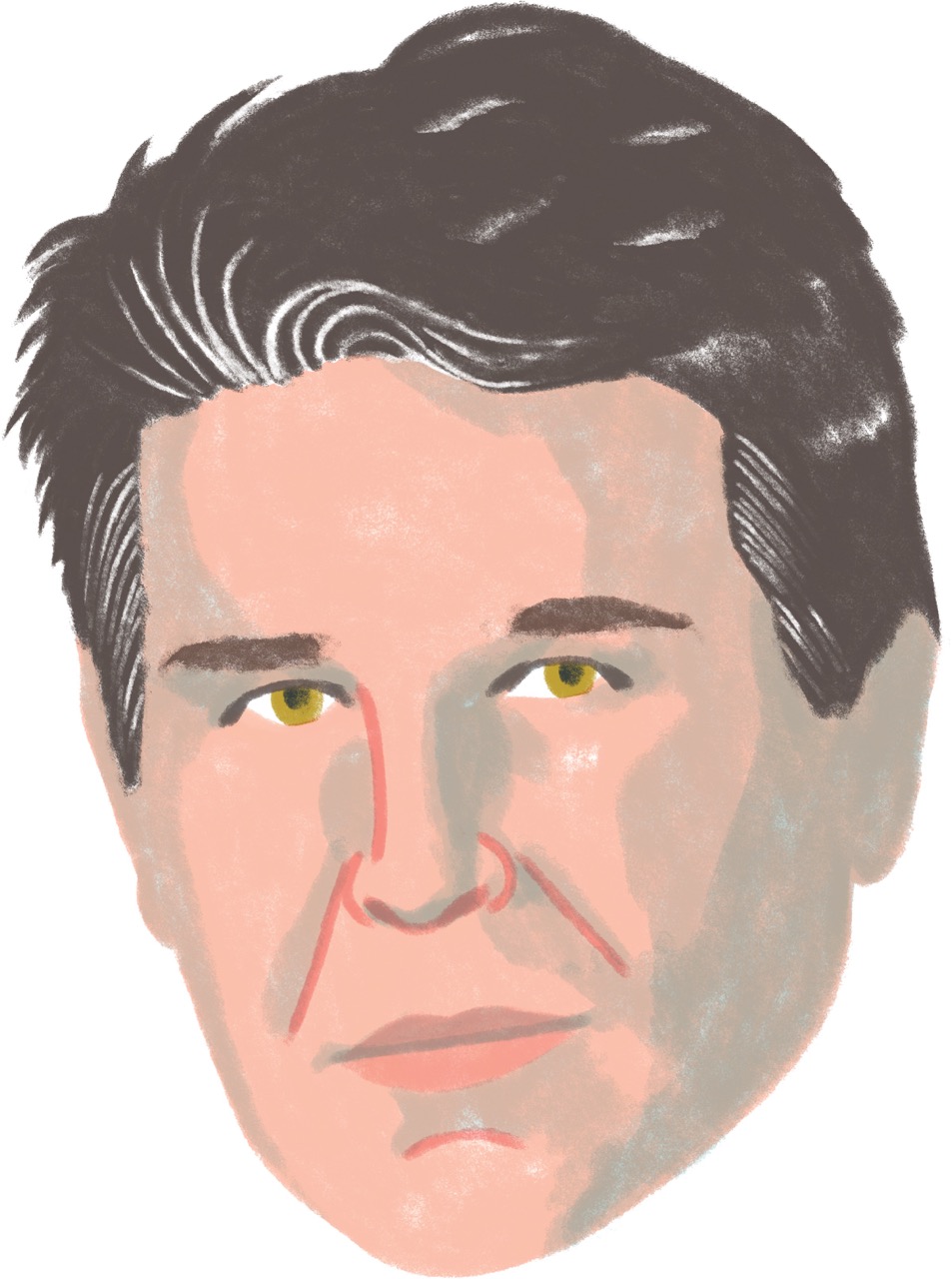
After the collapse of the SPAC frenzy, Bill Ackman is back with a reimagined investment vehicle, and his so-called SPARC is open for business. In today’s issue, notes from my conversation with Bill about the inner workings of his new acquisition machine and why he’s got Twitter/X in his sights.
But first, one quick update before we begin today...
- More Schiele: There’s been a new development in the ongoing story about the restitution of Egon Schiele artworks that were stolen from the Jewish cabaret performer Fritz Grunbaum by the Nazis, prior to his murder at Dachau in 1941. You will remember from my previous reporting that on September 20, Manhattan District Attorney Alvin Bragg restituted seven Schiele artworks from the likes of the Museum of Modern Art, the Morgan Library, and billionaire Ronald Lauder back to the Grunbaum heirs. You may also recall that three art museums did not cooperate with Bragg—the Carnegie Museums, in Pittsburgh; the Art Institute, in Chicago; and the Allen Memorial Art Museum, at Oberlin College, in Ohio—and Bragg ended up seizing the three Schiele artworks in those museums pursuant to a judge’s seizure order.
Now, two of the three museums—the Carnegie Museum, which owned Schiele’s Portrait of Man (1917) and the Allen Memorial Art Museum, which owned Schiele’s Girl With Black Hair (1911)—have agreed to turn over their Schiele artworks to Bragg for them to be returned to the Grunbaum heirs. As a result, the lawsuits against the two museums that the heirs have filed in federal court have been withdrawn. That leaves the Art Institute of Chicago as the lone institution still fighting the Bragg restitution effort.
|
| And now on to the show… |
 |
| Ackman in Full |
| Sure, Bill Ackman knows how to work the media beautifully, as he has many times in his career. But his public promotion of his new SPARC—a sort of SPAC 2.0—isn’t just a tickle: it’s a sign to the market that he’s open for a whale of a deal. And the calls are coming in… |
|
|
|
| The hedge fund manager Bill Ackman has always been a master of media access, perhaps even bordering on media manipulation. He knows how to get publicity on CNBC, mostly good over the years, as he’s weaved his way in and around one minefield (Herbalife) after another (Valeant), despite losing billions of dollars along the way. In the past five years, though, his hedge fund, Pershing Square Capital Management, is up 195 percent, thanks in part to an ingenious $27 million Covid-themed hedge that generated some $3.6 billion in three weeks in and around March 2020. In the same time period, his hero Warren Buffett’s Berkshire Holdings is only up 58 percent. The S&P 500 is up 47 percent. The publicly traded holding company controlled by his nemesis, Carl Icahn, is down 72 percent. So you have to give Bill his props.
During the SPAC renaissance of 2020, he volubly launched his own blank-check vehicle designed to take a private company public through a merger. More than $4 billion poured into the SPAC, Pershing Square Tontine Holdings, much of it from retail investors mesmerized by the possibility that Ackman would land a once-in-a-lifetime deal. Ackman fueled the frenzy by suggesting that he’d approached Airbnb, before it went the I.P.O. route, and Stripe, the payments company, which remains private. (At one point, the media got wind of the fact that Ackman wanted to take a stake in Bloomberg LP.; Bill still will not comment about his desire to buy a minority stake in Bloomberg.) Alas, it was not to be. In July 2022, as the SPAC frenzy faded, the time clock ran out, and Bill closed up Tontine Holdings and returned to his investors the $4 billion he raised. That gambit cost him $35 million in lost underwriting fees.
Now Ackman is back with a new variety of SPAC that he’s calling a SPARC, or “special purpose acquisition rights company,” and he is once again chumming the waters. On Sunday, just two days after the S.E.C. gave its approval to the company, Bill got a huge free advertisement for it by telling The Wall Street Journal that he would “absolutely” want to do a deal using his new SPARC to buy Elon Musk’s private company, X, which the rest of us still call Twitter. That got Bill a whole lot of media attention, of course, including a sit-down Monday morning on CNBC with Andrew Ross Sorkin. Needless to say, Wall Street now knows that Ackman’s SPARC is open for business and on the make for a big deal.
Naturally, Ackman was talking his book on CNBC, as he and other hedge fund managers are wont to do. “I have a lot of respect for Musk,” Ackman told Sorkin about potentially doing a deal for Twitter/X. “I think Twitter is a really important platform. I think he’s made tremendous improvements to the platform. And I think it’s a unique, very-difficult-to-disrupt kind of asset, and one that could grow and he’s obviously going to pursue different lines of business. So, I think it’s quite interesting. I don’t have information on how the business is doing. I have no idea whether he has any interest in doing something.” Ackman said he had not heard from Elon about doing a deal with his SPARC, but that he likes Musk, he likes the business, and he thinks X is an important company.
I called Ackman and we spoke about it, too, both on and off the record. It’s my own analysis that such a deal remains unlikely to happen, as I reported on Sunday. After all, X is probably closer to bankruptcy at this point than to an I.P.O., given that the $31 billion equity in the company has been practically wiped out and the Wall Street banks that hold $13 billion of the Twitter/X debt will have to sell it at a multi-billion dollar loss, unless the financial fortunes of the company change dramatically, and soon—an unlikely scenario.
Then again, a deal with X would make some sense if Elon used Bill’s money in the SPARC to buy back the X debt at 50 cents on the dollar, as I have been suggesting he should for months now. In that case, the transaction would be accretive to Elon’s equity. That might be a win-win.
I asked Ackman if he had additional insight into X’s financial situation, given that Bill’s foundation has a $10 million investment in the company. Typically, information rights are a condition of such an investment, as you would expect. Indeed, Ackman told me he put that provision in the documentation he proposed to Elon as part of his investment. But Elon struck that provision from the agreement, and Bill conceded the point. So he’s flying blind about the financials of X. Go figure. |
|
|
| Ackman has been in the SPAC game for long before it was trendy. Way back in 2011, he and two partners, Martin Franklin and Nicolas Berggruen, created Justice Holdings, a London-based SPAC, and quickly went on the prowl for a private company to buy. A little more than a year later, in April 2012, Ackman found what he was looking for in the portfolio of 3G, the Brazilian-American buyout firm: Burger King. 3G decided to take Burger King public again by merging it with Ackman’s blank-check entity. It became a legendary success on Wall Street.
3G had taken Burger King private in a 2010 leveraged buyout for $4.1 billion, using $1.6 billion of its own equity. At the time, Burger King had one brand—Burger King—and 12,000 restaurants in 70 countries and some $15 billion in revenue. In short order, 3G transformed Burger King into Restaurant Brands International, comprising 30,000 restaurants in 100 countries and some $40 billion in revenue in four brands: Burger King, Popeyes Louisiana Kitchen, Tim Hortons and Firehouse Subs. 3G’s initial $1.6 billion investment turned into some $20 billion, for a profit of $18.4 billion, making it the most successful leveraged buyout of all time. (Take note, Elon.)
Ackman did well, too. Pershing Square, Ackman’s hedge fund, still owns 29 million shares of Restaurant Brands International, worth around $1.9 billion. Ackman told me that he personally invested $20 million in the deal in 2012. Within six months, some $6.5 million of the $20 million was returned to him. He still owns 3.6 million shares, worth $234 million these days. Ka-ching!
Sure, Ackman was less successful in 2021, when Pershing Square Tontine Holdings failed to find a suitable target and was wound up. He and his investors had to eat the underwriting fees he’d paid upfront to raise the $4 billion when he returned the money to his investors. But Ackman is nothing if not creative. As part of the original Tontine Holdings deal, he also invented the SPARC—a sort of SPAC v2, wherein investors will know the merger target before they have to commit their money. There is also no time limit for him to find a company to buy. Ackman wanted a way to give each Tontine investor a tradeable right to buy into the SPARC once the S.E.C. approved the concept.
Unlike with the Tontine, there would be no warrants, no redemption rights, and no need for additional capital from other institutional investors, unless they wanted to invest. There would also be no underwriting fees, saving the SPARC hundreds of millions of dollars. In short, investors wouldn’t have to tie up their money upfront, and Ackman wouldn’t have a gun to his head to make a deal. He hoped his SPARC would change the SPAC game.
After a year, the S.E.C. finally gave its approval last week to Ackman’s SPARC, or more formally, Pershing Square SPARC Holdings, Ltd. What took so long, I wondered? Bill told me that the S.E.C. doesn’t like so-called “blank check” companies in the first place, and then didn’t like SPACs at all (even though it approved hundreds and hundreds of them) and that there would always be more comments from a changing cast of S.E.C. officials.
But, he believes the S.E.C. eventually came around to see his SPARC as a new, more transparent breed of SPAC. “It addresses all of the problems of SPACs,” he explained. “I feel very good about the final product.” The Special Purpose Acquisition Rights, or SPARs—yeah, sorry—will be distributed soon to those equity holders who were still in the Tontine at the time it was wound down in July 2022. It’s a who’s who of the Smartest Guys in the Room, including Guggenheim Partners, Susquehanna Capital, D.E. Shaw, Highbridge Capital, Blackstone and Goldman Sachs, among many others.
So while his public solicitation of Twitter/X might make it seem like Ackman is up to his old media-whipping tricks, his message is actually a simple one: his SPARC is open for business. He’s on the prowl. And thanks to the public markets, he essentially has unlimited capital for a deal to supplement the up to $3 billion that his hedge fund is prepared to invest once he finds a deal that he likes. “We have the entire capital markets as our partner in buying a company,” Ackman told me. “We just have to be the lead and take the risk and do the work. And as long as people agree with our assessment, everyone else will invest. It really is an innovative thing.”
Indeed, he thinks he’s created a free option, either for the investors who get the SPARs, or for other investors who buy the SPARs as they are traded in the market. “They say there’s no such thing as a free option,” he continued. “This is actually a free option. And I think it’s going to be a valuable free option because we’re going to do a good deal.” |
|
|
| In any event, the publicity campaign has worked. Wall Street knows Bill’s acquisition company is open for business. More realistically, he said, the first investment will more likely be for a company in the portfolio of a big private equity firm such as Blackstone or KKR. He thinks it’s a hard time for these companies to go public now, given the choppiness of the market. It’s also a hard time for them to be sold to a strategic buyer, because of the tougher regulatory environment, and it’s a hard time for them to be sold to another private-equity firm because it’s tough to get financing for the deal.
“What’s cool is we can do that,” Ackman said, especially since there are no underwriting fees and no M&A fees (unless bankers bring him the deal, or if they represent the seller). He noted that Pershing gets warrants for up to 5 percent of the stock, struck 20 percent out of the money, based on how much money is raised. But he thinks it’s all a bargain, and the best deal out there for a private company that wants to sell. “It’s the cheapest way to go public,” he explained. “It’s more certain. There’s a guaranteed outcome. The stock is going to trade better because everyone's opting in. And we’re an anchor investor that’s not going to sell.”
He said the only prerequisite for a deal is that it’s a company he likes in an industry he likes. I asked him whether he’d be interested in buying something like ABC or ESPN from Disney, since Bob Iger has been clear about pretty much everything at Disney being for sale. He didn’t like either of those. “It has to be a great business I believe in,” he said.
The preternaturally optimistic Ackman is not the slightest bit concerned he won’t find a deal to do, especially since there is no ticking clock like with his Tontine SPAC and his belief that he’ll have unlimited access to capital. “We’re going to get a lot of inbound calls,” he concluded, before hopping off the phone for a board meeting. “The cool thing is we don’t need to call anyone. They’re calling us.” |
|
|
|
| FOUR STORIES WE’RE TALKING ABOUT |
|
|
|
|
|
 |
|
|
|
Need help? Review our FAQs
page or contact
us for assistance. For brand partnerships, email ads@puck.news.
|
|
You received this email because you signed up to receive emails from Puck, or as part of your Puck account associated with . To stop receiving this newsletter and/or manage all your email preferences, click here.
|
|
Puck is published by Heat Media LLC. 227 W 17th St New York, NY 10011.
|
|
|
|