|
Welcome back to Dry Powder. I’m Bill Cohan.
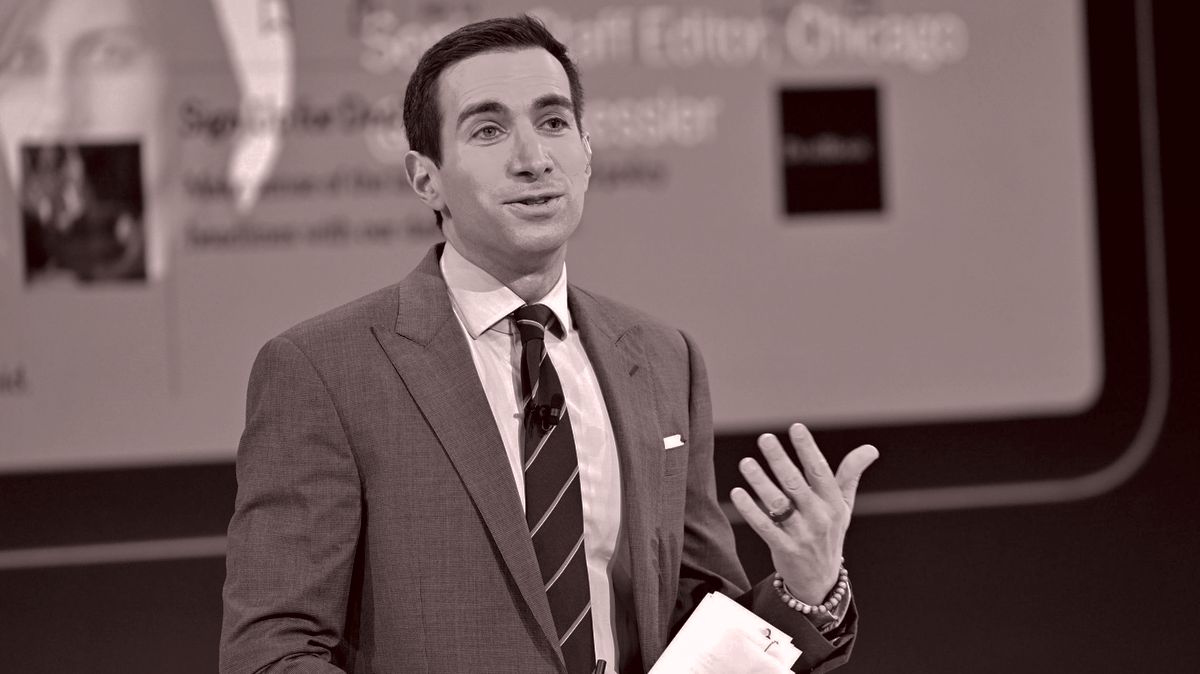
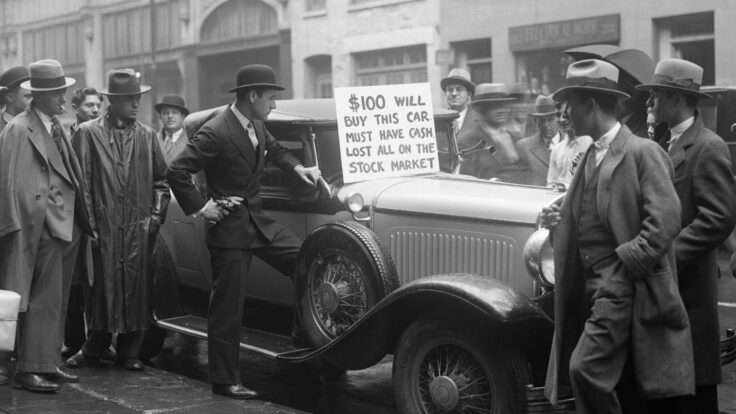
This afternoon, I’m sharing my recent conversation with a guy you all know well: Andrew Ross Sorkin, the DealBook and CNBC impresario, who has just finished a new book, arriving this fall, titled 1929: The Inside Story of the Greatest Crash in Wall Street History, and published by Viking. As a Wall Street historian, and someone with a deep interest in its intermittent corrections, I was eager to talk with Andrew about both that momentous period and the writing process itself. I was especially interested to get Andrew’s take on the parallels between the wobbly end of the roaring ’20s and our currently budding era of oligarchy, of which there are many. (They were talking about tariffs and deregulation back then, too.) More on this below.
But first…
|
- Lutnick family values: Once upon a time on Wall Street, nepo babies were all the rage. The whole idea behind the private Wall Street partnerships of old, such as Lehman Brothers or Lazard Frères, was to keep control of the firms and their hefty economic windfalls inside the founding families. A bunch of actual Lehman brothers ran that place for the longest time. Ditto the Lazard brothers, who founded and controlled the firm before their cousins, the David-Weill family, took control. This sort of intentional nepotism only became unfashionable after the big Wall Street firms started going public—beginning in 1970 with Donaldson, Lufkin & Jenrette—adding outside investors and shareholders, and requiring legit (or legit-seeming, at least) boards of directors to manage all the new capital and competing interests. Suddenly, merit replaced heredity as the determining factor in who should run a firm—and probably for the better. Companies such as JPMorgan Chase (market value $750 billion) are far more profitable and powerful as public entities than they ever were as discrete private partnerships.
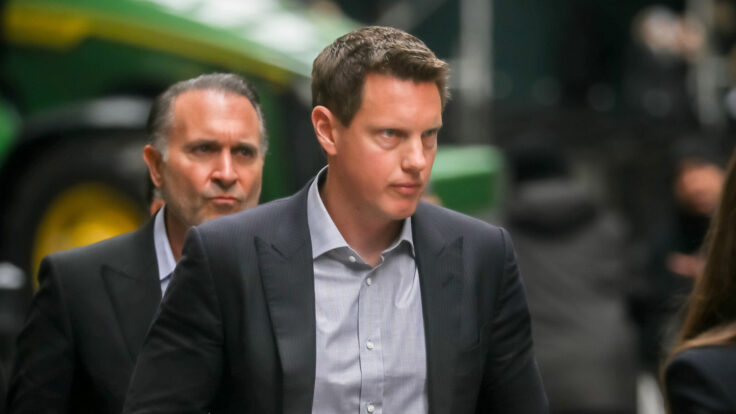
That’s what makes the recent decision by the billionaire Howard Lutnick, the outgoing C.E.O. of Cantor Fitzgerald and Trump’s new commerce secretary, so unusual. On February 18, Lutnick appointed his two twentysomething sons to run Cantor, the privately held, 80-year-old Wall Street brokerage and investment bank that Howard presumably thinks he will return to after his time in Trump’s government is up. The new chairman and C.E.O. of the firm will be Brandon Lutnick, 27, while his 28-year-old brother, Kyle, will be the company’s executive vice chairman. Both sons graduated from Horace Mann and then Stanford.On September 11, 2001, of course, 658 of the firm’s 960 New York-based employees, including their uncle Gary, were killed in the terrorist attacks, wiping out a whole generation of potential leaders of the firm. Apart from being Howard Lutnick’s kid and the new C.E.O. of Cantor Fitzgerald, Kyle’s other claim to fame is as a would-be rapper, aka Kxtz, whose 2018 track “California Roll” includes the boast, “Until I run the game, I’ve got everything to gain.” Well, let the game begin…
|
|
|
|
A MESSAGE FROM GOLDMAN SACHS
|
Tariff announcements have sparked volatility across equity, debt, and currency markets.
However, the implications of policy uncertainty on economic growth, international trade, and inflation are more difficult to parse out.
Listen to the Exchanges podcast from Goldman Sachs on what’s ahead for tariffs — and why it matters.
|
|
|
|
And now, a quick word from my partner Dylan Byers on Disney’s latest negotiations in the streaming wars…
|
|
|
 |
Dylan Byers |
|
- ESPN’s hardball: This week, in what may be remembered as another pivotal regression in Major League Baseball’s retreat from the zeitgeist, ESPN chairman Jimmy Pitaro told the league that his network would be opting out of its annual $570 million contract at the end of this season. Before ESPN’s letter could even be FedExed to MLB headquarters in Midtown, commissioner Rob Manfred was trying to get ahead of the news and put his own spin on the ball. “We do not think it’s beneficial for us to accept a smaller deal to remain on a shrinking platform,” Manfred wrote in a memo to his owners that soon somehow made its way into the digital pages of The Athletic—thereby likely putting the final kiss-off on a relationship that has existed for three and a half decades. Manfred, a former labor lawyer who has been navigating the balkanized sports media landscape, wasn’t quite done. In the extraordinarily chummy and relationships-based world of sports media, he seemed intent on delivering the message that his league didn’t need Disney’s money and that, despite the cratering of the regional sports network industry, he had plenty of options. “Given that MLB provides strong viewership, valuable demographics, and the exclusive right to cover unique events like the Home Run Derby, ESPN’s demand to reduce rights fees is simply unacceptable. As a result, we have mutually agreed to terminate our agreement,” the league said in a statement. This framing was a source of great amusement for executives at both ESPN and rival media organizations—including current and possible future league partners—all of whom knew that it wasn’t quite so mutual.
Continue reading here…
|
|
|
|
And now, my chat with Andrew…
|
|
|
|
The indefatigable Andrew Ross Sorkin spills the tea on his enigmatic and highly anticipated forthcoming tome on the Great Depression.
|
|
|
Andrew Ross Sorkin has been a longtime friend—his mother-in-law lives in my building, he and his family live around the corner, and I’ve contributed a piece here and there to DealBook over the years. I have always marveled at his tireless ability to do it all: boffo New York Times Wall Street reporter turned columnist; founder of DealBook; amazing master of ceremonies and executive producer for its annual conference, Wall Street’s Davos, that never fails to make headlines; and anchor of CNBC’s Squawk Box. Plus, Andrew was one of the creators of Billions on Showtime, which ran for seven remarkable seasons; and, of course, the author of the bestselling blockbuster Too Big to Fail, the inside account of the 2008 financial crisis, which was turned into an HBO movie. Is there any other journalist alive collecting checks from The New York Times Co., Paramount Global, and Comcast at the same time?
As soon as news emerged about Andrew’s forthcoming book on the Great Depression, titled 1929: The Inside Story of the Greatest Crash in Wall Street History, I was eager to chat about the project and how it came together. I first caught wind of the book back in December 2023, but Andrew wasn’t ready to spill the beans. At that point it was still an amorphous work in progress, and he’s too much of a pro to discuss a project prematurely.
Like many of us, Andrew had a vague sense of what occurred during the 1929 crash. He’d read the classics—among them, John Kenneth Galbraith’s The Great Crash and John Brooks’ Once in Golconda. But on a vacation seven or eight years ago, he decided to get more serious, downloading a bunch of books on the subject. Most of them, he said, had an “armchair” quality: they were distant, a tad dry, lacking a crisp, flowing narrative or any feeling that the reader was present while events were unfolding. “I didn’t feel like I had read a true character-driven, narrative ticktock, in-the-room, fly-on-the-wall kind of thing,” he told me. “I was a little surprised. I thought, Maybe someone has written it. But wouldn’t it be really fun to try to figure out if I could do that?’”
Andrew set out to see if he could re-create that inside-the-room feel for the incredible events of 1929. Unlike the 2008 financial crisis, which was playing out before his eyes in real time, the major players from the Depression were long dead. (This comes with its perks, too, as any author knows…) There were plenty of academics to talk to, of course, but he was looking for
the original source material of the people involved—letters, diary entries, memoirs—the stuff tucked away in obscure archives across the country. At times, he doubted if he could find what he needed—the normal authorial anxiety. Unsure of whether he could produce the narrative he wanted, he didn’t even initially sell the book to his publisher. “I didn’t know whether I’d be able to get the sort of granular detail that I was looking for,” he told me.
|
|
|
|
A MESSAGE FROM GOLDMAN SACHS
|
Policy uncertainty driven by tariff announcements has investors reevaluating their strategies.
On the rise: Capitalizing on the upside of the dollar, monetizing volatility, and not losing track of the long equity view.
Hear from Goldman Sachs on the Exchanges podcast.
|
|
|
|
One thing I’ve always admired about Andrew is how modest he is for a guy with such a prominent position in the world of financial news. He discussed the process of researching and writing 1929 with that same kind of humility. He told me that the process was like assembling pieces of an elaborate jigsaw puzzle, any one of which might send him down “these weird rabbit holes.” He’d go to the library at Harvard and just sit in front of a pile of documents: “I was like, ‘Oh, there’s all this stuff that I never read before. This is pretty cool. I can’t believe that there’s a transcript of this phone call with the president.’”
He hoped to get a lot of work done during the pandemic, but it turned out to be more difficult than he thought. As a visiting non-student, he was barred from entering many college libraries. Instead, he paid graduate students, who were in the stacks working on their dissertations, to hunt down documents—a veritable “black market,” he joked. “I used to pay people by the hour to take pictures with their iPhones,” he said, “to document hundreds and hundreds of pages. I created these crazy Dropbox folders, where they would upload the documents to me.” Every upload got the writer’s attention: “These crazy scans would come in, someone would send me 100 pages and I would stop everything. I’d miss dinner for no reason. I’d work on the book on the weekend, when maybe I should be doing something better with the family.” After the pandemic, he returned to the libraries to get the documents himself.
Eventually, the puzzle came together via a few crucial pieces toward the end of the process that unlocked the larger, 400-page narrative. “There are certain characters in the book who have been well reported on over the years,” he said, “but they’ve sort of been reported on in a siloed way. You would read a biography of somebody, but you wouldn’t necessarily have them in the same room with—or even know that they were related to—some other person. But then if you really dig into that person, you discover that they were. That actually was a lot of fun.”
|
Tariffs, Interest Rates & Regulation
|
|
Given everything else he was doing, the work on 1929 was intermittent at best. Every time he sat down to write, he’d need at least an hour of uninterrupted time to figure out what he had been thinking when he last worked on it. “My brain was on everything else,” he said. “I’d be on DealBook all day, or on CNBC stuff, or New York Times craziness, or 100 other things.” There were plenty of stops and starts and dead ends. He’d have thought he’d figured out a scene, or the way the events unfolded, only to discover there was no more thread.
But things really started coming together in the last year or so. “Not only did the pieces start to fit, but I started finding some new pieces,” he said. Eventually, there was an epiphany. “There was a moment where I looked at all the pieces on the table, and I could see how they all connected the way I had hoped.” Andrew told me his experience working on Billions ended up being helpful “in terms of trying to think about the character, and trying to be able to put myself in their shoes. If they had come from [a certain] meeting, what would they have been doing next? Who would they have called next?”
As Andrew navigated his research, he was struck by the parallels between events from a century ago and the present day, particularly how the relationship between the Gilded Age elites and the federal government foreshadowed the power of today’s billionaire class. But there were other similarities as well. “They had many of the same issues,” he said. “We are talking about tariffs today. Well, tariffs were an issue then—Smoot Hawley,” the tariff act of 1930. He continued: “How do you regulate banks or not regulate banks? What should the Federal Reserve be doing? Should they lower rates? Should they increase rates? If they increase rates, are they going to put the economy into a recession, and there are people fighting on all these different sides. It’s all the same stuff.” The Great Crash was not just a story about Wall Street, he concluded, but rather—as with the Great Recession—it was a story about the intersection of Wall Street and Washington.
The book is currently being edited and fact-checked. Andrew is working on the dreaded endnotes, providing the citations for the source material he dug up over the years. Who knows, but it feels like to me 1929 is destined to be a bestseller and a major motion picture. And given all the ways events in the book evoke the events unfolding now, it will be nice to be reminded of how a government and its allied oligarchs approached tough questions about tariffs, interest rates, and regulation once upon a time. The question now is: Can we wait until October? We could really use some historical insights now about what happens when the rich and powerful start running our government.
Over the years that he was engrossed in finishing 1929, Andrew came to have some favorite characters. One was Carter Glass, the U.S. senator from Virginia for whom the Glass-Steagall Act was later named. “He was the Elizabeth Warren of that time,” he explained. “He really did play a uniquely central role in all of the things that happened. He was one of the people who actually was worried about what was going to happen the whole time. And he was right.”
|
|
|
|
An essential, insider-friendly Hollywood tip sheet from Matthew Belloni, who spent 14 years in the trenches at The Hollywood Reporter and five before that practicing entertainment law. What I’m Hearing also features veteran Hollywood journalist Kim Masters, as well as a special companion email from Eriq Gardner, focused on entertainment law, and weekly box office analysis from Scott Mendelson.
|
|
|
|
Puck senior political correspondent Tara Palmeri grapples with the aftermath of what may be the most chaotic and consequential presidential election cycle of our lifetime. With 15 years covering politics, Tara speaks with the smartest political minds to discuss what’s happening behind the scenes in Washington, D.C., from the campaign trail to the Capitol.
|
|
|
Need help? Review our FAQ page or contact us for assistance. For brand partnerships, email ads@puck.news.
You received this email because you signed up to receive emails from Puck, or as part of your Puck account associated with . To stop receiving this newsletter and/or manage all your email preferences, click
here.
|
|
Puck is published by Heat Media LLC. 107 Greenwich St, New York, NY
10006
|
|
|
|