 |
|
Hi you,
It feels really good to be home! I was a little sad not to join the giant summer party in Europe along with every other passport-holding American, but I’ve been traveling locally in L.A. through bars and restaurants, tasting and sipping my way around the world. Outside of delicious calories, here’s what else I’ve been consuming lately:
- Rebecca Traister’s profile of R.F.K., Jr. convincingly argues that the man who leans into an outsider identity is the most insider-y insider who was ever inside.
- The Guardian’s podcast episode on the dual Hollywood strikes features actor Brian Cox in hilarious, sharp, and occasionally profane form.
- Christopher Nolan’s Oppenheimer is a three-hour movie that somehow felt efficiently delivered. I opted for the IMAX experience, and it’s worth it. I’ll probably be writing about the parallels between the atomic bomb and today’s A.I. arms race sometime soon.
- I found the smartest analysis of Barbie on TikTok, where PopCultureBrain finds powerful and hilarious parallels between the toy movie and Black Panther.
- I’m reading my friend Light Watkins’s new book, Spiritual Minimalism. Watkins is a longtime meditation teacher who’s taken the idea of decluttering your physical world to the inner, spiritual place. It’s a physically and spiritually practical guide to simplifying life. Contrary to a lot of spiritual media these days, his book under-promises and over-delivers.
- Finally, I’m taking a moment to remember the life of Charles Ogletree Jr., the renowned Harvard Law School professor, lawyer, and civil rights defender. I never met Ogletree, but several friends and schoolmates at Harvard did, and he was a giant of a man who will be missed.
|
|
|
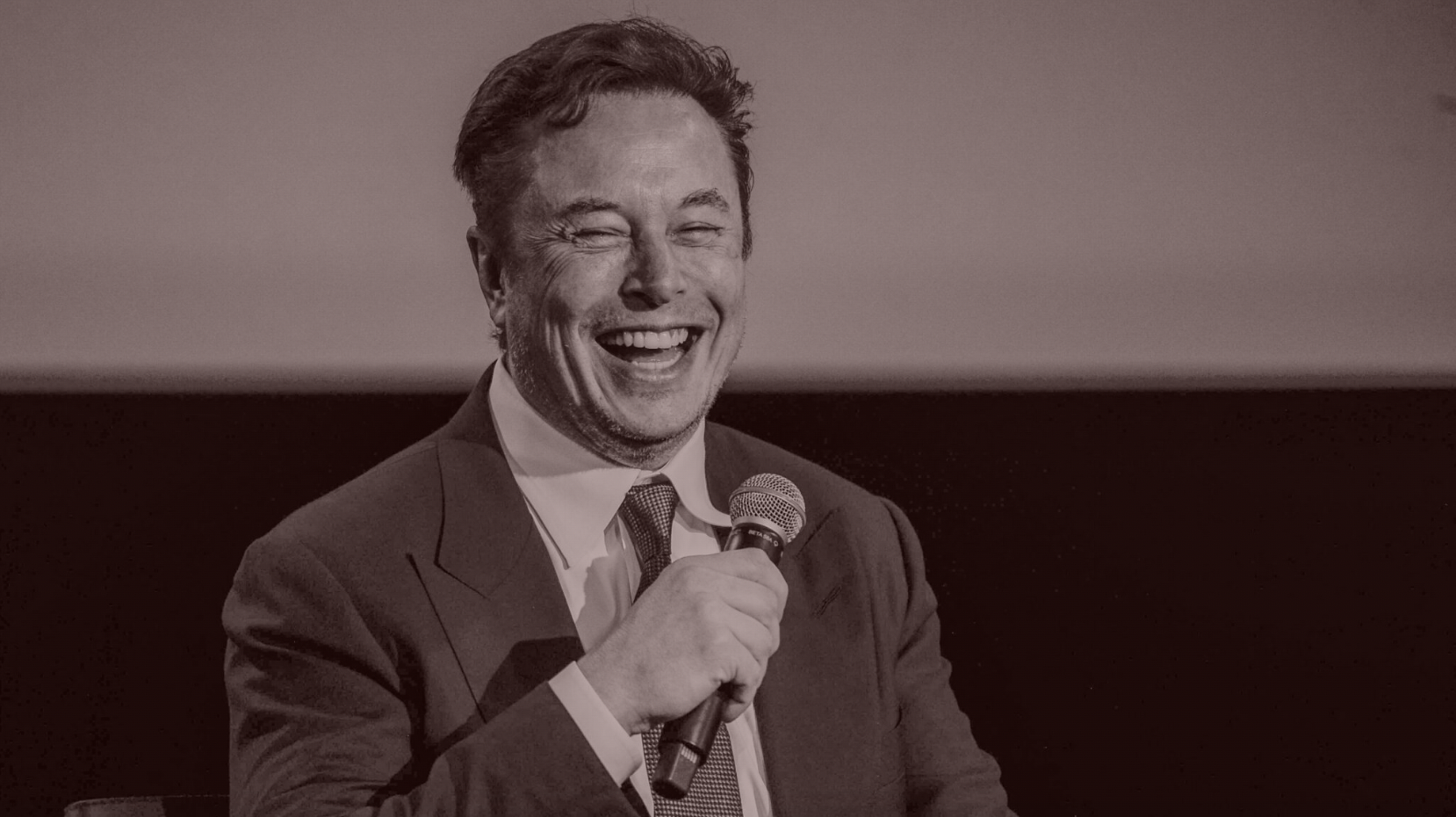
| Has Elon Musk finally taken a meaningful step towards justifying his still absurdly priced $44 billion acquisition of Twitter? Yes, I’m talking about rebranding the platform as X, ostensibly the foundation for creating a “super app” encompassing not just social media, but banking, too. Last year, Musk reportedly told Twitter staff that he was inspired by China’s WeChat, and wanted to transform Twitter into something similar: messaging, video, microtransactions. In other words: One app to rule them all.
For your sanity and my own, I’m going to temporarily set aside my annoyance and deep exhaustion at the latest antics of the owner, including commandeering existing account handles from active users, and take the concept of a super app idea seriously. Is such an app possible in the United States? And would it ever make it past Lina Khan’s F.T.C.?
Superficially, there is a simple consumer appeal to an all-in-one mobile application that offers a wide range of ostensibly unrelated services, bound by common infrastructure. The most prominent example is the aforementioned WeChat, which was launched in 2011 and has grown to 1.3 billion monthly users. For context, China has an estimated population of 1.4 billion people. WeChat users have access, via a single portal, to services as wide-ranging as food delivery, messaging, peer-to-peer payments, ride hailing, healthcare, and so much more. Some of these services are offered natively by WeChat. Others are created by third-parties and offered as “mini-programs” that leverage WeChat’s user data and payments infrastructure. Other regional examples include Gojek in Indonesia, LINE in Japan, and Grab in Singapore. A super app is essentially a one-stop shop for more than just shopping.
Obviously, this kind of single-app experience has not yet taken hold in the U.S., or in other parts of the English-speaking western world. But is it only a matter of time? Musk surely thinks so. Meta C.E.O. Mark Zuckerberg has intimated that’s a direction he’d like to go as well. As someone who previously analyzed digital behaviors in Asia for American businesses, and as a very online person, I find it almost impossible to believe that a super app, even if it made it past regulatory hurdles, would thrive in the U.S. But I do think a consolidation of the user experience in our mobile lives is coming. It just won’t look the way Elon hopes it will. |
|
|
| In countries where super apps exist, they are the result of a unique mixture of cultural, technological, regulatory, and competitive alignments—the necessary prerequisites to create a one-stop shop for the digital needs of a citizenry. But most of the super apps that succeeded launched years ago, in a landscape with far less, or essentially zero competition. For a super app to thrive in the U.S. today, it would have to wrangle meaningful market share from specialized services that consumers rely on, a devilishly difficult task, and one reason that even the most ambitious companies tend to stay in their own lane. PayPal might be dominating the payments game, but I don’t see it successfully taking on dating, messaging, or ride-hailing.
But, if one of the major tech incumbents were to attempt a super app, which would be best positioned? The answer is clearly Meta. Instagram and Facebook both possess robust retail hubs built inside of major social networks, and WhatsApp—which now includes digital storefronts, automated messaging, chatbot integration, messaging analytics and customer support features for businesses—is an underappreciated messaging service, at least in the U.S. But one look at the company’s history reveals a graveyard filled with failed attempts at expansion. (Remember Facebook Dating? No. No, you don’t.) If Meta truly wanted to be the WeChat of America, at this point, it would probably have to outright buy several companies, such as Uber, ZocDocs, Shopify, and more, to fill in the requisite service gaps. And I don’t see Lina Khan greenlighting those combinations anytime soon.
Super apps can be viewed like Swiss Army knives. China has the giant, 73-function version with multiple hex tools and a pressurized ballpoint pen. In the U.S., we are limited to the more modest 18-function knives with one blade, scissors, and a nail file. Uber is a great example. The company offers relatively distinct services across two categories, all within a single app: “Go Anywhere” and “Get Anything Delivered.” The former encompasses several forms of personal transportation, from scooter rentals to car rides to chartered bus reservations; the latter makes it easy to order food, alcohol, groceries, flowers, and pharmacy items. Whether moving people or goods, Uber is making a modest play to be a mobility-focused super app. But there’s a good reason they haven’t tried to expand into moving money via e-payments, or moving hearts via dating. In our context, the most successful companies understand their core competencies and user base and don’t try to mix, say, sports gambling and retirement savings.
Of course, there are two American companies—Apple and Google—that have quietly integrated themselves into our lives like a super app. Both provide common infrastructure for users across apps that leverage payment, location, and identity data. Both offer a range of native apps to cover daily needs including navigation, messaging, and productivity. Both support third-party app developers and extract their app store tax—sorry “fees”—for the privilege. And both offer an operating system alongside a sales platform, capturing virtually all user data and dollars that flow through their systems. That’s a nice position to have, and I understand why Musk and Zuck would want to create that for themselves. Much as it hasn’t panned out, a major driver of Zuckerberg’s pivot to the metaverse was the opportunity to leapfrog Apple’s mobile dominance and be the super platform for a virtual digital ecosystem. Whether you call it a “super app” or a “platform” is a distinction without significant meaning. The goal is to control the ecosystem, and to do that, you’ve got to go beyond the app. |
|
|
| Sure, it’s possible to imagine someone surmounting the significant regulatory and competitive hurdles to create or control a new ecosystem via super app. Or that this person could overcome the security challenges inherent in holding so much user data across multiple products and features. But it’s very hard to imagine that entrepreneur will be Elon Musk. As a leader, he’s proven quite capable of running multiple businesses in the mobility space, but when he added a social network to his portfolio, it was a disaster in every dimension: public relations, financials, information security, human resources, and more. To achieve a super app, he would first have to fix the core product at what used to be called Twitter. Then he would have to build successful adjacent services in deliveries, media streaming, or payments, for example.
Yes, Elon was a co-founder of the original X.com, a digital bank that merged with Peter Thiel’s Confinity to form PayPal—a line on his C.V. that gives him at least some credibility when it comes to payments—but that was a long time ago. Today, that sector is also saturated with the likes of Square, Venmo (now owned by PayPal), Zelle, and Apple Pay, all of which have far more engineers and employees and none of the liabilities that come with being the number one destination for public shitposting.
Musk doesn’t have to build a payments platform from scratch. He could, conceivably, lure the existing players into offering the WeChat equivalent of “mini-programs” inside his X ecosystem. But that requires trust he hasn’t earned from end users or third-party operators. X recently offered its most committed users, those willing to pay a subscription fee for the service, the option of hiding their paid verification badges. When you launch a special feature for people ashamed to be publicly associated with spending money on your service, maybe getting people to spend money on your service isn’t your strong suit. There’s a similar challenge for brands: With X struggling to get advertisers on the service, it borders on delusional to imagine them offering mini versions of their apps inside an X-run ecosystem that’s nastier and more hostile than ever.
The window is closed for anyone to pull off a WeChat in the U.S. However, there’s still an opportunity to consolidate our digital experiences. According to Apple, there are 1.8 million apps in its App Store. Google says it has 2 million apps in its own store. I have 392 apps on my iPhone right now. That’s a lot of apps, and a lot of taps. I could undeniably use the help of a middle manager to coordinate across this huge base. But ultimately, the truth is that we don’t want apps for the sake of apps. We want enjoyable experiences. We want answers to our questions. We want value.
Instead of banking on big-swing innovations that require retraining consumer habits, we could be trying to solve these challenges with the tools of today. For all the recent flack A.I. has taken, this may be a great opportunity for machine learning and conversational A.I. to flex its might. We could just talk to our phones, not simply to transcribe long text messages, but to control the phone and the features buried within all those apps more naturally. I don’t need a sentient A.I. that can write all the words and generate all the images and know all the things. I just need to be able to tell my phone, “Can you find me some dining out options near my 3 p.m. appointment at restaurants highly rated by Eater and a price point within my monthly dining out budget?” Surfacing information and using features across “apps” doesn’t require a “super app,” but it is an opportunity for a set of super experiences that could also focus on functional clusters like finance, recreation, and health.
The assumption has been that to build these experiences, some single entity needs to “own” me as a customer and own all my data to pull this off. Wrong! I should own my wallet (hi, Bitcoiners), own my data, and own myself. But I would be willing to grant access to the relevant parts of my digital life to pull off this multi-app magic. I still think this is the best possible version of a super app stand-in we can hope for in the U.S. And the second best part is that Elon would have nothing to do with it. |
|
|
|
| FOUR STORIES WE’RE TALKING ABOUT |
|
|
|
|
|
 |
|
|
|
Need help? Review our FAQs
page or contact
us for assistance. For brand partnerships, email ads@puck.news.
|
|
You received this email because you signed up to receive emails from Puck, or as part of your Puck account associated with . To stop receiving this newsletter and/or manage all your email preferences, click here.
|
|
Puck is published by Heat Media LLC. 227 W 17th St New York, NY 10011.
|
|
|
|