Hello and welcome back to The Best & The Brightest. I’m Leigh Ann Caldwell. The
stalemate in Congress over ending the shutdown has been the news of the week, which is why I’ve been all over your television this weekend. (You can check me out on Washington Week with The Atlantic here, or on ABC News’s This Week here.)
Anyway, a path to reopening the government appears to be nowhere in sight.
The Senate comes back this week to vote again on both the Republican bill to fund the government for seven weeks and the Democratic bill that extends tax subsidies for Obamacare and rolls back healthcare provisions of the One Big Beautiful Bill Act, which cut nearly a trillion dollars from Medicaid. To discuss all that, I called up Adam Jentleson, the sometimes polarizing, longtime
Democratic strategist. We also talked about the effectiveness of his party’s strategy and the grade point average of Senate Minority Leader Chuck Schumer. Jentleson didn’t mince words.
But first… |
- Vought’s
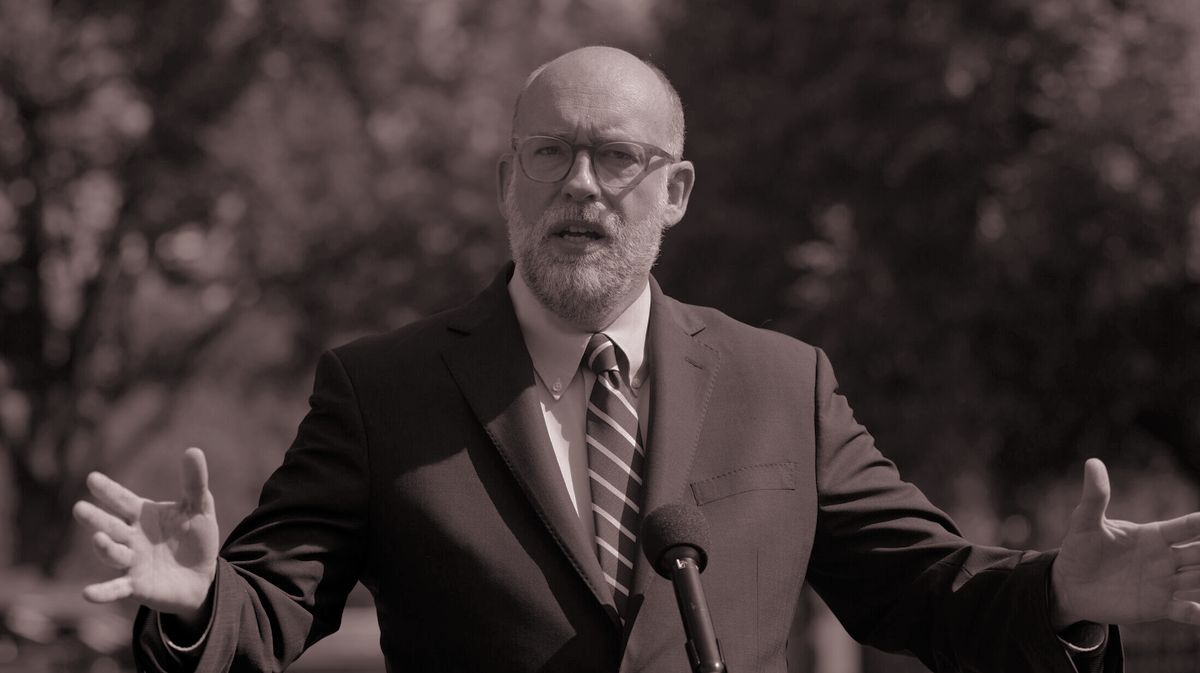
visions: This morning on NBC’s Meet the Press, Speaker Mike Johnson again strained viewers’ credulity by insisting that O.M.B. Director Russ Vought’s threat to fire government workers was “not a job that he relishes.” And yet everyone in Washington knows that Vought is fantasizing about mass layoffs of federal workers. As Republican Sen. Mike Lee said on Fox News, Vought has been “dreaming about this moment, preparing for this
moment, since puberty.”
Meanwhile, you may have noticed that many Republicans have backed off the talking point, initiated by Johnson, that Democrats shut down the government because they wanted to give undocumented immigrants health insurance. First of all, that argument is a stretch: Illegal immigrants aren’t eligible for Medicaid; Democrats want money reinstated that partially refunds hospitals for uninsured emergency room visits (E.R.s are required by law to treat everyone, regardless
of immigration status). But also, some House Republicans have complained to me in the past that Johnson doesn’t have a strong relationship with the truth, which is one reason they get frustrated with him during negotiations.
It’s notable that neither Trump nor Vought has yet announced mass layoffs, despite Vought telling House Republicans last Wednesday to expect them within days. Indeed, some Republicans, including Senate Majority Leader John Thune, have
argued that laying off federal workers could backfire. Maybe they’re getting cold feet. Or maybe they’re giving it some time, waiting to see if a deal is reached soon. - Lastly, a quick public service announcement: My partner John Ourand is hosting In the Arena, Puck’s first conference dedicated to the business of professional sports, in New York on October 16 in partnership with the good folks at MoffettNathanson. John has amassed an
extraordinary lineup of speakers—Fanatics C.E.O. Michael Rubin, NBA commissioner Adam Silver, mega-investor Gerry Cardinale, NFL E.V.P. Hans Schroeder, and local hero Josh Harris, who saved the Washington football club from the throes of disaster and has become the only person in town that everyone likes. We have a few tickets left. Claim yours
here.
|
|
|
After a year of drift and division, the Democratic Party’s sudden unity over healthcare as a
redline in the government shutdown offers a way forward to the 2026 midterms. Democratic strategist Adam Jentleson offers his candid observations on the shutdown, his party’s tactics, and the Schumer of it all. |
|
|
The Democratic Party is perhaps in its best position since its 2024 election shellacking, with polls
indicating that a majority of Americans blame President Trump and Republicans for the current government shutdown. Democrats, who have struggled to convey their values, finally have a clear and disciplined message: healthcare. For once, there is a modicum of unity.
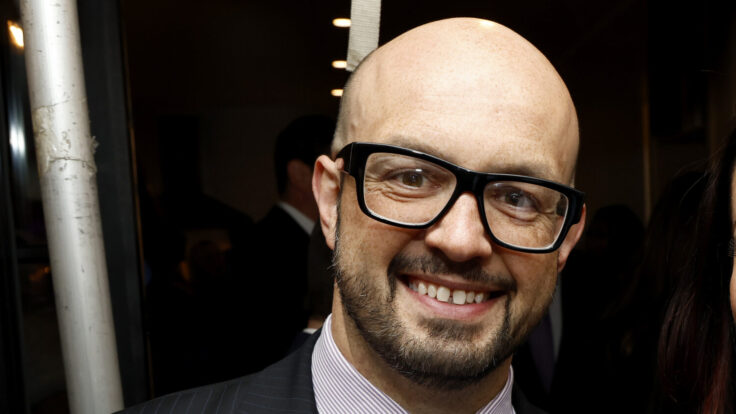
So I called up Adam Jentleson, a longtime Democratic strategist who has lately been critical of the party. After Kamala Harris lost the election, Jentleson’s widely read
Times opinion piece blamed activists and organized liberal groups for pushing elected officials too far leftward—which, he essentially said, had betrayed voters’ trust. Jentleson’s argument pissed off the activists and the liberal groups, but more than a few Democrats took what he said to heart.
Jentleson spent his formative years in
the trade as a speechwriter for presidential candidates John Kerry and John Edwards, but he really cut his political teeth as a top aide to Harry Reid, the late, take-no-prisoners Senate Majority Leader who prioritized winning above ideology. Jentleson then veered left, helping to run Sen. Elizabeth Warren’s presidential campaign and John Fetterman’s Senate race, back when he was an object of
party affection. These days, Jentleson runs the Searchlight Institute, the pragmatic Democratic think tank named after Reid’s poverty-stricken tumbleweed of a hometown in Nevada.
Last month, Jentleson received a ton of pushback after he released a poll that backed up his belief that Democrats shouldn’t talk about climate change. “Obviously, I’m very committed to solving the problem,” he told me, but “we have just completely lost the public.” His mantra: rather than preen about
ostensibly altruistic and often ephemeral topics, the party needs to lean into the quotidian by relentlessly focusing on the issues that ordinary people care about, starting with their bank accounts. Adam and I talked about how the Democratic Party is handling the shutdown. As always, our conversation has been edited for length and clarity. |
Leigh Ann Caldwell: Let’s start on the news of the day: the government
shutdown. Big picture, do you agree with Democrats’ funding strategy, demanding a negotiation on an unrelated policy—healthcare—in exchange for their votes? Is that the right tactic?
Adam Jentleson: Yes, I think it is the right tactic. They picked a smart fight by and zeroing in on an issue that is broadly popular and provides tangible benefits to people. And they’ve already succeeded in elevating the salience of that issue. Every poll
so far seems to show that they’re winning the blame game, which is a crucial part of this process.
Those numbers will have to continue to hold up. I’ve seen some of them making the accurate point that Republicans have majorities in both houses of Congress and could pass a bill on their own if they wanted to. The filibuster is standing in the way, but literally three weeks ago, the Republicans made changes to the filibuster when it suited them. [Ed. note: Republicans changed
Senate rules to pass large numbers of presidential nominees with one vote.] They’re perfectly willing to do that when they find it convenient. And they can do it again here.
We both know that healthcare is the one issue that voters trust Democrats on more than Republicans—
It’s all we’ve got left.
It’s reminiscent of the 2018 cycle, where Republicans made Obamacare the issue
because of their attempts to overturn the Affordable Care Act. So I get why this is the issue—also combined with the fact that A.C.A. premiums are about to skyrocket. But isn’t the democracy issue important, too?
It’s incredibly important, but it’s not salient with voters. Americans just don’t wake up every day thinking about the state of democracy. They wake up thinking about the state of their bank account, and whether they have health
insurance or not. If you want to save democracy, you have to communicate on issues that people care about. I think they’re being smart right now to keep the fight focused on concrete, kitchen table, material concerns of voters, rather than abstracting it out to issues where you start to lose voters’ attention. [The message] is literally, People’s premiums are going to go up—very soon—if this fix is not put in place. It could not be a clearer message. And I think that is a great fight to
pick.
How does this end? Is the promise of a negotiation on healthcare enough for Democrats to vote to fund the government?
I don’t know. And this is the quicksilver nature of these things, where you know the question is going to be: Does the base see that, whatever the off-ramp ends up being, as enough of a win? That’s a tricky question. A lot of times, what people want is just to move Republicans off their original position, and
a tangible demonstration of a cave on some level by Republicans. It is probably the case here that people are more interested in the positioning than the substance—if they feel like they got a win, they will be willing to accept a broad range of things. Part of that is striking while the iron is hot. And Democrats are in a dominant position right now. You never know if that’s going to change a week to 10 days from now. It gets harder and harder to sustain media attention for these things as the
fight goes on. So if Democrats feel like they have the wind at their backs, if they feel like they’re winning, I would seek opportunities to claim a win, and say they beat Trump and Republicans here. Wins beget wins, and carry that forward into momentum for 2026. |
After the 2024 election, you wrote an op-ed that everyone in the party read, arguing that the left
was too handcuffed by activist groups that were pushing the party too far to the left. Now those activist groups are demanding that the party fight and stand up to Trump, which is what it’s doing with this shutdown. Has the party learned any lessons? Are they giving in to the base on the shutdown?
I’m pretty encouraged by what I’ve seen so far in terms of people’s willingness to rethink things on both sides—among elected Democrats and among the
groups themselves, to a certain extent. To be very specific about my critique, it’s the interval between a sensible position on an issue and the maximalist position that the groups are responsible for. Are we pushing to restore Obamacare subsidies, or are we pushing for Medicare for All? In the past, the dynamic was that anything less than the maximalist position was unacceptable and would get Democrats criticized vehemently by the groups on social media and in real life, too—including sit-ins
in their offices, protests at their events, all sorts of things. Recently, Bernie and A.O.C. did what I thought was an extremely effective video—
I was going to ask you about that—
I thought that was fantastic. They’re using their star power to focus on an issue that has broad support and
unites the entire Democratic Party, and draws in swing voters and independents. That is a great example of where we should be, and where I think you can get broad alignment across the party. I think back to the Social Security fight of 2005 and 2006. Pelosi united the base with the center by picking a fight on protecting Social Security—a meat-and-potatoes Democratic issue. But it was something that every single person in the party, from Bernie to [former Montana Democratic senator] Max
Baucus, could unite behind—and it worked. I see a similar dynamic at play now. The big question is whether it holds, and whether we can take that lesson and play it forward into 2026 and beyond.
Trump is using the entire weight of the federal government to make this shutdown as painful as possible for Democrats in Washington, but mostly for Democrats around the country. How do Democrats compete with that?
I don’t think
that comes off the way that Trump thinks it’s going to. Those are painful moves, but the way that gets covered in those localities is going to look bad for Trump. These tend to be popular local projects, popular services that are being cut. On the one hand, there is a pain threshold for Democrats—how long can Democrats hold out against that level of pain is one question. But the other question is, does this result in backfire media attention for Trump and Russ Vought, where they
look mean spirited? |
Schumer has gotten a lot of criticism this past nine months. How do you think he’s doing
now?
You know this as well as anybody: Harry Reid was not the world’s greatest communicator. I think the job of being a caucus leader, and the job of being a public communicator, are not always the same thing. Chuck’s got a tremendous amount riding on this. Whether this is perceived as a win for Democrats or a cave by Democrats is going to be hugely impactful on what his future looks like. One way or another, people are desperate
for generational change. And it’s time to get realistic about that.
Will there be a new Democratic Senate leader after the ’26 midterms?
Look, I’ll put it this way: There are massive advantages to choosing to step down on your own terms as opposed to being forced out. You get to define your legacy. You get to have influence over your succession, and the goodwill is enormous. Versus getting forced out against your will—that can ruin
a perfectly good legacy. Look no further than Dianne Feinstein or Joe Biden, who are largely remembered for the way they were forced out in an undignified way, both of whom had great legacies to lay claim to. And now Biden can’t get a speaking engagement. I think there’s a lot to be learned there. When Reid decided to step down, he spent a year celebrating his legacy, and he went out with great fanfare. That’s something to think about very seriously. |
|
|
Join Puck’s chief political columnist, John Heilemann, as he roams the corridors of power and influence in America on this
twice-weekly interview show, taking you beyond the headlines with the people who shape our culture: icons and up-and-comers, incumbents and insurgents, moguls and machers in the overlapping worlds of politics, entertainment, tech, business, sports, media, and beyond. The conversations are rich and revealing, unrehearsed and unexpected… and reliably impolitic. A Puck-Audacy joint, new episodes drop every Wednesday and Friday. |
|
|
Unique and privileged insight into the private conversations taking place inside boardrooms and corner offices up and down Wall
Street, relayed by best-selling author, journalist, and former M&A senior banker William D. Cohan. |
|
|
Need help? Review our FAQ page or contact us for assistance. For brand partnerships, email ads@puck.news. You received this email because you signed up to receive emails from Puck, or as part of your Puck account associated with {{customer.email}}. To stop receiving this newsletter and/or manage all your email preferences,
click here. |
Puck is published by Heat Media LLC. 107 Greenwich St, New York, NY 10006 |
|
|
|