Greetings! As you can probably tell, today’s newsletter looks a little different.
After three years, we’ve redesigned the look and feel of our private emails, and want to know what you think. If you have any feedback, please click here to take a brief survey.
|
|
Welcome back to The Best & The Brightest, I’m Tara Palmeri.
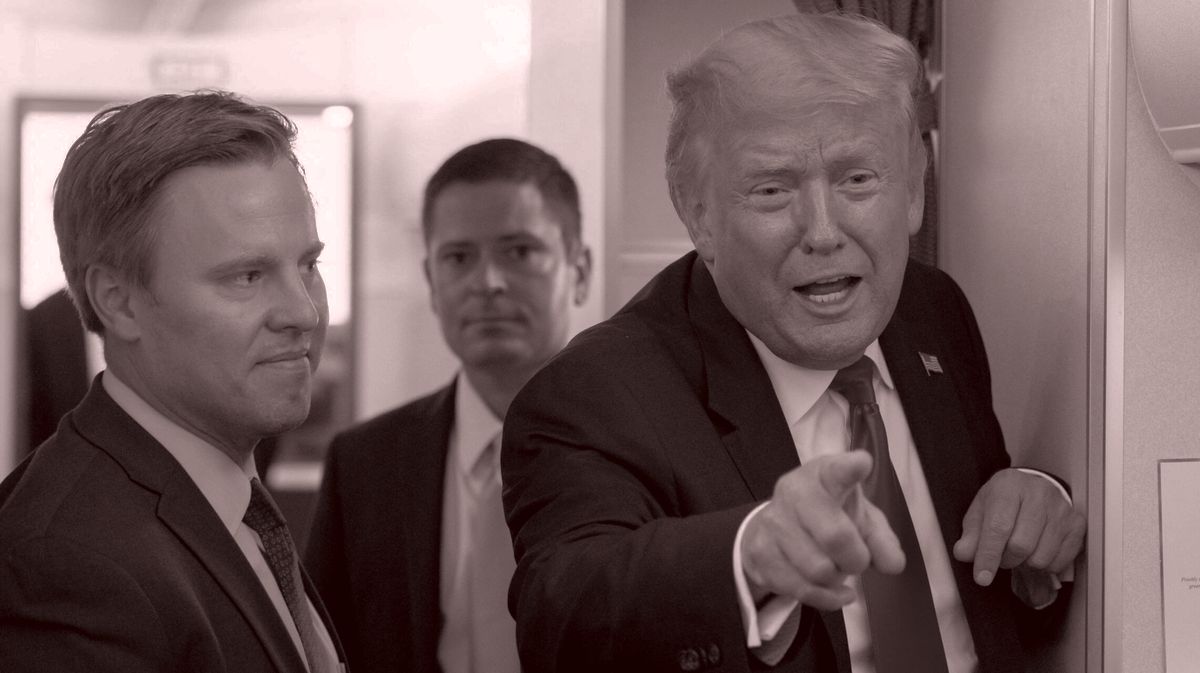
In tonight’s issue, my conversation with former Trump White House political director Bill Stepien, who knows more about the dark art of hoarding and deploying political capital—and about Trump’s misunderstood relationship with it—than perhaps anyone else. Indeed, many of my recent conversations with people inside Trumpworld confirm Stepien’s insights: I’m hearing that, when it comes to his cavalcade of problematic nominees—and particularly Robert F. Kennedy Jr.—he doesn’t believe that their loss would be his loss, and that it’s up to them to cross the finish line. We discuss all that and more, below the fold.
|
|
|
Congress can help keep teens safe online today by putting parents in charge of teen app
downloads.
Congress has the opportunity to establish a national standard requiring app store parental consent and age verification for teens.
This puts parents in charge of which apps teens download, making it easier for them to help keep teens safe. That's why 3 out of 4 parents agree: teens under 16 shouldn't be able to download apps without parental
approval.
Tell lawmakers: support a national standard requiring app store parental consent and age verification for teens.
|
|
|
|
But first, a little on the Elon of it all…
|
- President Musk: This past week was a reminder of Trump’s uncanny ability to take a wrecking ball to Washington’s basic functions—like keeping the government open. But it was also further evidence of an apparent new normal: G.O.P. legislators have to answer to Elon Musk now, too.
As my sources on the Hill enjoy pointing out, and as was the case with Trump in his first term, Musk is a political neophyte. And before his successful fusillade on X against Mike Johnson’s spending bill earlier this week, he had been on a losing streak. (Nothing came of his support for Rick Scott for Senate majority leader or Howard Lutnick for treasury secretary.) But his ability to nuke the spending bill was a potent reminder of his new shadow authority—and presages a difficult season ahead for passing complicated legislation. “What the actual fuck?” a Senate source texted me on Wednesday as the House scrambled to put a new bill together. “If we can’t get a C.R. done, how are going to pass tax reform?”
The source noted that, while some blamed the initial failure of the C.R. on Johnson for not coordinating with Trump over the weekend, it’s not like he could have known that he also needed Musk’s buy-in. Of course, Trump will fume when he sees the inevitable coverage and caricatures depicting Musk as the real president—just ask Steve Bannon how that works out. “Who is the president?” asked the Senate source. “At some point, this bromance has to blow up. Too many egos.”
|
|
And now, on to Bill Stepien…
|
|
|
|
A frank conversation with Bill Stepien, Trump’s former White House political director, about what exactly political capital is—and why Donald Trump never seems to run out.
|
|
|
|
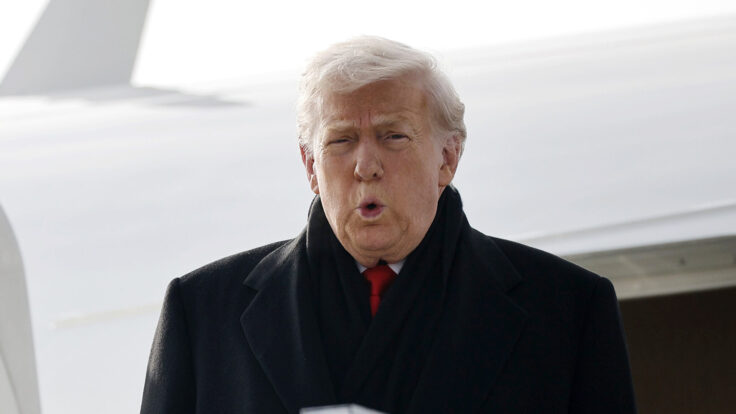
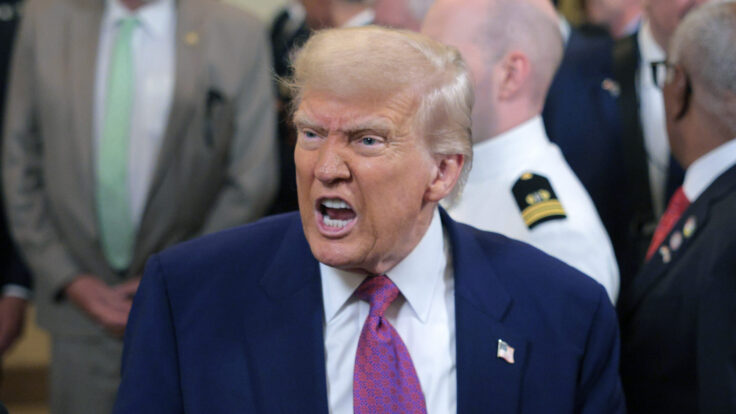
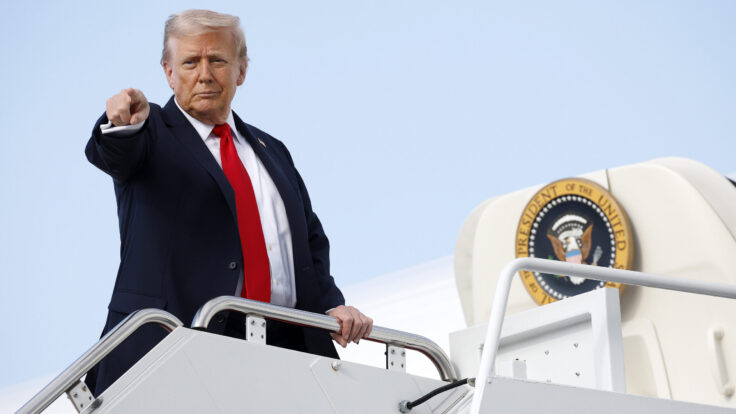
Donald Trump is heading into his second presidency at the height of his political powers, a reality evidenced once again this week after he sent Capitol Hill into a tizzy by nuking Mike Johnson’s stop-gap bill. Of course, earlier today, he subsequently endorsed Johnson’s refurbished and slimmed-down C.R. plan—but the initial episode was instructive in that, despite potentially sending the government into a shutdown, he somehow looked like a renegade hero within parts of his party.
Anyway, the other side of this narrative is that Trump is a term-locked president (at least if you’re going by the Constitution), and history indicates that his party will almost certainly lose the House in the midterms. This gives him, realistically, about 18 months to spend his political capital. And no one knows more about political capital—and Trump’s unique relationship to it—than his former White House political director Bill Stepien.
|
|
|
Instagram Teen Accounts: automatic protections for teens
Parents want safer online experiences for their teens. That's why Instagram is introducing Teen Accounts, with automatic protections for who can contact teens and the content they can see.
A key factor: Only parents can approve safety setting changes for teens under 16.
Learn more
|
|
|
|
During Trump’s first term, Stepien fed the president polling information on his legislative agenda and, especially, on midterm races—even if Trump often followed his own gut instincts. Stepien recently came on my podcast, Somebody’s Gotta Win, to talk about Trump’s unusual relationship with political capital, how that will dictate the legislative fights ahead, and which cabinet appointments he thinks Trump will actually fight for. Plus, in light of his lawsuit against Iowa’s Ann Selzer, we also discussed his relationship with
pollsters. This excerpt has been lightly edited and condensed for clarity.
|
|
Tara Palmeri: What does a political director do inside the White House?
Bill Stepien: In most White Houses, there’s a focus on helping guide the legislative agenda based on polling data and public sentiment. In a Trump White House, it’s quite different, as you might imagine. There’s a constant focus on races, candidates, and elections. My first two years with the president as political director were spent just
feeding information to him—not putting a finger on the scale of, “Sir, you should do this.” People call him and talk about how great they are, or talk about how great their guy or gal is, without providing a full story. My job, as I saw it, was to provide a full political story of a race and give a full picture, so we could have our eyes wide open on whatever political decisions he sought to make.
Many things are different eight years later. Most notably, his political strength is much more sizable. Now, you have people beating down the door because he’s at the height of his power. At any point, we would have died to have the poll numbers and strength that he has right now.
Trump’s down-ballot endorsements have had a spotty record—and he’s done some unusual ones. For instance, in the ’22 Missouri
Senate primary, he offered a kind of double endorsement to both Eric Schmitt and the scandal-plagued former governor Eric Greitens, and he’s done this more than once. Usually, an endorsement is a golden ticket, but Trump doesn’t look at political capital that way.
I think people oftentimes have a misguided view of the kind of person he actually is. At the end of the day, he’s a people pleaser. He
wants to make people happy. He wants to help people. He wants people to like him, and he wants to like people. The double-endorsement thing isn’t something I’d seen before, but it’s in line with him wanting to please and to help. That’s an example of him doing things his own way, for sure.
I think there are different ways to view political capital. Someone I used to work with would often say that you can obtain political capital and keep it in your desk drawer to save and use for a later date—or you can use it and actually expend it for something you want or need. Trump views political capital in the latter category. He gets it. He uses it. And unlike anyone I’ve seen before, he can get more. I’m not sure anyone has really seen an unending supply of political capital like Trump has, and I always laughed when I was in the White House and read stories about how he’d be enraged when one of his endorsees lost a race. He sees these things as wins and losses. He’s very black and white in how he views these races and his decisions.
And that extends to cabinet nominees, to legislation, to basically anything he wants. It feels like everybody else is playing political chess, and he’s just like, Whatever…
He believes—and he’s right—that with a tweet or a press conference, the news media soaks it up. I don’t think he worries too much about a bad news cycle, because it’s only a matter of hours, not days or weeks with this guy. He’s using his levers of influence to negotiate, to push around, to get people to sit up in their chairs. That’s very different from what we’re used to from the person sitting in that office, but this is the guy.
|
|
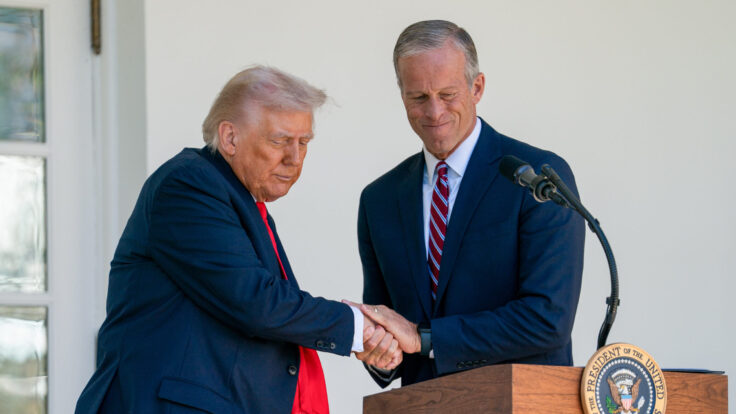
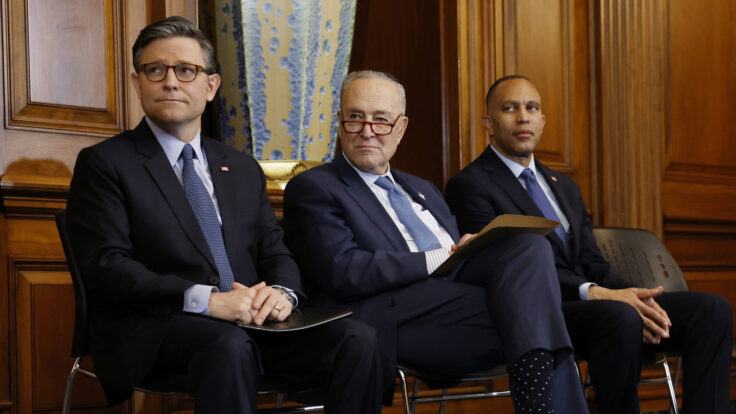
Let’s talk about his legislative agenda. Senate leader John Thune and Speaker of the House Mike Johnson see two different pathways to passing Trump’s agenda. Johnson is arguing for one massive bill that includes immigration, energy, and Trump’s tax code, while Thune is saying they should push it through two bills. What are the pros and cons of each approach?
Candidly, I think they should ask Trump what he wants to do, because if he’s not involved in the process, he’s less apt to engage. And we know he wants to be engaged, because he loves this process of negotiation, having people in the Oval Office going back and forth, battling it out. Besides, we know Trump’s instincts are really good on this.
Eight years ago, his instincts were to do tax cuts first, and all the smart people in Washington said, Sir, we need to go after Obamacare first. That was the white whale for Republicans in D.C., and it was more their fight than President Trump’s, and they ultimately wasted time on Obamacare. It didn’t go down as intended. It was weakening because of that swing and miss, and it took time to get back on track. So they should ask Trump what he wants to do, because who’s going to be a better salesman of this—Donald Trump, Senator Thune, or Speaker Johnson?
|
|
|
|
But does Trump really understand how this works?
If he doesn’t, it’s their job to help him understand if they want to be successful. The stakes are so high on this. And I think Johnson, in particular, has carved out a great relationship with Trump. It’s their job to make sure he is involved and engaged, and if he’s not, just ask Mitch McConnell how that goes.
If you were the political director right now, how would you advise Trump to play this?
I run from policy when I see policy, but having spent a couple of years in D.C., and knowing how slow and incompetent the system is, I think it’s really hard to do something once, let alone twice, especially when they’re both really important and they both really matter.
A lot of this comes down to relationships, too. And he doesn’t have that kind of relationship with John Thune, right?
It’s certainly a relationship that’s developing. I think Thune has done so many of the right things to further it and speed it along. It’s a new relationship, but it can’t be worse than the previous one. Anyone walking through that door will be a breath of fresh air compared to who was in place before.
How long do you think it will take to pass this legislation—tax cuts, immigration, energy, etcetera? This is a massive bill. Where do you think there are going to be reservations?
I know House Republicans are unhappy about pieces of it that they feel are inconsistent with what we just ran on and won on, like some of the giveaways that they think are things that were promised to Democrats. But that’s where the slim majority comes in. Then you have Christmas and the holidays, and you’ve got January 20 coming up around the corner pretty fast. At the same time, Trump’s focused on the cabinet and getting his people in place and assembling a government. So there are a ton of competing interests when it comes to time. How long one or two bills takes—your guess is as good as mine. There are a lot of balls in the air that make things complicated.
They’re almost certainly going to lose the House; history tells us that, especially with a slim majority. So you’ve got one term in front of you, and you’ve got two years before you probably lose control of the House. That’s why he’s been so aggressive in trying to get his people in place in the cabinet, because he understands that, unlike 2017, when he was walking in the door with potentially eight years in front of him, he’s got 18 months. It’s a much different clock. He understands the timeline, and there’s a quickened pace with everything he’s doing this time around.
|
The “Show of Strength” Theory
|
|
What was Trump’s relationship with pollsters when you were
with him in the White House?
He liked pollsters when their numbers were good, and he didn’t like them when they were bad. He looked at polls, but he was far from obsessed with them. He paid attention when you had something to show him, but he was guided more by his instinct than he was by a pollster’s number that was published somewhere. He used polls to verify his instincts, but they weren’t guiding his agenda or thought process.
One of Trump’s greatest strengths is messaging. In his first term, he fired off a flurry of executive orders that were pretty much toothless and couldn’t be upheld in court. How much of this is Trump’s way of sending a message to the American people that he’s trying to make good on his promise, and if it fails, it’s not because of him?
From my perspective, those are less legislative documents than they are guiding principles and shows of strength. They’re more, I’m doing on Day One what I promised to do and what you elected me to do. Most Americans don’t know what the hell an executive order is, or if something is subsequently held up in the courts, or overturned. They see him sitting at his desk with a big pen and a document with his
big signature on the piece of paper. And it’s the picture and messaging that matters a whole lot more than what happens after. Candidly, people are going to pay attention to what pictures they see on Day One.
Do you think Trump is genuinely eager to expand the power of the executive branch?
I don’t know the answer to your question. I would say the thing he can do most to have expansive powers is continue to do what he’s doing right now. Right now, he’s so much stronger than he was eight years ago, when Americans gave him even marks and his approval rating was plus-one. Now, it’s approaching plus-20. You can do a whole lot more with the bully pulpit when you’re strong politically. The best way to expand your powers is to look and be strong, and he is.
|
|
|
|
Join Emmy Award-winning journalist Peter Hamby, along with the team of expert journalists at Puck, as they let you in on the real conversations insiders are having across the four corners of power in America: Wall Street, Washington, Silicon Valley and Hollywood. Puck’s contributors will bring you smart conversation around the inside stories happening in these worlds. Presented in partnership with Audacy, new episodes publish daily, Monday-Friday.
|
|
|
|
Unique and privileged insight into the private conversation going on inside Wall Street, as told by the best-selling journalist and former M&A banker.
|
|
|
Need help? Review our FAQ page or contact us for assistance. For brand partnerships, email ads@puck.news.
You received this email because you signed up to receive emails from Puck, or as part of your Puck account associated with . To stop receiving this newsletter and/or manage all your email preferences, click
here.
|
|
Puck is published by Heat Media LLC. 107 Greenwich St, New York, NY 10006
|
|
|
|