 |
|
Welcome back to Dry Powder. I’m Bill Cohan.
|
|
Count me among the skeptics that Byron Allen can conjure up the nearly $30 billion he needs to take Paramount off Shari Redstone’s hands. In fact, a closer look at his bid reveals that the provenance of the financing is just one hangup among many. In today’s issue, a dissection of Allen’s offer, plus a few words on the chasm between Nelson Peltz’s accurate diagnoses of Disney’s troubles and his facile solutions.
But first…
- Notes on the Elon Clawback: I finally had the chance to read most of the 200-page opinion written by Kathaleen McCormick, the chancellor of the Delaware Court of Chancery, ordering Elon Musk to give up his $55 billion pay package. As a reminder, Elon squeezed the Tesla board to give him a whole boatload of out-of-the-money options that only became exercisable and valuable if the company achieved some crazy, way-out-there EBITDA projections and the stock price reached astronomical levels. The board subsequently granted him the options, in a process that the Delaware court found to be far from arm’s length. And then, somehow, Tesla achieved these goals, triggering the pay package.
McCormick’s ruling comes down to two factors: whether it was a fair compensation package, and whether it was awarded using a fair process. The Delaware judge concluded, on both fronts, that it was not: that it was an excessive pay package and that Elon’s board—which now, ironically, faces another test with his demand for more options for his A.I. and robotics ambitions—offered no resistance. In her decision, Judge McCormick was fairly scathing. “With a $55.8 billion maximum value and $2.6 billion grant date fair value, the plan is the largest potential compensation opportunity ever observed in public markets by multiple orders of magnitude—250 times larger than the contemporaneous median peer compensation plan and over 33 times larger than the plan’s closest comparison, which was Musk’s prior compensation plan,” she wrote, in finding for the plaintiff, a group of Tesla shareholders.
She also sought to answer the question of whether Elon controls Tesla—as in, every aspect of Tesla—as both its largest single shareholder and the controlling person on its board of directors. “In addition to his 21.9 percent equity stake, Musk was the paradigmatic ‘Superstar C.E.O.,’” she wrote, “who held some of the most influential corporate positions (C.E.O., Chair, and founder), enjoyed thick ties with the directors tasked with negotiating on behalf of Tesla, and dominated the process that led to board approval of his compensation plan. At least as to this transaction, Musk controlled Tesla.” Musk and his lawyers, she concluded, were unable to prove the non-Musk shareholders were “fully informed” about his gargantuan pay package because “the proxy statement inaccurately described key directors as independent and misleadingly omitted details about the process,” which she described as “deeply flawed.”
Judge McCormick then examined the deal under which Elon would get the options, or how and when they would be in the money. She found that lacking as well. The deal the board approved was to increase Elon’s ownership in Tesla to 28.3 percent, from 21.9 percent, “if and only if” Tesla’s “market capitalization” increased to $650 billion, from $50 billion. She acknowledged the appeal of the deal for shareholders, but then reminded readers that since Elon already owned 22 percent of the company, he would get more than $10 billion for every $50 billion increase in Tesla’s market value already, without the new deal. “Swept up by the rhetoric of ‘all upside,’” she wrote, “or perhaps starry eyed by Musk’s superstar appeal, the board never asked the $55.8 billion question: Was the plan even necessary for Tesla to retain Musk and achieve its goals?” She determined that Musk and the Tesla board were derelict in their fiduciary duty and that the plaintiff is entitled “to rescission” of the award to Musk.
Elon can appeal the ruling, and I assume he will. After all, who wants to give up nearly $56 billion? He’s since posted on Twix, “Never incorporate your company in the state of Delaware” and said that Tesla would hold a shareholder vote—making it a foregone conclusion—about reincorporating the company in Texas.
To me, this is just another example of the wheels coming off our collective sense of accountability for the rich and famous, who increasingly seem to be able to get away with whatever they want, whenever they want. Elon Musk had all the incentive he needed to increase the Tesla stock price, but for some reason it wasn’t enough. He has all the incentive he needs already to take Tesla down the A.I. and robotics paths that he has in mind. Where do you draw the line?
|
 |
| Allen & Company |
| News and notes on Byron Allen’s bid and the Paramount suitor carousel. Plus, Nelson Peltz’s script for the Disney turnaround. |
|
|
|
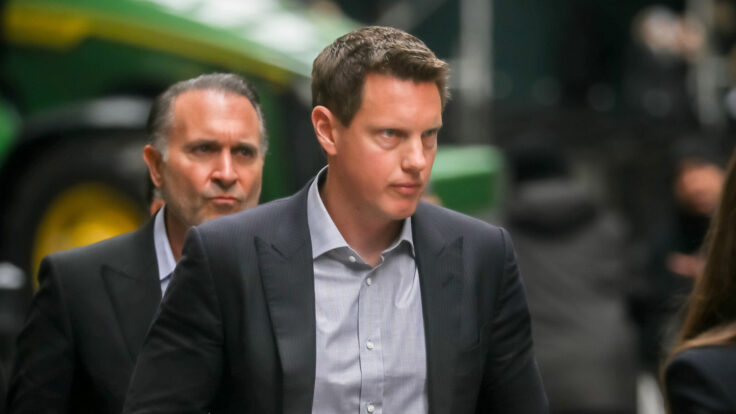
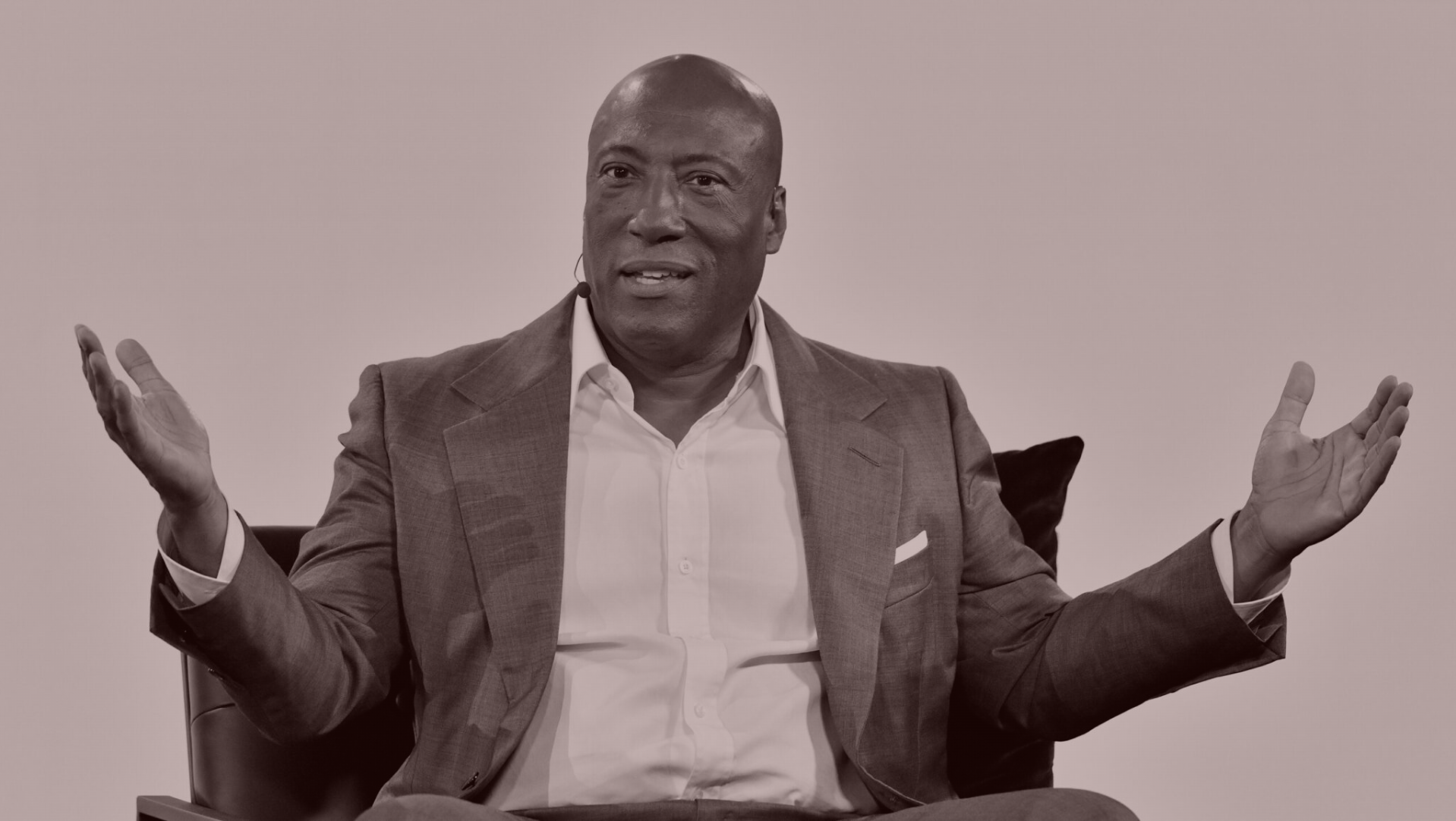
| Byron Allen, the media entrepreneur who very publicly made a $14 billion offer for Paramount Global, plus the assumption of the company’s $15 billion in debt, poses a very particular kind of dilemma for Shari Redstone and her M&A adviser, Byron Trott. On the one hand, Allen Media is not without its successes. It’s a private company, so it’s hard to know how things are going, but Allen has a net worth estimated by Bloomberg at $735 million, and he owns the Weather Channel, which he told my partner Matt Belloni the other day is very profitable for him. He also owns a bunch of local television stations.
But Allen Media Group also has debt, and it’s trading at a significant discount to par. According to Bloomberg, Allen Media Group’s bank loans are trading for around 90 cents on the dollar and, according to a recent Morgan Stanley report, the company’s senior notes, due 2028, are trading at 52 cents on the dollar. Shari and Trott likely see a red flashing warning sign about the viability of Allen’s $30 billion equity-and-debt offer for Paramount. Where is the money coming from? When Allen called Matt earlier this week, the mogul was extremely evasive. Alas, the days when Drexel Burnham young guns Leon Black and Mike Milken could write a “highly confident” financing letter to get people’s attention are long gone. If Allen wants the asset, he needs to show the world he’s got the money rather than being cagey about his sources of funding. This is deal insanity, and shouldn’t be taken seriously.
Allen has a legion of skeptics, including Mario Gabelli, the largest non-Shari owner of Paramount voting stock, who said he at least appreciated that Allen made an offer to benefit all Paramount shareholders—a real dig at the suitors thinking about buying just NAI, the parent company. I’m skeptical, too. For starters, Allen needs to come up with the $14.3 billion to pay for Paramount’s voting and nonvoting stock. That’s a lot of money. Even if he throws Allen Media into the mix and uses those assets as collateral for a $14 billion loan, I’d like to meet the bankers who are going to make that amount of money available to a company where the term loans are trading at 90 cents on the dollar, and the senior notes are trading at 52 cents on the dollar. A company that is already overleveraged and already has lost the confidence of investors that its existing debt can be repaid—52 cents on the dollar—does not get another $14 billion of debt to pay for another overleveraged, struggling company.
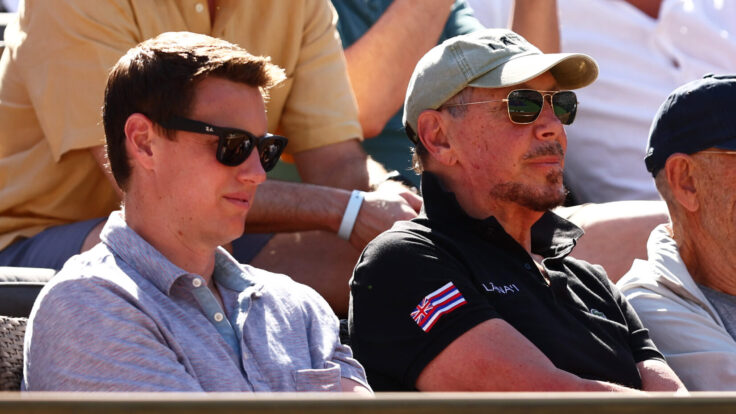
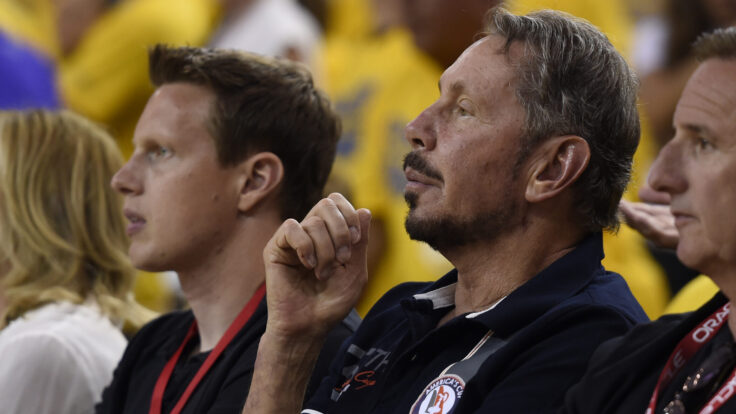
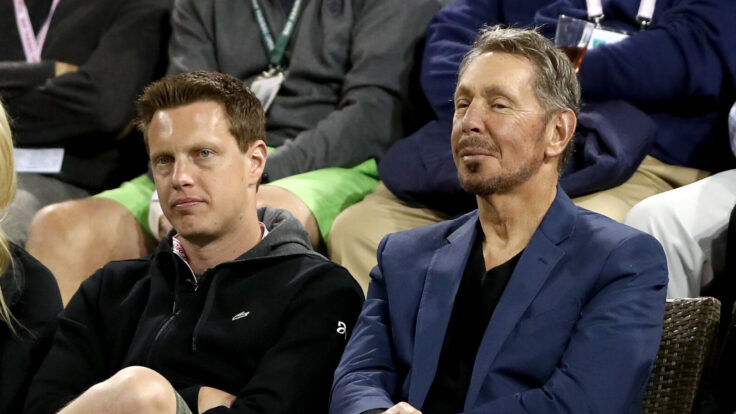
As my faithful readers also know, if there is a change of control of Paramount and the credit agencies downgrade the company’s BBB credit rating, then Paramount’s $11.2 billion of senior notes become immediately due and payable. Larry Ellison, the father of deal suitor David Ellison, could guarantee this debt with his fortune. Byron Allen doesn’t have that sort of juice, or if he does, he hasn’t disclosed any details. He would need to raise another $11.2 billion, at closing—so that’s $25 billion all in—to buy the Paramount senior notes.
Beyond the insanity of the fundraising exercise, I am not buying the idea that Allen will take the linear assets from Paramount that no one else wants—CBS, the cable channels—and then on-sell the other assets, like the Paramount studio. The break-up strategy seems flawed to me, given the near-zero tax basis in these assets, which will result in huge tax leakage upon their sale. How do you get the Excel spreadsheet to work? Punching the F9 button a zillion times only gets you so far.
This sale process, filled with leaks and stock gyrations, gets curiouser and curiouser—and more and more ironic. I believe that Shari and her children have definitively decided to sell the company. It’s increasingly looking like a financial necessity for the family, and that the events of October 7 have had a profound effect on their outlook on life. Plus, the equity markets are on fire. And the overall economy is much better than people thought it would be.
Yes, it’s a brutal moment for a company like Paramount, with a host of declining linear TV assets and a money-losing streaming business, and Shari made her life a lot more difficult by insisting on recombining CBS with Viacom. But at the very moment when she has finally decided to sell, she can’t seem to drum up a bidder with the wherewithal to make it happen. Ellison needs his father to step up. Allen doesn’t seem to have the money. And this is probably too big of a headache for David Zaslav, given all his other headaches, including $43 billion of net debt at Warner Bros. Discovery already. Apollo has the cash to make a deal like this happen, but it’s very unlikely to make an offer that Shari will find acceptable, at least at this moment. I’m starting to feel a little sad for Shari and her kids, as hard as that is to believe. |
|
|
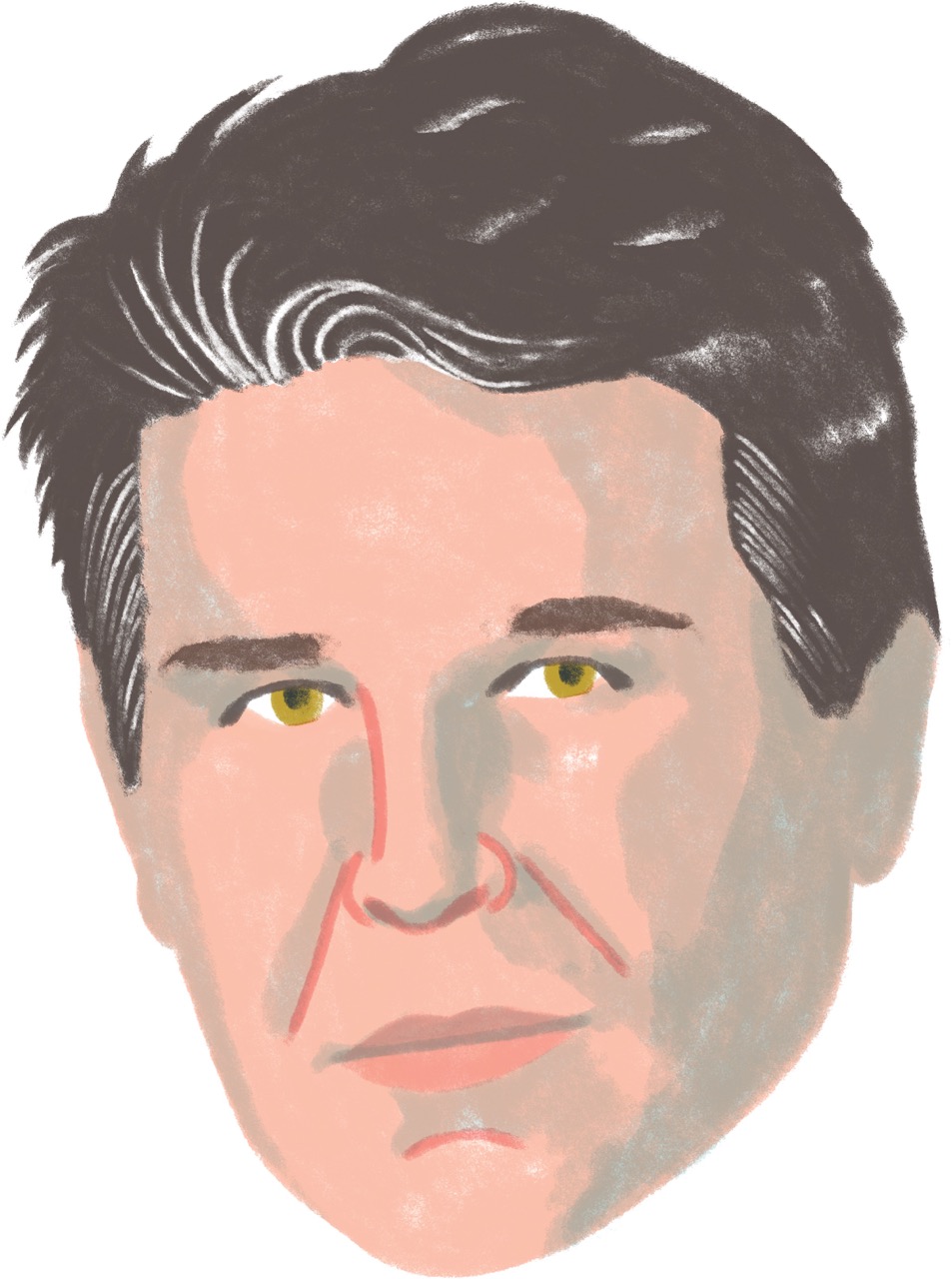
| It’s hard to disagree with Nelson Peltz’s diagnosis of Disney’s problems. He’s right that Disney’s “creative engine has stalled” and that Disney+ “has been poorly managed.” He’s right that ESPN is “challenged and lacks a clear strategy,” that the prices have gone up in the Disney theme parks and “investment has been deferred” to the point where C.E.O. Bob Iger recently pledged some $60 billion to the parks during the next decade. And he’s right that the Disney board of directors has a “lack of focus,” a “lack of accountability,” and a “lack of alignment,” with Disney shareholders. And it’s true that the Smiling Crocodile beneficially owns some $3 billion worth of Disney stock while Iger owns around $19 million and the rest of the Disney non-management directors collectively own less than $14 million.
The question is whether Nelson and Trian Partners, his alternative asset fund, can convince the other big Disney shareholders to implement his solution, which largely amounts to adding him to the board, along with Jay Rasulo, who had been at Disney for some 30 years, including five years as the Disney C.F.O. (I must have been asleep during his tenure as C.F.O.; I never heard of him until Nelson nominated him as a director in this proxy fight.)
As you probably know by now, Trian wants Peltz and Rasulo to replace both Michael Froman, the new head of the Council on Foreign Relations, and Maria Elena Lagomasino, the former JPMorgan Chase executive who has served as head of Disney’s compensation committee and who, in that position, has “overseen” payments of more than $800 million to Disney’s executives “while shareholders have suffered,” according to Peltz. (He is particularly irked that Lagomasino “oversaw” the awarding of a $250 million, four-year comp package to Iger in connection with the “value destructive” 2019 acquisition of 21st Century Fox, for some $70 billion.)
Part of a proxy battle is noise and momentum, and the Croc hasn’t lost his touch when it comes to getting attention for his side. But if the ultimate goal is the chance to control the direction of the company—as it has been during Peltz’s previous bids—he’s a long way away from succeeding. As I’ve written before, I’m not sure I understand what two board seats gets you on a 12-member board of directors, especially if to get those two seats, you’ve had to mercilessly criticize the other 10 members—a problem when considering that majority rules in situations when consensus can’t be reached. If boardroom voting were based on the number of shares each director beneficially owned, then I could see the wisdom of a proxy fight. But two seats out of 12, when the other board members hate you, is a real head-scratcher.
According to Nelson’s proxy materials, his agenda includes a few notable but perplexing goals. Foremost among them is: Get the board to review Disney’s “creative processes and structure” to enable Disney to reclaim its box office luster. Okay, I get this. But I’m not sure what a board of directors can do to inspire the rank and file to make better movies. Another is: Get management to make Disney’s streaming business as profitable as Netflix’s. Okay, that’s a worthy goal. But these are two very different companies. Netflix had a blank sheet of paper when it came to developing its streaming business. It’s not so simple for Disney, and I’m sure Iger is already quite focused on this, even if it was a mistake for him to come back to the corner office in November 2022.
The other Peltz suggestions are similarly unsophisticated. Get Disney management to “commit to a detailed plan” that makes ESPN’s direct-to-consumer project profitable and a success. Yes, well Nelson, we know our boy Jimmy Pitaro is working every day, every waking hour, on that project already. So where’s your “value add” on this important subject? Get Disney management to show the returns expected from investing $60 billion in Disney’s theme parks. Okay, that’s something Iger definitely has and can hand over to you in a second, once you sign an N.D.A. (and abandon the proxy fight). Align pay and performance for the Company’s senior leaders by tying compensation to clear, measurable, and ambitious goals. Okay, no-brainer. The board is already doing that.
The others seem so obvious that they are barely worth noting: Find a successor to Iger. Yes, that is definitely the board’s job, and yes, it has failed miserably at that job so far. Miserably. But adding James Gorman to the board—having just completed his own transfer of power at Morgan Stanley to Ted Pick—should help immeasurably. What does Nelson or Rasulo add to this process that Gorman can’t or won’t?
Nelson has diagnosed the problems at Disney correctly, but his solutions are lackluster at best—at least so far. In the past, Nelson’s “white papers”—occasionally issued during his proxy fights or when he’s rattling the cage of some company—have been thoughtful and introduced worthwhile solutions to genuine problems faced by the company over his fire. There hasn’t been a Disney white paper yet, although it has been rumored to be close to publication. So let’s revisit this silly fight after that PowerPoint emerges and see if there’s some substance from Nelson after all. Unless of course, what was filed on February 1 was the white paper... in which case I am at a loss to understand why the Smiling Crocodile thinks he can win this fight. |
|
|
|
| FOUR STORIES WE’RE TALKING ABOUT |
 |
|
 |
|
 |
| Nowhere to Ronna |
| A dispatch from the R.N.C.’s winter gathering in Vegas. |
| TARA PALMERI |
|
 |
| Law & Border |
| On the G.O.P. strategery surrounding the border crisis. |
| TINA NGUYEN |
|
|
|
|
|
 |
|
|
|
Need help? Review our FAQs
page or contact
us for assistance. For brand partnerships, email ads@puck.news.
|
|
You received this email because you signed up to receive emails from Puck, or as part of your Puck account associated with . To stop receiving this newsletter and/or manage all your email preferences, click here.
|
|
Puck is published by Heat Media LLC. 227 W 17th St New York, NY 10011.
|
|
|
|