Hello, and welcome back to Dry Powder.
Thanks for being a part of Puck, our new media company covering the intersection of Wall Street, Washington, Silicon Valley, and Hollywood.
SPONSORED BY FACEBOOK 
The inside conversation at the nexus of Hollywood and Wall Street. It’s been a dramatic couple of weeks in the entertainment and media sphere as the soon-to-be Warner Bros. Discovery grappled with an abrupt leadership change atop CNN, ViacomCBS rebranded as Paramount Global, and Netflix and the other Hollywood studios pulled out of Russia amid Vladimir Putin’s escalating war on Ukraine. So, this weekend, I went back and forth with fellow Puck founding partner and Hollywood correspondent Matthew Belloni about what it all means for Wall Street and the future of entertainment in the post-Covid, post-streaming, post-everything era.
Matt Belloni: Bill, you floated in a column that the recently exited CNN president Jeff Zucker might be a good fit to run Paramount Global (the former ViacomCBS). Not sure I agree with that. Zucker had some stumbles as C.E.O. of NBC Universal from 2007-2011. I remember when he put the erratic Ben Silverman in charge of NBC, which everyone knew would be a disaster. (It was.) And he engineered the botched Tonight Show transition from Leno to Conan and then back to Leno, and he wasn’t exactly loved by his bosses at the end. What makes you think Shari Redstone needs Zucker?
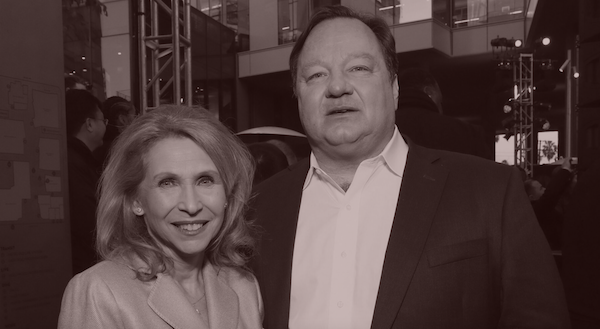
William D. Cohan: Well, Matt, Paramount needs to do something, anything to make it relevant to a potential acquirer. That’s got to be Shari’s main goal after years of financial engineering. She has to prove to her family that wresting the company away from her father Sumner and recombining CBS and Viacom—all pretty much against his previous wishes—was worth it. Her chosen leader, Bob Bakish, has done little, if anything, to improve the Paramount Global share price. Since he took over the combined company in December 2019, the stock is down nearly 14 percent (and that includes last week’s surprising 18 percent jump), at a time when the S&P 500 index increased 39 percent. Some say that Bakish deserves credit for merging these complex entities and refocusing on its streaming services, but these are simply the baseline requirements of the job. So Bakish is not exactly inspiring confidence.
Belloni: But that’s Bakish. What makes you think Zucker could be the solution?
Cohan: Zucker is exactly what Paramount needs: He’s an annoying micromanager who commands great loyalty and can run a news division (CBS News, check), a streaming business (Paramount +), TV channels (Showtime and CBS), and even a movie studio (Paramount proper). I’m not saying he’s Bob Iger, or even Steve Burke, and he has his flaws, but hiring Zucker would create huge buzz at Paramount—and some brief headline risk, too, but Redstone can easily deal with that. It would also generate momentum toward Shari’s goal: a sale, at a valuation well north of the $22 billion the company sits at now. By the way, Jeff Immelt, Zucker’s boss at G.E., loved him; it was his new masters at Comcast—and Burke in particular—that pulled the plug on Zucker’s reign at NBCU.
Belloni: So you’re convinced Shari is actively hunting for a sale. I agree, but some still think she hasn’t resigned herself to that fact yet. And to get the deal she wants, she’s going to need to improve the company’s financial performance, not just its streaming subs.
Cohan: All you have to do is look at what Zucker accomplished financially at CNN—growing operating income to $715 million in 2020, from $320 million when he took over in 2013. That’s pretty impressive, and my gut is that he could do something similar with the Paramount assets, and certainly more than Bakish has done. And you’d probably get Allison Gollust in the deal too.
Belloni: Well, those 2020 profits had a lot to do with Donald Trump and the election. CNN’s financials likely won’t be nearly that strong in 2022, and with those numbers came some long-term damage, thanks to the politicization of the CNN brand.
ADVERTISEMENT 
We’re making investments in safety and security—and seeing results
Facebook has invested $13 billion over the last 5 years to help keep you safe. Over the last several months, we’ve taken action on:
Belloni: Most think investor John Malone will influence Warner Bros. Discovery C.E.O. David Zaslav when it comes to CNN: moving it to the middle, politically, and away from the anti-Trump anchors. But replacing Zucker with Chris Licht, whose experience is at Colbert and Morning Joe, seems like the opposite. What’s your take on Malone’s influence on CNN and other aspects of WarnerMedia?
Cohan: Look, we both know Malone is a deity in cable television. He’s also been a longtime mentor to Zaslav. No question, he will have both access to, and influence on, Zaz. He’ll be a big shareholder in Warner Bros. Discovery with a board seat, and a big voice. But, as I’ve written, the real power at the merged company will be Steven Newhouse, of Advance Communications and Condé Nast fame. The Newhouses will have two board seats and own 8.3 percent of the company. Malone, God bless him, will own less than 1 percent. Now, will Newhouse flex his muscles? He’s always struck me as the quiet type, not prone to grand pronouncements—he’s a behind-the-scenes character who is now the apparent leader of the multi-generation Newhouse family fortune; unlike Malone, a self-created mogul, he inherited his wealth. But I don’t think Newhouse, or Malone, will decide how CNN should be run day-to-day. That’s Licht’s job now.
Belloni: The media earnings season that just ended seems like it represents a turning point where the Street will not simply reward streaming growth. Netflix didn’t deliver and it got hammered, but Paramount did deliver and it still got hammered. What do you think is happening? Is it just that money isn’t as cheap as it was, have the winners and losers in streaming video already been determined, or do you think investors are souring on the whole sector?
Cohan: I think the combination of Russia’s invasion of Ukraine and the Federal Reserve’s decision, after 13 years, that it will end the era of zero interest rates, has made investors and the financial markets very jittery. Suddenly, after years of inexplicably rewarding companies with exorbitant valuations on the promise of what they might do at some point in the future—exhibit A: Tesla; exhibit B: the SPAC craze—the tide is turning. We’ve gone from a “risk on” phase to a “risk-off” phase.
So it’s not that Wall Street has soured on streaming, per se. It’s just finally dawned on many investors, especially the Robinhood and Reddit meme crowd, that stocks can also go down. Most people, unfortunately, hit the panic button at times like these, when they really should be hunkering down for the long haul, if they can, and taking advantage of the price declines. This is not investment advice, but when stocks give you the gift of a 30 percent drop, that seems to me like a buying opportunity. As my friend Jay Pelosky, a former global strategist at Morgan Stanley and the founder of TPW Advisory, wrote to his clients recently, “Covid ebbing is THE single most important factor and yet it is getting the absolute least attention … This suggests an opportunity is brewing in risk assets.”
ADVERTISEMENT 
Cohan: We’re supposed to be a no-war zone here at the Matt and Bill show, but what do you make of the decision by Netflix and the Hollywood studios to pull their product in Russia? Is this just window dressing or are there meaningful consequences for these companies?
Belloni: The Dark Knight Rises, the most recent Batman standalone movie before this weekend’s The Batman, did $17.5 million in Russia for Warner Bros. That’s not an insignificant number, but it’s about half what the movie grossed in France, Germany and Australia. Russia is considered a growth market for Hollywood, so the studios will definitely take a hit by pulling the big titles. But they won’t give up as much as, say, Facebook or YouTube will by not operating there.
To me, the most interesting pull-out is Netflix, which only has about 1 million subscribers in Russia but it has been trying to grow its local content offering. It also had a very interesting partnership with the country’s National Media Group, which has very close ties to Putin. If Netflix forgoes subscribers in the region for months or years, that could hurt its overall global number and its growth trajectory, which, as you know, could impact the stock price.
Cohan: I think it’s important for American companies to be on the right side of history here, especially given all the lip-service paid to E.S.G.. So if these companies—and many others—lose some revenue in the short term by stopping doing business in Russia, they’ll be O.K. I’m sure Reed Hastings and Ted Sarandos will be fine.
Belloni: Finally, a reader asked this question: “When do you think a studio will actually buy a movie theater chain? Government approvals notwithstanding, a company like Amazon acquiring even a few hundred screens and offering discounted tickets to its films for Prime subscribers would certainly have an impact.”
I don't think Amazon is doing anything in the media space until its $8.5 billion MGM acquisition is approved by the government, and the fact that it’s taking so long suggests it’s getting a very close eye. Even if that is approved, I just don’t see C.E.O. Andy Jassy poking the antitrust bear with an acquisition in a business that was subject to a very famous antitrust ruling (the Paramount Decrees, which prohibited studios from owning theaters, and which have since been repealed).
Now, Netflix is another matter. Hastings and Sarandos could pick off Alamo Drafthouse or the Landmark chains as a venue for Netflix movies—and another carrot to use to lure filmmakers. It has bought theaters in Los Angeles for premieres and awards screenings. And maybe Apple would consider the iPic chain or another luxury theater, that fits with its premium ethos. But I think those deals would have already happened if the tech players were interested, and nobody else is buying theaters to make a lot of money. That ship has sailed, I’m afraid.
FOUR STORIES WE'RE TALKING ABOUT 
If theaters are going to survive, they badly need to evolve the model. Does Adam Aron have a solution, or just another schlocky ploy? MATTHEW BELLONI 
How to contextualize the atrocities from the first week of Putin’s war on Ukraine? Is this Europe’s 9/11, or the next Syria? JULIA IOFFE 
With his Senate bets struggling to gain traction, Thiel heads to Palm Beach for help making good on a $10 million investment. THEODORE SCHLEIFER 
Barry McCarthy, Peloton’s new C.E.O., is on a mission to recover the other 80 percent of his company's left-for-dead stock. WILLIAM D. COHAN 
You received this message because you signed up to receive emails from Puck.
Was this email forwarded to you?
Sent to {{customer.email}}
Puck is published by Heat Media LLC.
For support, just reply to this e-mail. For brand partnerships, email ads@puck.news |


SHARE