 |
|
Happy Wednesday, and welcome back to Dry Powder.
|
|
I fielded a nervous call the other day from a long-suffering Paramount Global shareholder, concerned about what a joint David Ellison-Gerry Cardinale takeover of the Redstone family holding company, National Amusements, Inc., would do for his investment. (In short: Not much!) In today’s issue, a closer look at the complexities of the prospective deal, and what it might actually take for Shari to part ways with her cherished family heirloom.
|
 |
| I Know What You Did Last Sumner |
| An examination of the hidden complexities in Gerry Cardinale and David Ellison’s clever attempt to buy National Amusements from Shari Redstone—and, with it, the controlling stake in Paramount Global. |
|
|
|
| Shortly after my Puck partner Matt Belloni reported that David Ellison and Gerry Cardinale were kicking the tires at National Amusements, Inc., the Redstone family holding company that owns nearly 80 percent of the voting rights and a 10 percent economic stake in Paramount Global, I started getting calls from Paramount Global shareholders. As you might imagine, they were worried about what a deal for NAI would mean for them and their Paramount stock.
One of the calls came from a friend who had just come in from shooting pheasants. He has been a long-suffering Paramount Global shareholder, and I could hear in his voice that his worries would not be alleviated if Ellison, the heir to the Oracle fortune and the founder of Skydance Media, and Cardinale, an ex-Goldman banker and founder of the suddenly ubiquitous RedBird Capital, succeeded in buying NAI. In fact, his suffering would likely be exacerbated by a new management team at Paramount Global, a no-doubt too-clever-by-half structure and, presumably, the end of the takeover premium that has propped up the stock lately. He’s right to be worried. (This is not investment advice.)
After Matt’s reporting worked its way into the market, the Paramount Global stock rocketed up some 14 percent. That must have pleased Paramount Global shareholders, the largest of which is Warren Buffett’s Berkshire Hathaway. The firm owns some 93 million Paramount Global shares, significantly more than the Redstone family’s stake in the same class of stock. Alas, the stock’s performance has been a doozy as the market contemplates Paramount’s myriad self-inflicted and endemic challenges in the streaming economy, and Buffett is surely underwater on Berkshire’s investment. (Barron’s has estimated he paid an average of around $30 a share for the stake. Even after last week’s run-up, the Paramount stock is trading around $15 a share.) Anyway, my friend didn’t seem very happy about the potential deal for NAI. I think he was off to get a shot of port, or something stronger. Poor pheasants. |
|
|
| I can see why Ellison and Cardinale would want to buy NAI rather than Paramount. Buying all of Paramount Global would cost at least $11 billion for its equity, plus another $14 billion for its net debt, $25 billion all told. Buying NAI would be a much smaller deal. For the sake of argument and round numbers, let’s agree that the Dynamic Duo could strike a deal at $2 billion for Shari’s equity in NAI, which owns a bunch of New England movie theaters and has other assets and liabilities, but whose main value derives from its 10 percent interest in Paramount, now worth around $1.1 billion. That’d be a sweet deal for Shari, albeit a lot less than the $5 billion her father was once worth.
But in addition to those NAI assets, they would also pick up NAI’s liabilities, which include, as best as can be figured, around $1 billion of debt, plus $125 million in newly issued preferred stock to BDT & MSD Partners, the awkwardly named investment banking partnership between Michael Dell, Byron Trott, and Gregg Lemkau. That’s a lot of leverage on a company that probably cannot nearly service its debt. In fact, it was so much leverage that Shari brought in BDT & MSD as equity investors earlier this year to pay off some of that NAI debt. Good for Trott, who is now advising Shari on the discussions with Ellison/Cardinale, making me wonder what happened to Aryeh Bourkoff, Shari’s longtime M&A adviser. (Aryeh, call me.)
By paying $2 billion for the NAI equity plus assuming the $1.125 billion in NAI debt and preferred, Ellison/Cardinale get control of Paramount Global for a total purchase price of $3.1 billion, as opposed to $25 billion. That makes sense, even if it comes with some unforeseen headaches at NAI, such as the danger of a default on the NAI debt, which could cost them control of Paramount Global down the road, should that happen. (I suspect to avoid that risk, they would pay off or refinance that debt.)
But, even if they just buy NAI, there’s no escaping fiduciary responsibility for all of Paramount Global, even if they only own 10 percent of the economics. I’m sure any decent corporate lawyer would tell Ellison and Cardinale that controlling 80 percent of the voting rights of a company means they control the company. Their investment at the NAI level won’t protect them from the challenges at the company or among its stakeholders. All that would really be happening if Ellison/Cardinale buy NAI would be that one controlling shareholder of Paramount Global would be replacing another. And what does that do for the other shareholders of Paramount Global? Not much. That’s why the non-Redstone shareholders in Paramount Global should be concerned. Indeed, in the last three trading sessions since Matt broke the news, the Paramount Global stock has traded down, as that reality sinks in. |
|
|
| So what would Paramount shareholders get out of an Ellison/Cardinale deal for NAI? Not much, as far as I can tell. The company would remain unsold and publicly traded, and control would be sold without the non-Shari shareholders getting a dime. Worse, the takeover premium that has been bolstering the stock as of late will disappear in an instant. Will it trade down to $10, from nearly $17? That wouldn’t surprise me one bit. (Again, not investment advice…) Paramount shareholders could get a windfall if the two men suddenly decide to take private the rest of what they don’t own, which would be the other 90 percent. But that would be another $10 billion, or so, and I don’t see that happening. That would mean buying the company twice. And ex-Goldman bankers are too smart to do that.
And yet, the stock has put so much pressure on the deal. If Ellison and Cardinale abandon the opportunity, or can’t reach an agreement with Shari on how to value NAI and what to pay her for it, the Paramount Global stock will tank, probably back to around the $10 a share it was fetching at the end of October, before rumors started filtering into the market about a potential deal. Whether Ellison and Cardinale walk away from the deal, or acquire NAI from Shari, I don’t see much of a difference. The stock could trade back at $10 either way.
I’m skeptical that a deal for NAI—and a subsequent drop in the Paramount Global stock price—will result in winnable shareholders lawsuits, but I wouldn’t be the least bit surprised to see a few plaintiff’s lawyers come out of the woodwork anyway. (After all, it doesn’t take much to file a shareholder lawsuit.) Regardless, there will be a lot of peeved Paramount Global shareholders if Shari sells NAI. The only deal that makes sense for Paramount Global shareholders is a deal for the equity of Paramount Global.
Wolfe Research’s Peter Supino put out a note on December 8 that nails the concern for Paramount Global shareholders here. “We fear that the rumored deal structure (NAI stake sale) might be the worst case outcome for equity-holders,” he wrote. “First, it entrusts the restructuring of Paramount to another billionaire media mogul’s unique incentives. While Skydance has had success, can we trust the firm’s alignment with shareholders & objectivity regarding the challenging sale of Paramount’s profitable and shrinking cable network and broadcast assets? If business gets tougher at Paramount, are common stockholders and the new controllers aligned?”
Good questions, Peter. And the idea that a deal for NAI could be “the worst-case outcome” for Paramount Global shareholders? Spot on. Rich Greenfield, at LightShed Partners, wrote in his note, “Our gut is that the ‘smoke’ everyone is talking about is manufactured by Paramount to create a sense of urgency amongst financial buyers that does not exist. Time is on the side of the buyers.” Rich is also onto something. (For the record, spokespeople for Ellison/Cardinale and Paramount Global declined to comment about the machinations here, making Matt’s reporting all the more impressive.)
Personally, I have my doubts about the whole thing. I’m not sure I see Shari reaching a deal with Ellison and Cardinale at a price that she will accept. (She’s very stubborn.) Nor do I see them making a bid for all of Paramount Global, through Skydance, which may be the only way to get an economic benefit of “synergies.” (There is a small chance, I suppose, that after buying NAI, Ellison and Cardinale could force Paramount to buy Skydance and get the synergy that way.) I also don’t see Ellison and Cardinale selling Paramount off in pieces, besides perhaps selling BET, which Paramount considered earlier this year. I think selling such low-basis assets as CBS, Comedy Central, MTV, et al., would be prohibitive from a tax point of view, and that’s if buyers can be found for them—a big if.
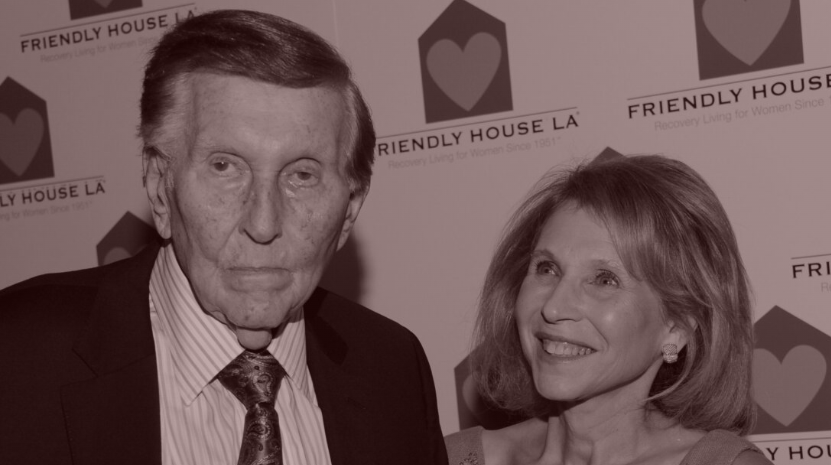
How about if Ellison and Cardinale buy just what they want, which is the Paramount movie studio? There would be a material tax implication for Paramount Global for selling the movie studio, too, I’m sure. (This is something that Greenfield also confirms.) But the thought has occurred before. Once upon a time, back in 2016, when Sumner Redstone was still in control and Philippe Dauman was running Viacom, the idea of selling a minority stake in Paramount Pictures was floated at a valuation of $10 billion for the studio alone—about what Redstone paid for it in 1994. But the idea was quickly scrapped and never suggested again. Might something like that be revived? It’s a possibility, although I’m not sure what it would accomplish for Shari or for Paramount Global, other than possibly using the cash to pay down some of its $14 billion in net debt.
And what if Ellison and Cardinale simply walk away from the whole thing? That’s when the real trouble starts. The stock collapses, of course, and I don’t think any other buyers emerge, until possibly some time next year when David Zaslav can do deals with his Warner Bros. Discovery, assuming it has the wherewithal to do anything like that. |
|
|
|
| FOUR STORIES WE’RE TALKING ABOUT |
|
|
|
|
|
 |
|
|
|
Need help? Review our FAQs
page or contact
us for assistance. For brand partnerships, email ads@puck.news.
|
|
You received this email because you signed up to receive emails from Puck, or as part of your Puck account associated with . To stop receiving this newsletter and/or manage all your email preferences, click here.
|
|
Puck is published by Heat Media LLC. 227 W 17th St New York, NY 10011.
|
|
|
|