|
Hello and welcome back to The Best & The Brightest. I’m Leigh Ann Caldwell, with everything you need to know on this cold, rain-soaked day in Washington.
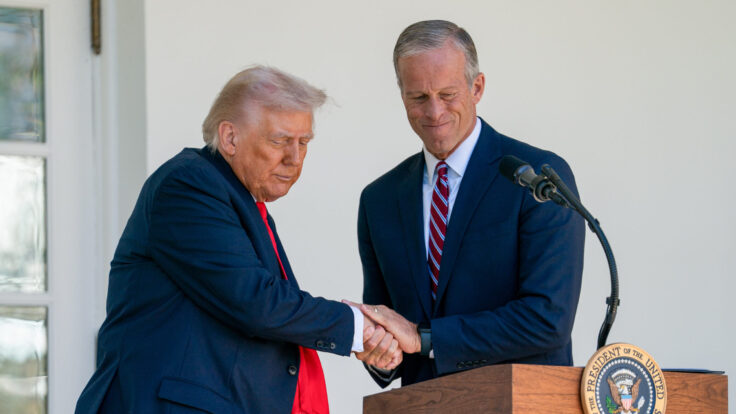
Today, I’m exploring the personalities and political incentives of senators as they posture and pontificate about their demands, dislikes, and disagreements over Trump’s One Big Beautiful Bill Act. The process in the Senate could be messy, but it will eventually come together—as Republicans have repeatedly told me, “Failure is not an option.” The question is what the bill will look like when it gets to the president’s desk, and what political capital individual members gain—or lose—along the way.
But first, a few other notes from around town…
|
- USAID employees strike back: The U.S. Agency for International Development, one of the first alphabet soup agencies essentially shuttered under DOGE, is going on a bit of a hiring spree. But it has nothing to do with the agency’s statutory job of assisting countries with disaster, poverty, and/or “democratic reforms”—that’s all basically done with, for now. Instead, after eliminating thousands of jobs, the agency is hiring lawyers to “defend vigorously” against more than 200 “grievances” from USAID employees. In addition, the new lawyers in the General Counsel’s office will be expected to “conduct investigations” into employee behavior, including “unauthorized communications with the media,” according to a job posting on LinkedIn.The agency appears to be using existing contracts for this retooled directive, a senior congressional aide told me: ZemiTek, a government contractor that has three contracts with USAID, including one to help the agency address “extreme poverty” in sub-Saharan Africa, posted the job listing on LinkedIn. While it may technically have the legal discretion to do this, and USAID has hired outside legal services in the past, “this was not how Congress intended those federally appropriated funds to be used,” Sen. Jeanne Shaheen, the top Democrat on the Senate Foreign Relations Committee, told me in a statement. “Using federal funding appropriated to USAID … to instead defend the Trump administration against the unlawful terminations shows how perverse and wasteful the administration’s actions have been.”Meanwhile, a senior State Department official said that “USAID is seeking additional support for a range of ongoing legal matters to help us vigorously defend taxpayer resources and carry out the president’s mandate to shut down USAID.” (ZemiTek did not respond to requests for
comment.)
There is “moral outrage” among former employees, both at the contractor and at USAID, said a former agency staffer who was hired by ZemiTek. This person received just one week’s pay when they were notified, in February, that their entire unit was being laid off—a severance offer far less than the months of pay that direct USAID hires got during the DOGE firing frenzy. Many of the laid-off workers are still searching for jobs while people overseas are dying without U.S. assistance.
|
|
|
|
A MESSAGE FROM AMERICAN BEVERAGE
|
We are American companies, making American products with American workers in America's hometowns.
America's beverage companies – The Coca-Cola Company, Keurig Dr Pepper and PepsiCo – have been a part of the American story for more than 100 years.
We are local bottlers and manufacturers, operating in all 50 states. We provide 275,000 good-paying jobs – the kind that require only a strong work ethic.
Our companies are central to their communities. Across the country, we contribute $2.8 billion to charities.
We’re proud of what we do and how we do it.
Learn more at
WeDeliverForAmerica.org.
|
|
|
- Trump’s TACO beef: Apparently, the president did not like being asked for his reaction to what the Financial Times recently termed the “TACO trade”—an acronym for Trump Always Chickens Out, which has become something of a mantra on Wall Street to describe the president’s repeated flip-flops on tariffs. “Don’t ever say what you said,” Trump furiously told a reporter, defending his “negotiation” strategy. “To me, that’s the nastiest question.” Will we see new tariffs by the end of this week?
|
|
|
|
Failure is not an option for Republicans as the Big Beautiful Bill moves to the Senate. The question is what remains of the multitrillion-dollar, debt-exploding monstrosity when Rand Paul, Ron Johnson, Mike Lee, and the chamber’s other deficit hawks get done with it.
|
|
|
|
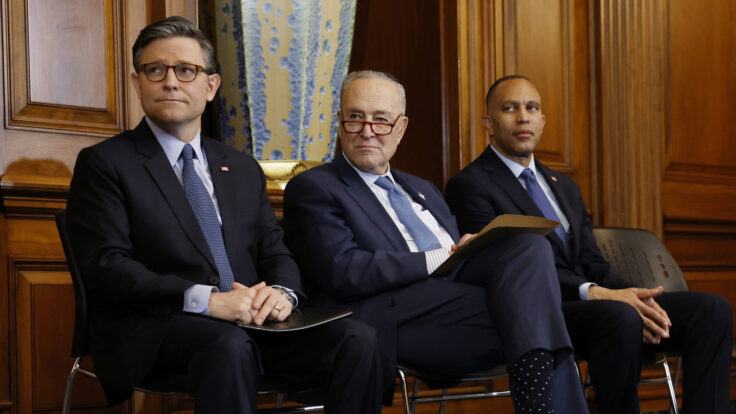
It’s that time of year—there’s a lull in Washington, but people are plotting their next moves for a coming showdown. To wit: When the Senate returns next week, they’ll have their turn with the tax and spending cut package hilariously named the One Big Beautiful Bill Act. With Trump’s help, House Speaker Mike Johnson managed to overcome Republican factionalism in the lower chamber to get their version passed. Now the party infighting will migrate to the Senate.
The dynamics and politics are similar, but the people aren’t. And the president, who demands complete loyalty from House members, might have a tougher job reining in the Senate. Herewith, a semi-complete taxonomy of the Senate deficit hawks, hawk-adjacents, centrists, pragmatists, and populists who will determine which version of the Big Beautiful Bill ultimately reaches Trump’s desk—and how much political capital everyone will burn along the way.
|
|
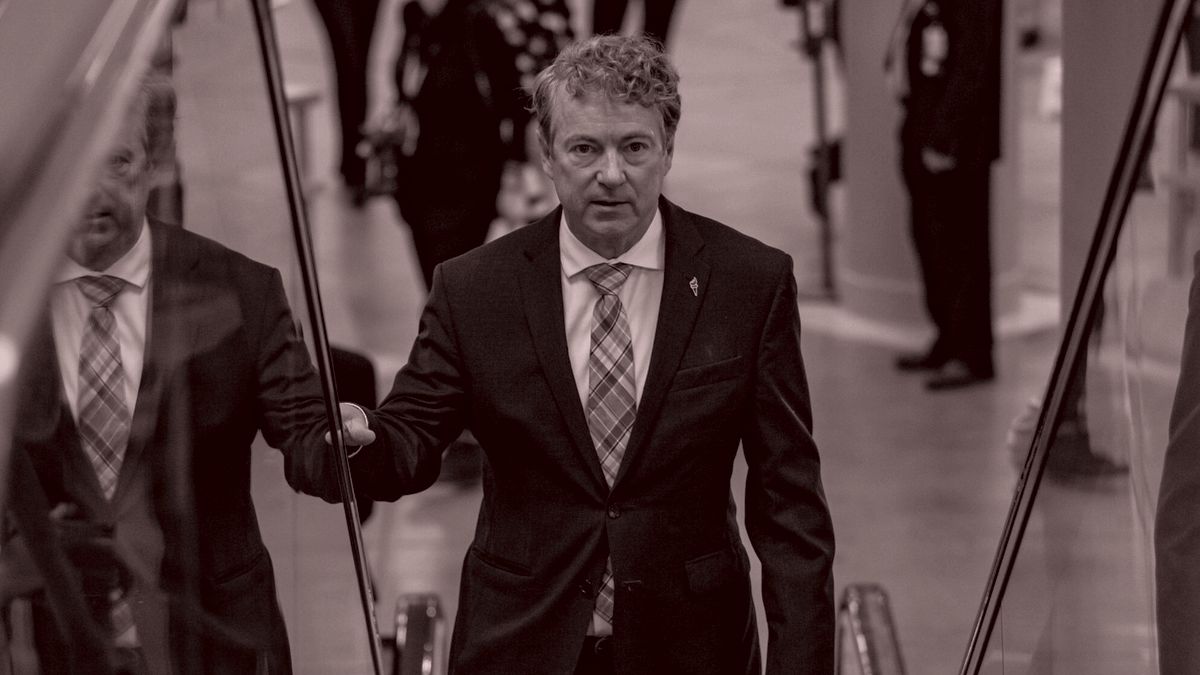
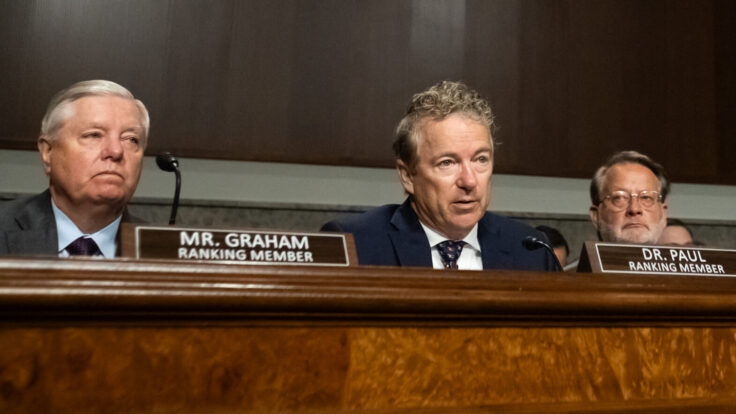
First up, there’s the duo who couldn’t care less what Trump thinks or threatens: Kentucky Sen. Rand Paul and Wisconsin Sen. Ron Johnson. Paul, in particular, has told every reporter in earshot how ugly he finds the “beautiful” bill, and refuses to support the House version in part because of its $4 trillion increase to the debt limit.
|
|
|
|
A MESSAGE FROM AMERICAN BEVERAGE
|
We are American companies, making American products with American workers in America’s hometowns.
You can find us on every street corner, in every small town and big city, with more than 4,400 manufacturing and distribution facilities across the country. We are an economic force in America, delivering $324 billion for the U.S. economy and $70+ billion in state and federal taxes.
Our success means success for small businesses and jobs for millions of Americans. We support an additional 4.2 million jobs that depend, in part, on beverage sales for their livelihoods.
Learn more at WeDeliverForAmerica.org.
|
|
|
This is just the latest episode in Paul’s consistent poking of Trump, which I wrote about in early March, covering everything from tariffs and fake DOGE cuts to expanded executive authority. He’s not worried about a primary threat: He won his last one, in 2022, with 86 percent of the vote. He could always face a more Trump-loving challenger, but he’s not up for reelection until 2028—a lifetime of votes in Senate politics. And like his fellow Kentuckian Rep. Thomas Massie, another inveterate Trump-poker, Paul’s got a strong brand; he’s unlikely to be phased by social-media sniping from Trump confidant Stephen Miller, who wrote on X today that “self-described libertarians” are “siding with lefty bureaucrats” ( i.e., the nonpartisan Congressional Budget Office, which assessed that the Republican bill will add $3.8 trillion to the deficit). There’s little chance that Paul votes for this bill, as whatever form it takes is unlikely to meet his spending and debt limit demands.
Sen. Johnson is in a similar camp. The cantankerous Wisconsinite has long crowed about deficits, and is demanding that spending return to pre-Covid levels—a roughly $5 trillion cut over 10 years, which he will not get. He also wants reforms to the budget process, which he might get. But one thing that likely won’t influence Johnson is a call from Trump. Like Paul, Johnson isn’t up for reelection until 2028, and he’s overcome the unexpected before—ousting incumbent Democrat Russ Feingold in the 2016 Senate race without much help from the Republican establishment, and holding on by a mere point against Democrat Lt. Gov. Mandela Barnes in 2022. He’s got a chip on his shoulder and he likes it. He threatened to vote against the first Trump tax bill in 2017, too, until he got the changes he demanded regarding taxes on pass-through businesses. Expect a similar play here.
|
Ron Johnson doesn’t usually have many followers in the Senate, but there may be others in his camp—and some who are worried about the deficit but reluctant to cross Trump, for whom Johnson acts as a heat shield. Perhaps they include Roger Marshall or Tommy Tuberville, two senators who complained loudly about the deficit during Joe Biden’s presidency but are unlikely to protest now.
Sens. Mike Lee and Rick Scott, too, made these complaints under Biden, with Lee sending a letter to the then-president demanding that any increase to the debt limit “be accompanied by cuts in federal spending of an equal or greater amount.” (The G.O.P.’s BBB definitely doesn’t do that.) Scott offered weekly updates on Biden’s “inflation and debt crisis.” But both have aligned themselves closely with Trump, and it’s hard to see either of them breaking with the president on anything—especially what’s expected to be his one legislative achievement.
Sen. Mike Crapo, the chair of the Senate Finance Committee, has stayed in close contact with the deficit hawks, a person familiar told me. He’s even joined them for their periodic dinners to understand their concerns and keep them close. After all, he knows he’ll need their votes.
|
|
As is often the case, the fiscal hawks are up against the more centrist Republicans. Sen. John Curtis could be one of those members who straddle both factions. He’s determined to reduce spending, but also wants to protect Biden-era renewable energy tax credits, most of which, per the House version of the bill, will be phased out at the end of next year.
|
|
|
|
Curtis, a freshman senator who founded the Conservative Climate Caucus as a House member, isn’t expected to buck the party, but could still impact the bill. Along with Sens. Jerry Moran (an unlikely ally), Lisa Murkowski, and Thom Tillis, he sent a letter to Senate Majority Leader John Thune pushing for the preservation of some tax credits to prevent disruptions and uncertainty in the renewable energy industry. I’m told by a person who works in the renewable energy policy field that Thune has been friendly to renewables, which could be a big boost in this effort. Thune even told the senators when to send him the letter to create the most impact, the source told me.
|
|
Then, of course, there are the members who are facing reelection in 2026. None of them can vote against the bill, since they’d surely invite a Trump-backed primary challenge. Tillis is one of them, and has already gotten into hot water with Trump—first when he threatened to vote against Defense Secretary Pete Hegseth’s confirmation (he backed down after Trump threatened a primary challenge), and then when he opposed Trump’s choice for top prosecutor in Washington, D.C., Ed Martin. But Tillis is expected to be vocal about his priorities, even if he won’t oppose the bill outright. (We’ll see whether he sticks to his early inclination to support the renewable energy tax credits—an approach that could pose challenges in a primary, but might also help him in a potential general election against popular former Democratic Gov. Roy Cooper.) Tillis will also push for more spending cuts—a safe position for a Republican ahead of primary season.
Sens. Bill Cassidy of Louisiana and John Cornyn of Texas are also facing primary challengers from the right in their conservative states, and both have been publicly calling for more spending cuts. Like Tillis, neither will derail the bill, but they will push for something that benefits their state.
|
|
Then, of course, there are Sens. Susan Collins and Josh Hawley, both of whom have expressed deep concerns about Medicaid cuts. (Murkowski is in this camp, too.) While at home in Maine this week, Collins—who is up for reelection this cycle, but knows exactly what she needs to do to win any primary and general election—said that she’s still examining the House bill, and will ensure Medicaid provisions don’t affect people with disabilities, families, and children. And Hawley, the O.G. Republican populist, has been particularly outspoken on the issue. These two are going to have to push back against much of the rest of the caucus, whose members could be open to even more cuts to Medicaid.
|
Finally, of course, there are the Republicans who are going to cause a stir and get some press for their priorities, but are ultimately trying to get to “yes.” Sen. Ted Cruz wrote an opinion piece in The Washington Post this morning demanding investment accounts for newborns, which are already part of the bill—based on legislation first introduced by Cruz, and which Trump renamed “Trump Accounts.” (Basically, he just wants to make sure his Senate colleagues don’t strip the provision out.) And Sen. Katie Britt is pushing for an enhanced Child Tax Credit, beyond the House’s proposed $500-per-child increase.
House Speaker Johnson wants the BBB on the president’s desk by July 4, but the Senate’s goal is just to pass their version by the July 4 recess—about four weeks from now. Thune and Republican leaders have said that the committees can hold their own markups if they’d like to craft their sections of the bill, but I’m told senators are privately saying that’s not going to happen. They have no interest in going through that time-consuming, start-from-scratch route. They’d rather posture for their priorities.
|
|
|
|
Join Emmy Award-winning journalist Peter Hamby, along with the team of expert journalists at Puck, as they let you in on the conversations insiders are having across the four corners of power in America: Wall Street, Washington, Silicon Valley, and Hollywood. Presented in partnership with Audacy, new episodes publish daily, Monday through Friday.
|
|
|
|
Unique and privileged insight into the private conversations taking place inside boardrooms and corner offices up and down Wall Street, relayed by best-selling author, journalist, and former M&A senior banker William D. Cohan.
|
|
|
Need help? Review our FAQ page or contact us for assistance. For brand partnerships, email ads@puck.news.
You received this email because you signed up to receive emails from Puck, or as part of your Puck account associated with . To stop receiving this newsletter and/or manage all your email preferences,
click here.
|
|
Puck is published by Heat Media LLC. 107 Greenwich St, New York, NY 10006
|
|
|
|