|
Hello, happy Memorial Day, and welcome back to The Best & The Brightest. I’m Leigh Ann Caldwell, writing to you while my husband and kids are watching the latest, and I guess final, Mission: Impossible.
In today’s special issue, my partner Abby Livingston reports on the hard conversations Democrats have been having on the Hill this week following the death of Rep. Gerry Connolly—the third Democratic member to die in office this year, a poignant reminder that Democrats have locked themselves into a seniority system with rapidly diminishing returns. The party is also dodging the fallout from Original Sin, Jake Tapper and Alex Thompson’s bestselling deconstruction of Joe Biden’s managed decline.
|
|
|
|
A MESSAGE FROM AMERICAN BEVERAGE
|
We are American companies, making American products with American workers in America's hometowns.
America's beverage companies – The Coca-Cola Company, Keurig Dr Pepper and PepsiCo – have been a part of the American story for more than 100 years.
We are local bottlers and manufacturers, operating in all 50 states. We provide 275,000 good-paying jobs – the kind that require only a strong work ethic.
Our companies are central to their communities. Across the country, we contribute $2.8 billion to charities.
We’re proud of what we do and how we do it.
Learn more at
WeDeliverForAmerica.org.
|
|
|
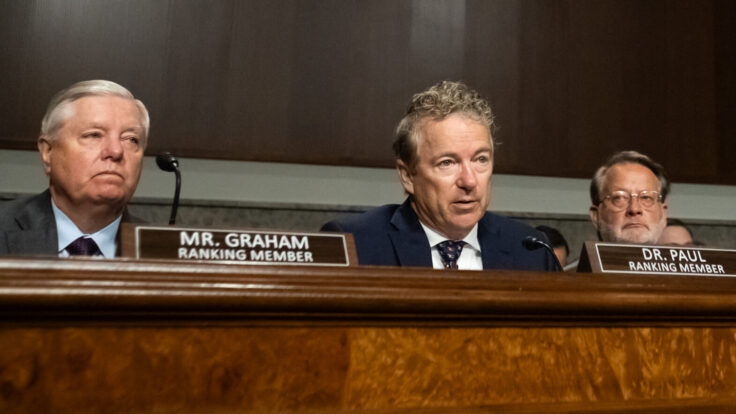
- The Senate suits up: Congress is off this week for the Memorial Day recess—members are back in their districts, attending parades, and honoring service members and veterans. Upon their return on June 2, the Senate will take a whack at the One Big Beautiful Bill Act, after the House narrowly passed it last week.Senators Rand Paul and Ron Johnson went on the Sunday political shows yesterday to reinforce their opposition to the bill as it stands. Paul is opposed to raising the debt limit by a minimum of $4 trillion—the largest single increase in history, and something that Republicans would never allow under a Democratic administration. Johnson is opposed to the trillions of dollars the bill would add to the deficit over the next decade, according to the Congressional Budget Office’s preliminary forecast that most other Republicans are dismissing or ignoring.
Johnson claimed there are enough Republican senators to block the bill in the Senate, where it can stand to lose only three senators. Presumably the third senator, in addition to Johnson and Paul, would be Josh Hawley, who’s been vocal about his opposition to the House bill’s cuts to Medicaid.
There are also parts of the House bill that the larger Senate is uneasy about, as I wrote last week. The Senate wants deeper spending cuts, fewer cuts to renewable tax credits, and a slimmed-down version of Trump’s tax priorities—particularly the “Make It in America” tax credit and full factory expensing, which together would cost up to half a trillion dollars over four years. And, of course, the Senate doesn’t support the increased federal deduction for high state and local taxes. All of which is to say that congressional reporters should probably rest up this recess. Things are gonna get spicy when lawmakers get back next week.
|
|
|
|
As the Tapper-Thompson exposé on Biden’s gerontocracy hits Washington, House Democrats are coming to terms with their own culpability in supporting an aging caucus.
|
|
|
|
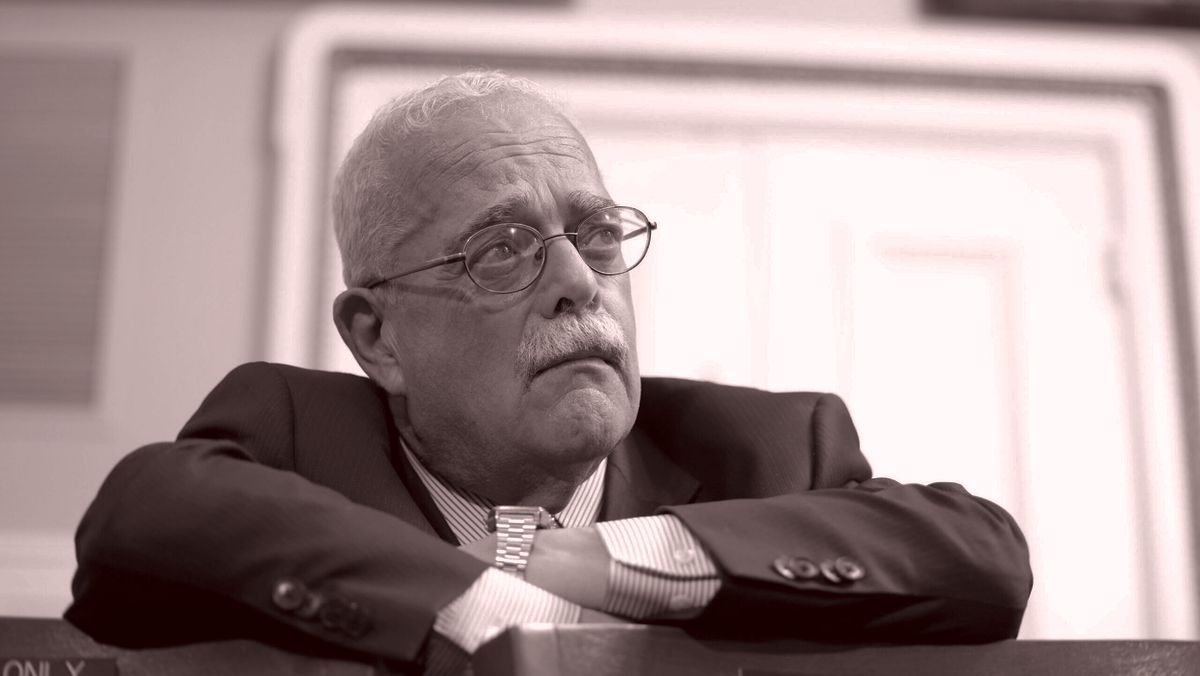
Less than 24 hours before the House voted on Donald Trump’s One Big Beautiful Bill Act—a multitrillion-dollar tax and spending package that would strip Medicaid from millions of Americans—the tragic news broke that Democratic Rep. Gerry Connolly had died. Connolly’s colleagues were bereft—in a town where the personal and the political are often inseparable, the longtime Virginia congressman was genuinely beloved by his peers. But there was also no escaping the grim calculus of the vote count. Connolly was the third Democratic member to die in office this year, following Reps. Raúl Grijalva and Sylvester Turner in March. In the end, the Big Beautiful Bill passed by a single vote.
Connolly would not have been the deciding vote—Speaker Mike Johnson was probably going to get some version of the megabill passed, regardless, with the precise margin decided by the number of members who would be allowed to go rogue. But the vacancies gave Republicans breathing room at a time when Democrats desperately needed more leverage. “It was a wake-up call,” a Democratic consultant told me. “They would have negotiated a different bill.”
|
|
|
|
A MESSAGE FROM AMERICAN BEVERAGE
|
We are American companies, making American products with American workers in America’s hometowns.
You can find us on every street corner, in every small town and big city, with more than 4,400 manufacturing and distribution facilities across the country. We are an economic force in America, delivering $324 billion for the U.S. economy and $70+ billion in state and federal taxes.
Our success means success for small businesses and jobs for millions of Americans. We support an additional 4.2 million jobs that depend, in part, on beverage sales for their livelihoods.
Learn more at WeDeliverForAmerica.org.
|
|
|
|
In fact, Connolly’s death was the latest in a series of wake-up calls—an ongoing five-alarm fire, really—that have been ringing in Democratic politics for years. They began in 2020, when Ruth Bader Ginsburg, who had rejected calls to retire during the Obama presidency, died while Trump was in office. Roe v. Wade fell 18 months later. Yet Democrats did little to address the party’s longstanding seniority system, which ossified into a veritable gerontocracy. The following year, Senator Dianne Feinstein died in office despite years of mounting questions about her health and mental acuity. Last summer, of course, Joe Biden was publicly revealed to be incapable of running for reelection—a scandal that resurfaced this past week with the publication of Original Sin, Jake Tapper and Alex Thompson’s endlessly touted chronicle of what they call a “cover-up” of the former president’s deteriorating health.
Indeed, for all their post-election soul-searching, so many of the party’s policy missteps arguably stem from an age issue that has now robbed them of power across all three branches of government. “This is the risk when you have a caucus that holds seniority as sacrosanct,” one Democratic member told me in the aftermath of the BBB vote. “I’d rather we were a party that rewarded new ideas and competence than one that rewards outliving someone else.”
The congressmen’s deaths were particularly dispiriting because Democrats actually gained a few House seats in November, leaving Johnson with a near-impossible margin to pass legislation. There was, briefly, a chance that the party could exert real power over the Big Beautiful Bill negotiations. Then in March, their members began dying, and Democrats lost their leverage. Connolly’s and Turner’s seats, falling as they do in Republican-run states, could sit vacant for months. As James Carville told me, summing up his advice for House Democrats: “Quit dying in states that have Republican governors!”
|
It’s long been a faux pas to speak openly about when elders should step aside. But despite a wave of Senate Democrats announcing retirements, it’s been a different story in the House, where so far this cycle only Connolly and Jan Schakowsky, the 81-year-old Illinois rep, have announced they wouldn’t seek reelection—in Connolly’s case, less than a month before his death. And not all elders are equally enfeebled: Nobody wants 82-year-old Rosa DeLauro, who’s thriving as the Approps ranking member, or 78-year-old Marcy Kaptur, who’s probably the only Democrat who can win her Toledo seat, to go anywhere. And it wasn’t that long ago that Ohio’s Joyce Beatty was the fastest base runner on the congressional women’s softball team while in her sixties.
|
|
|
Broadly speaking, Democrats had become numb to the sight of aging members who were disoriented as they wielded their committee gavels, or who reportedly showed up to Capitol Hill in pajamas. Staff and younger members could quietly fill the gaps—and were incentivized to keep their members in office to preserve their own careers. The kind thing was to let them go out “on their own terms,” and there was even an off-color term for those seemingly determined to part from Congress only through death: the Pinewood Box Caucus. Carville told me it’s probably too much to expect organic generational change in the House, even now. “If we’re sitting here waiting for people to willingly give up power,” he said, “that’s gonna be a long wait.”
The tax bill vote took place at the peak of the Original Sin frenzy as Tapper and Thompson toured their tome on how Democrats mishandled Biden’s physical and mental decline. The book has rocked the party establishment, identifying scores of fingerprints on the whole debacle, from senators to staffers, governors, consultants, and donors. All talked themselves out of confronting the president, then most finally turned on him—and one wonders whether such a reckoning could happen for elders on the other end of Pennsylvania Avenue.
Outside of Congress, there have been calls to implement age or term limits. But it’s a different story inside. Members haven’t managed to pass popular policies such as a ban on congressional stock-trading; it’s hard to see how they’d vote to limit their own tenures. A longtime Democratic House strategist told me that “there’s simply no one in the party with enough gravitas to tell these elderly members to stop running.” Voters themselves aren’t much of a check, either: The entire system is stacked in favor of incumbents, who attract the bulk of the corporate PAC money and consultant services.
Still, the strategist argued that this has created a kind of complacency, and “it wouldn’t take many successful primary challenges from the next generation to send shock waves through the geriatric caucus.” D.N.C. Vice Chair David Hogg is attempting to take the lead through a separate PAC to fund primary challenges against members he calls “ineffective.” That he has imperiled his party perch in the process—with the D.N.C. poised to strip him of his role over a technicality—reinforces just how much the party apparatus is built for incumbent protection. But the D.N.C.’s reaction may also indicate how party members are blind to genuine fury over the problem of aging members. As one prominent Democratic consultant told me: “Members gotta pass the torch, or the torch is going to be taken from us.”
|
|
|
|
Unique and privileged insight into the private conversations taking place inside boardrooms and corner offices up and down Wall Street, relayed by best-selling author, journalist, and former M&A senior banker William D. Cohan.
|
|
|
|
Finally, a media podcast about what’s actually happening in the media—not the oversanitized, legal-and-standards-approved version you read online. Join Dylan Byers, Puck’s veteran media reporter, as he sits down with TV personalities, moguls, pundits, and industry executives for raw, honest, sometimes salacious conversations about the business of media and its biggest egos. New episodes publish every Tuesday and Friday.
|
|
|
Need help? Review our FAQ page or contact us for assistance. For brand partnerships, email ads@puck.news.
You received this email because you signed up to receive emails from Puck, or as part of your Puck account associated with . To stop receiving this newsletter and/or manage all your email preferences,
click here.
|
|
Puck is published by Heat Media LLC. 107 Greenwich St, New York, NY 10006
|
|
|
|