{{ 'now' | timezone: 'America/New_York' | date: '%b %d, %Y' }} |
|
|
Welcome back to The Hidden Layer, my private email on the latest intrigue, noteworthy deals, and
endless chatter surrounding the artificial intelligence industry. I’m Ian Krietzberg.
In today’s issue, my candid conversation with Senator Mark Kelly on his newly announced legislative road map for A.I., plus a look at Tuesday’s Senate hearing on the dangers of artificial companionship. (I’ve written about the latter twice in recent weeks.) If you missed Tuesday’s dispatch on Aloe—perhaps the first “self-building” A.I. model—you can find that here.
Thanks for all the feedback. Keep it coming! Just reply to this email.
Finally, a reminder
that Puck is celebrating our fourth anniversary. We’re offering a 20 percent discount on annual memberships, and if you’re not signed up yet, remedy that here. (Be honest, you can expense it.)
Mentioned in today’s issue: OpenAI, Sam Altman, Megan Garcia, Adam Raine, Robbie
Torney, James Steyer, Josh Hawley, Dick Durbin, Mark Kelly, Google, Microsoft, Keir Starmer, and many more…
Let’s get into it… |
-
Altman takes a page from Zuck: It’s hard to ignore the timing of OpenAI’s latest policy changes, announced on Tuesday, surrounding teenage safety and privacy on ChatGPT. That same day, the Social Media Victims Law Center announced three new lawsuits on behalf of families of children harmed while interacting with chatbots on Character AI—including one who died by suicide—and the Senate Judiciary Committee held a
hearing focused on the harms posed by A.I. chatbots. The Institute for Family Studies also published the results of a survey it conducted with 2,000 American adults, which found overwhelming
support across party lines for child-safety-related A.I. regulation. (It’s possibly the only thing that nine in 10 Harris and Trump voters can agree on.)
Anyway, OpenAI C.E.O. Sam Altman has clearly learned a lesson from Mark Zuckerberg, who has made a habit of announcing new safety policies just in time for congressional inquiries. Tuesday’s Senate hearing featured testimonies from Megan Garcia,
the mother of Sewell Setzer III, who died by suicide in February after developing a relationship with a Character AI chatbot; Robbie Torney, Common Sense Media’s senior director of A.I. programs; and Matt Raine, father of 16-year-old Adam Raine, who committed suicide in April after discussing his plans with ChatGPT. Raine has brought a wrongful death
lawsuit against OpenAI. “We’ve come because we’re convinced that Adam’s death was avoidable,” he said. “And because we believe thousands of other teens who are using OpenAI could be in similar danger right now.”
During the hearing, Illinois Sen. Dick Durbin said, “If you put a price on this conduct, it will change. … We know the
direction we need to move in.” Meanwhile, Missouri Sen. Josh Hawley bluntly stated that the tech companies can’t be trusted, and called out their “deliberate strategy to farm engagement” among young, vulnerable kids. On Thursday, Hawley sent Altman a letter demanding a significant quantity of information regarding the design, intent,
and known impact of the company’s models on kids and teens. The OpenAI chief has until October 17 to comply with the request.
In the blog post announcing OpenAI’s new policies, Altman acknowledged an inherent “tension” between teen safety, freedom, and privacy on his platform. He emphasized the importance of protecting privacy—he’s often pushed for enshrining something
akin to attorney-client privilege for A.I.—and argued that adults should be free to use ChatGPT however they want, but noted that these principles sometimes conflict with the need to prioritize safety ahead of privacy and freedom for teens.
The policy changes, while not a silver bullet, are aimed at bridging the gap. Going forward, Altman wrote that ChatGPT won’t engage in conversations about suicide or self-harm if the bot determines a user is under the age of 18, and in cases of
suicidal ideation, will “attempt to contact the users’ parents and, if unable, will contact the authorities in case of imminent harm.” OpenAI also announced that new parental controls will be available by the end of the month.
Industry observers and insiders—including Matthew Bergman, founding attorney at the Social Media Victims Law Center, and
Jim Steyer, founder and C.E.O. of Common Sense Media—welcomed the changes. But they also questioned whether the safeguards will be sufficient, and if a “safe chatbot” is even possible, at least for young kids. - Silicon Valley brings an “A.I. future” to Britain: Just as President Trump embarked on an official state visit to the U.K., a handful of American A.I. giants revealed plans for enormous infrastructure investments in Britain.
OpenAI, Nvidia, CoreWeave, Salesforce, BlackRock, and Scale AI announced billions of dollars in proposed investments, and Google announced plans for a new data center in Hertfordshire, part of its two-year, £5 billion investment in developing the U.K.’s “A.I. economy.” Meanwhile, Microsoft announced a $30 billion investment in the U.K. between
2025 and 2028—the length of Trump’s term.
The U.S. and U.K. also announced a new tech partnership, in which the two countries will pool their efforts to speed up A.I. advancements. This will involve cutting red tape for nuclear power plant construction and the rapid adoption of
healthcare-related A.I. tech. Unsurprisingly, Prime Minister Keir Starmer applauded the investments, which are in line with the country’s own action plan on A.I.
|
|
|
AI growth is outpacing power infrastructure, making energy strategy a board-level concern. The
2025 Mid-Year Power Report highlights grid delays, rising onsite generation, and the strategic importance of power access. Read report |
|
|
Cloud provider CoreWeave
disclosed a massive deal with Nvidia this week. The semiconductor giant is “obligated to purchase [CoreWeave’s] residual unsold capacity” through April 2032. Funnily enough, CoreWeave’s entire business revolves around purchasing Nvidia G.P.U.s, plugging them into its own data centers, and renting them out to clients. (So Nvidia is… paying
CoreWeave to buy its own chips?) Nvidia is also a major CoreWeave shareholder, and anchored CoreWeave’s March I.P.O. with an approximate 6 percent stake in the company. Maybe Nvidia should just buy CoreWeave (and
Intel) and be done with it.
And now, the main event… |
|
|
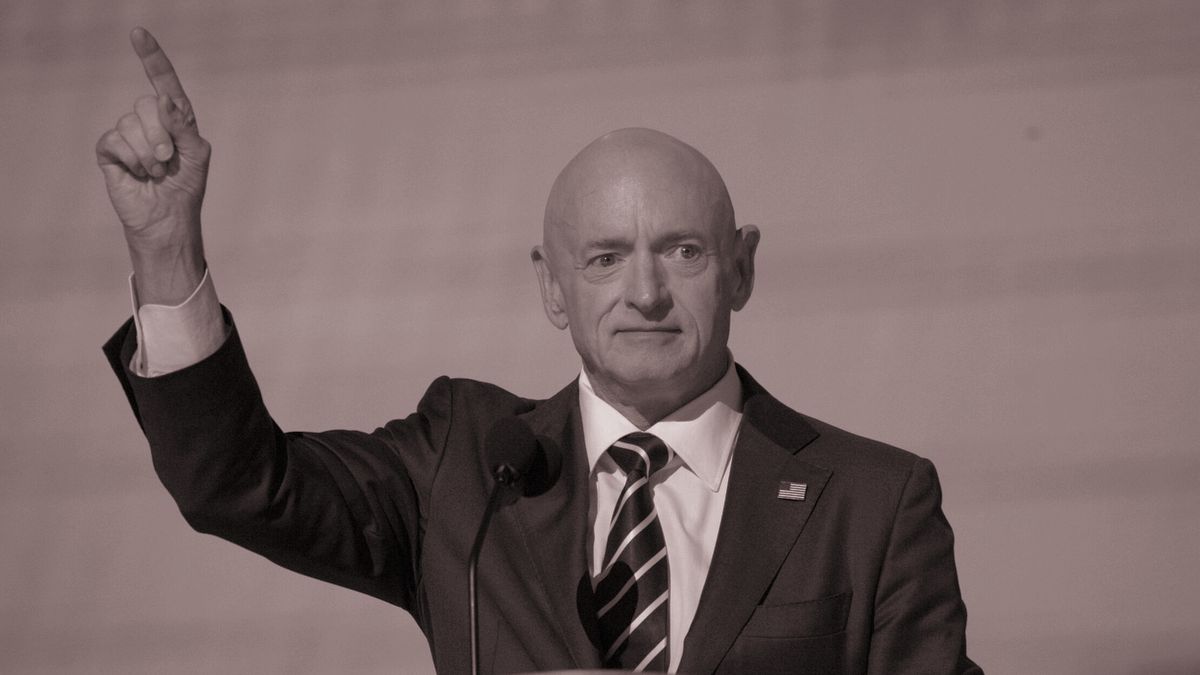
In a candid conversation, astronaut turned senator Mark Kelly discusses his new A.I. policy
road map, how the private sector can help “win” the A.I. arms race, and whether going all in on the technology is wise to begin with. |
|
|
Despite all the polling showing that Americans want quick, decisive regulatory action on artificial
intelligence—and no shortage of hearings about the best legislative approach—Congress has yet to set real guidelines for the technology. Arizona Senator Mark Kelly is hoping to change that with his new “A.I. for America” road map, which calls for the creation of a dedicated federal fund to invest in infrastructure and worker
retraining—paid for by the very A.I. companies that are straining U.S. infrastructure and threatening to replace American workers.
The idea, which Kelly calls “common sense,” is to ensure that the growth of the A.I. industry actually benefits ordinary citizens, while still “sustaining innovation and success” and all that. Other core elements of the plan involve educating K-12 students in A.I. and establishing guidelines—negotiated with labor union leaders—for how it should be used in
workplaces. Kelly hopes to leverage the “enormous profits” that A.I. companies are ostensibly generating to fund the plan—even though, as I’ve reported ad infinitum, few Big Tech companies, besides chipmakers like Nvidia, are actually generating profits from A.I. right now.
In at least one important way, Kelly’s road map is aligned with President Trump’s A.I. Action Plan: It assumes an inevitable diffusion of artificial intelligence across society, despite its known flaws and safety concerns. Dr. Sarah Myers West, the co-executive director of AI Now, applauded Kelly’s focus on issues like environmental stewardship, cost-sharing, and community partnership, which she called a “much-needed antidote to the reckless A.I. infrastructure build-out.” But she still found it troubling, she told me, that lawmakers across the
political spectrum have bought into the pursuit of A.I. supremacy. “There is a huge incentive for companies to persuade policymakers that the current trajectory is inevitable,” she told me. “These companies are turning to government to derisk their portfolios, and policymakers need to use that as leverage to act in the interest of the public rather than underwrite a precarious industry.”
On Tuesday, I got a few minutes to chat with Senator Kelly about his plan. As always, the following
has been lightly edited for clarity. |
Ian Krietzberg: Where did the idea of establishing some
sort of federal, corporate-financed fund for A.I. originate?
Senator Mark Kelly: When I got to the Senate in 2020, we heard a lot about A.I., but there was no real widespread awareness of how fast things could change. Then ChatGPT came out, and people saw this was a rapidly moving technology. I became really
concerned about what this means for workers. What if we wind up in a situation—five, 10 years from now—with millions of people losing their jobs because of A.I.? We’re not seeing those numbers yet, but I have anecdotal cases of a C.E.O. telling me that instead of hiring 20 analysts, they were going to hire two.
So I sat through most of those hearings on A.I., and we talked a lot about it, but then I didn’t see this thing moving along fast enough. Then when you see what the White House put
out—a lot of it makes sense, and some of it is very reasonable—but what it’s lacking is, How are we going to pay for these things? Are we going to put all this on the American taxpayer and have government-only funded programs? Or would a better solution be a public-private partnership?
Companies are going to gain a lot—actually, the most—out of A.I., and they should be a partner with government in how we fund the workforce, training and retraining and upskilling, but
also a partner in funding the infrastructure we need to build to make sure we stay ahead. My fear is, if we don’t do this, we’re going to find ourselves in a race with China that we’re going to lose, and that’s not an option. |
|
|
As AI adoption accelerates, power has become the defining constraint—and opportunity—for data center growth. Our
latest 2025 Mid-Year Power Report reveals a dramatic shift in how industry leaders are planning for the future. Read the report. |
|
|
Big Tech and major A.I. players have been
fighting regulatory legislation for years now. What’s been their response to your proposal?
Well, we’ve talked to not only tech companies, but A.I. companies. We’ve talked to universities, and folks formerly in government, and union leaders and labor [leaders], and over a period of months
we’ve worked with them to reconfigure this proposal. So we took their input—not all of it, but some of it—across that whole range of people.
Under the current administration, which has taken a strong anti-regulatory stance on A.I., what are the odds of this initiative, or something like it, actually coming to fruition?
That conflict is always going to be there. The conflict between, do we
want maximum innovation, or do we want to try to control the innovation to some extent, to maybe get a better outcome. That might not be what the innovators want—they want free rein. I get that, and I am very pro-innovation. I want this A.I. boom we could potentially experience to be as positive a thing as it can for our country. But that also means it needs to be positive for workers. So we’ve got to get ahead of this. We didn’t get ahead of social media, and now we’re still struggling to
figure out, how did we get here, and why didn’t we put some guardrails in place to prevent some of the stuff we see on social media today?
How would the money in your A.I. Horizon Fund be equitably distributed? The projects you lay out in your plan are pretty diverse. For example, data centers aren’t
equally distributed across the country, so you could imagine a disparate impact across states.
At the top level, you figure that out through a lot of collaboration. I think a good example is my SHIPS for America Act. We spent, like, a year talking to people and refining it, sitting down and taking the input seriously, then integrating it into the legislation. When we finally introduced the legislation in the Senate, we got a lot of support
because we listened to people and incorporated their good ideas. We didn’t incorporate every idea. Some just wouldn’t work. That’s the same approach we have here.
Many researchers have pushed back against this idea that A.I. should be ubiquitous, or that it should be adopted in schools, for example. Your plan actually calls for
more student exposure to A.I. So I’m curious how you think about this notion of the inevitability of artificial intelligence.
When I use ChatGPT, I see a remarkable technology. And we are, what, two years into this being publicly released? It is very, very powerful. As I talk to folks in industry, they think this is going to keep moving along at a rapid pace. I know what you’re saying. There are other
people that are saying, Well, this isn’t going to turn out to be what we thought it was. But we’ve got to make sure we don’t find ourselves looking back five or 10 years in the future saying, Well, we really messed that up, because we’ve got 12 million people out of work, and energy costs are up 50 percent because we didn’t put in the additional capacity to the grid—and we should have done all these things upfront, because this thing did move along this
fast.
I’m not saying that’s the worst case. It’s actually, in some ways, the best case, because it means the technology works. It helps us grow our economy, and ultimately, maybe if we manage it right, it creates more jobs. Every time we’ve had advancements in technology and innovation and productivity, we’ve had a bigger economy and more jobs. If we manage this well, I think we could have the same thing. But we could also screw it up. We need to have a plan for what we want this
country to look like 10, 20, 30 years in the future. |
That’s all for today. I’ll see you next week.
Ian |
|
|
Join Emmy Award-winning journalist Peter Hamby, along with the team of expert journalists at Puck, as they let you in on the
conversations insiders are having across the four corners of power in America: Wall Street, Washington, Silicon Valley, and Hollywood. Presented in partnership with Audacy, new episodes publish daily, Monday through Friday. |
|
|
Unique and privileged insight into the private conversations taking place inside boardrooms and corner offices up and down Wall
Street, relayed by best-selling author, journalist, and former M&A senior banker William D. Cohan. |
|
|
Need help? Review our FAQ page or contact us for assistance. For brand partnerships, email ads@puck.news. You received this email because you signed up to receive emails from Puck, or as part of your Puck account associated with {{customer.email}}. To stop receiving this newsletter and/or manage all your email preferences, click here. |
Puck is published by Heat Media LLC. 107 Greenwich St, New York, NY 10006 |
|
|
|