{{ 'now' | timezone: 'America/New_York' | date: '%b %d, %Y' }} |
|
|
Welcome back to The Best & The Brightest. I’m Leigh Ann Caldwell, back in school
for the day at Stanford’s Hoover Institution, where Eugene Volokh just gave a talk about free speech and Elizabeth Economy discussed U.S.–China geopolitics. Special thanks to Drew Endy, who tried to teach a roomful of journalists that biotechnology is actually a thing.
In today’s issue, Abby Livingston talks with the Cook Political Report’s Jessica Taylor, who outlines how a government shutdown
and tightening polls could sway this fall’s governor races in Virginia and New Jersey, especially amid all the generational and ideological upheaval reshaping Democratic primaries.
But first, a few notes from Capitol Hill… |
- The
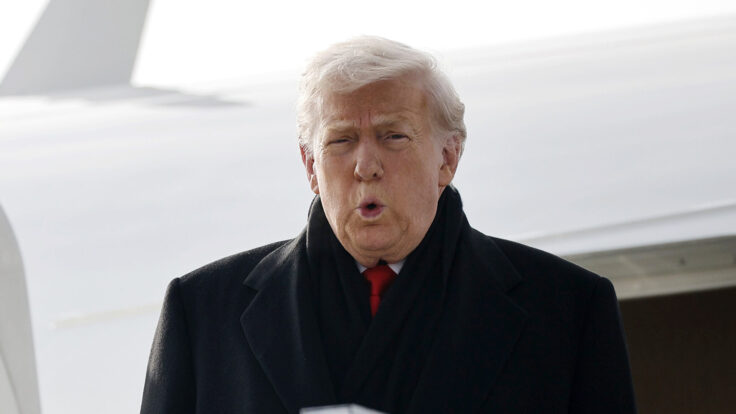
congressional watchdog strikes back: Absent a miracle, the government will shut down tomorrow at midnight, which also coincides with another critical deadline: Trump’s $4.9 billion “pocket rescission” of foreign aid will also go into effect after tomorrow if Congress doesn’t block the move. The Government Accountability Office, a nonpartisan congressional watchdog, has called the maneuver illegal, but the Supreme Court
allowed Trump’s clawback in an emergency-docket decision this week.
Of course, the administration is pleased with the initial ruling, which seemingly validates the president’s ongoing campaign to wrest control of funding from Congress. Republicans haven’t resisted his moves, either. As I
wrote a few weeks ago, both the White House and Senate Majority Leader John Thune are expecting further litigation on the issue, but the administration can now point to the fact that Congress didn’t stop them from canceling this set of funds.
The G.A.O. remains adamant that the power of the purse belongs to
the legislative branch alone. In a ruling out today, the group said the administration was again breaking the law by “improperly withholding [or] delaying” funding for FEMA’s Emergency Food and Shelter Program and the Next Generation Warning System Grants Program. It also recently found that the administration had illegally withheld funding for at least seven other programs, including
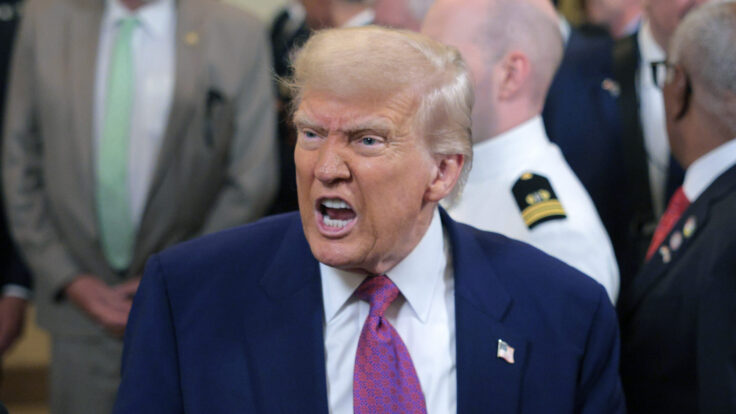
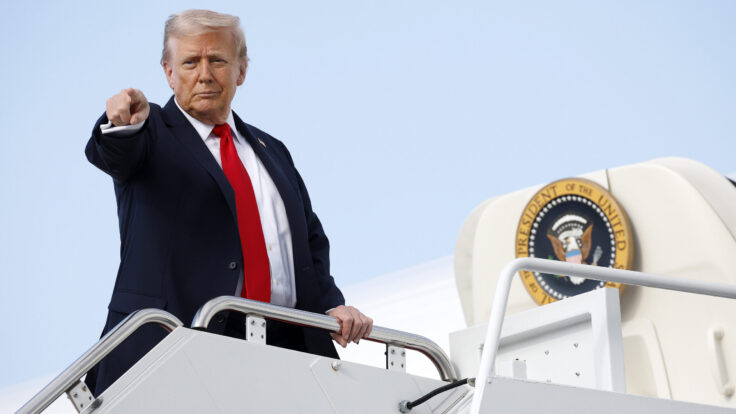
electric vehicle charging, Head Start, and N.I.H. medical research. - Shutdown stalemate: Trump’s meeting with congressional leaders today yielded no progress on a government funding deal but plenty of recriminations. “You don’t use your policy disagreements as leverage to not pay our troops, to not have essential services of government functioning,” Vice President J.D. Vance said after the meeting, sounding much like the Democrats of
yesteryear. (Historically, the G.O.P. has demanded policy changes in exchange for funding the government.)
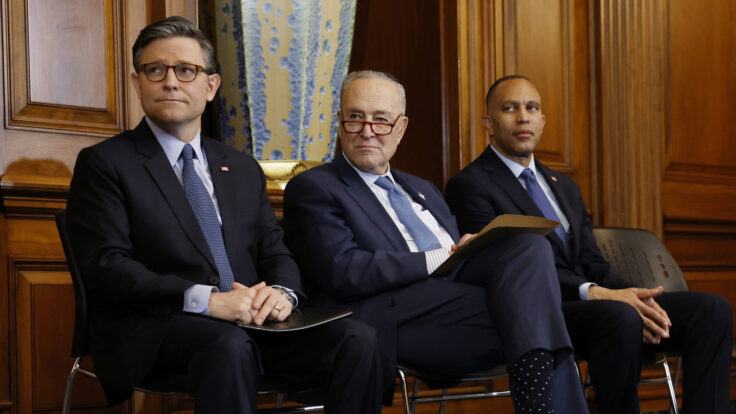
Meanwhile, House Republicans are out of town, with no plans to return until next week. House Speaker Mike Johnson said the House has done its job and it’s up to the Senate to pass the House’s funding bill unchanged, though now he’ll have to contend with some not-ideal optics: People will be losing government services while a quarter of the legislative branch isn’t
even in D.C.
Meanwhile, Senate Democratic leader Chuck Schumer continues to face pressure from his left flank. Following a report that Schumer might agree to a 10-day stopgap funding bill if Republicans promise to negotiate over Affordable Care Act subsidies, the progressive activist group Indivisible released a statement this afternoon
denouncing the idea. “Trading away leverage in exchange for a pinky promise isn’t a real strategy,” Indivisible’s Andrew O’Neill said. “Democrats should know better than to negotiate against themselves like this, and scrap this idea immediately.” Schumer scrapped the idea a few hours later.
|
Now on to the main event… |
|
|
Political soothsayers see diverging polling in Virginia and New Jersey, the two off-cycle
states that Democrats are watching for signs of electoral life heading into the midterms. Jessica Taylor, the peerless Cook Political Report analyst, surveys the shifting 2026 map—and explains how this week’s shutdown blame game could play out in November. |
|
|
One of the most critical tests of the pre-midterm electoral mood will occur just over a month from now: the
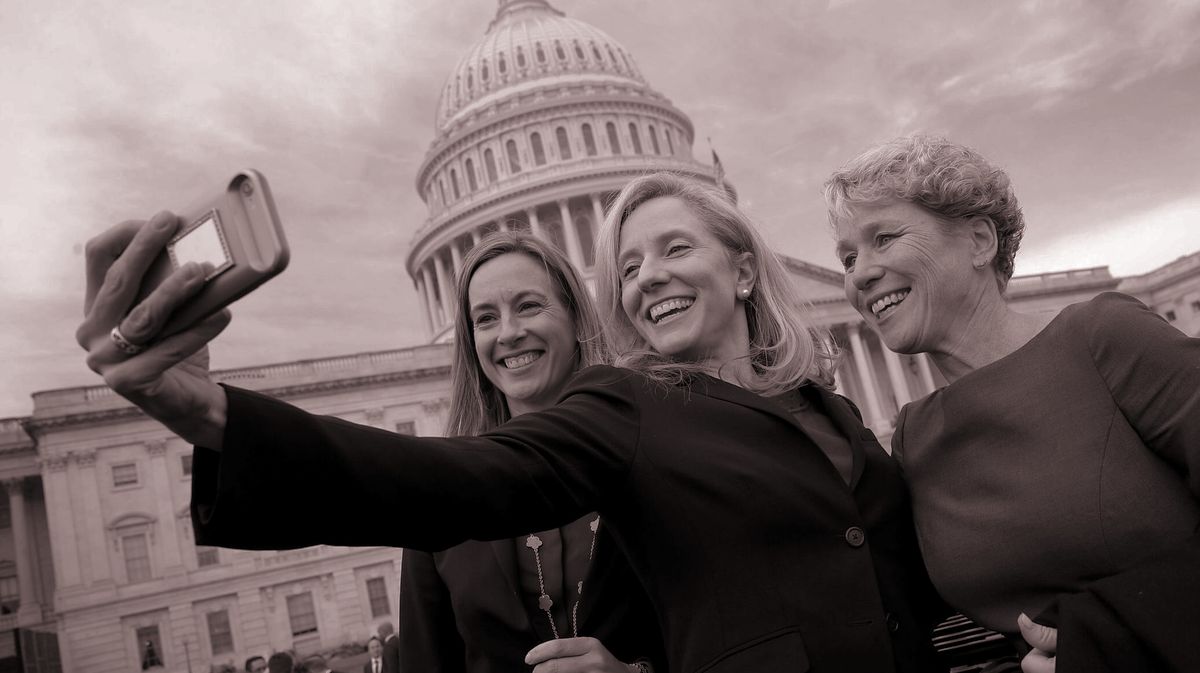
off-year governors’ elections in New Jersey and Virginia, both blue states that lurched rightward in 2024. In each case, Democrats are hoping that their candidates—Mikie Sherrill and Abigail Spanberger, both moderate women with national security backgrounds—will offer a model of a next-gen Dem who can win swing voters. The left is already fired up in Virginia, galvanized by federal workers who have been battered by budget cuts and are now bracing for a
government shutdown. But the polls are tightening in New Jersey. A split result would leave analysts and operatives with fewer clear signals to carry into 2026.
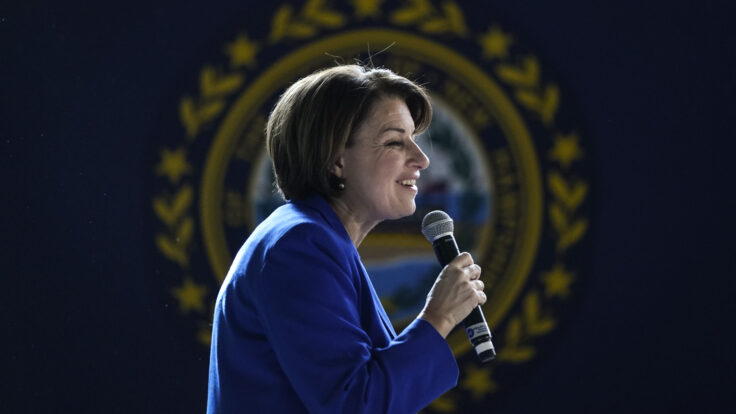
Of course, those two races are just the start of a much larger scramble for statewide offices next year. So I reached out to the Cook Political Report’s Jessica Taylor—a leading political analyst whose predictions move political markets, directly affecting fundraising and campaign momentum—to discuss the Virginia
and New Jersey tea leaves. We also talked about which party will get blamed for a seemingly inevitable shutdown, whether Democrats have a path to retake the Senate, and why everyone should keep an eye on Michigan. As always, the following has been lightly edited for length and clarity. |
Shutting Down in Virginia
|
Abby Livingston: What impact, if any, do you think a
potential shutdown could have on Senate and gubernatorial races next year—and the more immediate gubernatorial elections this November in New Jersey and Virginia?
Jessica Taylor: I’m looking to see whether it has an immediate impact on the Virginia governor’s race, because we had a shutdown in 2013 engineered by Ted Cruz to protest Obamacare. A lot of his party was mad at him for that, and it is attributed by operatives in both parties for costing them
the [Virginia] governor’s race that year. Virginia is affected more by a shutdown, and it’s been more affected by [budget] cuts and everything that’s happening in the federal government. That’s one reason Abigail Spanberger is ahead so much.
But I’m not sure of this shutdown, in terms of who might get the blame. Polls show it would be Republicans, and I don’t think Republicans in Virginia are angling for a shutdown. But are you able to pin it more on Democrats this time,
if Democrats in the Senate [conduct] more of a blockade? I do think it could impact Virginia uniquely in many ways.
Virginia is usually the state in an off-year that everyone’s obsessed with, because it’s one of the most competitive states. If so many things are going in Democrats’ favor, do you think there’s a risk that folks might overread the results of Virginia?
If we look at where Democrats are overperforming in special elections, it does show that they are
more motivated at this point. But I caution that, yes, both parties can overread things. In 2021, Republicans thought that Glenn Youngkin’s victory was going to presage this huge red wave for them. And that really didn’t happen.
Democrats nationwide—if Spanberger wins, if Sherrill wins—they’re going to want to hold them up, like, Here are these moderates, here are these women who have been in national security roles and defense roles, as opposed to the other
election that will be happening concurrently in New York City, where Republicans are going to want to hold up [Zohran] Mamdani as the face of the Democratic Party.
There are Senate candidates who are thumbing their nose at the establishment in the way that Mamdani did. They’re not socialists, but they’re more liberal than I think D.C. Democrats want. So it’s going to be about who Democrats lift up as the face of the Democratic Party, and who Republicans
are able to make out to be the bogeyman.
New Jersey is a race that’s getting much more interest, and it’s expected to be closer.
What you’re dealing with in New Jersey is that Trenton is very unpopular, and I think that was a large part of why [incumbent Gov. Phil] Murphy’s election was so close. There’s a backlash toward the way the state is being run as a whole. Sherrill is a little more distant from that, since she’s been in
D.C., but she’s been criticized for not knowing state policy issues as well. Murphy has even criticized her for her plan to freeze electricity rates and different things. This is the third time [the Republican gubernatorial candidate, Jack] Ciattarelli has run, and he came so close last time. The state moved toward Trump in the presidential election—but do those voters come back out in an off-year election? That’s a
big question mark. Ciattarelli did align himself more with Trump to win his primary, so that has enabled Sherrill to paint him as more Trumpy. |
How do you see the Senate map at this point?
Republicans are still overwhelming
favorites to keep the majority. There is a very, very narrow path for Democrats, if everything goes in their favor, that I did not see at the beginning of 2025. They were able to get candidates they wanted, like in North Carolina with Roy Cooper and Ohio with Sherrod Brown. Republicans did not get the candidates they wanted in states like New Hampshire and Georgia.
But Democrats have not cleared the field in Michigan. That primary has the potential to
really hurt Democrats. Maine, on paper, should be their easiest state to win; it’s the only state up for Republicans that Kamala Harris carried. I think that [Democratic Gov.] Janet Mills is going to get in, but I also think that Graham Platner [an oyster farmer and Marine Corps veteran also running for U.S. Senate] represents a real threat to her in a primary, when you have a primary electorate that is clamoring for people to
fight Trump and fight Washington. Janet Mills and Susan Collins are actually friends.
It’s yet to be seen what type of electorate we’re facing in 2026, in part because we don’t know where Trump’s approval ratings are going to be. The map is still working against Democrats, but they’ve expanded it in a way that I wasn’t sure was possible in January.
It’s unusual to see so many competitive Democratic primaries. What’s the mood among Democrats you speak
to?
It’s very different when I talk with people in-state versus people in D.C. Democrats have been better than Republicans at clearing primaries and anointing favorites. But there is a disconnect: Are you a fighter or are you a part of the establishment? That’s the biggest divide.
Campaigns evolve every cycle, and this one feels particularly unstable. What’s the biggest change you see on the horizon?
The generational change. We saw that Democrats
were willing to go along with the establishment picks. But Biden, and everything that happened with him, opened up a new window of people wanting to move on from the septuagenarians and octogenarians, and go with people that are more like them. You have candidates in a lot of these races talking about, I’ve really struggled, I’m more like you, I’m blue collar, etcetera. Those are the voters that Democrats have been losing. So the question is whether they can win those
voters back with candidates that are more aligned with them.
What’s the most interesting thing going on in the governors’ races?
The most interesting race, to me, is in Michigan. I think that rising blue-collar voters speaks to a lot of people not being seen by either party. And there’s a very viable candidate in Michigan, Mike Duggan, who’s been in politics and the mayor of Detroit, who left the Democratic Party to run as an independent. He’s one
of the few independents I’ve seen with a viable path. The conventional wisdom early on was that he was going to pull from Democrats and give Republicans an opportunity to win. That could still happen, but right now, he’s pulling equally from both parties. So could we see a rise in more independent candidates?
My last question is the one everyone asks me: What do you make of Texas?
It’s fascinating right now. It does feel like maybe some of the attacks on [A.G. and
Senate candidate Ken] Paxton are working, because [incumbent Sen. John] Cornyn has been rising in polls. And Rep. Wesley Hunt [who is considering jumping into the Senate primary] is still sort of the X factor there. He’s still trying to present himself as the Goldilocks alternative. But Texas is a runoff state—at some point, you have to get to 50 plus one. The biggest X factor in a lot of these races is,
What does Trump do? Last time, Trump was more reined in with his endorsements, compared to 2022, when he backed a lot of really flawed candidates. But you can’t predict what Trump is going to do.
Then you have the ideological fight happening on the Democratic side, which is fascinating. Colin Allred is the candidate that Democrats wanted last time. He ran up against a bad environment, but I don’t think he ran the best campaign either, and I’m not sure he’s
lighting the world on fire right now. And then you have someone like James Talarico. I think he’s a really, really interesting candidate. But is he too liberal for Texas? To me, Texas is Democrats’ Lucy and the football: Every single time they think they can do this, the ball is pulled away from them at the end. |
|
|
Join Emmy Award-winning journalist Peter Hamby, along with the team of expert journalists at Puck, as they let you in on the
conversations insiders are having across the four corners of power in America: Wall Street, Washington, Silicon Valley, and Hollywood. Presented in partnership with Audacy, new episodes publish daily, Monday through Friday. |
|
|
Unique and privileged insight into the private conversations taking place inside boardrooms and corner offices up and down Wall
Street, relayed by best-selling author, journalist, and former M&A senior banker William D. Cohan. |
|
|
Need help? Review our FAQ page or contact us for assistance. For brand partnerships, email ads@puck.news. You received this email because you signed up to receive emails from Puck, or as part of your Puck account associated with {{customer.email}}. To stop receiving this newsletter and/or manage all your email preferences,
click here. |
Puck is published by Heat Media LLC. 107 Greenwich St, New York, NY 10006 |
|
|
|