{{ 'now' | timezone: 'America/New_York' | date: '%b %d, %Y' }} |
|
|
Hello and welcome back to The Best & The Brightest. I’m Leigh Ann
Caldwell.
The government is reopening tonight, a massive relief for federal employees who have gone without a full paycheck for more than a month. I’ll have more below on the end of the longest shutdown in U.S. history—and what comes next.
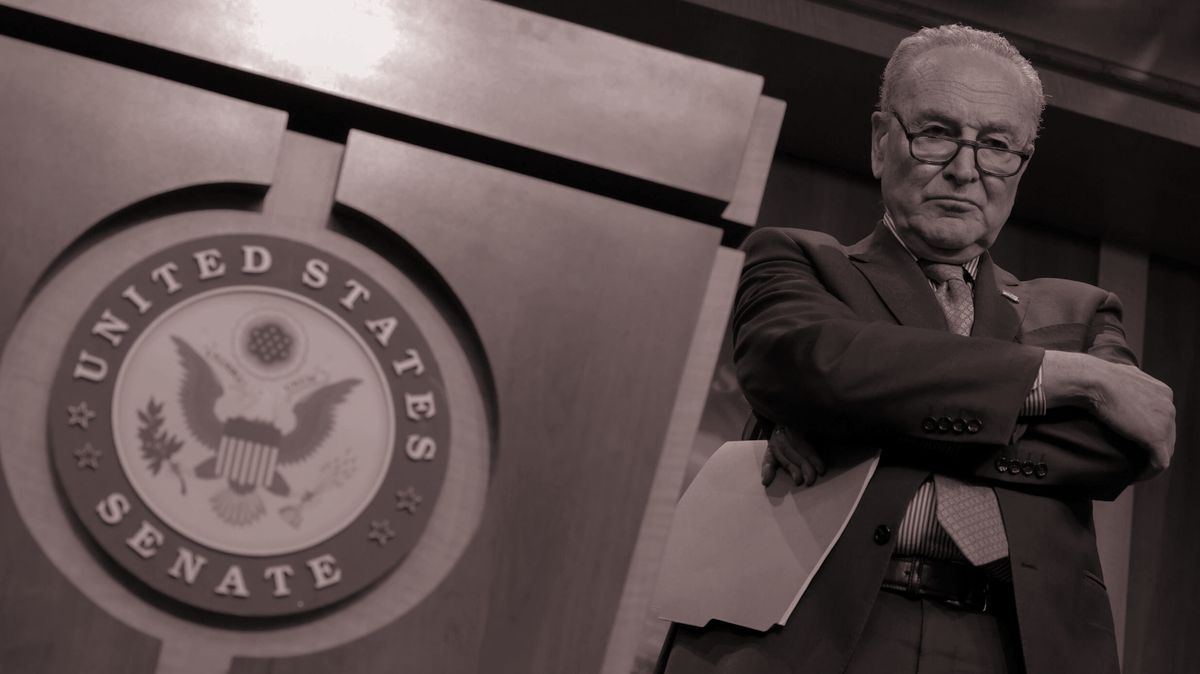
I also have fresh reporting on the drama surrounding Chuck Schumer, the beleaguered Senate Democratic leader who just can’t seem to catch a break. The Progressive Change Campaign Committee’s Adam Green
told me that the minimum expectation, after Democrats failed to secure real concessions in exchange for reopening the government, is to “have one head roll—and that head is Chuck Schumer.” |
|
|
Instagram Teen Accounts default teens into automatic protections for who can contact them and the content they
can see. Nearly 95% of parents say Teen Accounts help them safeguard their teens online. And we’ll continue adding new protections, giving parents more peace of mind. Explore our ongoing work to keep teens safe online. |
|
|
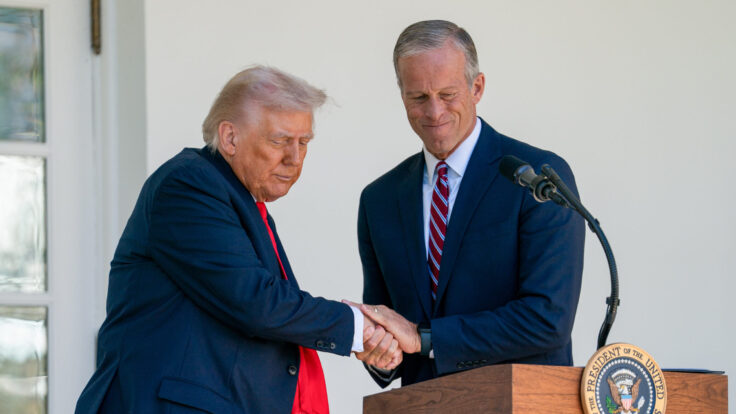
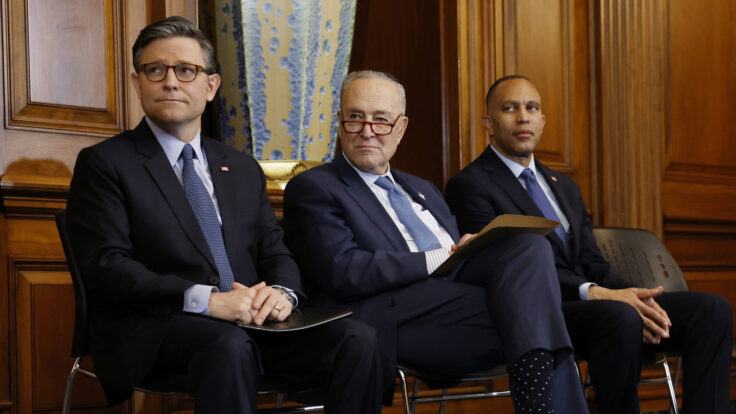
- Reopening roll call: Earlier this evening, the House passed the Senate’s funding bill to reopen the government through January 30. The president is expected to sign it tonight, thereby turning on the lights immediately. (It will likely take another few days for federal and legislative workers to get paid, however.) The bill passed with all but two House Republicans; meanwhile, six Democrats broke with the party to support the bill. Most Democrats remained opposed, because the deal
doesn’t address rising Affordable Care Act costs. House Democrats, however, are attempting to work around Republican leadership and are introducing their own discharge petition to extend A.C.A. subsidies for three years. It will be a test to see if any vulnerable Republican signs on. Republican Rep. Don Bacon, who has been working on a Republican version of A.C.A. subsidies, said he won’t back the Democratic effort. Democrats have to compromise, he said.
- The Epstein email drop: On Wednesday morning, Democrats on the House Oversight Committee released emails from Jeffrey Epstein’s estate indicating that Donald Trump may have known about Epstein’s misconduct and spent time with one of Epstein’s victims. Epstein wrote to Ghislaine Maxwell that Trump spent “hours” in Epstein’s home with one of Epstein’s victims—name redacted—and referred to Trump as “the dog that hasn’t barked.”
Republicans fired back, accusing Democrats of cherrypicking by leaving out emails that named prominent Democrats. Republicans then released more than 20,000 pages that had been handed over to the committee under subpoena by the Epstein estate.
The White House insists that Trump has nothing to hide—Karoline Leavitt, the White House press secretary, called the new emails a “clear distraction”—but continues to refuse to release all of the documents. Meanwhile, CNN reported
that administration officials summoned Rep. Lauren Boebert—one of four Republicans who signed Republican Rep. Thomas Massie and Democratic Rep. Ro Khanna’s original discharge petition to release the Epstein files—to the White House today. Also today, Speaker Mike Johnson swore in the petition’s 218th signatory, Rep. Adelita Grijalva, which means it can come up for a vote after seven legislative days. Grijalva
invited Elizabeth Stein and Jessica Michaels, Epstein survivors, to witness her swearing in, and she signed the petition immediately. - Are Democrats ready for another Kennedy?: Last night, my partner Peter Hamby broke the news that Jack Schlossberg, John F. Kennedy Jr.’s grandson, had entered the crowded primary to fill retiring Rep. Jerry Nadler’s
Manhattan congressional seat. Schlossberg had the most high-profile campaign rollout for a House member, maybe ever. The New York Times dropped a Maureen Dowd profile, and MSNBC’s Jackie Alemany released clips of her exclusive
TV interview with the 32-year-old social media influencer.
Some Democrats might be rolling their eyes about another nepo baby entering the political conversation, but others want the party to reclaim the Kennedy name and mantle. Trump reportedly brags that a Kennedy, Health and Human Services Secretary Robert F. Kennedy Jr., works for him. There hasn’t been a Kennedy serving in Congress since 2021, when Rep. Joseph Kennedy III retired after losing to Sen.
Ed Markey in the Massachusetts Senate primary.
|
|
|
The embattled top Senate Democrat is once again facing calls to step down from
leadership. |
|
|
Chuck Schumer has had better weeks. The back-slapping,
attention-craving Senate Democratic leader is now facing the type of scrutiny that anyone who loves to be loved would prefer to avoid.
For 39 days, he managed to keep Senate Democrats mostly united behind a government shutdown. But then, on day 40, eight members of his caucus defected—working with Republicans on a nominally bipartisan deal to reopen the government without extracting any major concessions in return. Despite voting against the deal himself, Schumer bore the brunt of the
blowback within the party—from the liberal left groups and Senate hopefuls who are demanding he resign, to colleagues who are frustrated with his leadership. And though he personally called potential 2028 presidential contenders—including governors Josh Shapiro, Andy Beshear, and JB Pritzker—to ask them not to criticize the deal, according to three people familiar with the calls, some
ignored him and disparaged it in public. |
|
|
Last year, Instagram launched Teen Accounts, which default teens into automatic protections. Now, a stricter
“Limited Content” setting is available for parents who prefer extra controls. Instagram will continue adding new safeguards, giving parents more peace of mind. Learn more. |
|
|
Schumer is now being blamed by the left both for allegedly orchestrating the
negotiations to end the shutdown, and for losing control of his caucus. And with the illusion of party unity broken, he’s also facing criticism internally for the way he handled the shutdown. More than half a dozen Senate Democrats and aides I spoke to painted a picture of a leader who, while he performed much better than he did during the last funding showdown in March, still failed to direct the caucus when they needed it most. He largely failed to manage expectations about what was
achievable in a shutdown—none has ever resulted in a policy win for the party responsible—and never articulated a clear endgame, they say. But despite this latest round of finger-pointing, the backstory of the shutdown is more complicated—as are the conversations surrounding a potential Schumer succession. |
Earlier this fall, when it first became clear that Senate Democrats would withhold the votes needed
to fund the government, the left wing of the party cheered Schumer, in a major reversal from March. Back then, Schumer had entertained, but ultimately rejected, the idea of a shutdown to protest the Trump-Elon DOGE cuts. This time around, though, Schumer held the line and articulated a clear demand: No Democratic votes for a short-term funding bill unless Republicans committed to addressing the expiring tax credits under the Affordable Care Act.
Keeping
the party unified for as long as he did was not a trivial accomplishment: Several sources told me that six Democratic senators never wanted to shut down the government to begin with. Schumer, however, managed to convince all but three—Sens. Catherine Cortez Masto, John Fetterman, and Angus King (an independent who caucuses with the Democrats)—to stick with the party. And he called them almost daily to keep them tucked in. Even as the real-world
impacts of the shutdown grew apparent, Schumer kept them in line, repeatedly pointing to polling in closed-door meetings that showed Democrats were winning the argument with voters. “The off-ramp was to keep working and working and working until the Republicans cracked,” a person close to Schumer said.
And for a while, it seemed the Republicans would crack. Big Democratic wins on Election Day—combined with news coverage of escalating flight delays, and Trump’s refusal to release
food assistance to 40 million Americans—seemed to have put the G.O.P. on defense. But Trump was enforcing unity for his party, as well. He made clear to Republicans that they must refuse to negotiate on anything. Meanwhile, the most nervous Democrats began talking to their Republican counterparts on day one of the shutdown, frustrating leadership and others in the party who thought the talks projected weakness.
People close to Schumer dismiss the notion that he somehow
puppeteered the eventual compromise—“fucking poppycock,” said one. On the contrary, these people said, Schumer simply encouraged bipartisan conversations and asked that members not surprise him. Sen. Jeanne Shaheen of New Hampshire, who led the negotiations with Republicans, said on Fox News that she kept “leadership informed throughout,” which of course caused even more speculation that Schumer was secretly pulling the strings.
Schumer’s allies also rejected the idea
that he can control individual members, since power moves like removing a member from a committee are decisions for the caucus, not the leader. Indeed, the senators who voted for the deal—hailing from purple states like Nevada, Maine, Pennsylvania, and New Hampshire—doubted the shutdown was a smart move in the first place. The pain, they felt, wasn’t worth the political gain. |
|
|
Their decision, however, has clearly cost Schumer political capital. The moderates who
struck the deal feel Schumer has thrown them under the bus as their colleagues, and people close to the leader himself, disparage the compromise. Meanwhile, those who voted against the deal say they wish Schumer had been more vocal about his opposition. The moderates, they argue, caved at the moment when Democrats should have had maximum leverage—right after stunning electoral victories, and amid a torrent of negative headlines for Trump. (Holding up food aid, hosting lavish events,
tearing down the East Wing…) Everyone came away angry with each other, but united in their frustration with Schumer.
Among the activist class, too, Schumer has become the focus of mounting frustrations with leadership. “The most minimal thing, in order to pivot back to the election, is to have one head roll—and that head is Chuck Schumer,” said Progressive Change Campaign Committee co-founder Adam Green. “As a matter of results, he failed, and that has to be
acknowledged.” |
Still, the turmoil is unlikely to have any immediate impact on Schumer’s job security.
Despite all of the complaining, there’s no one who wants to foment a coup, and no one else is exactly champing at the bit to lead the Senate Democrats during such trying times for the party. Plus, such a move would draw attention away from the president’s myriad self-inflicted wounds. Hawaii Sen. Brian Schatz, who seems to have the votes to be whip in the next Congress, won’t challenge Schumer—nor would Senators Chris Murphy and Cory Booker, who
have their sights set on the White House. Patty Murray, the top Democrat on the Appropriations Committee, is fully on Team Schumer and has no intention of being leader. She also receives a full security detail—a nice perk—for having served as president pro tempore when Democrats were in control.
After the 2026 midterms, of course, there will be a required vote to elect the congressional leadership team, at which point Schumer could be
sidelined with a public challenge or a quiet nudge. “[Schumer’s leadership] is never not in jeopardy,” one Democratic aide told me. But a serious threat in that area is likely only if Democrats lose seats next year.
At that point, there’s the issue of who would replace him. Among the viable contenders, Schatz is well-liked and has proved to be a good messenger and deputy whip, but he’s still green. (Schumer was a member of Harry Reid’s leadership team
for a decade before he became leader.) Schatz could also face some opposition, given that he’s a leader of the party’s progressive wing, which runs counter to the tradition of Senate leaders who care more about winning than ideology.
There’s also the dark horse possibility. Several Democrats clued into party dynamics suggested that centrist Sen. Cortez Masto could be a potential challenger to Schatz, even though she has not publicly expressed interest in the job. She did, however, develop
a massive donor network as chair of the Senate Democrats’ campaign committee for the 2020 cycle. She also recently formed the Mod Squad, a place for pragmatic Democrats to share and elevate ideas and legislation. During the shutdown standoff, she voted 15 times to fund the government, which could reassure the centrist wing that thinks the party has moved too far left.
In any case, Schumer’s job is probably safe for what is expected to be his final two-ish years in office. (He hasn’t
announced whether he’s retiring or running when his term is up in 2028, but Senate Democrats have no expectation he’ll run again.) Until then, he will likely continue to be a scapegoat for the left. |
|
|
Join Emmy Award-winning journalist Peter Hamby, along with the team of expert journalists at Puck, as they let you in
on the conversations insiders are having across the four corners of power in America: Wall Street, Washington, Silicon Valley, and Hollywood. Presented in partnership with Audacy, new episodes publish daily, Monday through Friday. |
|
|
Unique and privileged insight into the private conversations taking place inside boardrooms and corner offices up and
down Wall Street, relayed by best-selling author, journalist, and former M&A senior banker William D. Cohan. |
|
|
Need help? Review our FAQ page or contact us for assistance. For brand partnerships, email ads@puck.news. You received this email because you
signed up to receive emails from Puck, or as part of your Puck account associated with {{customer.email}}. To stop receiving this newsletter and/or manage all your email preferences, click here. |
Puck is published by Heat Media LLC. 107 Greenwich St., New York, NY 10006 |
|
|
|