|
Hello and welcome back to The Best & The Brightest, I’m Leigh Ann Caldwell.
Washington is on edge this afternoon after another elected official was manhandled by D.H.S. agents. This time, it was California Senator Alex Padilla who was shoved, pushed to the ground, and handcuffed, all of which you’ve probably seen on video by now. Padilla had been disrupting a press conference being held by Homeland Security Secretary Kristi Noem in California (an event that was pretty disruptive in and of itself), but the aggression toward a senator was excessive and, until recently, unimaginable.
In fact, there have been a few similar incidents in recent weeks: Newark Mayor Ras Baraka was arrested outside an ICE detention center in New Jersey, where Rep. LaMonica McIver was charged with assault, and a staffer for Rep. Jerry Nadler was handcuffed in his office by ICE agents.
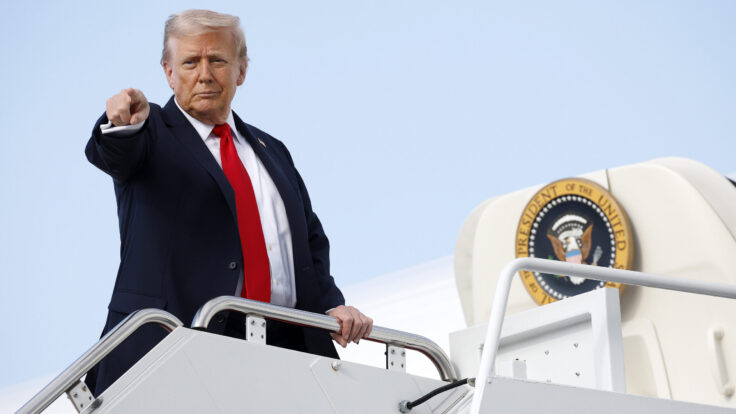
The handcuffing of a U.S. senator is only the latest manifestation of Trump’s escalating rhetoric against his political opponents—including his recent threat to arrest California Gov. Gavin Newsom. It’s also representative of the administration’s contempt for Congress more broadly. Trump has been seizing authority from the legislative branch by eliminating agencies and government programs, imposing tariffs, firing inspectors general, and sending weapons to Israel—all without the congressional consultation or approval required by law. Arrests, investigations, and handcuffs, however, are something else entirely.
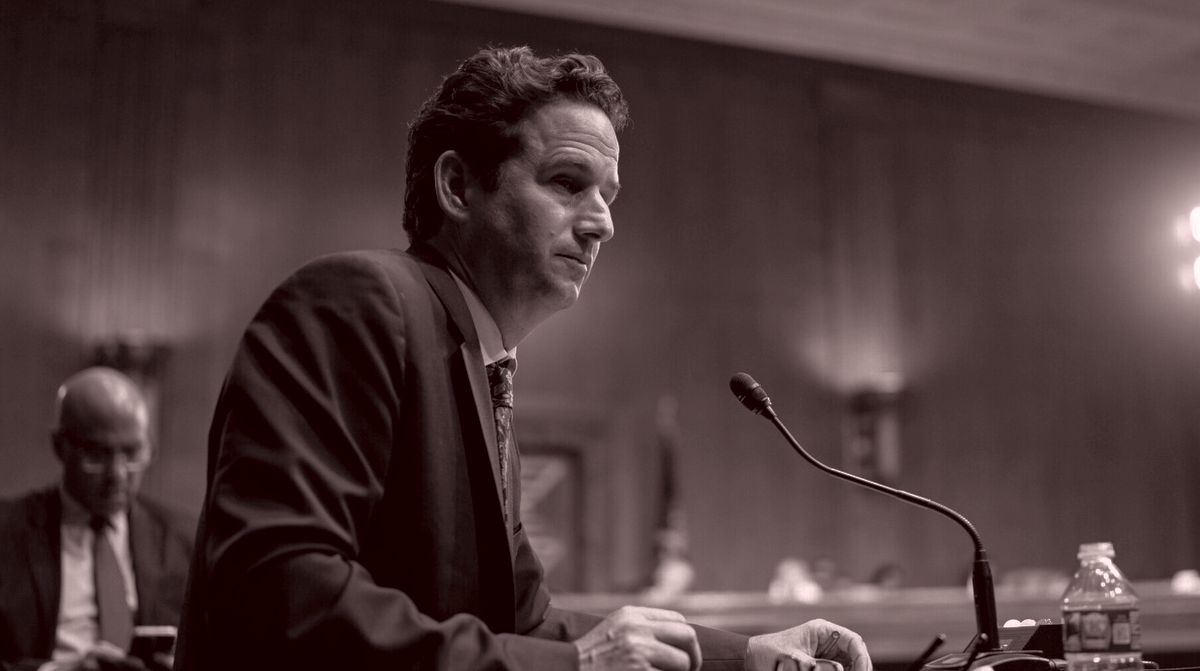
Speaking of Democratic senators, a few hours before Padilla was handcuffed, I sat down with Hawaii Democratic Sen. Brian Schatz at Puck’s second Power Breakfast at the historic Hay-Adams hotel, across the street from the White House (and the AFL-CIO headquarters). We had a great group of guests in the room, including Keenan Austin Reed, Scott Sloofman, Rich Luchette, Brian Krebs, Sarah Schakow, Jennifer Siler, Kevin Walling, Sara Fischer, Marianna Sotomayor, and many more. I spoke with Schatz about whether Congress can claw back any authority from the White House and if Democrats are overplaying their hand on the Big Beautiful Bill. More from our conversation, below the fold.
But first, here’s Abby with a few odds and ends from around town…
|
|
|
 |
Abby Livingston |
|
Trump Picnic Politics & G.O.P. Baseball Dominance
|
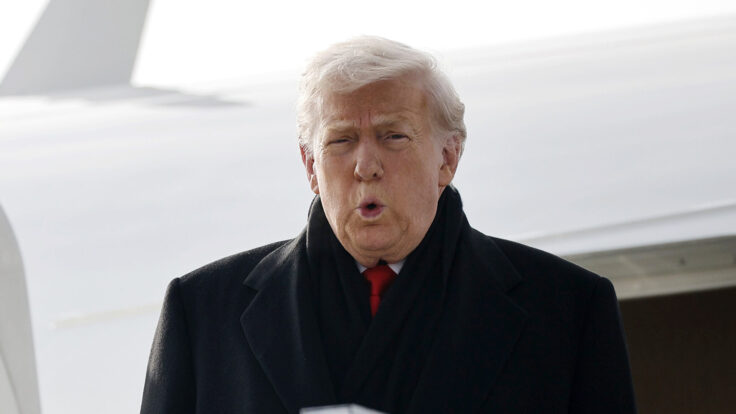
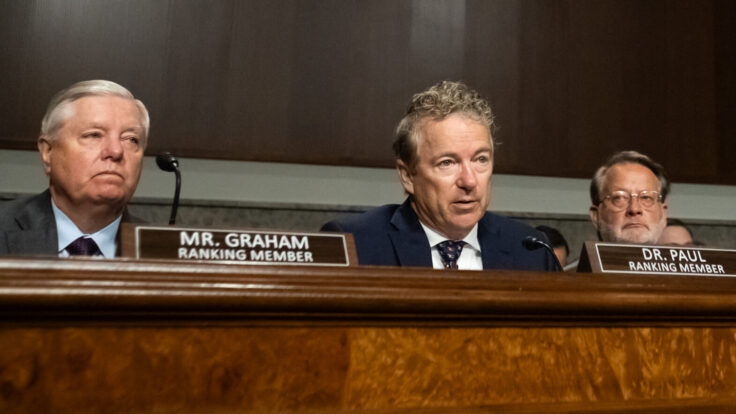
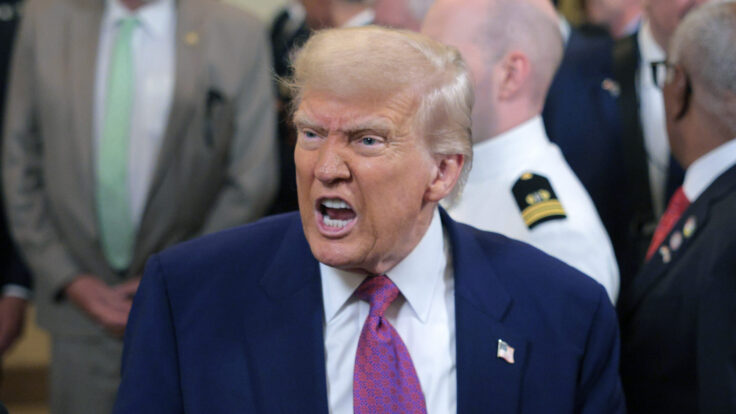
- White House picnic rejects: Sometimes the most powerful force in Washington isn’t money or power, but FOMO. After Big Beautiful Bill critic Rand Paul disclosed the “incredibly petty” news that he was perhaps “the first senator in U.S. history to be uninvited to the White House picnic,” Trump un-uninvited him “and his beautiful wife and family” via Truth Social. “He’s the toughest vote in the history of the U.S. Senate,” Trump wrote, “but why wouldn’t he be?” Plus, the president noted, the picnic would give him “more time to get his Vote on the Great, Big, Beautiful Bill, one of the greatest and most important pieces of legislation ever put before our Senators & Congressmen/women.”No such luck for Paul’s fellow Kentucky Republican, Rep. Thomas Massie—a perennial burr in Trump and House leadership’s saddle—who posted on X that he was still excluded even though “Pelosi and every Democrat” was invited. “Low class,” Massie concluded. On the other hand, no amount of picnic schmoozing with Trump was going to get Massie to “yes.”
- No crying in baseball: Also this week, the congressional Republican baseball team extended its winning streak over Democrats to five years, led by Texas Rep. Roger Williams, a former pro baseball player in the Atlanta Braves system. Democrats have not won a game since Morehouse pitching phenom Cedric Richmond exited Congress and joined the Biden White House in 2021. It was a bittersweet game for both teams. Longtime Democratic coach Bill Pascrell died last year, as did Williams’ wife, Patty. Both were recognized at the game at Nationals Park, with Pascrell posthumously inducted into the Congressional Baseball Hall of Fame. Williams praised his late friendly rival in a text to me on Monday: “Bill was a good friend of mine. … A good guy and a good friend.”Is there hope for the Democrats? Maybe. All signals indicate Democratic candidates are coming out of the woodwork to run for office, and it’s assumed that team coach Linda Sánchez will be scanning next year’s primary results and the D.C.C.C.’s “Red to Blue” program for diamonds in the rough.But Williams redirected me to the actual point of the game: “The winners are the charities,” he said, noting that they were likely going to raise more than $2 million for the Boys and Girls Clubs of Greater Washington, Washington Nationals Philanthropies, and the United States Capitol Police Memorial Fund. The U.S. Capitol Police, you’ll recall, were at the scene of the 2017 shooting at the Republican baseball practice that injured several people, including now-House Majority Leader Steve Scalise.
|
|
|
|
Now, back to my conversation with Senator Schatz…
|
|
|
|
A wide-ranging conversation with Senator Brian Schatz about Trump deploying troops to Los Angeles, the dangerous rhetoric of “invasion,” the trouble with the Big Beautiful Bill, and how to un-DOGE America.
|
|
|
At the tender age of 52, Hawaii Sen. Brian Schatz represents a generational shift in the Democratic Party, even if he still needs to wait his turn for top leadership—or at least until 2026, when Sen. Dick Durbin retires and Schatz will finally get his shot at becoming the Democratic whip. Until then, he’s positioned himself as a critical voice in the caucus, even as Democrats, by Schatz’s own admission, are aimless.
Schatz has elevated his reputation on the Hill as one of few members of the minority to get creative, not just rhetorical, in opposing Trump, including by placing holds on administration nominees to protest the administration’s “lawlessness.” Of course, he’s had plenty of rhetoric for the president too: His national profile has risen as one of his party’s sharpest communicators (and yes, he too has been known to curse in public).
On Thursday, I sat down with the senator at the historic Hay-Adams hotel, across from the White House, as part of Puck’s Power Breakfast series. We discussed what worries him most about Trump’s second term, how Democrats should react to the president’s militarized response to protests in L.A., and whether defending Medicaid could be the Democratic Party’s path back to power. This excerpt of our conversation has been edited and condensed for clarity.
|
“This Is Definitely a Trap”
|
|
Leigh Ann Caldwell: The Trump administration continues to call the unrest in Los Angeles an “invasion” of immigrants coming over the border. Where do you fear the administration is going to go under the guise that this is an invasion?
Brian Schatz: This is a rhetorical trick. If you think that people coming to this country illegally can be characterized as an invasion, that’s fine, but that’s not the kind of invasion that was envisioned by Congress when they established the federal code that allows the mobilization of forces. They were talking about a country invading our country, not people being able to come across the border in an impermissible fashion.
If you hate this unlawful behavior of the president and his administration, then you have a special obligation to be as disciplined as possible when communicating to the broader public who is not in the middle of the protest. We have to maintain the high ground, because this is definitely a trap. It’s unlawful and authoritarian. That’s number one. Number two is, they
definitely don’t want to talk about this unpopular bill [the One Big Beautiful Bill Act]. We have to be as ferocious as we can in terms of standing up for the rule of law, while quickly reminding people that this is all so they can pick your pocket.
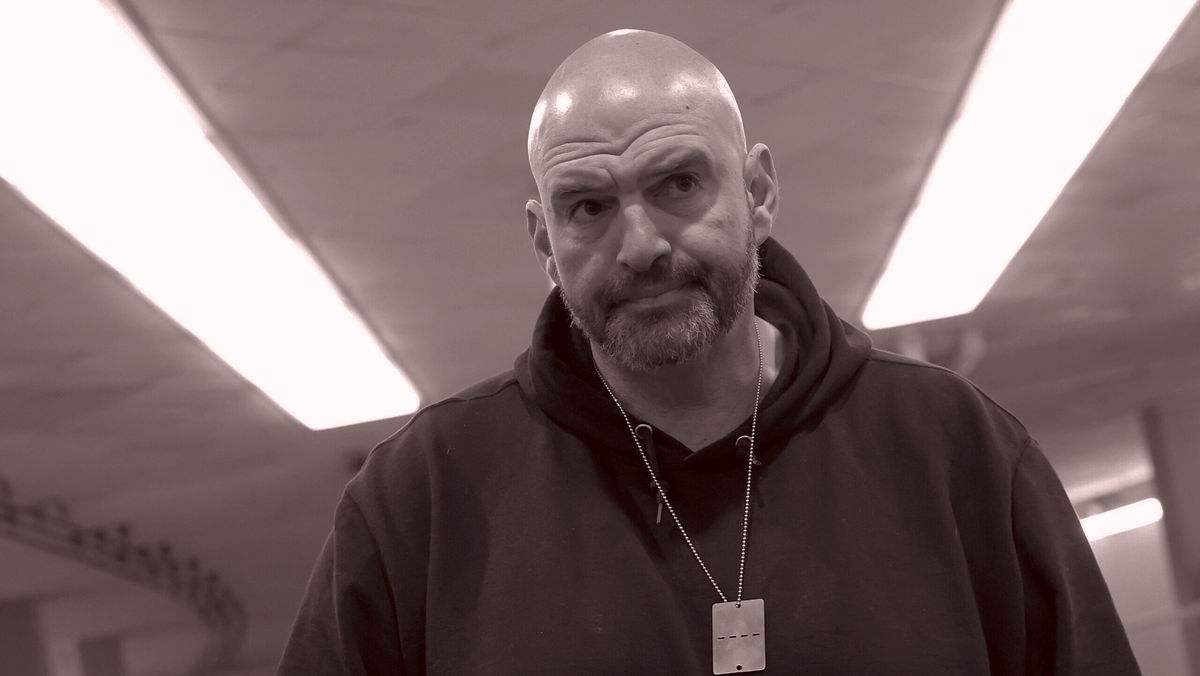
But the administration, and even your colleague Senator Fetterman, say that Democrats, by denouncing the use of the military and National Guard, are standing with unrest and with people who aren’t supposed to be in this country.
I like John a lot, and we get along, but I don’t know anyone, at least in the United States Senate, who’s expressing any kind of sympathy to anybody who’s lighting cars on fire or throwing bricks or interfering physically with a law enforcement action—even if it’s the kind of law enforcement action you find objectionable.
Democrats across the country are worried about what’s happening. Anarchists go in and hijack any protest and light stuff on fire, and then that becomes a 24/7 news item. We need to address that asymmetry in the media. But Democrats need to clarify that those people are not part of our coalition. The nuance is hard. Protests are about how it looks. And we need to make sure we don’t fall into any of Donald Trump’s traps.
So what can Democrats do about it?
We should focus on this bill, and we should fight the unlawful actions of the administration in court. We should clarify the kind of immigration and border
enforcement that we find to be appropriate. But I think it’s perfectly reasonable to imagine a cohort of voters who didn’t like the disorder at the border that they observed under the previous administration, and also don’t like this disorder. If you have an aversion to things being a little sketchy, wobbly, and violent on television, and you didn’t like what you saw at ports of entry under the Biden administration, you can also imagine that same voter going, This seems worse, more unlawful, more unstable, more like a developing country.
So Democrats need to be the ones that stand for a lawful process at the border to fix the broken immigration system, and to recognize, Let’s kick the bad people out, and let’s not do harm. We’re chasing farmworkers around with drones, removing 4-year-olds from school, questioning nurses from the Philippines—that’s not what most people signed up for. Some people love that stuff, and that’s their thing, but it ain’t 51 percent of the public.
|
|
If Democrats are going to focus on the Big Beautiful Bill for the next year and a half, is putting the spotlight on its Medicaid cuts going to be your path back to power?
I think we’re on a path to a good midterm, doing the basics, talking about healthcare, talking about the need to check this administration, talking about the price of everything. The worry I have structurally with the Democratic Party is, are we now the party that wins in the midterms and loses in the presidential cycles? That’s not a good place to be.
We should try to take one or both of the chambers back, and not turn our internal reform conversation into our external messaging. There’s a longer-term conversation about the coalition that makes up the Democratic Party, and how we make sure we’re competitive in states where we’re not currently competitive. But that doesn’t need to be accomplished by the end of this calendar year, and it can actually interfere with running against Republicans’ really unpopular bill
Why does it interfere? Why can’t you do both?
It’s sort of a self-answering question—we can’t do both because we’ve demonstrated we can’t do both. I also think it’s a little too interesting when Democrats are fighting each other in public, and it’s a little too ready-made of a story that has conflict and controversy in it. This bill is about two-to-one unpopular. That’s the good news for us.
The bad news for us is that only about two-thirds of the public know about it. So our job is to make sure close to 100 percent of the public knows about it. And by the way, to know this bill well is to really hate it. There are all these Easter eggs that have turned rotten—like a tax benefit for silencers. They just threw in, with impunity, whatever they thought they could get through. I think the more people know about this bill, the better.
Republicans say that Democrats who vote against this bill, which will probably be all of them, are voting to raise taxes on every American. And they also say Medicaid work requirements are actually popular. So could it also be a political liability to vote against it?
I suppose anything is possible, but I will tell you that the last round of Trump tax cuts, we went into it thinking, Let’s try to kill the bill, but we know we’re probably not going to be able to. So, let’s play this thing to a tie. We did much better than that. The public is a little different about the question of tax rates. It’s not uniformly popular to cut taxes in every instance anymore. And when these tax cuts are going to substantially benefit people making more than $4 million a year, and the money comes from things that people are sympathetic to, I think they lose that argument.
|
|
Do you think an end to the renewable energy tax credits will be devastating for the renewable energy industry?
The details very much matter here. It could be as bad as a death knell, or it could be harmful, but survivable. I think we just don’t know. The demand for electricity is going up because of electrification, because of A.I., and because of a couple of other factors. I’ve been a climate person for all my adult life, and Democrats are always in a tough spot because we’re always arguing for solving a planetary crisis, but there were trade-offs that had to do with a lack of abundance—a lack of people having enough of the things that they care about. That equation has flipped so that the shortages are going to be created by the elimination of these tax credits.
I want to ask about USAID. Will appropriators put back into place some of this funding, and programs that have been slashed, through the State Department budget?
We’re in very constructive conversations. I think people are giving Marco Rubio bad information about the extent of the harm. But he continues to say he wants the foreign aid enterprise to survive. Not to be too much of a stickler, but if he wants to merge it into the State Department, we need a law for that. But that’s not my abiding concern. There’s a pretty good argument for folding it in, as long as all the functions exist. As the political dust is settling, there are a number of Republicans who are saying they didn’t want to cut PEPFAR, or UNICEF, or the World Food Program, or Food for Peace. As near as we can tell, out of a multibillion-dollar budget, the stuff they objected to amounts to less than $50 million—and that’s being generous to them. My view is, cancel all that stuff and we’ve got a deal.
But do you think you will actually be able to reinstate some of these programs?
Yes, I do. I think we can substantially restore funding to the entire enterprise with some big reforms. But the core function, which is economic support, humanitarian assistance, foreign military financing—I think we’re going to cobble this thing back together. It may not look exactly the same, but I think there’s a recognition, even quietly among the hawks on the Republican side, that this is one of the tools in our foreign policy toolkit.
I know you think that Donald Trump is dangerous, and you have a lot of concerns. What do you think is the most concerning thing he’s doing?
It depends on the day, but I think the undercovered story of the administration is the corruption. That stablecoin thing [the Trump-linked crypto token USD1] is a Swiss bank account. You can just help them out and show proof of it and there’s no paper trail. It’s pure grift and graft. And I think the 747 being donated by a foreign power with whom we have a mixed relationship is creepy stuff, and would be even if it were one of our staunchest allies.
However, I think that Democrats have to have discipline. You’re not trying to get vindicated, you’re trying to win. And so the thing that moves us in the direction of winning is this bill containing all these Medicaid cuts, cuts in nutritional assistance, the evisceration of the clean energy tax credits—and all to provide resources to people who don’t actually need them. I think the more we talk about this bill, the more we weaken the president’s position.
|
|
That’s all for today. To listen to our entire conversation, tune in to a special episode of The Powers That Be—Puck’s daily podcast on the intersection of Washington, Wall Street, Hollywood, and Silicon Valley—which will drop next week.
See you Sunday,
Leigh Ann
|
|
|
|
Join Emmy Award-winning journalist Peter Hamby, along with the team of expert journalists at Puck, as they let you in on the conversations insiders are having across the four corners of power in America: Wall Street, Washington, Silicon Valley, and Hollywood. Presented in partnership with Audacy, new episodes publish daily, Monday through Friday.
|
|
|
|
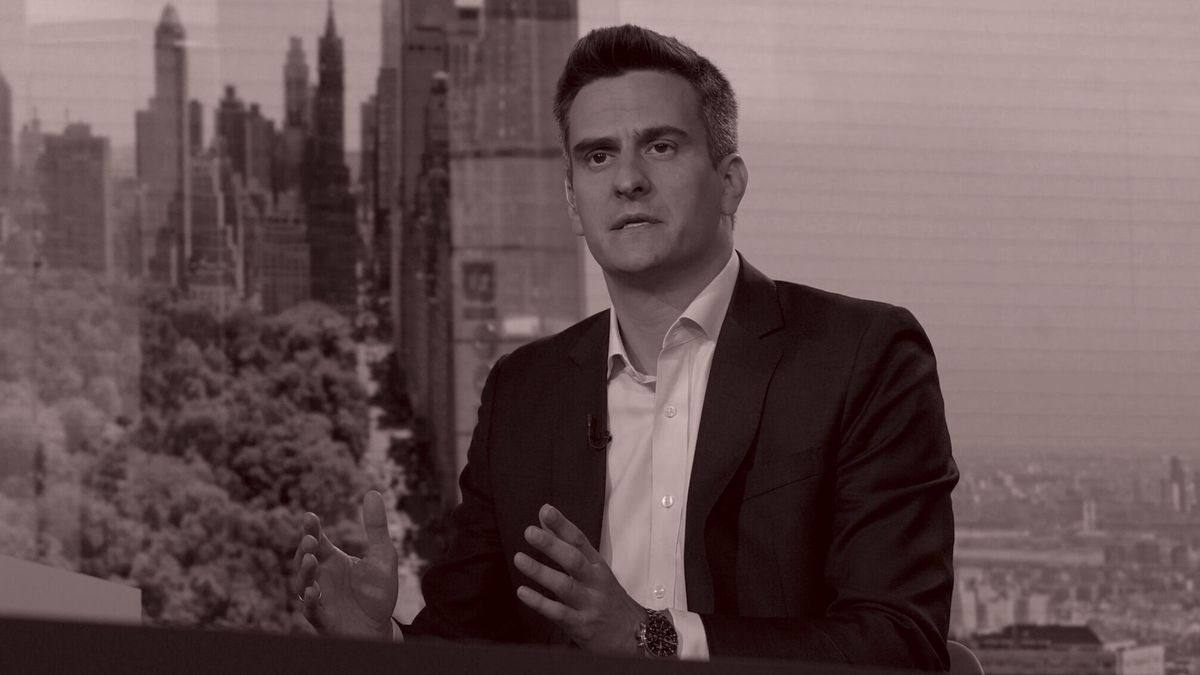
Unique and privileged insight into the private conversations taking place inside boardrooms and corner offices up and down Wall Street, relayed by best-selling author, journalist, and former M&A senior banker William D. Cohan.
|
|
|
Need help? Review our FAQ page or contact us for assistance. For brand partnerships, email ads@puck.news.
You received this email because you signed up to receive emails from Puck, or as part of your Puck account associated with . To stop receiving this newsletter and/or manage all your email preferences,
click here.
|
|
Puck is published by Heat Media LLC. 107 Greenwich St, New York, NY 10006
|
|
|
|