{{ 'now' | timezone: 'America/New_York' | date: '%b %d, %Y' }} |
|
|
Welcome back to Dry Powder, I’m Bill Cohan.
In tonight’s issue, news and
notes on the attempted redemption of Sam Bankman-Fried, more than a year after he was sentenced to a quarter-century behind bars. As S.B.F. awaits his November appeal from a California prison cell, his father, Joe, made a rare public appearance, in which he reflected on the family’s ordeal, including lost bank accounts, living in the media fishbowl, suicidal ideation, and 800-mile round trips for uncertain visits with his son. I’ll highlight the fascinating
takeaways below.
But first… |
- The
big B.T.C. short: Last weekend, my social media feeds lit up with talk of a major “whale” that placed an extremely large, and extremely well-timed short position in Bitcoin some 30 minutes before Trump announced new tariffs on China that sank the markets on Friday. Over the years, of course, I’ve received regular reports from longtime traders who see strange and unlikely movements, up and down, in stocks and options—the types of jumps that make you scratch your head and
wonder if someone knew something. But this particular move was truly exceptional.
At 4:30 p.m. Friday afternoon, according to accounts that track movements in crypto markets, the whale opened up a massive $100 million-plus short position in Bitcoin, betting that the price would fall, and soon. Twenty minutes later, Trump threatened 100 percent tariffs on China. Nearly every market went red, but the effect was especially pronounced among many digital tokens, in which
exuberant crypto traders had become highly leveraged. Within half an hour, some $19.3 billion of Bitcoin positions had been liquidated, driving the price per coin down to $110,000 from roughly $122,000 earlier in the day.
When the bloodbath was over, the unnamed whale had made $192 million in profit in 50 minutes. “This wasn’t luck,” Shanaka Anslem Perera, an observant Australian independent researcher,
tweeted. “This was insider trading. Subpoena the exchange logs. Name the desks. Prove markets are fair … or admit they’re not.” Apparently it took a Bitcoin trade to wake up the market to what has been going on for quite a while, without the slightest bit of accountability from Trump’s S.E.C. - A Zaz non-update update: A quick correction:
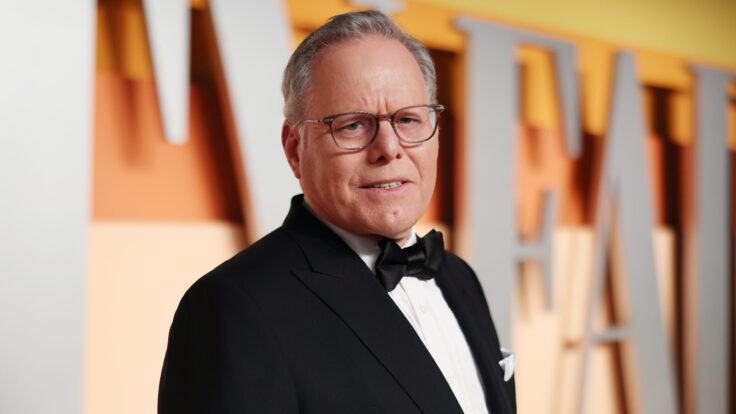
I’m now reliably told that Goldman Sachs is not working with David Zaslav and Warner Bros. Discovery on a potential deal with Paramount Skydance, or what might become a hostile takeover defense. I got that impression from my respected friend Charlie Gasparino, who wrote in September that WBD had met with Goldman bankers to possibly shop the company. But it turns out, Goldman is not working with WBD. The company isn’t saying who it has
hired for a possible deal with PSKY, or someone else, but WBD did work with JPMorgan Chase and Evercore on its split-up transaction, announced back in June.
|
Now, on to the main event… |
|
|
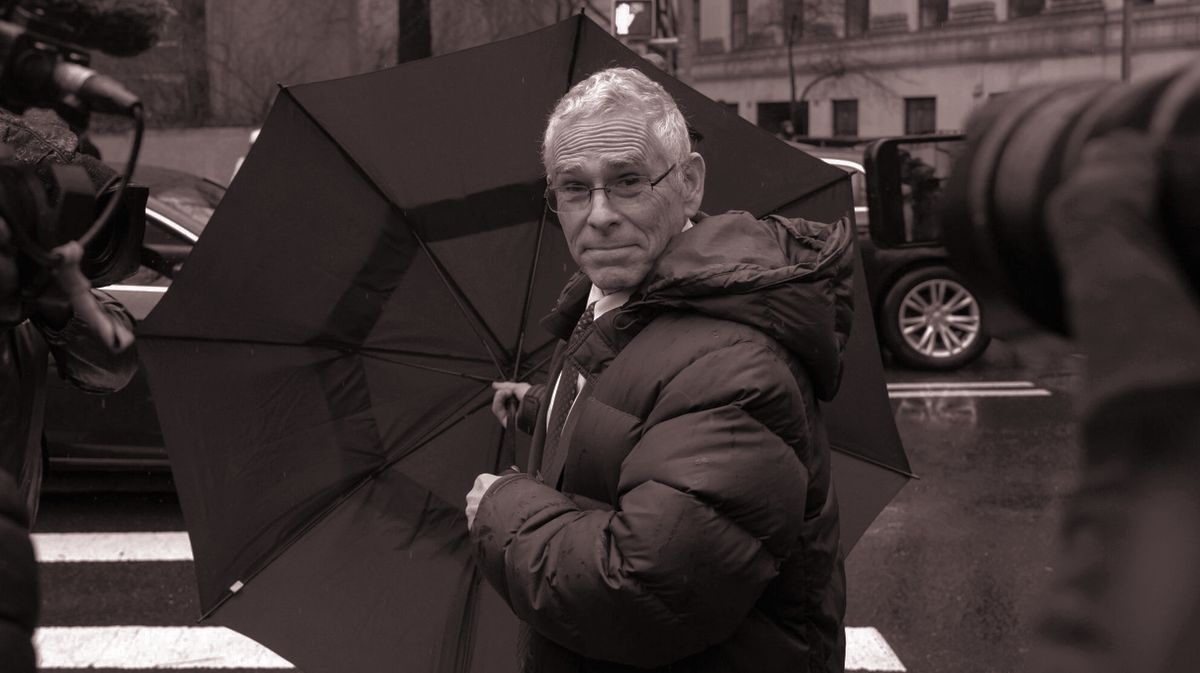
In a rare public appearance, Joe Bankman confessed the depths of his agony over his son and
his own attempts at a gradual renewal. |
|
|
On November 4, Sam Bankman-Fried’s attorneys will stand before the Second Circuit Court of
Appeals, in Lower Manhattan, to appeal his 25-year prison sentence for conducting what prosecutors described as one of the largest financial frauds in history. In the meantime, he continues to hang in there as Prisoner 37244-510 at Terminal Island, in San Pedro, California, where he was transferred from Brooklyn’s Metropolitan Detention Center following the ill-advised (and unauthorized) jail cell interview he gave to Tucker Carlson in March. (I got my
75 minutes in the clink with Sam, too.) Not much has been heard from Sam since the Bureau of Prisons moved him to Southern California. A so-called “friend” with access to his X account posted “gm” from Sam—“good morning,” that is—on September 23, and yesterday retweeted a post from a friendly FTX creditor. But nothing else since he thanked Tucker for having him on the show.
You
may recall Sam’s arguments for why his sentence should be overturned. Among them: His lawyers claim that Judge Lewis Kaplan was biased against him; that there were procedural errors, including the exclusion of important exculpatory evidence; that he was “presumed guilty” from the start; and that he did not have criminal intent when money was transferred from the FTX exchange to his personal hedge fund. In their view, some of his mistakes were innocent and a result of simple
mismanagement. S.B.F.’s legal team also claimed that Sullivan & Cromwell, which had represented FTX before the crypto exchange filed for bankruptcy, effectively became an “arm of the prosecution” in building the legal case against him, and then went on to become the debtors’ counsel in the bankruptcy proceeding. The firm reaped hundreds of millions of fees in the process while setting Sam up to be prosecuted.
With his appeal rapidly approaching, I noted another interesting development:
Joe Bankman, Sam’s father and a longtime professor at Stanford Law School, recently participated in the 2025 White Collar Conference, an online confab that bills itself as the first and only conference “by white collar justice-impacted people for white collar justice-impacted people.” The keynote speaker was bestselling author and CNN analyst
Jeffrey Toobin, who spoke about the history of pardons (and his own appreciation for second chances).
Joe was interviewed by Brent Cassity, a former C.E.O. who spent five years in Leavenworth after pleading guilty to wire fraud, money laundering, and mail fraud. Cassity published a memoir about his experience, Nightmare Success: Loyalty, Betrayal, Life Behind Bars, Adapting and Finally Breaking Free, and now hosts a podcast in which he interviews
former inmates and others. The conversation between Joe and Brent focused on what it was like for Sam and his family to live through his prosecution, conviction, and sentencing. “The Bankman-Fried family was surviving a nightmare together,” Cassity said to the more than 100 online attendees, who paid $10 each to attend. (I paid $12.51; online ticket distributors have to get their vig, of course.) “Joe is here today to talk to us about what it was like living through this nightmare as a
family.”
At first, Joe admitted publicly for the first time that he had considered suicide. “I’ll be honest,” he said, “when it first happened, … I thought about it, and I thought that I can’t do it, and it’s not even attractive for me. And so I decided that I’ve got to live the best life I can. That helped me, because I faced the worst. I said, I might not be able to change anything. I still have to make meaning of my life. And for me, that was a very useful self-dialogue to put
me on the right path.”
Joe said he was “absolutely shocked” when the shit hit the fan for Sam. At the time, he’d been working on “these wonderful charities” for his son. “It was so exciting for me, and I had absolutely no idea that anything was amiss,” he told Cassity. Then the walls closed in rapidly. “I used the tidal wave metaphor—that all of a sudden you’re swimming for your life, and you see your son swept out to sea, and your house is in ruins—because no matter what you start with,
we know the criminal justice system will take everything from you, everything from your family.”
Joe lamented that his scholarship of the law proved little help to Sam. After all, his specialty is tax law, not criminal defense, although he did say he taught criminal law at Stanford for a few years before giving it up. What did help, though, was Joe’s additional training as a psychologist. “I had a few more tools than most people had to stay as strong as I could,” he said. Later, he said,
a friend told him he had to develop a superpower. “I think he was thinking of the superpower as being a samurai warrior for my son,” Joe mused. “And I’d love to have had that superpower, sure, but I’m not a conflict guy. So, I decided my only superpower was to be resilient. And that worked for me.” |
Bankman also spoke candidly about occupying the center of the news cycle. “The good news is all your fears
about humiliation and about being in the public eye, on the one hand, they come true,” he said. “On the other hand, once they come true, you realize that’s not the real problem. Our real problem wasn’t the invasion of our privacy by the press, or the fact that when we went to that courthouse every day, we barely could get in because of the press blocking our way. Our problem, frankly, was our son’s life, and what we thought of as an unjust prosecution, and making sure that our son
survived. That made everything else a lesser problem.”
Tuning out the endless stories about Sam, he said, was essential. “Before that, we were junkies,” he said. “Nobody read more than we did. We listened to everything. And, in fact, in my own little field, I was a talking head. I knew these periodicals. I even knew some of the journalists a little bit. And let me say, my opinion of institutions, including the fourth estate, journalism, fell quite a bit. But I quickly realized that I had
to dissociate from that, because I couldn’t be what other people were telling me I was, and I had to block that out.”
One of the themes of the White Collar Conference, as articulated by Cassity, was that “when someone goes to prison, the whole family goes to prison.” Joe confirmed that this maxim was definitely true for the Bankman-Frieds. Joe said he lost his bank accounts as a result of Sam’s predicament, and it took him a while to find another bank that would take his money—a not
uncommon phenomenon for white-collar criminals and their families. (I appreciated the irony of the crypto king’s family losing its bank accounts, given that crypto is, you know, supposed to be DeFi.) He worried he couldn’t deposit his paychecks. “Then what do you do?” he said. “You need a bank. You have all these automatic deposits. You’re worried about your electricity going off, and, of course, you try to remember everything that’s on an automatic deposit. But you’re a little, to use a Yiddish
word, farmisht, right? You’re really overloaded in general.”
The family knew the odds were long when Sam decided to go to trial, Joe said. “The state is so awesome, and people so rarely win trials, that you might have just decided, I can’t afford it, right? And of course, we’re maybe the poster children for people who tried to afford it, and tried to win the trial, and didn’t,” he reflected. “It was all a nightmare.” Joe said he could tell from rulings on many
pretrial motions, which were decided in the prosecution’s favor, that Judge Kaplan would be a challenge for the defense. And then Kaplan jailed Sam before the trial. “Listening experientially to a government that you always loved say the world’s worst things about your son—particularly when you believe, I think, accurately, that many, if not all of them, are untrue—has to be one of the world’s worst experiences,” he said. “There were a lot of days which were solely devoted to the excoriation of
the person you love most in the world.”
Then came Sam’s guilty verdict and Judge Kaplan’s 25-year sentence. “We had a pretty good sense of where this judge was throughout,” Joe said. “But again, to bring people there: It’s not just that they deliver a sentence. This judge read a 30-minute speech that he’d prepared, accusing my son of things—including things he wasn’t charged with—and offering his own opinions. So you’re listening to this even before the sentence is pronounced. It’s not
like seeing your son, I guess, executed, but you know, 25 years in prison, statistically, that’s not really good for your health, and it’s taking away much, much of your life—you’re seeing your son’s life kind of disappear before your eyes. Now there’s an appeal, and we’re optimistic that something will change, but we’re also realistic. It’s one of the worst days of your life, second maybe only to the day when the prosecution delivers their closing statements, and uses your son’s lack of eye
contact, for example, as a symbol of guilt.” |
Bankman shared how difficult it is for him to visit Sam in prison in San Pedro. The visiting hours are short
and could be curtailed for any reason, at any moment. That’s just the way it is with the Bureau of Prisons. “We drive 400 miles each way to visit Sam,” he said, “and it takes up to two days, and you don’t know if you’ll get the full time, or if you’ll get part of the time. Sometimes you’re turned away, and then you’re begging for some kindness on behalf of a guard. Often it comes. … But the institution and institutional considerations lead to this nightmare where you’re just like, … Is this
visit going to be worth the 16 hours of driving?”
To get through the “nightmarish tidal waves,” he said, “you’ve got to be glass-half-full to get through this and be mindful of the present. For me, it’s maybe sunlight on the trees—a smile from someone who’s a stranger. It sounds corny, but for me, and I think for other people, that can get you through it. … People are basically good, but we’ve got institutional structures that kind of robbed them of some of that basic goodness. And I
think we probably all encountered that.”
Cassity said that his own experience aligned with Bankman’s: “What we find in this world as we live through these nightmares is that you find good from people that you weren’t even expecting it from. And then the institution is this ugly monster that you’re fighting. It’s faceless, and it’s all the time. And I think that’s such a great takeaway: People are there. You can find people that will be supportive. In these situations, the family, and the
person who’s being investigated, you definitely find out who your friends are.”
“That’s for sure,” Joe said.
Joe encouraged the conference’s attendees to reach out to him by email and share their stories. I wrote to Joe, whom I’ve interviewed a few times over the years, and asked about Sam’s appeal, his hope for a pardon from President Trump, and whether he regretted the Tucker Carlson interview. “With the appeal coming up in a few weeks, we are not giving
interviews,” he replied, adding that he agreed to give the talk at the White Collar Conference because of the “wonderful things” the organization was doing. I hear ya, Joe. Good luck on your appeal, S.B.F. |
|
|
Join Puck’s chief political columnist, John Heilemann, as he roams the corridors of power and influence in America on this
twice-weekly interview show, taking you beyond the headlines with the people who shape our culture: icons and up-and-comers, incumbents and insurgents, moguls and machers in the overlapping worlds of politics, entertainment, tech, business, sports, media, and beyond. The conversations are rich and revealing, unrehearsed and unexpected… and reliably impolitic. A Puck-Audacy joint, new episodes drop every Wednesday and Friday. |
|
|
Puck’s daily political newsletter from Washington on what’s really happening in this town, from the White House to the Pentagon
to Capitol Hill, K Street, and the campaign trail. |
|
|
Need help? Review our FAQ page or contact us for assistance. For brand partnerships, email ads@puck.news. You received this email because you signed up to receive emails from Puck, or as part of your Puck account associated with {{customer.email}}. To stop receiving this newsletter and/or manage all your email preferences, click here. |
Puck is published by Heat Media LLC. 107 Greenwich St, New York, NY 10006 |
|
|
|