{{ 'now' | timezone: 'America/New_York' | date: '%b %d, %Y' }} |
|
|
|
Welcome back to Dry Powder. I’m Bill Cohan.
It was a
scary scene at the Hilton last night in Washington, D.C., after an alleged would-be shooter tried to charge through a gantlet of Secret Service members to enter the White House Correspondents’ Association Dinner. This kind of madness happens far too often, and nothing ever seems to be done to prevent it from continuing to happen. (I was not there, in case you were wondering. But many of my esteemed Puck colleagues were.)
And yet, I couldn’t help but notice a line in Michael
Grynbaum’s account of the incident in The New York Times, in which he observed that while many in the room were understandably shaken, others “appeared relatively unfazed. Lloyd Blankfein, the former chief executive of Goldman Sachs, was sitting with CBS News journalists toward the front of the room when the emergency occurred. As the confusion unfolded, Mr. Blankfein turned to his seatmate and asked, ‘Are you going to finish that salad?’” I’m
glad everyone is safe.
In today’s issue, some notes up top on a fresh legal ruling in favor of Leon Black. Then, a close look at the Warner Bros. Discovery shareholder vote for the PSKY deal, and the stunning math behind how Sam Bankman-Fried’s various investments would have netted out if FTX hadn’t imploded.
Also mentioned in this issue: Jessica G. L. Clarke, Apollo, Wigdor, Jeanne
Christensen, Gunnar Wiedenfels, JB Perrette, Bruce Campbell, Rob Bonta, Larry Ellison, Lewis Kaplan, John J. Ray III, Barbara Fried, Joe Bankman, Anthropic, Michael Burry, and more…
But first…
|
- Wigdor’s
Black mark: In an April 23 ruling, U.S. District Judge Jessica G. L. Clarke, a Biden appointee, handed Leon Black a big legal victory in the ongoing civil lawsuit brought against him by a Jane Doe, who accused the billionaire Apollo founder of all sorts of terrible things. She alleged, for instance, that he “brutally raped and assaulted her in New York City in 2002, when she was only sixteen years old,” and that she was
trafficked to him by Jeffrey Epstein and Ghislane Maxwell. Leon, of course, has denied all the allegations as pure fiction. Even though the case was barely into the discovery phase, Leon brought a motion for “case-terminating sanctions” against Jane Doe and her former attorney, Jeanne Christensen, at Wigdor, for “lies, fraud, and spoliated evidence that he contends render this case rotten to the
core.”
While Judge Clarke did not throw the case out entirely, she did throw the book at Wigdor and Jane Doe, and ordered the firm to pay Leon’s “reasonable” legal fees, which could run into the tens of millions of dollars. The judge wrote that both Jane Doe and Christensen “have engaged in serious, sanctionable misconduct in this case” and that Christensen “lied repeatedly to the Court and to opposing counsel.” Clarke found that Christensen “directed” Jane Doe “to destroy a relevant
social media account that [Jane Doe] used to communicate publicly about her experiences as a purported Epstein victim,” and that Jane Doe “falsified sonogram images in her personal journals, which her First Amended Complaint relies on to support the allegations in this action.”
Clark goes on in this vein for some 76 pages, but stops short of tossing the case. It’s now stayed, pending a separate ruling in the Second Circuit about the legality of the New York City Victims of
Gender-Motivated Violence Protection Law, under which Jane Doe and her onetime attorney brought the case against Leon (and which Clarke helped to draft).
Susan Estrich, one of Leon’s attorneys, commented to me that “Doe should withdraw her complaint and apologize to Mr. Black for manufacturing false and defamatory claims. We urge the federal authorities to investigate this fraud on the court.” Christensen did not respond to a request for comment.
But Douglas Wigdor wrote to me on her behalf. “Black’s objective was for the court to dismiss this case,” he said, “and while we are upset about the sanction, we are pleased that our former client will get her day in court.”
|
Now, back to S.B.F. and an Ellison wrinkle… |
|
|
|
Even as he withdrew his latest plea, Sam Bankman-Fried has been pushing another argument in
the court of public opinion: that if FTX hadn’t been forced into bankruptcy, his biggest investments would be worth some $114 billion by now. Plus, notes on Zaslav’s golden parachute—and how a state antitrust intervention could sweeten the deal. |
|
|
|
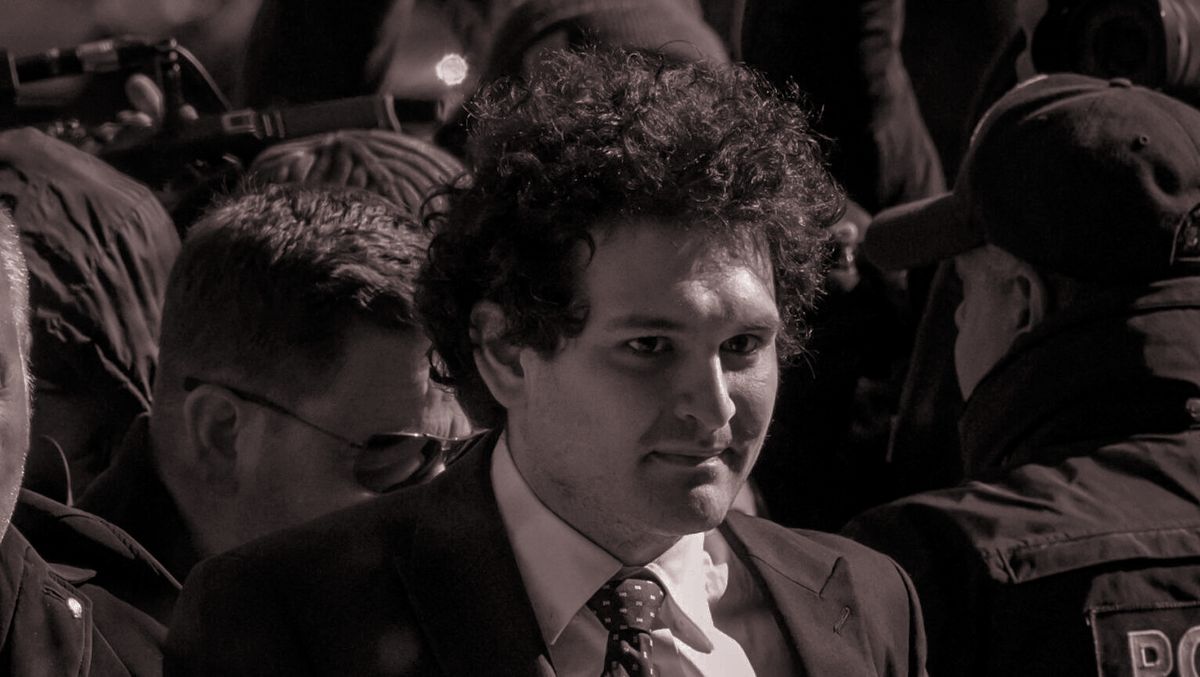
The wheels of justice tend to turn slowly after a jury has already rendered its verdict. Indeed, Sam
Bankman-Fried, the disgraced FTX founder, has been waiting for about two years on a decision from the Second Circuit, to which he appealed his original, 25-year sentence for fraud and conspiracy. In the meantime, Sam was recently moved to the federal prison in Lompoc, California—the same facility where Michael Milken once served time—where he has been plotting his various legal means of escape.
Alas, it seems
increasingly unlikely that Donald Trump will grant him a pardon or commute his sentence: The president likes to exact a price for such beneficence, and I suspect Sam is low on cash these days. It doesn’t help that Sam has tried to shift the blame to Sullivan & Cromwell—the same prestigious Wall Street law firm that now represents Trump
in various ongoing legal skirmishes. When Sam drafted a brief in February requesting that Judge Lewis Kaplan grant him a new trial, it rested heavily on his contention that FTX was actually solvent when it filed for bankruptcy and that Sullivan & Cromwell, which made hundreds of millions of dollars as the debtor’s counsel in the bankruptcy proceeding, had a conflict because the firm was explicitly aiding the prosecution. (Sullivan & Cromwell did not respond to a
request for comment about Sam’s quest for a new trial.)
On April 22, however, a letter from Sam voluntarily withdrawing his request for a new trial—without prejudice, meaning he reserves the right to refile the request—appeared on the court docket. According to Sam’s letter, he “conceived” of his motion for a new trial and “formulated the arguments, drafted multiple versions of it myself, and did the bulk of the legal research while I was at MDC Brooklyn and had better access to legal
materials as well as a word processor.” He also wrote that his parents, Barbara Fried and Joe Bankman, both former Stanford Law School professors, made various editorial and organizational suggestions, some of which he’d accepted. But, Sam continued, he had decided to withdraw the motion because he was facing pushback on two fronts. First, of course, there was the prosecution’s opposition. But Sam was also forced to respond to
Judge Kaplan’s skeptical line of questioning—and, he wrote, “I do not believe I will get a fair hearing on this topic in front of you.” That is yet another dig at Kaplan, whom Sam has been feuding with pretty much ever since he was arrested in December 2022.
Meanwhile, Sam—or some surrogate—has been pushing a related argument in the court of public opinion. On the same day that Sam withdrew his request for a new trial, a series of posts (and reposts) appeared on his X account highlighting
just how much money he might have returned to investors and customers had FTX not been forced into bankruptcy. To wit: FTX’s top six venture capital investments would ostensibly be worth a stunning $114 billion (not a typo) if John J. Ray III, who took over the bankrupt estate, hadn’t sold them for a fraction of that amount several years ago.
The biggest winner in FTX’s portfolio was Anthropic, in which Sam invested about $500 million in April 2022. According to
one of the posts, that stake would now be worth roughly $82.3 billion, or 165x his original investment. (I have not been able to independently verify the calculations.) Instead, Ray sold the Anthropic stake in March 2024 for around $884 million—not a bad return, but a far cry indeed from the $82 billion it would apparently be worth now.
There were other potential big winners, too. Sam’s $189 million stake in Solana, a cryptocurrency, would apparently be worth $5.1 billion. His $612.5
million stake in Robinhood could be worth just under $5 billion. His $1.17 billion stake in Genesis Digital would allegedly be worth some $3.5 billion. And while this next claim is a little harder to verify, Sam tweeted that in 2022, FTX invested $700 million into venture capital firm K5 Global, which invested $200 million of that into SpaceX—a stake that would now be valued at roughly $15 billion. Finally, Sam’s $200,000 investment in Anysphere, which later morphed into the parent company of
Cursor, could apparently be worth around $3 billion if SpaceX completes a deal to buy Cursor at a proposed $60 billion valuation. The FTX estate sold that stake in April 2023 for roughly the same $200,000 that Sam had paid for it a year earlier.
The unrealized gains were tallied up by an X account that tracks the famous investor Michael Burry, which wrote, “Had [S.B.F.] done nothing wrong, he’d have an estimated worth of $114,000,000,000 today. Instead
he’s tweeting from [a] Federal Correctional Institution.” The post added that Sam “might have been the best V.C. in history.” And that might well be true, but at the moment, Sam is in Lompoc, hoping beyond hope that Trump comes through for him. And, it must be said, it’s not enough for an investor to take a bunch of prescient positions. He has to stay invested in them long enough to realize those gains. Easier said than done, even when you’re not in prison. |
Zaz’s $550
Million Payday
|
Meanwhile, on Thursday morning, Warner Bros. Discovery shareholders took just 11 minutes to approve the
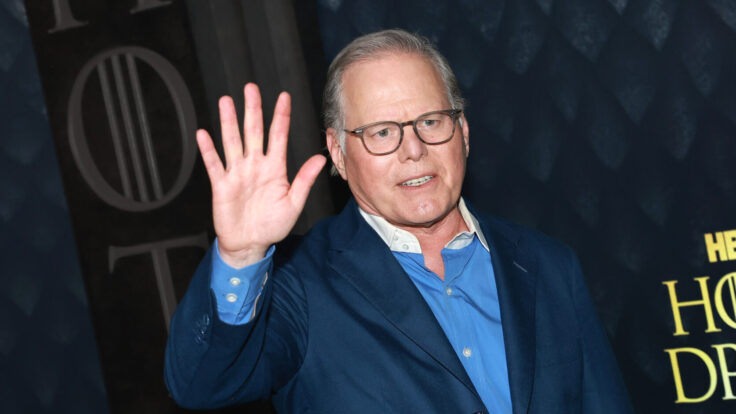
$31-a-share, all-cash bid from Paramount Skydance. No surprise there—what WBD shareholder in their right mind would reject the offer? In the end, 99 percent of those who voted by proxy or in person voted for the PSKY deal. The only real drama was related to the second item on the shareholders’ agenda: the gargantuan compensation packages for WBD executives, led by David Zaslav (who—usual disclosure—is a de minimis shareholder in Puck).
If and
when the deal closes, Zaz is slated to receive around $550 million, while the other three top WBD executives—Gunnar Wiedenfels, JB Perrette, and Bruce Campbell—will be paid around $140 million each. Collectively, they are likely to receive more than $1 billion when their stock vests sometime later this year upon the change of control of the company. But despite the WBD board’s recommendation, the
shareholders did not approve the compensation packages—and it wasn’t really close. Nearly 82 percent voted no. That’s pretty astounding. But no worries, Zaz et al., the vote was nonbinding. The WBD executives will still get their money.
With the shareholder vote now a done deal, can anything stop the sale of WBD to PSKY? Obviously, the more than 4,000 Hollywood folks who signed the recent letter opposing the combination hope so. But the letter was addressed to the D.O.J.
and F.C.C., neither of which is expected to raise any kind of stink. Instead, Ellison’s Hollywood antagonists are pinning their hopes on various state attorneys general—particularly, California’s Rob Bonta.
Last month, Bonta and a group of other state A.G.s filed
suit to try to block the merger between Nexstar and Tegna, two big television station groups. The judge issued a preliminary injunction that stopped that merger from proceeding any further, pending the outcome of the litigation, even though the merger itself is technically closed. The suit is unlikely to ultimately block the combination, but it has delayed the integration of the two companies. Could the same playbook be used in the WBD-PSKY deal? The short answer is yes, but I suspect the
case for reduced competition would be a heavier lift here than with Tegna–Nexstar, despite the outcry over the deal in Hollywood.
Anyway, if the state A.G.s try to delay the deal’s closing beyond September 30, it could cost Larry Ellison real money, or what would be real money to most billionaires. You will recall the so-called “ticking fee” that PSKY agreed to pay WBD shareholders if the closing is delayed beyond that date—25 cents per WBD share, or an
extra ~$625 million paid by Larry & Co. to the WBD shareholders for every quarter of delay. As best I can tell, if the deal closes on, say, October 15, WBD shareholders would collectively get a pro-rata portion of that $625 million for every day after September 30. In other words, Bonta can still cause Larry some serious agita—especially when Oracle’s stock is down some 12 percent this year and is only worth $500 billion these days. |
|
|
|
Join Puck’s chief political columnist, John Heilemann, as he roams the corridors of power and influence in America on this
twice-weekly interview show, taking you beyond the headlines with the people who shape our culture: icons and up-and-comers, incumbents and insurgents, moguls and machers in the overlapping worlds of politics, entertainment, tech, business, sports, media, and beyond. The conversations are rich and revealing, unrehearsed and unexpected… and reliably impolitic. A Puck-Audacy joint, new episodes drop every Wednesday and Friday. |
|
|
|
Puck’s daily political newsletter from Washington on what’s really happening in this town, from the White House to the Pentagon
to Capitol Hill, K Street, and the campaign trail. |
|
|
|
Need help? Review our
FAQ page or contact us for assistance. For brand partnerships, email ads@puck.news.
You received this email because you signed up to receive emails from Puck, or as part of your Puck account associated with {{customer.email}}. To stop receiving this newsletter and/or manage all your email preferences, click here. |
Puck is published by Heat Media LLC. 107 Greenwich St., New York, NY 10006 |
|
|
|
|