 |
|
Happy Halloween, and welcome back to The Stratosphere.
|
|
It’s been a scary few days at the Sam Bankman-Fried trial. I’ve spent the week hovering around the Daniel Patrick Moynihan courthouse in Lower Manhattan, watching someone I first met three years ago, this month, stare down decades in jail.
How will this all play out? We’ll know soon enough, because a decision will probably come by the end of this week. In the meantime, Eriq Gardner—Puck’s resident legal ace and the author of The Rainmaker, which you must sign up for—and I decided to broadcast the play-by-play of what we saw.
But first…
- The Democratic donor network Mind the Gap — probably best known these days because it was founded by Barbara Fried and heavily funded at times by, you guessed it, S.B.F.—is out with their first funding recommendations for the 2024 cycle, and I’ve seen a copy of their most recent 11-page memo. “Our strategy early in the 2024 presidential race will be to massively scale high-performing voter registration and mobilization programs,” the group wrote donors recently.
Mind the Gap is pitching donors to back a site-based voter registration program called the Everybody Votes Campaign, and voter-mobilization radio ads through American Independent Radio, both of which “are projected to generate more net Democratic votes dollar for dollar than virtually any other tactic this cycle.” (At about $300 or $400 per net Democratic vote, Mind the Gap argues.) The group is also encouraging donors to give to television ad campaigns for competitive House races that will be chosen later by Mind the Gap, according to the memo. “The program will be able to maximize cost efficiencies by reserving TV ad early time and at scale.”
The group has really tried to clamp down on leaks ever since I first broke the news about Mind the Gap’s existence a few years ago—and the memo ends with an exhortation to not share any of this with the press. Whoops.
- Dean Phillips, the Democratic challenger to Joe Biden, has some Silicon Valley backers who will be interesting to watch over the next few months. For instance, Sam Altman, the OpenAI chief who has an eclectic mix of political views and gave $200,000 to Biden earlier this year, tweeted on the day of Phillips’s announcement that he was “curious” about Phillips, and that his message appeared to be “close to what the majority of voters actually want.” And then there’s Uber C.E.O. Dara Khosrowshahi, who doesn’t make many political gifts but has double maxed-out to Phillips during his 2018, 2022 and 2024 congressional runs. What gives? Well, Dara and Phillips are longtime friends from their years together at Brown, I’m told.
- Vivek Ramaswamy confirmed our scoop over the weekend that he had quietly hosted Elon Musk for a fundraiser last month. “He showed up late at night and we had a conversation,” said the candidate. Elon’s attendance at the $50,000-a-plate event is great, but Vivek’s people are really hoping for a big check to his dark-money group, the American Exceptionalism Public Policy Committee. I’m going to guess it won’t happen, primarily because Elon is a flake.
|
 |
| Sam I Am |
| The financial trial of the century is wrapping up the only way it ever could: with Sam Bankman-Fried betting big on himself. |
|
|
|
|
|
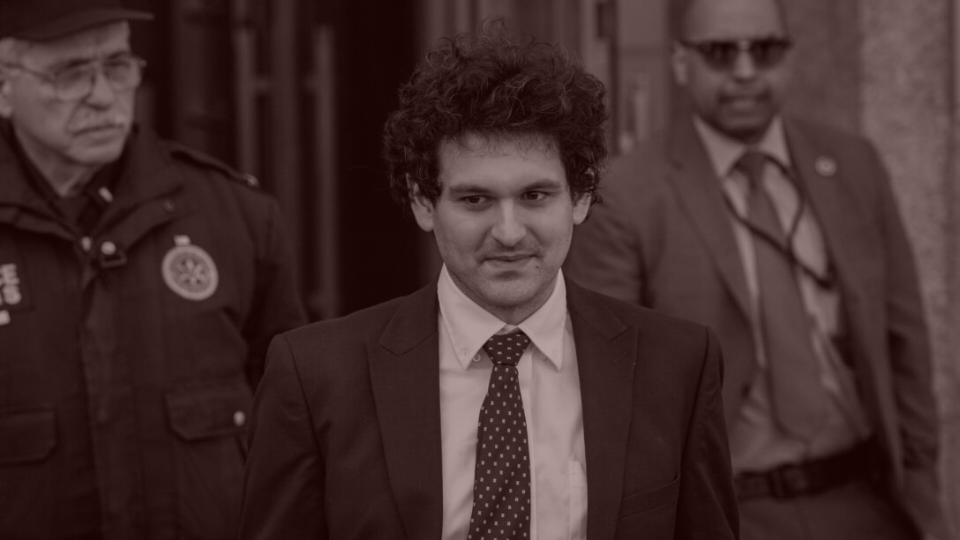
| Of course it was going to end like this. There’s never been a defendant quite like Sam Bankman-Fried, the until-recently mop-headed 31-year-old who stands accused of vaporizing billions of dollars in a sprawling financial fraud scheme, and so there would never be a questioning, and grueling cross-examination, like the one that unfolded since last Thursday on the 26th floor of Daniel Patrick Moynihan courthouse in Lower Manhattan.
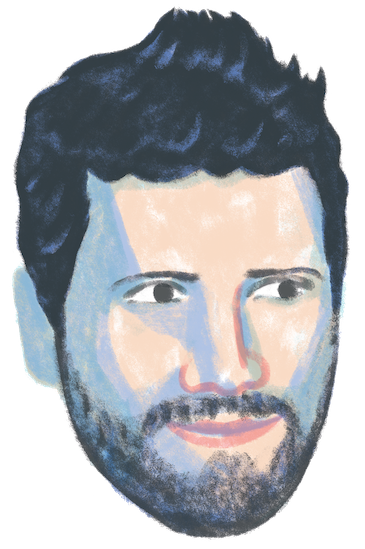
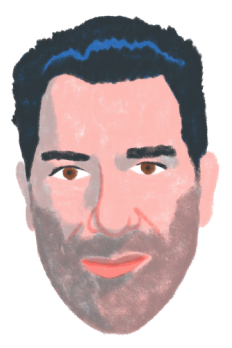
What I saw alongside my Puck partner, Eriq Gardner, was peak Sam—hubristic, clever, insouciant, awfully sad. But also, for the first time, truly accountable. We were in the courtroom over the last four days to watch a testimony for the ages. Herewith, our notes... |
|
|
| Teddy: Man, I need a drink or a shower or both. I just left the courthouse after witnessessing two days of the federal government’s destruction of Sam Bankman-Fried, and the flogging was about as brutal as I feared when Sam’s lawyers first said he would testify. After weeks of sitting there like a potted plant, I’m sure on some level Sam felt good about finally speaking his piece in direct examination. But I found his credibility to be extraordinarily damaged by the hands of Danielle Sassoon, the Scalia-reared S.B.F. marauding machine cosplaying as an Assistant U.S. Attorney.
From their opening statements, prosecutors made clear they intended to paint S.B.F. as a serial liar—and boy, did he make it easy for the feds to illustrate that tendency before the jury. Within minutes of Sassoon’s cross, which began shortly after the mid-morning break on Monday, Sam was being forced to answer for contradiction after contradiction, on matters real and trivial. Oh, you were totally uninvolved in trading at Alameda? Then why is there this government exhibit of you telling Caroline Ellison to buy these specific cryptocurrencies? Oh, you were supportive of crypto regulation? Then why is there this message in which you said “Fuck regulators”? (Sam had to repeat that curse aloud before everyone.) Oh, you didn’t think about trying to get FTX to release your shares in Robinhood after the bankruptcy? Then why, exactly, is there a document we’ve obtained in which you literally say that you considered doing that? That’s just a few particularly illustrative examples—I could offer at least five more from my notes from the last two days.
When questioned by his own lawyers, I thought Sam came across as fairly confident, borderline credible and, if I really squinted, even a smidge sympathetic! He definitely looked better than some of his critics will ever give him credit for. But I simply cannot see how a juror could view him as an honest broker after what I saw this week in cross, or trust anything Sam said, especially given that the contemporaneous documentation was paper-thin, especially compared to the prosecution’s endless stream of exhibits.
Eriq: Let me buy you that drink. First, I’d like to say this trial isn’t a popularity contest—that someone can be a lying schmuck and not an outright fraudster. But S.B.F.’s defense really hangs on the notion he had no criminal intent, and that, of course, certainly calls for some sort of character assessment. He can suggest he believed that Alameda was engaged in nothing more than the margin trading allowed on FTX’s platform, or that he really didn’t know the extent of its debts, or that he was largely a hands-off boss with respect to Caroline’s trading strategies (except for wishing she would have hedged more), and so forth, but if the jurors believe he was never an honest broker, as you put it, that all goes out the window.
With his credibility in question, all that’s left for the jury to assess is Sam telling investors, customers, and Congress one thing about equal treatment on the FTX platform, while simultaneously appearing to give himself advantages. That’ll be the sort of stuff that comes up in the jury room during deliberations.
Teddy, you’ve met with him outside of the courtroom setting, and you obviously saw him the last couple of days on the witness stand. Did you see a big difference in how he presented himself?
Teddy: Sam’s demeanor during cross-examination was—and there’s no point in sugarcoating this—highly unlikeable. I guess that was his job, to bob and weave and frustrate prosecutors, but it also surely frustrated the jury (to say nothing about how it frustrated Judge Kaplan, who is going to sentence him at the end of this).
I also don’t really know that his obstinance achieved anything: He gobbled up time successfully, sure, but it came at a price, and he’d often end up in the same place. He never answered questions directly, and when he found one a bit too specific, he’d try to reframe it by “adding context” that no one asked for—before eventually getting slapped down by prosecutors or the judge. “Can you just answer the question?” Kaplan said, exasperated, at one point on Monday. Sam’s favorite line, which he uttered again and again, was that he “couldn’t recall” saying one thing or another—but eventually, after a few minutes of waffling to the point of trolling, he’d essentially concede the point, and we’d all be all the dumber for going in circles.
At one point on Tuesday morning, for instance, he wouldn’t concede that he had dinner with Tony Blair and Bill Clinton—a seemingly harmless line of questioning—because he didn’t “remember if there was food.” An hour or two later, it felt like pulling teeth to get him to acknowledge when he became aware that Caroline and Gary Wang had pled guilty, which was publicly announced. I know Sam, and I think he was just being difficult for the fun of it. I might understand if this obfuscation allowed him to Houdini his way out of a jam, but the strategy only worked about 10 or 15 percent of the time. Sam, always the schemer, saw it almost as another difficult video game.
Sam was at his best when his instinctive recalcitrance made him wary of traps. (I’ll leave it to you whether it was worth clarifying to prosecutors that only some people on crypto Twitter were “dumb motherfuckers.”) Sassoon was deflated a few times on Tuesday when she tried, late in her cross-examination, to lure Sam into admitting that he stole customer funds as part of a “scheme,” hoping that she had worn him down and that Sam was on auto-pilot. “Yep! Yep! Yep!” he’d respond to consecutive questions in his artificially chipper tone. But then he’d catch the stray question about the theft of customer funds, and he’d hit her back with a “Nope!” without missing a beat. The one-two punch didn’t work against such a hyper-aware defendant.
I’m sure Sam thinks he’s smarter than Sassoon and all the other feds, but he made the mistake of making that overly obvious to the jury. He was too often too clever by half… which is, of course, how he’s always been, and maybe how he got into this position in the first place.
Eriq: I think his mind was racing as he tried, in real-time, to figure out how to best answer these questions. He could see what was coming. Yes, he probably does think he’s the smartest person in the room, but I also think the hemming and hawing had as much to do with an attempt to not get trapped on any front—it was a hedge against the long record of damning statements he previously made. |
|
|
| Teddy: Eriq, one thought I’m left with is just how much Sam’s media tour hurt him. I’ve been a (self-serving) defender of Sam’s media strategy, arguing that lawyers are sometimes too cautious, and that the accused could benefit from speaking up before opinions are calcified. But any PR worth their salt would have advised him to simply shut up after FTX’s bankruptcy, but Sam insisted on defending himself. As a result, many of those interviews were used this week to puncture his credibility. Sam would often say he “didn’t remember” or “could not recall” what, exactly he had told reporters at Bloomberg, or the Financial Times, or to Andrew Ross Sorkin, or to crypto influences in a random Twitter Spaces, or even what he said in his own tweets. But the paper trail came back to bite him again and again this week, when he was forced to reconcile his testimony with what he told journalists and the public. The whole thing felt almost too easy. I mean, there are so many interviews for prosecutors to choose from!
Eriq: I remember watching his interview with Sorkin and getting text after text from horrified lawyers who were also watching. I’m sure many of my buddies will be satisfied now. They can point to this example as the quintessential reason why those facing criminal exposure need to shut up. Sam’s media tour certainly was a gift to prosecutors.
Teddy: I remember chatting with you on Thursday during the evidentiary hearing, when Bankman-Fried testified outside of the jury’s presence in what was truly an otherworldly experience. You thought it was basically an unmitigated disaster. By Friday, though, you were almost impressed with the guy. What changed?
Eriq: Well, first of all, the purpose of that Thursday hearing was to figure out whether certain proposed testimony was admissible. For example, S.B.F. wanted to point to the involvement of F.T.X. lawyers in the bank and loan documents, but he wasn’t allowed to talk about any of that stuff, and Judge Kaplan basically only allowed him to discuss how company lawyers had signed off on the auto-deletion of messages. Furthermore, the tough cross-examination expanded into a realm that S.B.F.’s attorneys argued went well beyond the scope of figuring out the admissibility of evidence. He was really on his heels when it came to stuff like why Alameda’s assets weren’t liquidated when his trading firm was so far in the red. And what made it even worse was that Judge Kaplan said he’d allow prosecutors to bring up testimony from that hearing in their real cross-examination a few days later. In other words, prosecutors basically got a free shot at deposing the defendant. So it was a disaster!
On Friday, the jury was brought in, and his team spent all day in direct examination. The questions were softballs, and he was able to slowly walk the jury through the origins of F.T.X. and how it wasn’t founded to be any sort of criminal racket. Of course, it went better for him that day, but then came the cross on Monday and Tuesday, and it got tough again. I won’t go quite as far as you by judging his performance as a disaster these past couple of days, but clearly each outing was different from the last.
Teddy: I know every lawyer will disagree with me, but I think it was actually smart for S.B.F. to take the stand. He bet on himself like he has a thousand times before. This case was blowing up in his face, and he had absolutely nothing to lose given the sheer volume of the evidence against him. He was toast if he didn’t testify, right?
Eriq: I actually think you might be off on your assumption that lawyers would disagree. I’ve talked to many in the last few weeks, and they could all clearly see that Bankman-Fried was losing. The calculus surrounding testifying shifted, so adjustments were in order. And you know what? Even watching what happened these past few days, I think it was the right move to testify.
Teddy: Well, to be clear, I think he would have testified no matter what. It just so happened that what his ego wanted lined up with what was good for him. Convenient! |
|
|
| Teddy: How much blame do you put on Mark Cohen and Christian Everdell, S.B.F.’s defense lawyers? Did they make some miscalculation? Or is their client just undefendable?
Eriq: I can’t say for sure, but I think it might be a combination of bad lawyering and bad client. From what I’ve been told, there were other, bigger-name criminal defense lawyers who almost represented S.B.F., but that didn’t come to pass. Now, Cohen and Everdell have some bonafides—Cohen is a former federal prosecutor who previously represented Ghislaine Maxwell—but frankly, neither seemed particularly competent while cross-examining the prosecutor’s witnesses. They didn’t touch the credibility of these people whatsoever, and the judge expressed what a lot of us were feeling in the gallery, admonishing them for wasting everyone’s time by rehashing what was elicited during the direct examination of these witnesses.
Teddy: I was there for the Caroline cross, and Cohen scored almost no points on her. Really.
Eriq: Exactly. That said, Bankman-Fried bears some responsibility for how his defense has played out. Again, he didn’t need to go on that media tour. And to the extent that demonstrated how he won’t listen to counsel, that dynamic was evident at trial, too. Indeed, there was a moment last week when he was on the witness stand, and the prosecutor asked a rather sarcastic question about whether S.B.F. felt that safeguarding customer assets also included not embezzling money from them. His team objected, the judge sustained the question, but he answered the question anyway. “You didn’t have to answer if it has been sustained,” his lawyer shouted. “Haven’t you been sitting here for four weeks?” Bankman-Fried chuckled and responded, “I felt the need to answer that one.”
Teddy: That happened on a few occasions this week, too. I appreciated Sam’s commitment to the public record.
Do you see anything here that can be grounds for appeal? I’m sure he’ll appeal whatever decision we get this week.
Eriq: You mean like inadequate counsel? I mean seriously, I can’t believe they didn’t send a trial subpoena to F.T.X.’s lawyers at Fenwick & West. For the most part, I expect an appeal to largely focus on the fraud theories that Judge Kaplan rejected before the trial even began. I don’t want to overestimate the possibility that the conviction is overturned, but I think he has a better-than-average shot. As Preet Bharara will attest, the 2nd Circuit Court of Appeals has thrown out a bunch of convictions in recent years on the financial fraud front. Of course, every case is different, but I have noted how prosecutor-friendly Judge Kaplan has been throughout this case. It’s certainly possible the judge wasn’t thinking clearly on some of these complex issues.
Teddy: Alright Eriq, what are the odds, in your estimation, that he’s convicted on a majority of counts? We’ll get closing statements tomorrow, and then probably a decision by the end of the week—or early next by the latest.
Eriq: I think the odds are pretty high, but since that’s a boring answer, let’s just say that I think the chances of prosecutors securing a conviction is similar to the mighty Kansas City Chiefs beating the Denver Broncos. Guess what? The Broncos just pulled an upset this past weekend, so if S.B.F. prevails, I’d be surprised but not shocked. If S.B.F.’s lawyers can just put reasonable doubt in the mind of one juror, that’s enough.
I keep thinking about the former Salomon Brothers investment banker on the jury. There was some pretty crazy shit that happened at that Wall Street firm in the ’90s, so who knows what’s going through that person’s head. And the jurors as a whole have to wrap their heads around the complicated world of crypto. So who knows. That said, I think that practically everything went right for prosecutors during this trial. I don’t see much they could have done differently to put themselves in a better position here. I’d still bet on the Chiefs. |
|
|
|
| FOUR STORIES WE’RE TALKING ABOUT |
 |
|
 |
|
 |
|
 |
| Endeavor Fever |
| Ari’s take-private bid, Jamie’s stock sale, and more. |
| WILLIAM D. COHAN |
|
|
|
|
|
 |
|
|
|
Need help? Review our FAQs
page or contact
us for assistance. For brand partnerships, email ads@puck.news.
|
|
You received this email because you signed up to receive emails from Puck, or as part of your Puck account associated with . To stop receiving this newsletter and/or manage all your email preferences, click here.
|
|
Puck is published by Heat Media LLC. 227 W 17th St New York, NY 10011.
|
|
|
|