{{ 'now' | timezone: 'America/New_York' | date: '%b %d, %Y' }} |
|
|
Hi, and welcome back to Line Sheet. I’m thrilled to reveal our new special guest columnist, legendary fashion
reporter Teri Agins, whose first dispatch is an essential retelling of what really happened to the designer fashion market. Before the industry consolidation and the rise of resale, there was the stampede of fast fashion, which has skewed consumer expectations regarding the cost of clothing.
You might be surprised to know that, when adjusted for inflation, the prices of designer dresses 40 years ago were similar to what they are today. But the
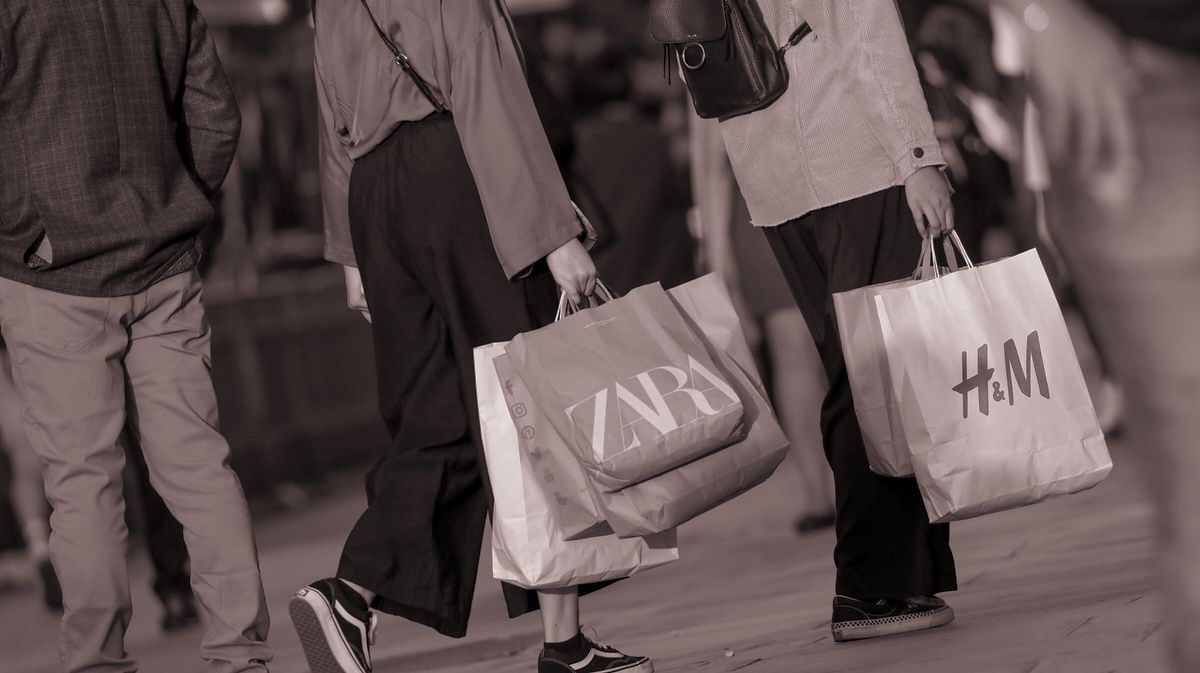
prices of high street fashions are far lower. Everything changed when H&M, Zara, and even Target made trendy silhouettes instantly accessible at a fraction of what one would pay for the original designer piece. (Despite knowing better, I was shocked to hear recently that Edikted, a popular teen retailer, boasted a design-to-shop-floor turnaround time of six days. Not too long ago, six months was common.)
Teri, who created the fashion business beat at The Wall Street
Journal and is still the best to ever do it, has a rare perspective on the transformation. I’m excited to have her in the driver’s seat for this Inner Circle issue (upgrade
here). Up top, Sarah Shapiro is back with the
essential news of the day.
Programming note: Tomorrow on Fashion People, I’m joined by Georgiana Huddart, co-founder and creative director of Hunza G, maker of the unforgettable crinkle-fabric swimsuits that have been so influential on the broader fashion market over the past decade. (Don’t forget, Hunza is the brand behind Julia Roberts’s legendary “I got money to spend in here!” dress in
Pretty Woman. It’s actually available to purchase on Hunza’s site. Perfect for those who still frequent the Reg. Bev. Wil.) Listen here and here.
Mentioned
in this issue: Louis Vuitton, Gucci, Prada, Donald Trump, Zara, H&M, Uniqlo, Shein, Temu, Amazon, Saks Global, Marc Metrick, Hermès, Chanel, Jay Choyce Tibbitts, Bella Freud, LVMH, the Arnault family, Vivienne Westwood, and many more… |
|
|
A MESSAGE FROM OUR SPONSOR |
The refined BMW 7 Series is all luxury. With the ability to define your design, the ultimate glamour is yet to be.
Learn more at BMWUSA.com. |
|
|

| Sarah Shapiro
|
|
Three Things You Should Know…
|
- More layoffs at Saks:
Another 90 employees received pink slips at Saks Global this week. In a memo to staff, chief commercial officer Emily Essner described the cuts as an “expected part of the integration process” of Saks and Neiman Marcus Group, which has resulted in a more streamlined commercial and merchandising team. There are likely more layoffs to come: C.E.O. Marc Metrick has promised more “synergies” as Saks Global tries to achieve its $600 million annual cost reduction
target over the next few years.
- An LVMH tariff update: It looks like the U.S.-E.U. trade deal doesn’t include carve-outs for LVMH, despite the Arnault family’s close ties to Trump. Under the terms of the deal, the U.S. will continue to impose a 15 percent tariff on most goods from the E.U., including wine, spirits, and luxury goods. Still, the new rate is half of what the president initially threatened, and the trade
deal may bring some predictability to the rattled luxury industry.
- Fashion Neurosis joins Vox Media: Designer Bella Freud’s podcast, Fashion Neurosis, is partnering with Vox Media—part of a larger strategic expansion that will include a Substack launch, as well as perks and bonus content for paid subscribers. (Bella was on Lauren’s podcast,
Fashion People, back in January, where she talked about what it was like to work with Vivienne Westwood, why she doesn’t stage runway shows, John Malkovich, and much more.)
|
|
|
In the 2000s, fast fashion learned to undercut the luxury business and never turned back.
And yet, the underside of today’s cheap-and-cheerful fashion math is its boring sameness. |
|
|
The kingpins of luxury fashion, led by Louis Vuitton, Gucci, and Prada, managed to hold on to their rarefied
cachet over the past three decades, even as they grew to become ubiquitous, multibillion-dollar brands at the center of some of the largest companies in the world. But luxury’s heyday is waning: 2025 is expected to be the second consecutive year of flat demand in the sector. This follows the sales downturn in 2024, luxury’s worst results since the 2008 global financial crisis.
It’s a generational backlash—and no wonder, given the extraordinary prices ($3,900 for The Row’s mini leather
tote!) that effectively turned off many aspirational consumers. Meanwhile, the wealthy under-40 crowd has plenty of other items to splurge on—an updated $1,300 iPhone, say, or a spa resort getaway. In 2024, luxury goods sales among Gen Z shoppers fell 7 percent, more than any other generation, according to Bain—a $5.7 billion decline. |
|
|
A MESSAGE FROM OUR SPONSOR |
The refined BMW 7 Series is all luxury. With the ability to define your design, the ultimate glamour is yet to be.
Learn more at BMWUSA.com. |
|
|
The stagnation in luxury has coincided with growing interest in affordable-but-still-stylish clothes, namely
fast fashion, the nimblest players in contemporary retailing. Luxury labels, a margin game, continue to bank on the awareness they receive from dressing red-carpet celebrities and their lavish, star-driven marketing campaigns. But the mighty Zara, H&M, Uniqlo, Shein, Temu, and Amazon have irreversibly changed the entire fashion system. Fast fashion purveyors are wooing everybody, including the most sophisticated consumers, who are just as tickled to pull off a bargain look.
Even the
thrift shops are riding the wave as fast fashion has unwittingly raised interest in inexpensive designer retreads online, from the Hermès and Chanel offerings on The RealReal to bargain-basement no-name labels on ThredUp, as well as neighborhood resale stores, where used frocks from Zara and H&M hang next to vintage Versace and Max Mara. Meanwhile, fast fashion companies have stayed in front by turning out better and better versions of the trendiest silhouettes, such as dresses with linings and
invisible zippers. Or consider the handsome $39 and $49 pure linen shirts at H&M and Uniqlo, and the supple cashmere blends that go on sale in the fall. Knockoffs of designer brands are part of the social media hype cycle, too. TikTok influencers teach women how $50 worth of tailoring gives S-M-L togs a customized fit.
At its core, fast fashion was the textile tech-play of the 2000s. Fast-growing Shein, founded in China in 2008 and now based in Singapore, claims to be the world’s
biggest fashion marketer online, with some 88 million active users, including 18 million in the U.S. According to Bloomberg, Shein generated almost $10 billion in revenue in the first quarter of the year, before Trump’s tariffs kicked in. (Shein has disputed these numbers.) Temu, another Chinese
e-retailer, was generating tens of billions of dollars in revenue before the end of the de minimis exemption forced it to pivot its distribution strategy.
Indeed, without the costly overhead of elaborate real estate portfolios, head designers, celebrity mascots, and live fashion shows, many fast fashion brands are essentially tech plays: Given the decidedly lower margins, their business plans coalesce around providing the speediest, most efficient global sourcing and
logistics operations, buoyed by social media. Yes, Temu ponied up for Super Bowl commercials, but the brand doesn’t need to differentiate with expensive marketing campaigns when it’s learned to incentivize engagement from ordinary shoppers. Young women of all shapes and sizes post customer reviews full of selfies from every angle in front of the mirror, showing off what they just bought. They’re rewarded with discount coupons and free clothes, which they keep plugging online. |
|
|
After they’re done wearing them, many women consign their used fast fashions online and to vintage shops.
This is the churn that keeps fast fashion labels in front of new shoppers all the time. Any concerns regarding the ethics of questionable cheap labor in developing countries or environmental sustainability just don’t seem to come up, as scores of working women are too busy browsing, proud to buy an updated wardrobe that they can afford. |
In 1999, as an intrepid Wall Street Journal fashion industry reporter, I
wrote a book titled The End of Fashion: How Marketing Changed the Clothing Business Forever, which zeroed in on the seismic disruptor of the 1990s: the end of formal dress codes in America. By 1994, almost all of corporate America went casual. Millions of office workers were no longer required to wear expensive business suits and tailored clothing. Apparel makers who banked on formal business attire were flummoxed. The white-collar crowd got a kick out of wearing jeans, t-shirts, and
sneakers to the office.
Kmart and Target didn’t miss the opportunity to push their own $15 togs—a trend I dubbed at the time as “cheapskate chic.” From then on, wearing cheap, casual fashions was a point of pride. Unbowed, luxury designers deftly created a lifeline: pricey accessories, starting with $1,500 logoed handbags and $500 high
heels, which were positioned as status symbols to pair with casual clothes.
The underside of today’s cheap-and-cheerful fashion math is the boring sameness of merchandise, which has resulted in the chase for growth and profits in this feverishly competitive and glutted marketplace. The heady risks and artistic expression, the exquisite niches that used to define original style, have all but vanished from commercial fashion. Other than fine materials, craftsmanship, and exclusive logos,
the truth is that there’s not a wide demarcation between luxury garments and everything else sold in fashion. “There is so much awareness in marketing and messaging… all the brands are making the same things,” said Jay Choyce Tibbitts, a social strategist and digital creator for fashion and consumer brands. “With fast fashion, ‘dupe’ culture, and the rise of counterfeits, nobody wants to invest in distinction. You can get the look for $10—and
that’s messed up the whole system.” |
Until tomorrow,
Lauren
P.S.: We use affiliate links because we are a business. We may make
a couple bucks off them. |
|
|
Puck’s daily art market email, anchored by industry expert Marion Maneker, offers unparalleled access to the mega-auctions and galleries,
elite buyers and sellers, and the power players who run this opaque world. Wall Power also features Julie Brener Davich, a veteran of Christie’s and Sotheby’s, who provides unique insights into how the business really works. |
|
|
Finally, a media podcast about what’s actually happening in the media—not the oversanitized, legal-and-standards-approved version
you read online. Join Dylan Byers, Puck’s veteran media reporter, as he sits down with TV personalities, moguls, pundits, and industry executives for raw, honest, sometimes salacious conversations about the business of media and its biggest egos. New episodes publish every Tuesday and Friday. |
|
|
Need help? Review our FAQ page or contact us for assistance. For brand partnerships, email ads@puck.news. You received this email because you signed up to receive emails from Puck, or as part of your Puck account associated with {{customer.email}}. To stop receiving this newsletter and/or manage all your email preferences, click here. |
Puck is published by Heat Media LLC. 107 Greenwich St, New York, NY 10006 |
|
|
|