Welcome back to Dry Powder. I’m Bill Cohan.
As the world flounders through the choppy seas of Trump’s 90-day tariff moratorium, I’m continuing to monitor the oft-overlooked bond market. Today, in particular, I’m focused on the conclusions that we can draw from the balance sheet of Saks Global, the parentco of Saks Fifth Avenue, Neiman Marcus, and Bergdorf Goodman. (The would-be retail behemoth has been brilliantly covered by my partner Lauren Sherman in Line Sheet.)
In today’s issue, an examination of the $2.2 billion senior secured junk bond that the company issued back in December to help finance the acquisition of Neiman Marcus Group. Creditors are now demanding a 20 percent yield, an increase of 81 percent in just four months…
But first…
|
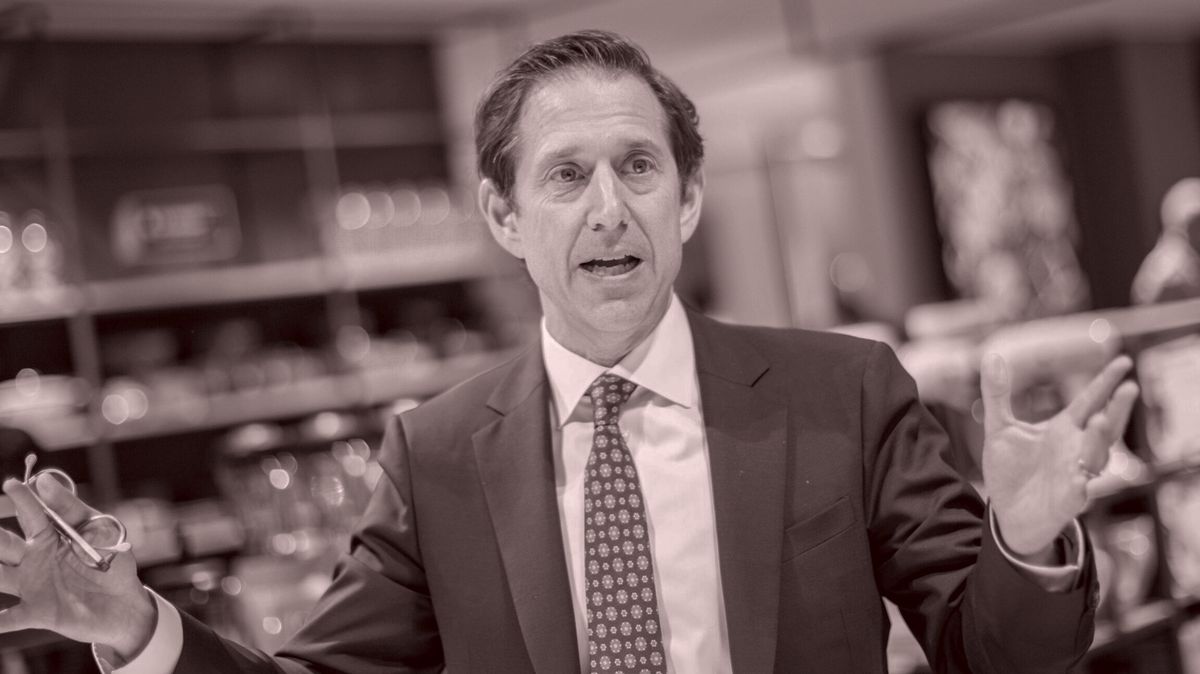
- Gary Cohn’s new job: Back in January, I wondered whether Apollo C.E.O. Marc Rowan would also assume the role of chairman of the company’s board of directors. After all, Trump had just tapped Jay Clayton, the current Apollo board chairman (and head of the S.E.C. during Trump’s first term), to become the new U.S. Attorney for the Southern District of New York, one of the most prestigious and powerful among U.S. Attorney postings, not least because Wall Street conveniently lies within hand-deliverable subpoena distance. Well, effective tomorrow, Marc will become both Apollo’s C.E.O. and its board chairman.
However, the narrative was complicated last week after Sen. Chuck Schumer used his senatorial “blue slip” privilege to block Clayton’s appointment to the U.S. Attorney post. Schumer’s nixing of Clayton took Wall Street by surprise; Clayton, a partner at Sullivan & Cromwell, has done a lot of business in the industry, and is generally well regarded. Schumer said he rejected Clayton because “Trump has made clear he has no fidelity to the law”—not because of anything to do with Clayton’s reputation. (Schumer also used his “blue slip” privilege to block Joseph Nocella Jr. as U.S. Attorney for the Eastern District of New York, another prestigious post.) In response, Trump announced on Truth Social that Clayton will instead serve as “interim” U.S. Attorney for the Southern District, starting Tuesday. In any event, Clayton’s departure as Apollo board chairman created the opening for Rowan. At the same time, Apollo announced that it had selected our old friend Gary Cohn to be Apollo’s lead independent director. Like Rowan, he also starts tomorrow.
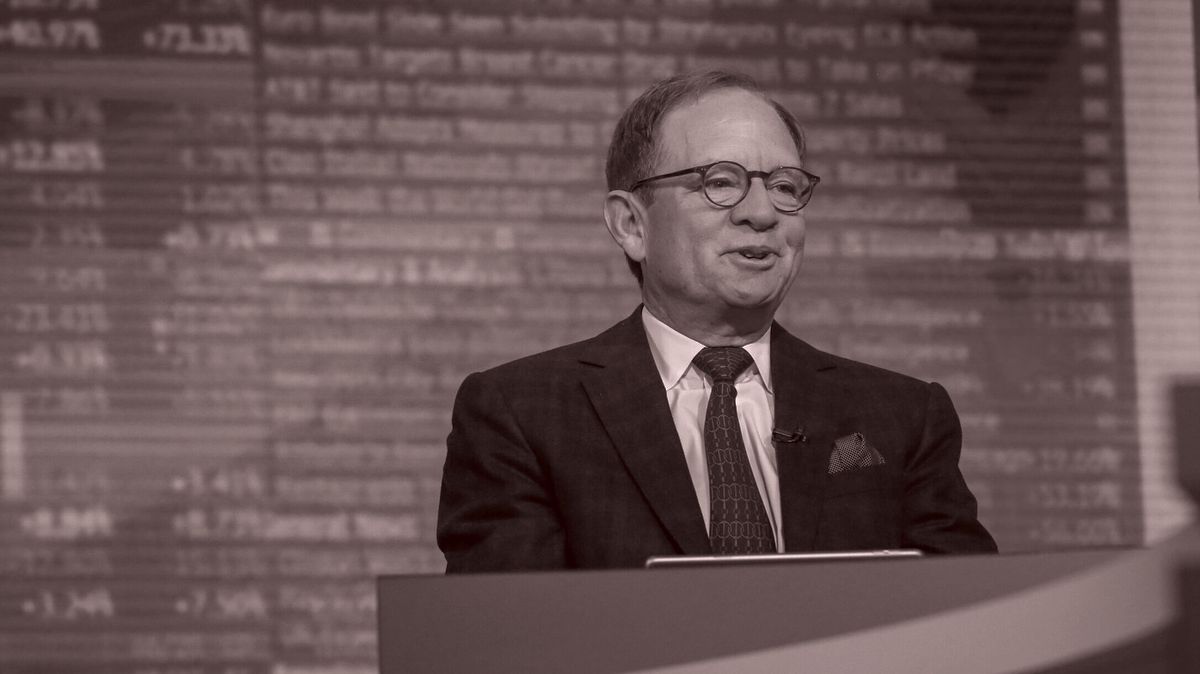
Cohn, of course, was the former Goldman #2 who waged a power play to become Goldman’s C.E.O., only to lose that battle and wind up with the consolation prize of becoming Trump’s first national economic advisor during the president’s previous term, despite being a Democrat. Cohn ended up leaving the White House after the incidents in Charlottesville, Virginia and returned to New York, where he served as vice chairman of IBM. Last week, in an S.E.C. filing, Gary coughed up the usual corporate pablum about his enthusiasm for joining the Apollo board. “I couldn’t be more excited to work with a transformational firm like Apollo that is driving the financial services industry forward,” he said. “With the ongoing convergence of public and private markets, this is a remarkable time to create value for its shareholders and investors.” He declined my request to elaborate further, but it’s a positive development for a guy whose third act—the IBM vice chairmanship, unsuccessful SPAC work—hadn’t fully blossomed.
Who knows how long Gary will stick around the Apollo board. Word around Wall Street is that he’d go back to Washington if Trump asked him. Given the turmoil in the economic ranks in the White House these days, that notion is not as crazy as it sounds.
|
|
|
|
The high-stakes roll-up of iconic department store brands Saks and Neiman Marcus is now straining under the weight of its junk-bond financing. Facing spiking yields, vendor unrest, and now Trump’s trade war, Richard Baker’s bold bet is fast becoming a cautionary tale.
|
|
|
When the yield on the average junk bond spiked 100 basis points, to 8.5 percent, shortly after Donald Trump’s “Liberation Day” tariff presentation, there was bound to be serious fallout for individual corporate bond issuers. Et voilà, here we are. Take, for instance, the $2.2 billion senior secured bond issued in December by Saks Global, the new parent company of the retail behemoth formed by the merger of Saks Fifth Avenue with Neiman Marcus and Bergdorf Goodman. The five-year bond was issued to help finance Hudson’s Bay Company’s $2.7 billion acquisition of Neiman Marcus Group, which had emerged from bankruptcy in 2020.
The complex Saks-Neiman merger, which has been brilliantly covered by my partner, Lauren Sherman, was consummated against long odds late last year. Since then, I’ve become increasingly curious about what Saks Global’s current balance sheet can tell us about the future of the fledgling conglomerate. And it’s not looking particularly good, at least not at the moment.
As Lauren has reported, the architect behind Saks Global is Richard Baker, the Greenwich-born son of a real estate developer. After graduating from the Cornell School of Hotel Management in 1988, Baker joined his father’s mall-development company, National Realty & Development Corp. In 2008, NRDC bought the Toronto-based Hudson’s Bay Company and then took it public in 2012. The next year, Baker orchestrated Hudson’s Bay’s acquisition of Saks in a $2.9 billion deal.
Then, last December, Baker got his hands on Neiman Marcus Group, which was owned by a bunch of wise-guy Wall Street hedge fund investors, including Davidson Kempner and Sixth Street. Baker called the deal “a milestone transaction”—one that he hoped would “redefine” the “luxury shopping experience.” As part of the deal, Saks was spun off from Hudson’s Bay into its own separate company, which then merged with Neiman Marcus Group.
Last month, the iconic Hudson’s Bay, founded in 1670, filed for the Canadian equivalent of bankruptcy, and will likely liquidate its 80 stores and inventory by June, unless a deal for the company materializes. (A Vancouver-based Chinese billionaire has expressed interest in buying the company out of
bankruptcy, although the auction of its assets looms.) “Give him credit as a successful real estate dealmaker and manipulator,” Mark Cohen, the retired director of retail studies at Columbia Business School and the former C.E.O. of Sears Canada, told me. “As a retail owner-operator, however, he’s a complete dud.”
|
|
To finance its acquisition of Neiman, Saks Global issued the $2.2 billion senior-secured junk bond, underwritten by Jefferies, with help from Bank of America, Citigroup, and Morgan Stanley. The ubiquitous Michael Klein was the lead financial advisor to Baker on the merger, and his firm, M. Klein & Company, was also an equity investor, along with Amazon, Salesforce, Authentic Brands Group, and G-III Apparel Group, among others.
The new equity investors joined with Baker’s existing equity investors, including the Rhône Group—run by my old Lazard buddies Steve Langman and Robert Agostinelli—and the Abu Dhabi Investment Council. All told, the idea was to raise more than $1 billion of new equity for the deal, along with the bond offering, plus a $1.8 billion asset-backed lending facility. The bond offering last December was a blowout, and increased in size to $2.2 billion from $2 billion as a result of investor demand.
It’s not hard to see why. The interest rate on the bond was 11 percent, senior, and secured by the company’s assets. At the time, the yield on the average junk bond was 7.25 percent, while the yield on the 10-year Treasury was about 4.5 percent. Offering investors an 11 percent senior secured bond represented a tasty spread.
But there was also obviously plenty of risk in owning this particular security. S&P Global, the ratings agency behemoth, gave Saks Global a credit rating of CCC+, solidly in junk-bond territory and indicative of its post-deal “unsustainable” capital structure—which, in S&P’s view was “highly dependent on favorable business, economic, and financial conditions, including significant synergies from the proposed acquisition.” And that was before Trump kicked off his tariffpalooza.
S&P figured the company’s leverage ratio in 2025 would remain “very high”—in the mid 9x debt-to-adjusted EBITDA range. The ratings agency also expected a free operating cash flow loss of $130 million in 2025, on revenue somewhere in the vicinity of $7 billion, and doubted whether Saks’ EBITDA in 2025 would be sufficient to cover its interest expense, “which highlights risks of less-than-expected synergy generation that could eventually lead to liquidity pressure.”
Saks is a private company, with a big, publicly traded debt issue. But while the debt is public, its financial statements are private, and Saks does not make any filings with the S.E.C. Its bond prospectus is not publicly available, either, which is a bit odd, given the size of the offering and prominence of the company. I asked for a copy of the prospectus so I could see what it had to say about the pro forma earnings of the Saks-Neiman combination, but Nicole Schoenberg, Saks’ head of communications, said it was available only to prospective accredited institutional investors, not me. “Baker’s next retail train wreck will be the Saks/Neiman Marcus merger,” Cohen predicted. “Two luxury players limping along trying to make the case that the combination will be accretive.”
|
The first whiff of trouble emerged on Valentine’s Day. That’s when Marc Metrick, the Saks Global C.E.O., wrote a letter to company vendors informing them that Saks would henceforth pay them after 90 days, rather than the customary 30. “Stretching payables,” as this tactic is known on Wall Street, is sometimes (but not always) indicative of emerging financial difficulties. Furthermore, Metrick wrote that Saks would not pay its overdue bills to vendors until July, and would pay them off in 12 monthly installments. “It was the letter heard around the world,” Lauren observed. Vendors were outraged.
Metrick, Lauren reported, insisted that the change was not a “threat” but rather “an excruciatingly necessary reorganization required to reset the relationship between brands and retailers.” In a subsequent interview with Lauren on her podcast, Metrick said that,“for the longevity of the model,” Saks had to make changes to its payables. He claimed the company was “well capitalized” but, “we had to look at how much should be going out at once,” and how to “handle all the different invoices that are there.”
To my mind, these were more warning signs, despite Metrick’s calm logic. He said he wrote the letter for “transparency” reasons, so that vendors, including those owed money and those about to ship more goods to the company—whether to Saks, Neiman, or Bergdorf—would know the new terms of engagement. “If I had to do it all over again, I would do it,” he told Lauren. Metrick said he didn’t expect Saks’ vendors to finance Saks’ business. “It’s not their job,” he said. “But, I can’t finance theirs either. We have to be partners. And I think this is a movement more toward that. By and large, our brand partners understood that.” (He also confirmed Lauren’s reporting that some vendors, such as Chanel, got “different deals,” and would get paid on better terms than others.)
In March, Saks confirmed the rumors that it intended to close the flagship Neiman Marcus store in downtown Dallas, after 111 years. After some pushback, Metrick agreed at the eleventh hour to keep the location open through the 2025 holiday season, and to potentially reimagine the space as a center for events and fashion innovation. “This is not a well-performing store,” Metrick told Lauren.
Needless to say, none of these developments were particularly good news for the Saks bondholders, most of whom paid close to 100 cents on the dollar for their bonds last December. Pretty much from Inauguration Day, the price of the bonds has been falling. Then came Liberation Day, and the bonds tanked. As of Good Friday, the bonds were trading at 72 cents on the dollar, meaning the people who paid 100 cents on the dollar have lost 28 percent of their money in about four months.
Even though they are legal obligations, bonds can be very risky, too—as S&P Global warned from the start about the Saks offering. The Saks bonds, which had an 11 percent yield in December, are now yielding more than 20 percent—an 81 percent increase. Put another way, investors are demanding a yield on par with the interest on a Capital One card.
The implications of creditors demanding an equity-like yield on a senior, secured piece of paper are well-known to investors. It could signal concern about an imminent payment default, a debt restructuring of some sort, or that the equity value of the company is in the process of being wiped out. After all, if the debt is not worth par—or 100 cents on the dollar—it’s hard to make the argument that the company still has equity value. “Is 20+ percent enough for bondholders to stay the course?” Cohen wondered. “I doubt it.”
|
Tariffs, Tidal Shifts & Killer Bees
|
|
No surprise, Saks Global sees things differently. According to a statement that the company shared with me, “Tariffs have negatively affected the value of equity and bonds recently, including our bonds. Following our late-December acquisition of Neiman Marcus Group, we are in the early stages of solidly executing on our strategy for the combined business, including capturing significant synergies over the next few years, improving inventory flow, which is currently approaching fiscal 2023 levels, and establishing new payment terms to reset the working capital model. All of these plans were
shared with our bondholders when the bonds were issued, and we are confident in our ability to continue to execute against them.”
For his part, Metrick is bullish about the prospects for the combination of Saks and Neiman Marcus. He told Lauren that Saks would, without “caveat,” be paying its vendors the money it owes them by this December. He said he hoped to “transform” Saks into “something new” and that “people are going to start to get very excited about it.”
But he also conceded that he’s been around a long time and has lived through multiple upheavals, including the bursting of the dot-com bubble in 2000, September 11th, and the Great Recession. “Our business is filled with insecure, paranoid people,” he said. “The one lesson I’ve learned is that luxury is a long game.” Trump’s tariffpalooza has affected the business, of course, but it won’t be the only thing, he predicted: “It’ll be something else. It might be killer bees. It might be the tidal shifts. I have no idea what’s going to be happening two years from now or three years from now.” But when your bonds are yielding 20 percent a mere four months after the closing of your big strategic merger, things can spin out of control pretty quickly.
|
|
|
|
Join Puck’s chief political columnist, John Heilemann, as he roams the corridors of power and influence in America on this twice-weekly interview show, taking you beyond the headlines with the people who shape our culture: icons and up-and-comers, incumbents and insurgents, moguls and machers in the overlapping worlds of politics, entertainment, tech, business, sports, media, and beyond. The conversations are rich and revealing, unrehearsed and unexpected… and reliably impolitic. A Puck-Audacy joint, new episodes drop every Wednesday and Friday.
|
|
|
|
The ultimate fashion industry bible, offering incisive reportage on all aspects of the business and its biggest players. Anchored by preeminent fashion journalist Lauren Sherman, Line Sheet also features veteran reporter Rachel Strugatz, who delivers unparalleled intel on what’s happening in the beauty industry, and Sarah Shapiro, a longtime retail strategist who writes about e-commerce, brick-and-mortar, D.T.C., and more.
|
|
|
Need help? Review our FAQ page or contact us for assistance. For brand partnerships, email ads@puck.news.
You received this email because you signed up to receive emails from Puck, or as part of your Puck account associated with . To stop receiving this newsletter and/or manage all your email preferences, click here.
|
|
Puck is published by Heat Media LLC. 107 Greenwich St, New York, NY 10006
|
|
|
|