 |

|
|
Welcome to Dry Powder, I’m William D. Cohan.
Tonight, my assessment of the latest twist in Sam Bankman-Fried’s ongoing legal saga—in particular, a pair of amicus briefs that shed new light on the role of Sullivan & Cromwell, John Ray III, Judge Lewis Kaplan, and other cast members in this sordid affair. The Sam soap opera is hardly over, I would argue. In fact, as the addition of his new bunkmate Diddy suggests, it all just keeps getting weirder and more compelling. More on that below.
But first, a few pieces of Wall Street intel from my partner Eriq Gardner…
- Paramount legal pressure: The California State Teachers Retirement System (CalSTRS)—the second-largest public pension fund in the U.S., with nearly $350 billion in assets—is eyeing a lawsuit over Shari Redstone’s deal with Skydance Media. CalSTRS, a major investor in Paramount Global, has issued demands to inspect the company’s books and records, suspecting foul play. It’s not alone: Various stakeholders, including investor Mario Gabelli and Rhode Island’s own public employee pension fund, have been probing whether Redstone orchestrated the Paramount sale to favor her interests. Many are eagerly anticipating the S-4 registration of new Paramount stock, expecting it to illuminate the process leading to the Skydance deal.
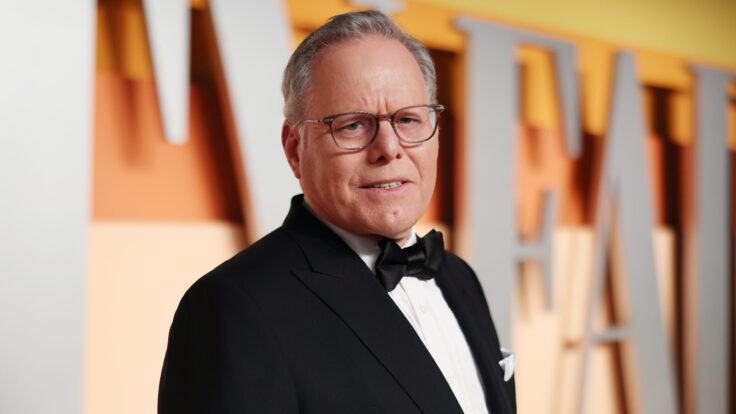
But not all attorneys are willing to wait. The Philadelphia-based firm Berger Montague, for example, filed a lawsuit on July 24, alleging Redstone breached her fiduciary duties by negotiating a premium for her Class A shares. The suit also names Skydance and its leader, David Ellison, accusing them of complicity. On Monday, the attorneys spearheading this case informed Delaware Chancellor Kathaleen McCormick that they wished to move to the next phase and litigate on behalf of all of Paramount’s Class B stockholders.
That aggressive move triggered other plaintiffs lawyers, who quickly came forward to acknowledge their ongoing investigations into the Paramount-Skydance deal for clients including CalSTRS and APG Asset Management. These lawyers, aiming to eventually spearhead a consolidated action, urged McCormick to go slowly, pointing to upcoming events like the S-4 registration. They detailed their own plans to file lawsuits not long after the Skydance transaction closes in 2025 (a timetable that assumes government regulators don’t challenge the merger). This strategy contrasts with Berger Montague, who are seeking to halt the deal’s completion. And it presents McCormick with an early call on the direction of the litigation.
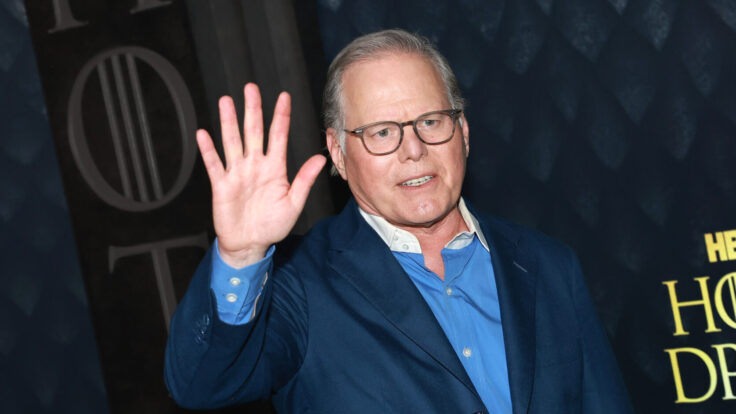
- A quick note on Zaz’s various legal issues: It’s an interesting time to be a lawyer working for Warner Bros. Discovery C.E.O. David Zaslav: On Friday, WBD argued that the NBA must license its games to TNT. Come Monday, the company told a different court that producers have no duty to license sports networks to distributors like FuboTV.
Okay, each case has its nuances. The first involves WBD’s “matching rights” suit against the league, which sold a “streaming-only” package to Amazon. Aiming to fend off a motion to dismiss, WBD played its tiniest violin, waxing on about the “40-year, multi-billion-dollar relationship” that’s been derailed by the “bad faith” “poison pills” in Amazon’s deal, such as stringent escrow and credit-rating requirements and cross-promotional obligations that would be tough for any network without an NFL partnership to meet.
The other case involves an appellate brief filed by WBD—alongside Disney and Fox—urging the 2nd Circuit to reverse a district judge’s preliminary injunction against the launch of the triumvirate’s sports streamer, Venu. The three studios argue that they have no obligation to supply a skinny bundle of sports channels to FuboTV in the first place, so there can’t be anticompetitive consequences for hoarding this privilege for themselves. Surely, there are some contradictions in all of this, but that’s why you hire $2,500-an-hour litigators! (Sign up for Eriq’s What I’m Hearing+ here.)
|
|
And now, on to the main event…
|
 |
| Play It Again, Sam |
| Two recently filed amicus briefs on behalf of S.B.F. may prove to be his best hope yet of reducing his sentence. At the very least, they offer a fascinating revisionist history of this chapter of the FTX saga. |
|
|
|
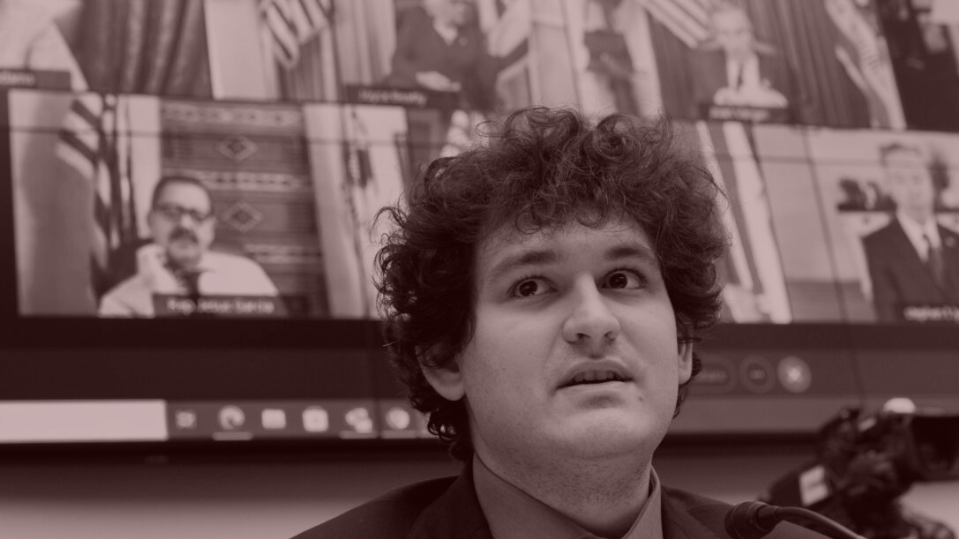
| They probably won’t make a whit of difference, but the two amicus briefs filed this week in support of Sam Bankman-Fried’s ongoing legal defense sure make for interesting reading. On September 13, Sam and his lawyers filed his appeal, in which they argued that he deserves at the very least a new trial, if not his conviction vacated in its entirety. As I previewed, they argued that Sam did not get a fair trial a year ago, and that federal prosecutors were colluding with both the new executives running his bankrupt company and with Sullivan & Cromwell, the debtors’ attorneys who had represented Sam and FTX prior to the company’s bankruptcy filing in November 2022. Furthermore, Sam’s attorneys argued that the prosecutors and the debtors were given much more than the benefit of the doubt by Judge Lewis A. Kaplan in his Manhattan courtroom.
The first amicus brief was filed by seven doctors who are self-described experts in neurodiversity, a catchall term for differences in brain function that encompasses two of Sam’s diagnoses—autism spectrum disorder, or A.S.D., and attention-deficit/hyperactivity disorder, or A.D.H.D. They argued that Sam’s A.S.D. and A.D.H.D. put him at a disadvantage during his criminal proceedings, and especially during the trial phase, when the judge repeatedly admonished Sam for failing to answer questions directly, thus giving the jury the impression that he was being evasive or argumentative when he was, in their view, just being Sam.
The other brief, written by a group of bankruptcy legal experts, argued that Sam was disadvantaged during the criminal trial because the FTX debtors, led by FTX’s new C.E.O., John J. Ray III, had worked too closely with Sullivan & Cromwell, the debtors’ counsel, and federal prosecutors to build the case against Sam. That’s not the way bankruptcy proceedings are meant to work, they wrote. Bankruptcy is not meant to be an arm of the prosecution.
Meanwhile, Sam remains in the Metropolitan Detention Center in beautiful Sunset Park, Brooklyn, along with his newest neighbor, Diddy, in a dormitory-style room in the women’s section of the prison. Sam is in the first innings of his 25-year sentence. These amicus briefs may represent his best chance to reset that number and have a shot at a decent life after prison—although he is also supposed to somehow pay an $11 billion fine. |
|
A MESSAGE FROM OUR SPONSOR
|
 |
| Get a custom-made IRA from Betterment.
Choose where and when you want to retire, and a Betterment IRA can help make your money hustle all the way there.
Learn More. |
|
|
| The Neurodiversity Argument |
|
| The group of seven neurodiversity experts, who stipulated they were not paid by anyone on Sam’s legal team, appears to be led by Dr. Alexander Westphal, an adjunct associate professor at the Yale School of Medicine and one of the editors of the Handbook of Autism Spectrum Disorder and the Law. They argued in their brief that Sam’s “idiosyncratic speaking style, poor eye contact, peculiar adherence to routine, and fidgetiness” as well as his “unusual affect, his longwinded answers, and how poorly they were received by the court” put him at a severe disadvantage with Judge Kaplan and the jury. They noted that press reports about the judge rarely failed to mention that he was “visibly irritated” by Sam, and that it was “pretty clear” that Kaplan “did not like Sam” or his “demeanor.”
Sam is “neurodivergent,” they wrote, adding that such individuals can “present differently, often exhibiting characteristics—poor eye contact, lengthy and qualified answers, reluctance or inability to display emotion—that can easily be misunderstood as evidence of evasiveness, callousness, or guilt.” Sam’s autism and his A.D.H.D. “pose a particularly grave risk of prejudice” in a trial setting, they argued, adding: “For individuals with ASD, poor eye contact likely has everything to do with their neurodivergence, and nothing to do with their culpability.”
To illustrate how Sam may have been put at a disadvantage by his autism and his A.D.H.D., the doctors cited an exchange between him and the prosecution, with interjections by the judge, during Sam’s court testimony: |
- Q. Well, let’s talk about Alameda’s main trading account. Are you aware that that main trading account could go negative?
A. And so to clarify, you’re talking about info@, the main
account, or the entire user?
Q. The info@ main account.
A. So account No. 9.
Q. Yes.
A. And by “go negative,” you’re talking about negative in a
particular coin or negative net asset value?
Q. Just have a negative balance, Mr. Bankman-Fried.
A. Sorry. I—
. . .
THE COURT: … I’ve gotten beyond my tether here … [P]art of the problem is that the witness has what I’ll simply call an interesting way of responding to questions for the moment.
. . .
Q. Mr. Bankman-Fried, in May of 2022, were you aware
that account ID 9 @AlamedaResearch.com could have an overall
negative value?
A. I am giving you my best guess at answering the question.
Q. I’m not asking for a guess. I’m asking what you
understood at the time.
A. I am going to answer what I think the question you are asking is, but I apologize if I’m answering the wrong question. . . . I’m assuming that overall net asset value, rather than value in a particular coin, is what I think that you are going for here, so that’s how I was answering that question. That is my answer as of that time.
THE COURT. Mr. Bankman-Fried, you have been asked that question in one form or another quite a number of times and not once did the question include the phrase net asset value. Unless I’m mistaken, every single answer you have given responded on the assumption that counsel had asked you about net asset value. Now, that’s just an observation. If I’m mistaken, I’ll stand corrected, but it says what it says.
[Mr. Bankman-Fried]: I apologize if that’s correct.
A. If [the court’s observation] [i]s true, I don’t know what you
mean by negative balance.
|
| The doctors noted that Sam “identified the ambiguity” in the prosecutor’s question, “sought (but was denied) more clarity,” and then “attempted to answer the question after rephrasing to offer precision that was otherwise lacking.” But, the judge didn’t appreciate Sam’s dilemma. He “perceived that as evasive or belligerent and communicated his frustration,” they wrote. Kaplan, they continued, interpreted Sam’s “seemingly stubborn drive for precision, clarity, and accuracy not as traits characteristic of neurodivergence, but as belligerence, stalling, or obstruction.”
The judge, the doctors wrote, “made his viewpoint apparent to the jury through ‘comments about the defendant on the stand.’” The “impact” of such ongoing observations about Sam by the judge “might have been devastating,” they continued. “Jurors, lacking any familiarity ‘with FTX, crypto,’ or the defendant, ‘may well have easily taken cues from the most visible legal expert who ran the show.’” (Here the brief is quoting from Nikhilesh De, writing in CoinDesk, in April 2024.)
I have to say this argument rings true to me, based on my two lengthy interviews with Sam, including the one in May at the M.D.C., and in my correspondence with him. He doesn’t give a quick answer to questions and can launch into a stem-winder without warning.
His parents, Joe and Barbara, also shared their observations, according to the court record and the amicus brief. “Sam has struggled throughout his life,” Joe said, “to learn and control things most of us take for granted, such as eye contact, small talk, and responding to social cues.” Barbara recounted that Sam “has no interest in small talk, but will engage passionately and relentlessly with ideas to the point that [it] can exasperate and exhaust others. I know, having disappointed him many times in our conversations over the years by running out of intellectual energy long before he showed any signs of flagging.”
Of course, the doctors argued, Sam’s conditions were exacerbated during the trial by the fact that the court denied him his recommended dosage of Adderall. They noted that Sam, who was awakened at 4 a.m. in the M.D.C. every day to make it to the courthouse in Lower Manhattan, was given, “at the government’s insistence,” only “half the dose he previously was taking.” And, they continued, by the time the trial got underway each day, Sam was already flagging and in need of another dose of the medication so that he could focus on the evidence and the questions being asked. “The government’s case went forward, for weeks, without Mr. Bankman-Fried receiving effective doses of his medication,” the doctors wrote. They concluded that the “effects” of Sam’s conditions “permeated” his trial, and that neurodivergence should be “understood” and “considered” in evaluating his appeal. |
|
|
|
|
| The five bankruptcy experts, including law professors David Skeel at Penn and Jonathan Lipson at Temple, whose previous research paper I reviewed in May, also made a fascinating argument. To wit, that the FTX estate, during the bankruptcy process, used company resources to the tune of “tens of millions of dollars” in “real time” support from Sullivan & Cromwell to help federal prosecutors build a case against Sam and to convict him—“the prosecutorial equivalent of breaking the sound barrier,” they wrote—even though the estate is on the verge of distributing proceeds to its former customers of between 129 percent and 143 percent of the petition-day value of their claims. In other words, S&C fleeced a bankrupt FTX even though the company’s investors all not only got their money back but also a return on their investment.
The fees paid to S&C—into the hundreds of millions of dollars—represented one of the highest “burn rate[s]” in the history of bankruptcy proceedings, the brief claimed, and could have partially been used to further benefit the estate’s customers and creditors, instead of to build the legal case against Sam. “Congress designed the chapter 11 and criminal justice systems to be separate, and the boundary between them is not usually problematic. Here, however, the FTX chapter 11 bankruptcy estate crossed that line repeatedly, pervasively and persuasively, to the detriment of both the defendant and FTX’s stakeholders,” the brief’s authors argued. “It sets a dangerous precedent, encouraging the aggressive use of chapter 11 proceedings to support parallel criminal prosecutions.”
Their concern is over the poor precedent being set for bankruptcy proceedings generally, rather than whether Sam, specifically, was wrongly convicted or deserves a new trial. As Sam did in his appeal, the law professors argued that Sullivan & Cromwell “played a pivotal and problematic role” in both “inducing the bankruptcy” filing and then in “leading” the debtors’ “support” for Sam’s prosecution. “Unlike Enron and WorldCom, where bankruptcy counsel had no prior connection to the debtors, S&C had represented FTX in 20 nonbankruptcy matters, including in sensitive regulatory work in which the firm may have learned of the asset commingling that precipitated the bankruptcy and formed the basis of the prosecution,” they wrote, also noting that when S&C encouraged Sam to turn FTX over to Ray in the early-morning hours of November 11, 2022, the law firm failed to mention it had gone to prosecutors in the Southern District of New York two days earlier with their “concerns” about FTX.
Was S&C acting responsibly, or covering its own backside, by going to the federal prosecutors? Paul Holmes, a spokesman for Sullivan & Cromwell, referred me to the examiner’s report in the FTX case, which countered the allegation that the law firm had reported Sam’s “crimes” to prosecutors before the bankruptcy filing, and noted that he hadn’t seen “any email or other document in which S&C expressly disclosed a crime to prosecutors or regulators prepetition. The examiner has seen communications disclosing to the government that FTX.US had discovered an anomaly on its balance sheet—that there were not enough assets to cover liabilities. Those disclosures do not conclude that the anomaly amounted to, or was the result of, a crime.”
As for the assertion that S&C had a conflict because it was a prepetition attorney to FTX, Holmes cited the examiner’s observation that prepetition, “S&C was representing the FTX Group, not Bankman-Fried. Significantly, Bankman-Fried was then separately represented by sophisticated, experienced counsel [Paul Weiss]. Furthermore, the FTX Group’s decision, in consultation with S&C, to make a swift and decisive self-disclosure concerning the balance sheet anomaly is consistent with the prudent and common strategy for companies to promptly self-disclose corporate misconduct, and may have helped preserve estate resources by enabling the company to earn cooperation credit.”
The professors were particularly critical of what they deemed John Ray’s prejudicial commentary about Sam and the conditions Ray found at FTX after taking control of the company, such as this statement, delivered under oath, after just six days on the job: “Never in my career have I seen such a complete failure of corporate controls and such a complete absence of trustworthy financial information as occurred here. From compromised systems integrity and faulty regulatory oversight abroad, to the concentration of control in the hands of a very small group of inexperienced, unsophisticated and potentially compromised individuals, this situation is unprecedented.” (Of course, it was not only John Ray who perceived a company out of control; many of Sam’s colleagues and fellow FTX executives ended up admitting to a very similar set of facts.)
The law professors also drew attention to Ray’s testimony to Congress last December, a few days before Sam was taken into custody, that FTX was a “dumpster fire” and had “virtually no internal controls and no separateness whatsoever.” They wrote that while “it is understandable that a new management team in bankruptcy would want to distinguish itself from pre-bankruptcy management,” they quoted from Bloomberg’s Matt Levine that “it is hard to think of a C.E.O. in recent memory who has been more focused on trashing the previous management.”
In closing their brief, the law professors reiterated that they were not passing judgment on Sam or his conviction and sentence, but rather were concerned that “FTX bankruptcy was used in ways that blur the healthy boundary between the chapter 11 and criminal justice systems.”
Interesting points, all, if you ask me. Whether any of this, or Sam’s appeal itself, will persuade the judges in the 2nd Circuit Court of Appeals remains to be seen. But I’ll be following it closely on your behalf. |
|
|
|
| FOUR STORIES WE’RE TALKING ABOUT |
|
|
|
|
|
 |
|
|
|
Need help? Review our FAQs
page or contact
us for assistance. For brand partnerships, email ads@puck.news.
|
|
You received this email because you signed up to receive emails from Puck, or as part of your Puck account associated with . To stop receiving this newsletter and/or manage all your email preferences, click here.
|
|
Puck is published by Heat Media LLC. 227 W 17th St New York, NY 10011.
|
|
|
|