 |
|
Welcome back to The Stratosphere, and a happy 70th to Puck subscriber Ervin Schleifer in Camden, Delaware.
|
|
We have two stories in today’s edition. First, a look at whether any of the political aides who worked for Sam Bankman-Fried face any possible legal exposure from the Department of Justice, which I report has been issuing subpoenas to a number of them. Will D.O.J. be satisfied with the heads of Sam, Nishad and Ryan—or will they go further down the totem pole?
Then, below the fold, a look at a new, controversial strategy from LinkedIn billionaire Reid Hoffman to engage in the 2024 primary—among Republicans. If you’re following the battle between DeSantis and Trump, you’ll want to scroll down for that.
|
|
|
| Who knew what, and when? In the aftermath of FTX cofounder Nishad Singh’s guilty plea, the haze of paranoia surrounding Sam Bankman-Fried’s former associates has narrowed to that simple question. Last month, with Singh’s cooperation, federal prosecutors unveiled new details of S.B.F.’s alleged straw-donor scheme, depicting a sophisticated and highly choreographed endeavor wherein Bankman-Fried effectively embezzled tens of millions of dollars in customer deposits to Singh and another FTX executive, co-C.E.O. Ryan Salame, to make political contributions in their names. Is it really possible that not a single person who handled political donations for the three crypto billionaires knew anything about it?
That might strain credulity, at first blush. But it has been the position of nearly all of my sources inside S.B.F.’s operation since FTX’s downfall in November: that the people involved in the Bankman-Fried family influence machine were merely stewards dispersing checks, not people with intimate knowledge of misconduct at FTX, Alameda Research, or financial arrangements between Sam’s C-suite. Now, as federal prosecutors distinguish between so-called witnesses, subjects, and targets in the S.B.F. investigation, we’ll see if those claims withstand legal scrutiny, too.
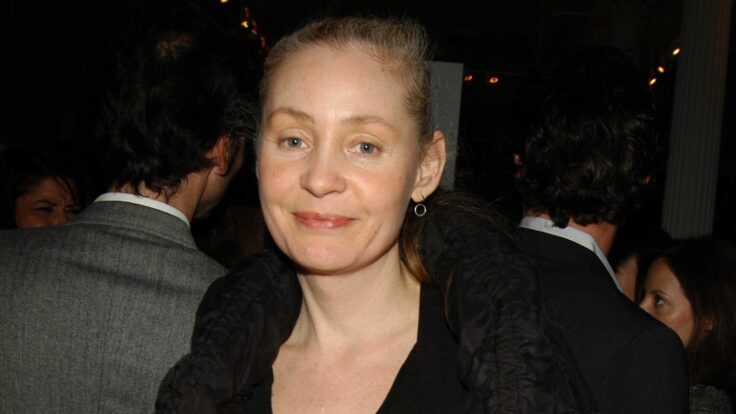
I have learned that prosecutors, including those from the D.O.J. Public Integrity Section, have subpoenaed a number of S.B.F. aides in recent months as they investigate Sam’s political operation. One of those to receive a subpoena, I’m told, is Jenna Narayanan, a donor-advisor to Guarding Against Pandemics, Sam’s principal lobbying group, who was asked to cooperate with the investigation earlier this year. (Her lawyer, the prominent criminal defense attorney Isabelle Kirshner, declined to comment.) Narayanan, who is in her 40s, always struck me as the adult among the kids advising S.B.F., Singh and Salame. A former longtime strategist for Tom Steyer who previously cut her teeth at the Democracy Alliance and fundraising for John Edwards, Narayanan keeps a low profile but is well-regarded in the insular world of high-dollar progressive fundraising. When young effective-altruist operatives pitched various risky schemes to S.B.F.’s inner circle in Signal groups, it was often Narayanan who would caution them to wait a beat before rolling the dice on some political “play” that could backfire. “I thought of her as the person who would slow things down if needed,” said one source.
Receiving a subpoena doesn’t mean that you’re under investigation as a target or a subject, of course—just that you might have helpful information to prosecutors. And I don’t mean to single out Narayanan when others got them, too. But given the specific charges facing S.B.F., lawyers say there is expected to be greater scrutiny from prosecutors of the GAP officials who actually moved the money, which was Narayanan’s purview as the group’s top check-cutting official. For instance, people like Sean McElwee, a GAP pollster, are now seen as less likely to be in the cross-hairs as are people like Tyler Deaton, who moved money for Salame. The prosecutorial thesis, in short, is that advisors who facilitated these transfers via FTX must have known about the alleged reimbursement scheme; otherwise, could they really be effective donor-advisors at all? That assumption is very much disputed by GAP employees. But the real question going forward, defense lawyers in the case say, is just how deep into the org chart prosecutors intend to drill when they already have the big fish, S.B.F., seemingly dead to rights. |
|
|
| With The New York Times sniffing around GAP for what I’m told is an upcoming piece of reporting, it’s worth a closer look at the people who could be under the microscope. After all, the Bankman-Fried brothers’ political operations sprawled across dozens of related nonprofit groups for everything from fellowships to benefits-administration, with seemingly everyone in Washington on retainer.
At the top of the food chain was Gabe Bankman-Fried, Sam’s younger brother, who launched the group in 2021 and was effectively everyone’s boss. Democratic strategist Michael Sadowsky, a data nerd and a die-hard effective altruist, oversaw the super PAC, Protect Our Future, and the two co-pilots were at times closely advised by a former New Hampshire state legislator Elizabeth Edwards-Appell. (The triumvirate were sometimes referred to as “GEM,” shorthand for their first names.) There was also Dave Huynh, aka “Delegate Dave,” who worked with Sadowsky for years and was a key liaison to the Democratic political establishment, given his presidential-campaign level experience with Kamala Harris and Hillary Clinton. A few other aides—Narayanan, McElwee, Simon Vance, Varun Krovi, Matt Lackey, and Keenan Lantz—rounded out the core Democratic political crew that surrounded S.B.F. and Nishad Singh. (There were also a bunch of lower-level aides and Ph.D. types who focused on scientific policy matters, whom I will spare the public mention.)
On the Republican side of the FTX/GAP universe there was Deaton, who served as a de facto proxy for Salame with senior G.O.P. leaders, and Brinck Slattery, who ran Salame’s super PAC, American Dream Federal Action. I’ve recently looked into whether there was any funny business at the Salame super PAC, given that its funding allegedly derived from FTX deposits, and because, as I’ve reported, a grand jury in Puerto Rico recently issued at least one subpoena related to FTX’s Republican campaign-finance activity. But based on my reporting, Salame’s super PAC—advised by top G.O.P. consulting firms like FP1—was a fairly traditional outside group: they monitored races; they commissioned polls; they cut ads. Of the multiple people I spoke with, no one involved suggested it was anything more than a normal super PAC doing normal six- and seven-figure interventions in Republican primaries.
Running parallel to the Republican and Democratic operations was the FTX lobbying team, overseen by former C.F.T.C. commissioner Mark Wetjen, which occasionally scuffled over political turf with S.B.F.’s personal team. (Naturally, sources from both teams have privately blamed the other for their current legal and financial predicament.) It was somewhat unusual, after all, for a C.E.O. to simultaneously have his own aggressive personal lobbying operation in addition to a traditional, equally-aggressive corporate lobbying shop. And the lines were easily blurred: if someone on the Hill was meeting with S.B.F. on crypto policy, they surely also knew he was also a major Democratic donor with his own super PAC.
So who knew what? To be sure, some of these S.B.F. advisers were responsible for sloppy compliance and legal work: At one point, in the lead-up to the Carrick Flynn congressional race, they basically failed to file a legally required F.E.C. report until I questioned them about it. An initial filing from Protect Our Future, the super PAC overseen by Sadowsky, misattributed $13 million from S.B.F. in the name of some crypto trust LLC. The Bankman-Fried indictment from S.D.N.Y. details other sloppy campaign-finance behavior, which presumably had the sign-off from Bankman-Fried’s professional help. Were those missteps, though, or federal crimes?
If prosecutors want to nail anyone from Gabe on down, they will have to show something more sinister. In the months since S.B.F.’s arrest, multiple people in his circle have argued to me that a fair-minded observer wouldn’t fault his advisors for not asking questions about the provenance of the money they helped donate. If you were Narayanan or Deaton, they contend, there was no reason to believe that Singh or Salame weren’t cash-flush billionaires, capable of making $10 million or $20 million donations. Sure, GAP officials may have gotten creative with who signed their names to certain checks—who should be in charge of the transactional “woke shit,” as one consultant put it, and who should be in charge of the MAGA checks—but coordinating fundraising, in and of itself, isn’t illegal, even if it is a little gross. The truly illegal stuff was the reimbursement scheme, and maybe only Sam, Ryan and Nishad knew about that.
Nevertheless, the cloud persists. The reputational injury to a small group of political and philanthropic consultants is not the concern of prosecutors, of course, but it has weighed heavily on many people in S.B.F.’s once-sprawling political and philanthropic circles who fear that dozens of careers may be irreparably damaged. Some of their friends and lawyers have wondered to me: When will their moment of absolution arrive? Sam will have his day in court, presumably. Some targets may eventually receive a so-called “declination letter” from prosecutors many, many months from now, that would allow them to claim innocence. But for the rest, the letters S.B.F. and FTX will forever stain their resumes, whether evidence ever emerges that they knew about his wrongdoing or not. |
| Reid Hoffman’s DeSantis Gamble |
|
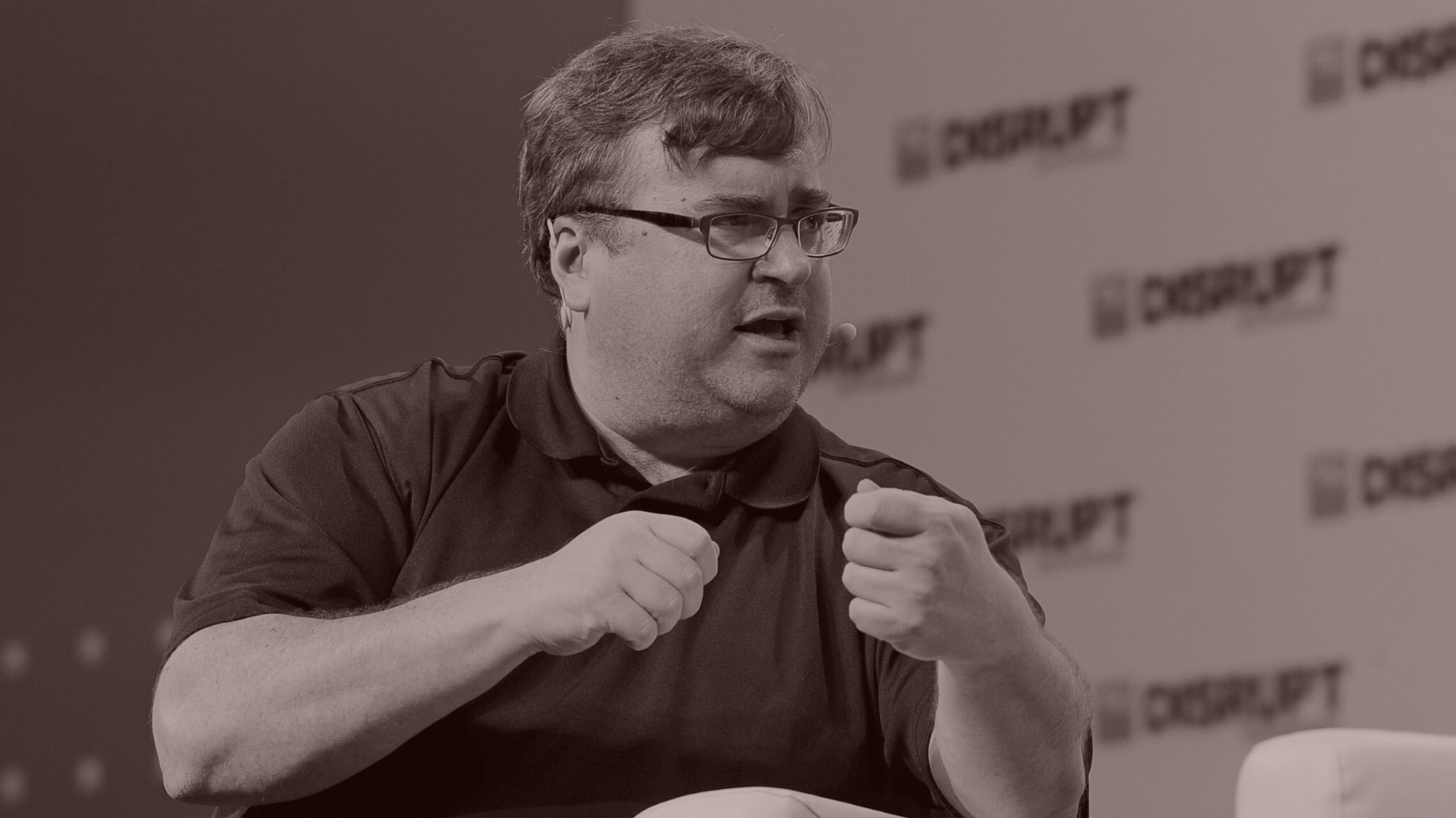
| Meanwhile, an explosive rumor coursing through Democratic big-money circles made its way to me last week: Was Reid Hoffman, the billionaire LinkedIn founder whose fundraising moves are closely followed by other progressive mega-donors in Silicon Valley, really about to spend millions in the 2024 election to support Ron DeSantis?
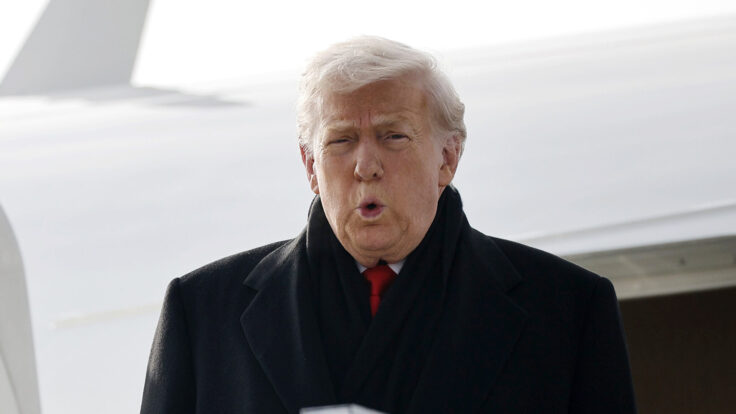
And the gossip is kinda true, I have learned, with a few key caveats. Hoffman is indeed planning to get involved in the Republican presidential primary, I’m told, and his top adviser Dmitri Mehlhorn has communicated that plan in closed-door conversations as a top 2024 priority. The logic, according to a person familiar with the strategy, is pretty simple: Democrats have two shots to take out Donald Trump next year, first in the primary and then in the general, and it would be foolish to waste one of those chances.
Of course, Hoffman remains a Democrat, and he shares the belief of many Democrats that Biden would have a slightly better chance of defeating Trump than DeSantis. But while I would not expect Hoffman to do anything to overtly boost DeSantis like, say, donate to a pro-DeSantis super PAC, the line between beating Trump and boosting DeSantis can be thin. Hoffman’s team is currently studying early voting states—party registration requirements, demographic groups, state G.O.P. nominating rules, media ecosystems, etcetera—to see where they can move the needle. And if they do inadvertently elect a President DeSantis? I’m told that Hoffman and Mehlhorn, at a high level, don’t view the Florida governor as an existential threat to democracy, unlike Trump, and believe he may even have the ability to successfully govern.
Hoffman, and especially Mehlhorn, have become bogeymen in recent years among some elements of the left who see them as overly-influential center-right operators who are all-too-excited to piss on the Democratic base. But their DeSantis strategy puts them at odds with most establishment Democrats, too, and it speaks to an interesting high-level intellectual divide between Hoffman and other party elites. Many leading Democrats—not just those on the party’s left-most flank—view Trump as a symptom of America’s problems, and DeSantis as another avatar of Trumpism. Hoffman and Mehlhorn view Trump more narrowly as the disease itself. And that means they are willing to do whatever it takes to excise the cancer, even if it means electing DeSantis instead.
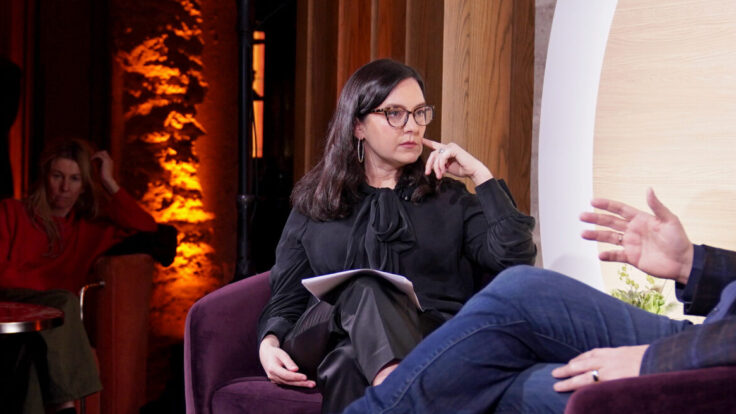
Hoffman declined to comment, but he hinted at his perspective in an interview Monday with my old boss Kara Swisher. “The short answer is I will spend as much as I possibly can and it takes and is effective [to beat Trump],” he told Kara. Hoffman said he would “absolutely” support Biden against Trump. But if DeSantis was the nominee? Hoffman was just a touch more tentative. “DeSantis—I’m almost certainly in the Biden camp. Like 99.99999 percent. Unless an asteroid passes close to the Earth.” |
|
|
|
| FOUR STORIES WE’RE TALKING ABOUT |
 |
| CNN’s Trump Test |
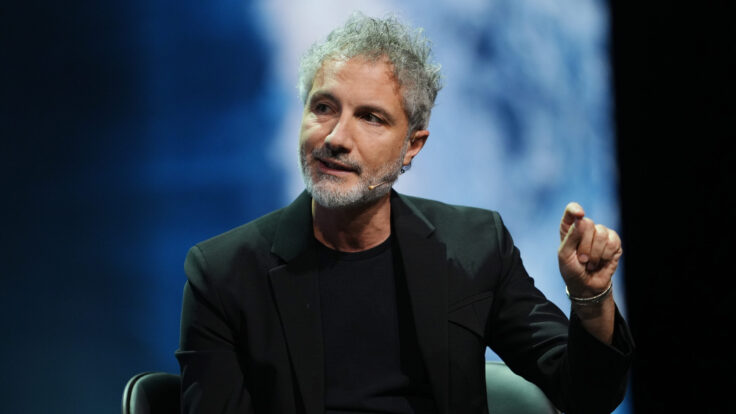
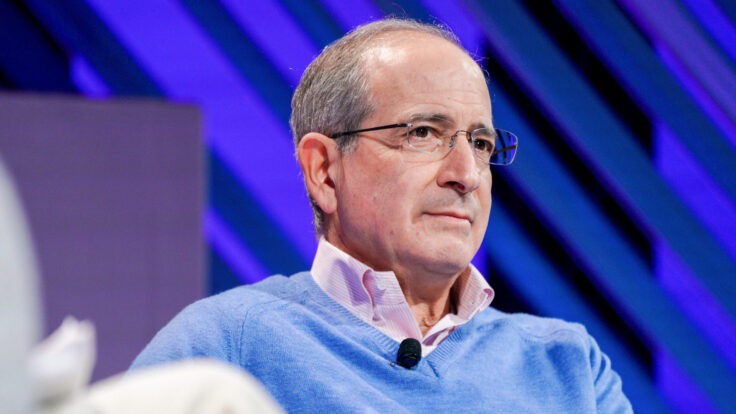
| How would an indictment play in the New CNN & post-Dominion Fox News? |
| TARA PALMERI & DYLAN BYERS |
|
 |
| Tiger’s Legal Snafu |
| Dissecting the legal ramifications of the star golfer’s $30 million breakup. |
| ERIQ GARDNER |
|
 |
|
 |
| SVB’s Final Days |
| The definitive post-mortem on the bank’s implosion. |
| WILLIAM D. COHAN |
|
|
|
|
|
 |
|
|
|
Need help? Review our FAQs
page or contact
us for assistance. For brand partnerships, email ads@puck.news.
|
|
|
|
Puck is published by Heat Media LLC. 227 W 17th St New York, NY 10011.
|
|
|
|