 |
 |
|
Welcome back to Dry Powder. I’m Bill Cohan.
|
|
While interviewing Sam Bankman-Fried for his forthcoming book on the crypto craze, the actor Ben McKenzie began to detect a suspicious evasiveness. In today’s issue—the sixth installment of the S.B.F. Chronicles—McKenzie spills about what first set off his fraudster radar.
|
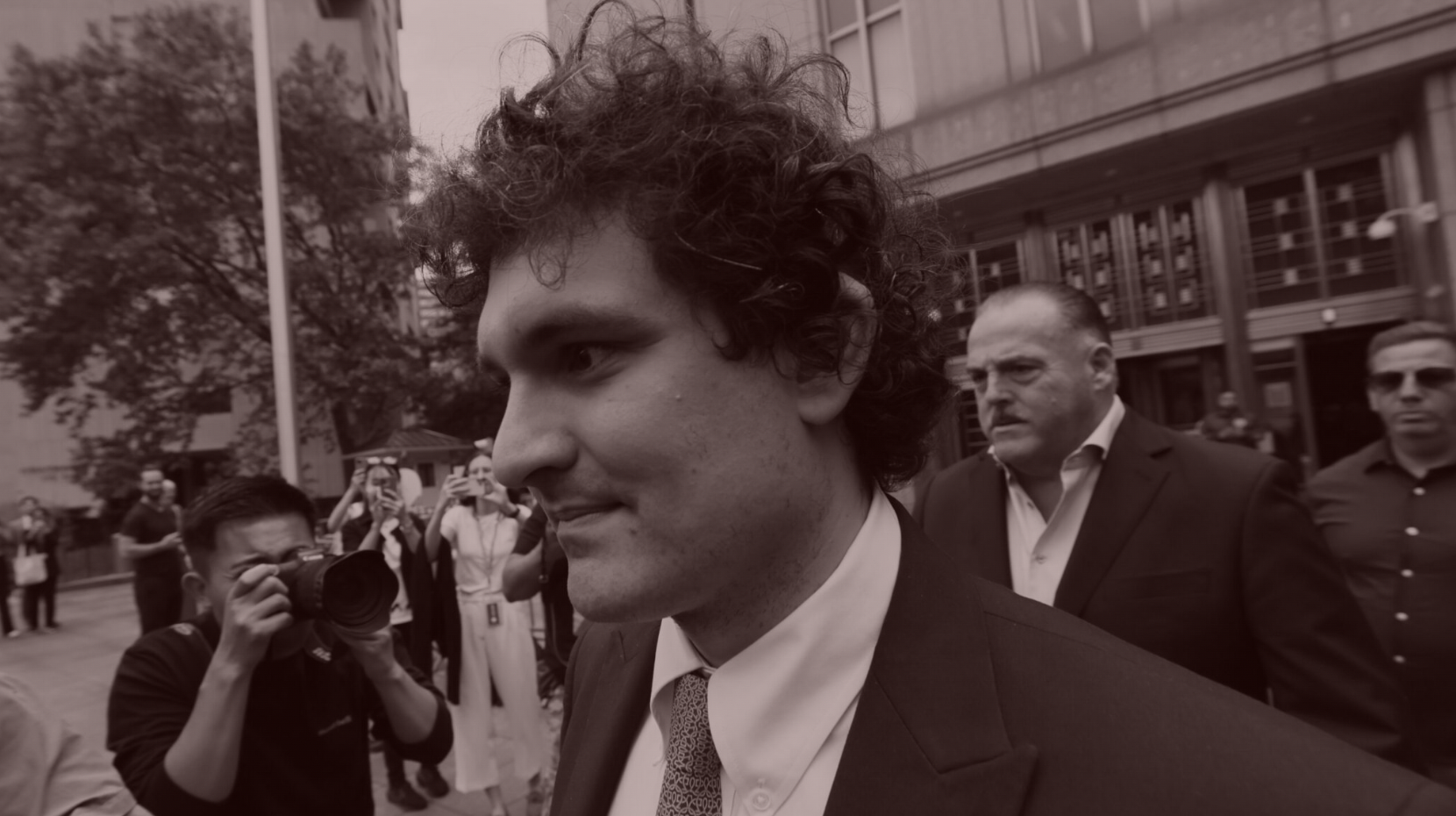 |
| S.B.F. and an ‘O.C.’ Star Walk Into a Hotel… |
| Before Bankman-Fried’s downfall, the actor Ben McKenzie engaged in on-and-off correspondence with the alleged crypto scammer. Nearly a year later, McKenzie reflects on how S.B.F.’s purported crimes were “even dumber and simpler than I thought.” |
|
|
|
| Nearly a year ago, on July 20, the actor-turned-crypto-skeptic-cum-author Ben McKenzie met with Sam Bankman-Fried at the One Hotel, near Central Park, for an interview for his forthcoming book. At the time, S.B.F. was at the peak of his powers at FTX—the unbathed alleged billionaire prodigy who had the whole world believing his hype. He was in town for media interviews with Bloomberg, and with Fortune, for what would turn out to be the infamous cover story, The Next Warren Buffet? “I remember looking through the glass at this guy who I’d never met, who was the ‘J.P. Morgan of Crypto,’ according to The Mooch, anyway. And I was just kind of fascinated by him,” McKenzie recalled to me. “A 30-year-old guy, comes from quite an intellectual pedigree: parents are professors of law at Stanford. He went to MIT. Jane Street Capital. Now he’s King of the World.”
Of course, you may know McKenzie, now 44 years old, from the famous teen drama, The O.C., where he played Ryan Atwood, or as Ben Sherman, on Southland, or as James Gordon, on Gotham. (Not me. I’ve never watched any of those shows.) I know Ben only from his new side gig as a crypto debunker and co-author of the forthcoming book, Easy Money: Cryptocurrency, Casino Capitalism and The Golden Age of Fraud, and it’s a doozy.
Co-written with Jacob Silverman, a contributing editor at the New Republic, the book will be published on July 18 by Abrams Press, which is best known for its elaborate art books but is now publishing more traditional non-fiction. McKenzie’s book is the story of his deep dive into the world of crypto, first as a curious enthusiast and then as a realist. “Am I crazy, or is this a total scam?” he asks himself rhetorically at one point early on. I’ve read and enjoyed Easy Money—in fact, I blurbed the book after my friend Liaquat Ahamed, author of Lords of Finance, urged me to do so.
In the course of reporting Easy Money, McKenzie got to know the infamous S.B.F. pretty darn well. They texted often, and McKenzie ended up writing a chapter in Easy Money about Sam titled “The Emperor Is Badass Naked.”
McKenzie has thusly earned his place as the sixth entry in my S.B.F. Chronicles series, about those who saw trouble brewing early on with FTX and tried, in their way, to do something about it.
What remains fascinating to me is that it was largely people like McKenzie, who existed outside TradFi (as the kids say these days), that spotted S.B.F.’s antics early on. After all, Ben was a professional actor, albeit with a degree in economics from the University of Virginia; James Block, meanwhile, was a psychiatry and bipolar disorder doctor; and Marc Cohodes was an accomplished short-seller. As my friend Michael Lewis explored in The Big Short—and will explore further in his much-anticipated book, Going Infinite, about his months embedded with S.B.F.—it is often the outsiders who can perceive bullshit most clearly. |
|
|
|
|
| McKenzie started going down the crypto “rabbit hole” in the spring and summer of 2021, and cold-called Silverman in August 2021 about collaborating on crypto-craze articles. Their first piece together, Celebrity Crypto Shilling Is a Moral Disaster, appeared in Slate on October 7, 2021 with the subhead, “Take it from me: I’m a former teen-soap star.” The pushback was well-timed: Peak Bitcoin was a month later, when the cryptocurrency was trading at more than $69,000 per coin. (It’s closer to $29,000 per coin these days.)
The two men were writing articles with the stated intent of luring a book publisher into the fold with the idea that crypto was going to crash just “when the opposite seemed to be happening,” Ben told me. They scored with the Abrams imprint, but only after they approached other publishers that were skeptical of their skepticism. McKenzie found that the young editors at various publishers thought the book idea was a good one, but then interest would fizzle after they kicked it up the publishing food chain to the older folks. “We literally got the feedback once,” McKenzie explained, “‘Why is this guy from TV writing it? Why isn’t Paul Krugman writing it?’”
After Abrams signed the duo up, they jetted off to South by Southwest, in the spring of 2022. They visited a crypto mining company. They interviewed Alex Mashinsky, then still the C.E.O. of Celsius Network, which would declare bankruptcy a few months later. They went to the Bitcoin conference in Miami. They even flew to El Salvador to see Bitcoin, as a currency experiment, in action. Their profile in cryptoland was rising. In addition to pieces in Slate and The New Republic, they wrote articles for The Washington Post and The Intercept.
At one point, S.B.F. reached out to Silverman, which was around the time that Ben started getting “all this hate online,” he told me. Their Twitter banner explained that they were writing a book about “crypto and fraud.” Soon after Terraform Labs blew up in May 2022, McKenzie sent out a “puerile” tweet, the gist of which, he said, was “if you want to take a swing at me, two words of advice: Don’t miss.” S.B.F. replied to the tweet, which McKenzie thought was “kind of funny, in retrospect.” Sam asked Ben if he had ever considered that the price of various cryptocurrencies “might go up ?!!!”
They started DMing each other over Twitter, off and on, for the next few months. “Honestly, I did not expect him to engage with us,” Ben told me. “To his credit he did, or maybe it’ll be to his folly.” Ben asked S.B.F. for an interview for Easy Money. “He agreed almost immediately,” Ben said. There were zero pre-conditions. He allowed the interview to be filmed, as well. That was when they agreed to meet at the One Hotel. |
|
|
| At that moment, S.B.F. was trumpeting himself as the savior of the crypto industry because of his willingness to buy up any number of failed crypto companies. “Crypto desperately needed that because, as anyone who has studied the industry for five minutes realizes, there’s not that much real money there,” Ben said. “There’s a lot of fake money and there’s some real money.” But when the troubles started, he said, people “need to get paid in real money to run these companies” and “people want the real money back.” Sam was the one saying he would save the industry by offering real money to buy the failing companies. “That was the circumstance under which I met him,” Ben told me.
During their interview, he pressed S.B.F. to share with him the name of one company where cryptocurrencies were actually providing some “utility” and “doing some good.” S.B.F. “veered around that question as best he could,” Ben recalled. “Several times he started talking about remittances,” one of the early holy grails of crypto, the ability for people in places with less well-developed banking infrastructures to send money around the world quickly and inexpensively. But Ben had just returned from El Salvador, where that had been pretty much the premise behind the country adopting Bitcoin as a national currency. He knew better. “Like everything with crypto,” Ben told me, “it didn’t work.” But Sam kept talking about remittances. “‘Sam, all due respect,’” Ben told him, “‘like, I just came from this place that’s trying it. It’s not working.’” He continued, recalling the conversation. “And so he backpedaled and said, ‘Oh, well, in the future, in the future.’”
Ben kept pressing Sam about the real-world usefulness of cryptocurrencies. He admitted that Bitcoin was not useful as a currency because it could only handle five to seven transactions per second, because of how Bitcoin is mined, whereas Visa can handle 24,000 transactions a second. Sam suggested that Solana could be that useful currency. Ben thought that was an “awfully convenient” thing for Sam to suggest, considering he “owned a bunch of it, kind of pumping his bags so to speak.” Plus, Ben said, Solana broke down some six times in 2022 alone. “So I was like, ‘Sam, come on, this thing doesn’t even work,’” Ben recalled. “Didn’t have a great answer for that.”
He also pressed S.B.F. about crypto and fraud, without quite using that word. “I never accused him of anything, because there wasn’t anything I could accuse him of,” Ben recalled. “And I certainly didn’t want to get over my skis. At the time, the assumption that I had—and I believe it was shared fairly widely amongst skeptics—was that there was a heck of a lot of fraud going on. A lot of speculation. But I, at least, assumed that Sam was making money because he had a market-making company. He had an exchange, operating out of the Bahamas’ fairly loose regulatory environment, in a pretty unregulated industry. What was stopping him from making money hand over fist, whether he was doing that illegally or not?” (S.B.F. has long maintained his innocence.)
Ben said at the time that he did not “necessarily believe” S.B.F. was “on the up and up” and, indeed, there were “a lot of red flags,” particularly with Sam’s relationship to Tether—some 36.8 billion Tethers were issued to Alamada, Sam’s hedge fund. “I just didn’t understand how that worked,” Ben said. He asked Sam about Alameda’s relationship with Tether and what that was all about. “He pretty much ducked the question,” Ben said.
He also pressed Sam to discuss his political donations—some $40 million to Democrats, making him the second largest donor to Joe Biden in 2020—and about the $23 million or so that Ryan Salame, Sam’s No. 2, had given to Republicans. “One of the more bizarre moments in our interview was me saying, ‘Sam, you’re this utilitarian. You’re this Effective Altruist. You want to talk about pandemic preparedness and mosquito nets, and how you’re going to give all this money away.’ And I said, ‘Okay, how much money have you given to that stuff, and how much have you given to politicians?’” S.B.F. froze up. “He really did not want to answer that question,” Ben recalled. “Which was odd to me, to be honest. He had floated this number of like $50 to $100 million that he’d spent on pandemic preparedness and all these sort of charitable causes. Which, okay, great, but then I asked him how much he spent on the politicians and he refused to answer. He said, ‘I’ll have to get back to you,’ and he got very twitchy and he turned in his seat, and that was really strange because a lot of [that] information is public. So why is he not telling me the truth?” |
|
|
|
|
| McKenzie said the most revealing part of his interview was when Sam thought the cameras were off and the interview was essentially over. “He basically slagged off almost all the other important players in the industry,” Ben recalled. He was somewhat critical of Tether, of Binance, of crypto entrepreneur Justin Sun, etcetera, and suggested there was a lot more he could say if they were off the record, even though Ben had not agreed to be off the record with him.
In fact, Ben had noticed a pattern of strange behavior with Sam. They would have a public disagreement on Twitter, and then Sam would direct-message Ben in all caps, insisting that what he was writing was off the record even though Ben had not agreed to be off the record in their DMs. Sam would then try to “position” Ben on the topic of their disagreement. “It smelled so wrong,” he said. “It just felt wrong. The thing that actually drove me crazy initially was I couldn’t figure out why he wanted me to like him. What does he care what a TV actor moonlighting as a reporter/author thinks? What does it matter?”
For the next few months—between July and the end of September, before the November blowup of FTX and Alameda—Ben would criticize S.B.F. on Twitter. They would engage with each other publicly and then Sam would DM him again privately. Ben thought S.B.F. was “trying to influence my reporting” and that it started to feel “increasingly desperate.” His final DM from S.B.F. was October 17. They chatted about the September stablecoin war and what was up between him and Changpeng “C.Z.” Zhao at Binance.
Ben told me he was not that surprised that, of all people, it was a TV actor and a psychiatrist who would be among those most skeptical about crypto. He said that the mainstream media had no incentive to question S.B.F.—that it was too busy worrying about getting access to him, or putting him on the cover of magazines. “But man, there were people doing great work,” Ben continued, “and there were people just straight up swallowing it whole without even asking basic questions like, ‘Are you lying to me? Is this true? Can you show me how it is true?’”
Before Ben had to go—he lives in Brooklyn with his wife and their children—I asked him how he reacted to the news of S.B.F.’s arrest, extradition, and the alleged fraud he supposedly perpetrated at FTX and Alameda. He said he felt “vindicated” by the allegations, because even though he’d only been on the case for two years or so, he had regularly been criticized, yelled at, and told he was stupid. “Or worse,” he continued. “People get threatened. People get doxxed. I’m a public figure. So I’m used to a certain amount of pushback, but it was significant and I had to process that. So I felt vindication.”
He said Sam needs to face the justice system and let a jury decide if he’s guilty or not. And if he’s found guilty, he needs to serve his time. “But I also feel mildly sympathetic to him,” Ben said. “I don’t know. He’s an odd guy. It’s an odd thing… he seems totally like a child. But then he does things where you’ll see the other side,” he continued, referring to the DM conversations with a Vox reporter that surfaced after his arrest, “and you’re like, Whoa, he’s not acting like a child here.” Of course, it may take us years to figure out the real S.B.F. In fact, one imagines him puttering around his parents house in Palo Alto wondering the same thing, himself. |
|
|
|
| FOUR STORIES WE’RE TALKING ABOUT |
|
|
|
|
|
 |
|
|
|
Need help? Review our FAQs
page or contact
us for assistance. For brand partnerships, email ads@puck.news.
|
|
You received this email because you signed up to receive emails from Puck, or as part of your Puck account associated with . To stop receiving this newsletter and/or manage all your email preferences, click here.
|
|
Puck is published by Heat Media LLC. 227 W 17th St New York, NY 10011.
|
|
|
|