Hello and welcome back to The Best & The Brightest, your daily dispatch from Washington. It’s
foreign policy Thursday, and I’m Julia Ioffe.
Today, a look at how Marco Rubio is doing—or not doing—as secretary of State. Indeed, while there was once a hope that Rubio could serve as the “adult in the room,” many department insiders are wondering what happened to the former senior member of the Senate Foreign Relations Committee and vice chair of the Senate Intelligence Committee, who was once a champion of USAID. “He immediately became a
different person,” one senior State Department official told me. “We’re all asking: Who is this person?”
But first… |
- Trump
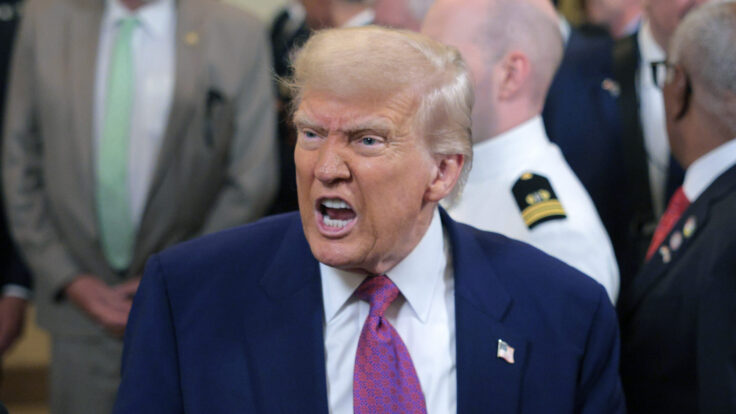
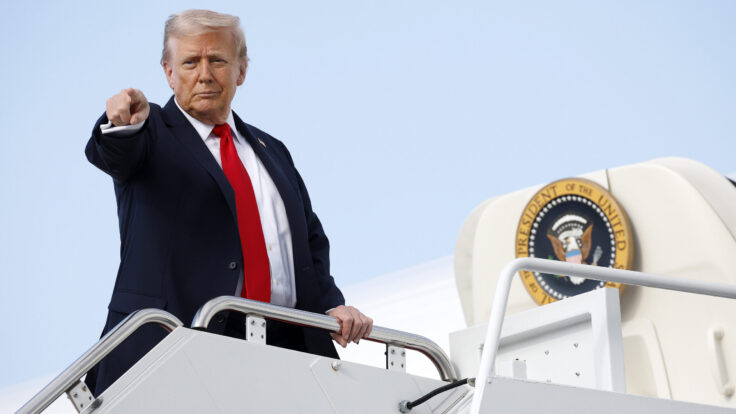
catches on to Putin’s game: During his televised cabinet meeting on Tuesday, Donald Trump lashed out at his hero, Vladimir Putin. “We get a lot of bullshit thrown at us by Putin, if you want to know the truth,” he said. “He’s very nice all the time, but it turns out to be meaningless.” A few of you have reached out to ask how Putin managed to fritter away this chance. To which I say, his chance for what, exactly? Putin believes he has the upper
hand in Ukraine—and with good reason. Western sanctions haven’t broken him, Western weapons haven’t stopped him. And while Trump may want to end the war, Putin wants to win the war. The war helps Putin stay in power, and he clearly places a higher premium on conquering Ukraine—all of it, as he recently made
clear—than he does on détente with the West or sanctions relief. There are some things, as they say, that money can’t buy.
|
Now, here’s Abby with an update from Texas… |
|
|

| Abby Livingston
|
|
- The Texas map nobody
wants: In a bid to save the House for Republicans, the once-mighty Texas Republican delegation is set to fall in line with orders from the Trump White House to redraw the state’s congressional lines. Gov. Greg Abbott announced yesterday that redistricting would be on the agenda for a special legislative session. But delegation insiders do not want this change: The 2021 map was drawn for incumbent protection in a wave year, which could also be the case next
year if historical trends hold up.
To pick up new seats, Republican voters will need to be pulled from safe Republican seats to redden currently Democratic districts. If Republicans go after three seats this way, the changes can probably be made with little fanfare and concentrate mostly on South Texas, which is trending toward the G.O.P. anyway. But if they go big—aiming for, say, five seats—the lines could make reelection much more difficult for Republican incumbents in Houston
and Dallas. Another target mentioned? Austin, home to Democrat Lloyd Doggett, who has survived so many redistricting attempts that he could probably survive a nuclear winter at this point.
The question for House map obsessives is whether the plan might backfire against Republicans, with the Democrats actually gaining seats, or at least pull resources from other House races. If mapmakers make reelection too difficult for some of the older Texas Republicans, we may
see retirements coming. Or could Republicans pit Democrats against each other in member-vs.-member races? Or force them to defend much more competitive seats? - Paxton’s “Biblical” divorce: Earlier today, the Times reported that Texas state Sen. Angela Paxton, the wife of Texas Attorney General Ken Paxton, was filing for divorce from her husband “on biblical grounds.” As she wrote on social media: “I believe
marriage is a sacred covenant and I have earnestly pursued reconciliation. But in light of recent discoveries, I do not believe that it honors God or is loving to myself, my children, or Ken to remain in the marriage.”
Meanwhile, of course, Ken Paxton is preparing to wage a controversial primary challenge to Sen. John Cornyn. And based on the texts flooding my phone from Texas sources, many believe that this could shake up his bid. That said, Paxton is famously
resilient and has weathered a multitude of scandals before—even if divorce, in some corners of the state, may be a greater sin than alleged bribery.
|
|
|
Marco Rubio’s appointment at Foggy Bottom was greeted with optimism in the building, where
staffers saw him as a serious foreign policy person. But their hope quickly died as America’s chief diplomat instead became a mute accessory to Trump. |
|
|
It’s been a rough week for Secretary of State Marco Rubio. First, Defense
Secretary Pete Hegseth and his policy chief, Elbridge Colby, stopped the shipment of U.S. weapons to Ukraine without so much as informing him. Then, news leaked that Ric Grenell, a special presidential envoy with a nebulous remit, was running a diplomatic channel to Venezuela in parallel to Rubio’s—also without consulting him. Meanwhile, Rubio has been put in charge of two key national security organs—the State Department and National Security
Council—whose staff are in the process of being culled into irrelevance. (USAID, where he also served as acting administrator, has already been dismantled.) “He gets to fly around the world and have meetings with presidents, but he’s not setting policy,” one senior State Department veteran told me. “There’s no sign that he has any power or influence.”
When Rubio was “clapped in” by his new employees at Foggy Bottom, on January 21, the career foreign and civil service officers greeted
him with cautious optimism. He was, after all, considered a serious foreign policy person. He had been a senior member of the Senate Foreign Relations Committee and vice chair of the Senate Intelligence Committee. He was a champion of USAID and had been on the board of the International Republican Institute, which had been founded by Ronald Reagan to advance democracy around the world. He had authored reports on the Uyghur genocide in China and had members of the Venezuelan
opposition on speed dial. He also hailed from Florida’s Cuban American community, which has traditionally believed in a muscular exercise of American power abroad. He seemed like the most normal and credentialed cabinet pick of this administration, and his Senate colleagues voted unanimously to confirm him.
Perhaps most importantly, on that January day, Rubio pledged to restore the State Department to its rightful stature after two decades of declining influence. “I want the Department of
State to be at the center of how America engages the world,” he vowed, praising his new workforce as “the greatest, the most effective, the most talented, the most experienced diplomatic corps in the history of the world.” Maybe, as one former State Department official told me, he’d be “the adult in the room.” Maybe, in the words of one career foreign service officer, he “was not super MAGA.” One senior State Department official even reconsidered the retirement they’d planned when
Trump won the election, reasoning: “It’s Marco Rubio. We’ve worked with him when he traveled overseas. We’ve briefed him. He gets us. What a relief!”
That hope died within the week. On January 27, USAID workers were put on leave, and by early February, word came down that nearly everyone at the agency would be let go. USAID was a kind of sister organization to State, and the way its workers were treated—locked out of their offices, slandered by administration
officials—indicated to Staties that Trump 47 would be far worse than they had originally thought, and that Marco Rubio wouldn’t save them. At Foggy Bottom, career foreign service officers were sidelined while strange people with scant experience and radical, right-wing views were installed in senior positions. Rumors of plans for a department overhaul, accompanied by massive layoffs, paralyzed the rank and file.
For months, as the case challenging Trump’s ability to carry out mass firings
at federal agencies worked its way up to the Supreme Court, all anyone at State could talk about were reduction in force notices, or RIFs. Not Ukraine, not Gaza, not Iran, but who would be fired and who would be spared. A.F.S.A., the foreign service employees’ union, was frozen out, and its members were left to grasp at details that trickled out as haphazardly, it seemed, as they were devised. The secretary, himself, was notably absent. “We’re all waiting for the next shoe to drop at the foreign
service and at State,” one career foreign service officer told me. “People don’t feel like the secretary has their back.”
Rubio, meanwhile, became a mute accessory to Trump. He sat blinking and melting into an Oval Office couch as the president and J.D. Vance excoriated Ukrainian President Volodymyr Zelensky, whose cause Rubio had championed in the Senate. He sat silently next to Trump at televised meetings and stood behind him at press conferences,
stepping in occasionally to echo the president’s infinite wisdom—or to giggle when Trump was asked about NATO chief Mark Rutte calling him “daddy.”
All the while, Steve Witkoff, Trump’s buddy from the New York real estate industry, was jetting around the world, trying to negotiate an end to the wars in Ukraine and Gaza and leading nuclear talks between Washington and Tehran. America’s chief diplomat had become, as another former State Department official
put it, the great disappearing secretary of State. “He immediately became a different person,” this person said of Rubio. “We’re all asking: Who is this person? This is not the same official we remember that fought so hard for democracy and said he respects the foreign service.” When reached for comment, a State Department spokesperson responded: “Anyone with a basic understanding of how our government works would
know that the president of the United States sets the policy.” Rubio, this person continued, “is proud to serve under President Trump who is putting the American people first.” |
“Not
Friends to the Foreign Service”
|
While Rubio makes sure to be near Trump—on the Oval Office couch, hovering over the Resolute Desk—Foggy
Bottom has been run in his stead by a small cadre of Trump loyalists led by Michael Anton, a veteran of the first Trump administration’s N.S.C., skeptic of birthright citizenship, and author of The Flight 93 Election, the 2016-era manifesto of MAGA’s “intellectual” wing. Anton is now director of policy planning, one of the most powerful,
and wonkiest, positions at Foggy Bottom. Rubio also brought over his clique from the Hill, among them Dan Holler, his Senate comms director; his scheduler; and Heritage Action founder Michael Needham, his powerful Senate chief of staff.
Needham, as I wrote back in 2013, was once the enfant
terrible of Capitol Hill—an aggressive, break-shit kind of guy before Trump made it popular. He has since matured and, according to one Democratic Senate aide, is “charming, polite, gracious.” But he was also known to make access to Rubio rare and difficult—a gatekeeping role that he has, by all accounts, retained at State, and which he now shares with Anton. “Rubio is very distant,” a second senior State Department official explained. “We don’t feel his presence as we did with
Blinken. Access to Rubio is through these two people—and they are not friends to the foreign service.”
Needham has also been tasked with helping oversee the reorganization of the State Department and the foreign service. “Rubio is definitely not involved in personnel policy,” the second senior State Department official said. “It’s not his strength. So they’ve delegated it to Needham and [Lew] Olowski,” a young-ish and relatively
inexperienced lawyer who was tenured out of turn and via an opaque process—which irritates career F.S.O.s endlessly—then placed in charge of the Bureau of Global Talent Management, State’s H.R. department. Olowski is also an evangelical preacher and lists “brand ambassador” for the Gabriel Network, a Christian anti-abortion group, on his LinkedIn C.V. Like his wife and other
MAGA-friendly officials rising quickly at State, he is a Ben Franklin Fellow.
Olowski stunned career Staties by waxing poetic about Jesus and dolphins in his first speech to the building, in April, and is widely reviled as the person responsible for writing political
loyalty—“fidelity”—into the promotion guidelines as well as for planning RIFs in the most nonsensical and cruel way. Foreign service officers are going to be laid off, for example, not based on their performance, role, or seniority, but by what office they were assigned to on or before May 29. If they worked for an office that has been eliminated, they too will
be eliminated, according to the word in Foggy Bottom, even if they have already moved on to their next assignment.
Olowski’s role as a heat shield suits Rubio perfectly. “Rubio doesn’t want to get his hands dirty,” the second senior State Department official told me. “The RIFs—that’s what the White House wants done. Rubio’s going to want to look as good as possible and sign on the fewest pieces of paper as possible.” Another senior official echoed the sentiment. “People are wondering how
much these quotas are driven by Russell Vought,” this official said, referring to the head of O.M.B. and Project 2025 mastermind. “Rubio and his two depsecs are just following orders,” a retired senior official confided. “It’s all coming from Vought and the White House. It’s not coming from the seventh floor.”
This idea that Rubio is merely the willing puppet of the MAGA commissars was reinforced by the installation of Darren Beattie as head of public
diplomacy. Beattie, a January 6 truther who was fired from the first Trump administration for attending white nationalist conferences, and who has said the U.S. needs to “put competent white men” back in charge, is believed to be the voice behind the
scathing pronouncement coming out of State under Rubio’s byline. Those include an op-ed in The Federalist excoriating the now-shuttered Global Engagement Center—which was created to fight disinformation online—as the seat of the so-called “censorship industrial complex,” staffed by “enemies of speech,” guilty of
“abuses of trust” and harboring an insatiable “authoritarian impulse.”
Not that the distinction matters that much to the State Department rank and file. Whoever is actually drafting the statements, they have been made in Marco Rubio’s name or delivered by him, and they refer to his employees as the “bloated, bureaucratic swamp,”
“more beholden to radical ideology than advancing America’s core national interests,” and “left-wing activists [waging] vendettas against ‘anti-woke’ leaders” who are guilty of funding and facilitating
“the invasion of our southern border.” “I don’t think there’s another secretary of State that’s defamed his own workforce the way Rubio has,” a senior State Department official fumed. “Dulles never sank so low during the McCarthy era. He let McCarthy do that.” |
It’s the prevailing theory at State that Rubio is just using the post to gild his run for the presidency in
2028. He has “never given up on the ambition of becoming president of the United States,” said someone who worked with him in the Senate. “He’s ambitious,” sneered another senior State Department official, using the adjective I most frequently heard to describe Rubio. “It’s a cabinet of bootlickers, and the people who are the best bootlickers are the ones who do the best. He’s accepted the role of Little Marco. He doesn’t chafe at it.”
If Rubio runs in ’28, he wouldn’t be the first
Republican to overestimate the political value of a foreign policy cabinet spot—just ask presidents Nikki Haley and Mike Pompeo. But the fact that it is often Rubio and Vance flanking Trump at important announcements is just fueling chatter in Foggy Bottom and on the Hill that Rubio will try to run when Trump’s term is over. (“If we have elections again,” as one retired F.S.O. made sure to clarify.)
For a time, Rubio appeared sidelined within Trump’s
orbit. In recent days, however, as Witkoff and his aw-shucks naïveté have largely failed to deliver results, his profile has risen in the administration. Staties and even some Democrats have privately speculated that perhaps it was Rubio who has helped move Trump away from his pro-Putin position and back toward supporting Ukraine, however tenuously. Perhaps, they muse—or even dare to hope—the actual head of the U.S. State Department is setting some policy after
all.
More likely, however, Rubio is there to look the part. Trump by his own account, cares a tremendous amount about how things look. He famously didn’t give John Bolton the job because he has a mustache, and everyone knows that secretaries of State should not have mustaches. Rubio, on the other hand, is clean-shaven and boyish. He looks right, and, because of his long experience in the field, he sounds right, too. Even his detractors in the foreign service
acknowledge it. “Rubio is a natural,” said the senior State Department official. “He understands all that. You can throw him into any summit, he’s going to be able to navigate it and have a conversation with any counterpart. The optics of him being in those spaces is very comfortable.”
On Thursday, Rubio sat down with one such counterpart, Russian Foreign Minister Sergey Lavrov, on the sidelines of the ASEAN conference. It was a meeting that was at once high level and
meaningless. Neither Lavrov nor Rubio has any power to set policy; only Putin and Trump do. But that misses the point. Presidents might need a foreign service and a cadre of diplomats to craft and implement policy, but autocrats don’t. They just need men to play the part convincingly. |
That’s all from me, friends. I’ll see you back here next week. Until then, good night. Tomorrow will be
worse.
Julia |
|
|
The industry's go-to source for unflinching reporting on the trillion-dollar business of artificial intelligence - perhaps the
single most important technology of our time. Ian Krietzberg, the powerhouse journalist behind The Deep View, delivers twice-weekly insights into the latest dealmaking and breakthroughs in A.I., and how the intersecting worlds of finance, entertainment, media, and politics are being transformed in its wake. |
|
|
Join Emmy Award-winning journalist Peter Hamby, along with the team of expert journalists at Puck, as they let you in on the
conversations insiders are having across the four corners of power in America: Wall Street, Washington, Silicon Valley, and Hollywood. Presented in partnership with Audacy, new episodes publish daily, Monday through Friday. |
|
|
Need help? Review our FAQ page or contact us for assistance. For brand partnerships, email ads@puck.news. You received this email because you signed up to receive emails from Puck, or as part of your Puck account associated with {{customer.email}}. To stop receiving this newsletter and/or manage all your email preferences,
click here. |
Puck is published by Heat Media LLC. 107 Greenwich St, New York, NY 10006 |
|
|
|