{{ 'now' | timezone: 'America/New_York' | date: '%b %d, %Y' }} |
|
|
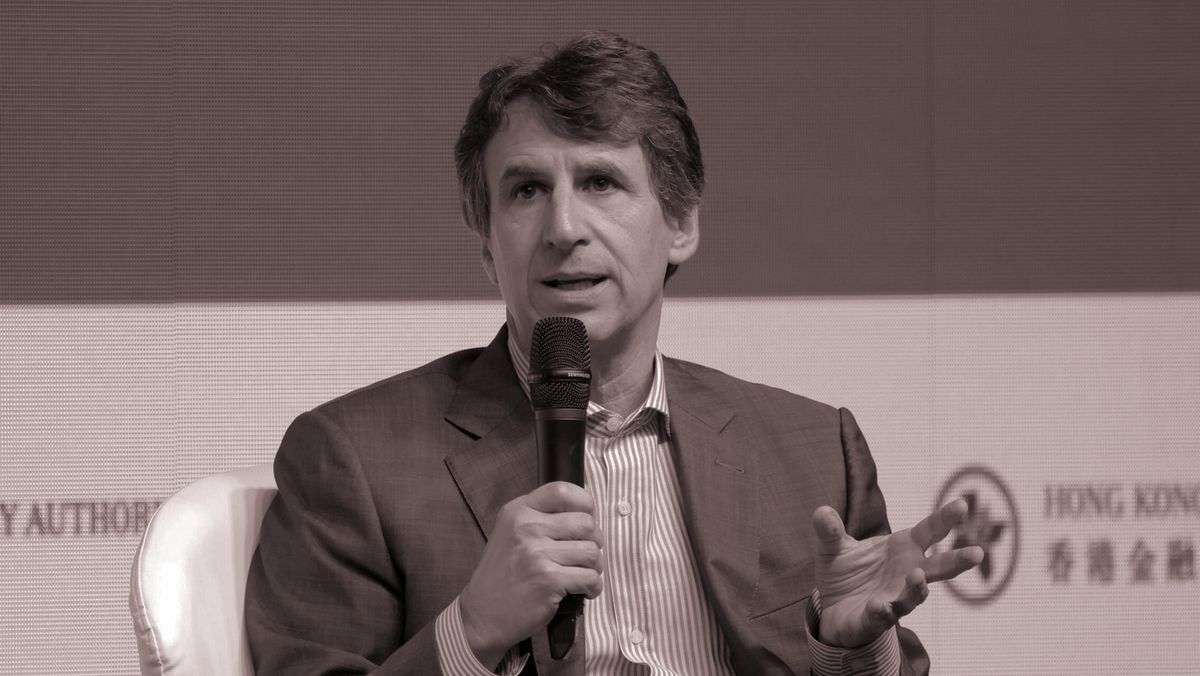
Welcome back to Dry Powder. I’m Bill Cohan. If you haven’t read the excellent profile of my partner Matt Belloni in today’s New York Times, I highly recommend it. Some of the quotes will even make you laugh out loud, to say nothing of the huge photographs. It’s all well-deserved praise.
Last week, Apollo C.E.O. Marc Rowan made a light cameo in the Epstein
document dump via his inclusion in Michael Wolff’s book, Siege: Trump Under Fire, much of which was included in the release for some reason. During Trump I, Michael wrote, Jared Kushner offered Marc the job as head of the powerful Office of Management and Budget. He wrote that Marc initially accepted the job, only to then turn it down “after Leon Black objected to what would have to be disclosed about Rowan’s
and the firm’s investments.” (You will also recall that Marc was briefly considered to be Treasury secretary in Trump II, but lost the job, at least for now, to Scott Bessent.)
Rowan was also one of the 15 or so Wall Street executives invited by Trump to the White House for a secret dinner on November 12. He attended along with the likes of Steve Schwarzman, Henry Kravis, David Solomon, Jamie Dimon,
Ted Pick (but not Brian Moynihan) and Ken Griffin. Our friend Charlie Gasparino reported that the agenda for the dinner included topics such as “affordability,” regulatory reform, and what Wall Street can do to improve the lives of ordinary Americans. I asked Marc how the dinner went. “Fun time was had by all,” he responded without elaborating. Somehow, that rings true to me.
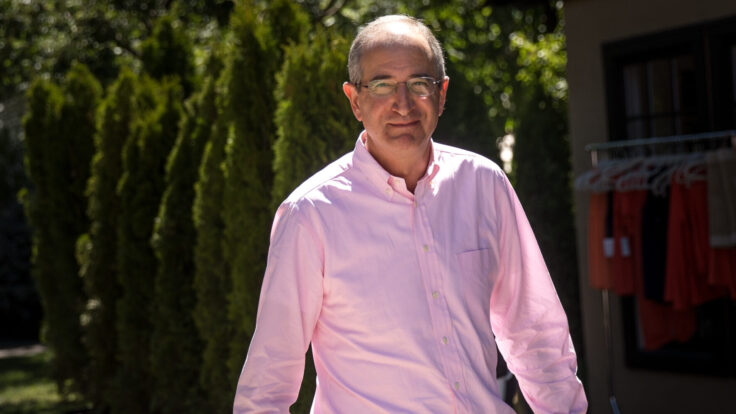
Marc is the subject of tonight’s issue, which
focuses on the debate over the frothy private credit markets. Are we due for a correction? Or do a handful of bankruptcies simply evince that the market has become naturally large and varied—including, yes, some bad actors.
But first… |
-
A distressed asset buyer’s guide to the galaxy: Distressed investing is coming back into vogue as more companies tumble into bankruptcy or engage in what is euphemistically known on Wall Street as L.M.E.s, or liability management exercises. And that’s why I highly recommend Joseph E. Sarachek’s new magnum opus, The
Distressed Investing Playbook: How the Smart Money Profits When Companies Fail and Markets Go Haywire. Sarachek, the managing partner of his eponymous Scarsdale law firm and adjunct professor of bankruptcy investing at NYU Stern, is a recognized authority in the privately held trading of distressed debt.
Fun sidenote: He is also the brother of Russell Sarachek, who was a colleague of mine at Lazard back in the day. In fact, if Russell had not gone on vacation in
September 1989, I probably would have never been tapped to work on the bankruptcy of Revco Drug Stores, a Salomon Brothers leveraged buyout that was the largest bankruptcy in history at the time. Lazard was hired to represent the debtor in the bankruptcy. When Russell came back from his weeklong vacation, however, he discovered that I’d replaced him for what turned out to be the entire two-year-plus pendency of the transaction. Ah, Lazard. (Russell turned out more than fine, by the way.
He now runs his own investment firm, Valor Holdings.)
In a taut 250 or so pages, Joe Sarachek covers the basics of the process: what can be bought and sold during a bankruptcy or a restructuring and how to make money from buying and selling trade claims, bank loans, bonds, or other kinds of debt. It can get pretty esoteric, for sure, but also quite fascinating. “Above all else, the #1 rule in distress is ‘Buy it Right,’” he notes in the book. It is also essential to be a contrarian
thinker when it comes to distressed investing: The best way to make money is usually to take a risk that no one else would consider. “Opportunity rarely arrives with a clear label,” Sarachek writes. “More often than not, it appears as a messy, complicated situation that most investors would rather avoid. … Distressed investing is about seeing what others miss, … where the risk is mispriced and the potential upside is worth the challenge.” As many of you know, he is absolutely right: that’s why
you have third homes and many more grey hairs.
|
|
|
The Breguet Classique Souscription 2025 represents a reinvention of a timeless icon – paying
tribute to the original aesthetic, elevated by a contemporary perspective. Join Breguet in celebrating 250 years of horological excellence. |
The Breguet Classique Souscription 2025
represents a reinvention of a timeless icon – paying tribute to the original aesthetic, elevated by a contemporary perspective. Join Breguet in celebrating 250 years of horological excellence. |
|
|
-
Ackman’s advice to the lovelorn: Ubiquitous Dry Powder character Bill Ackman has once again lit up X in a way few would have imagined. On Saturday afternoon, seemingly apropos of nothing, he switched hats from billionaire hedge fund manager to pop psychologist. Bill mused that he hears from “many young men that they find it difficult to meet young women in a public setting. In other words, the online culture has destroyed the ability to spontaneously meet
strangers.”
Ever the problem-solver, Bill offered up a remedy from his own youth. Back in the day, he wrote, he would often ask, “May I meet you?” before proceeding into a conversation. “I almost never got a No. It inevitably enabled the opportunity for a further conversation. I met a lot of really interesting people this way. I think the combination of proper grammar”—is that proper grammar?—“and politeness”—is it polite or just weird?—“was the key to its effectiveness. You
might give it a try.”
May I mention how quickly meme culture took this one and ran with it, Usain Bolt–style? One online wag, Derivatives_Ape, recounted what happened when he tried this line on a woman at a bar. “She just looked at me,” he wrote. “Blank stare, for like three full seconds. Then she absolutely lost her mind laughing. I mean full-on can’t-breathe,
tears-in-her-eyes laughing.” Her two friends had a similar reaction. “I stood there like a complete idiot. … I will never listen to Bill Ackman again. Never taking advice from a boomer again. This shit doesn’t work in 2025.”
|
And now on to the main event… |
|
|
A recent string of bankruptcies and defaults suggests some challenges in the seemingly
indomitable private credit market. And yet, according to some O.G.s, things have never been better. Apollo’s Marc Rowan lays bare the risks and rewards. |
|
|
We’re currently living through a colorful era of mixed metaphors in the credit markets, which, depending on
whom you listen to, is either rollicking along after years of unprecedented growth or careening toward a correction. In his latest memo, Oaktree co-chairman Howard Marks referred to “cockroaches in the coal mine”—combining the idiomatic canary with JPMorgan Chase C.E.O. Jamie Dimon’s recent observation about the bankruptcies of First Brands Group and Tricolor Holdings. “I probably shouldn’t say this,” Dimon
said, “but when you see one cockroach, there are probably more.”
Marks, whose distressed-investing firm will soon be 100 percent owned by Brookfield Asset Management, an alternative-asset behemoth that competes with the likes of Blackstone and Apollo, offered a little clarity about his metaphor. “Both the cockroach and the canary can be precursors
of problems ahead,” he said. “We’ve heard both sayings in use in the last month, and we’re likely to hear them more.”
Marks was his usual pithy self throughout his latest missive, wondering whether a new credit crunch is upon us, citing the old Wall Street adage that the worst of loans are made in the best of times. He acknowledged a growing litany of worrisome data points—the bankruptcies of First Brands and Tricolor; the recent filings of two small telecom firms under common ownership,
Broadband Telecom and Bridgevoice; and revelations by a regional bank, Zions Bancorp, that it would take a $50 million writedown because two of its corporate borrowers had misrepresented material information and were unresponsive to subsequent inquiries—noting that while two high-ish–profile credit problems could be a coincidence, six high-ish–profile credit problems might constitute a trend.
In a potential allusion to Hemingway’s famous line about a bankruptcy
occurring “gradually, then suddenly,” Marks offered a new insight: “In real life, things fluctuate between pretty good and not so hot. But in investors’ minds they go from flawless to hopeless.” In effect, Marks suggested that it was worth hitting the pause button on all the hand-wringing about the private credit markets. “The truth is that there are always defaults and not infrequently defalcations (how’s that for a good old-fashioned word?),” he wrote. |
|
|
The Breguet Classique Souscription 2025 represents a reinvention of a timeless icon – paying
tribute to the original aesthetic, elevated by a contemporary perspective. Join Breguet in celebrating 250 years of horological excellence. |
The Breguet Classique Souscription 2025
represents a reinvention of a timeless icon – paying tribute to the original aesthetic, elevated by a contemporary perspective. Join Breguet in celebrating 250 years of horological excellence. |
|
|
Marks waxed on with historical context. “Over my 47 years in the high yield bond market, more than 2 percent
of all bonds by value have defaulted in a typical year, and many more during crises,” he wrote. “If you apply that percentage to the number of sub-investment grade issuers, which runs in the thousands, it shouldn’t come as a surprise if there are a few dozen defaults in a normal year. So no, I don’t think this is necessarily the beginning of a trend. It’s not an indictment of the whole sub-investment grade debt market, or the whole private credit market. Rather, it’s just a reminder that the
yield spreads people care about so much are there for a reason: because sub-investment grade debt entails credit risk. And thus a reminder that credit skills are always a necessity for debt investors… even if the need for those skills isn’t apparent in good times.” |
In his note, Marks also reminded the industry that “good times lead to complacency, risk tolerance, and
carelessness, as people bid aggressively for assets and compete to make loans.” I think Apollo C.E.O. Marc Rowan would agree. Indeed, this seemed to be the very message that he wanted to convey on the firm’s recent third-quarter earnings call. Rowan acknowledged the concerns about the credit markets following the bankruptcies of First Brands and Tricolor (by the way, Apollo made a killing by shorting the First Brands debt) but essentially said things couldn’t be much
better at Apollo, noting that the firm’s assets under management at the end of the third quarter were closing in on $1 trillion—$908 billion, to be precise—up 24 percent year over year. “In short,” he told research analysts, “the growth flywheel is spinning.”
Apollo, he said, was “fortunate” to be in an industry “experiencing very strong demand” for its products, chiefly private credit these days, with a twist of $150 billion or so in private equity. “Companies like ours and others in our
industry do not get to be big unless we are attached to fundamentals in the economy and essentially are a source of secular growth for our country and for the world,” he observed, arguing that demand for capital has never been stronger thanks to what he called the Global Industrial Renaissance, “whether it’s infrastructure, energy, energy transition, data centers, defense, new manufacturing, or robotics.”
Apollo is also benefitting from other trends, according to Rowan, including a
so-called retirement crisis, which he described as a “gap” in retirement income “almost everywhere in the Western world.” His firm provides a way to close that “gap,” he said, through the annuities issued by its insurance subsidiary, Athene. Apollo also claims to be able to provide other investors with “excess return per unit of risk,” one of Marc’s favorite sayings. “We provide an alternative to increasingly concentrated, correlated, and indexed public markets,” he said. “If you want
to escape the Mag 7, but still want to be invested, it is very difficult to do efficiently in public markets.”
During Rowan’s reign, Apollo has gone from mostly providing private equity offerings to institutional investors, to satisfying the exploding demand from institutional investors, insurance companies, and traditional asset managers for both private equity and private credit. (Individual investors will soon be allowed to invest in alternative assets via their 401(k)s, too.
Caveat emptor!) “For an industry that has grown pretty large over the years, we are now anchored by three really powerful secular trends that serve a fundamental good, not just in our economy, but in the world,” Marc said. “Private assets are becoming more and more acceptable and more and more in demand.”
Not that Rowan doesn’t worry. “I believe our industry will find that it is limited in its growth by its capacity to find good investments rather than by its capacity to raise capital,”
he said. “It is incumbent on us to focus on origination—to make sure that we grow origination quarter over quarter, and that we really do respect the fundamental principle of our industry, which is excess return per unit of risk.” (There’s that phrase again!)
In the end, he also subscribed to the Dimon-Marks theory that, though there may be a few cockroaches, this is still a damn great business. “Credit is credit,” he argued, “whether it’s originated by a bank or an asset manager, it
makes almost no difference to me. There are fundamentally good underwriters of credit, and there are less-good underwriters of credit. The observed outcome of a number of articles and the focus on a couple of isolated incidents in the marketplace is nil. Ten basis points of spread widening is essentially nothing.” As he noted later in his remarks, “If you look at the recent blow-ups—and we all know the various names—almost all of those blow-ups have taken place in credit underwritten by the
banking system. It is not that we have public credit and private credit. We have credit. The difference between public credit and private credit and bank credit is literally whether it is syndicated or not. There are good banks; there are bad banks. There are good asset managers; there are bad asset managers. There are good insurance companies; there are bad insurance companies. I don’t think we’re talking about systemic risk.” |
|
|
Ace media reporter Dylan Byers brings readers into the C-suite as he chronicles the biggest stories in the industry: the future
of cable news in the streaming era, the transformation of legacy publishers, the tech giants remaking the market, and all the egos involved. |
|
|
Join Emmy Award-winning journalist Peter Hamby, along with the team of expert journalists at Puck, as they let you in on the
conversations insiders are having across the four corners of power in America: Wall Street, Washington, Silicon Valley, and Hollywood. Presented in partnership with Audacy, new episodes publish daily, Monday through Friday. |
|
|
Need help? Review our
FAQ page or contact us for assistance. For brand partnerships, email ads@puck.news.
You received this email because you signed up to receive emails from Puck, or as part of your Puck account associated with {{customer.email}}. To stop receiving this newsletter and/or manage all your email preferences, click here. |
Puck is published by Heat Media LLC. 107 Greenwich St., New York, NY 10006 |
|
|
|