 |
|
Welcome back to The Best & The Brightest. I’m Peter Hamby. I want to give a March Madness shout-out to my colleague Bill Cohan, an only semi-annoying Duke alum who is currently sitting atop the standings in Puck’s NCAA Tournament office pool. Not only that, but Bill’s bracket ranks in the top 99.7 percent of all ESPN entries. My Puck bracket—“The Defenestrators”—isn’t doing so hot.
In today’s edition, I have some very newsy results from Puck’s latest polling partnership with Echelon Insights—with voters naming their top picks for Trump’s running mate, a look at why Republicans might face trouble in downballot races this fall, reviews of President Biden’s State of The Union Address, and even more evidence that a TikTok ban or sale is popular with likely voters.
But first…. Here’s Abby Livingston’s collection of all the Capitol Hill chatter, outrage, and subterfuge…
|
| Johnson Attrition & NBC’s Ronna Rage |
|
Congress is out for a two-week recess, but the drama never ends on the Hill. Here are the political storylines consuming the chattering classes…
- Gotta Ronna: From what I hear, Chuck Todd’s unusual on-air diatribe calling out his NBC News bosses for hiring former R.N.C. chairwoman Ronna McDaniel is rocking NBC and has completely stunned the Washington establishment. Todd, of course, is a generational figure in political media, as well as a mentor to hundreds of journalists who worked with him in the ’90s and early aughts, when he led The Hotline newsroom, and at NBC as political director overseeing the embed program. (I am among his acolytes; I was Chuck’s assistant at NBC many years ago.) He no longer moderates Meet the Press, but his opinion still matters in important circles.
Alas, the weirdness of the Trump era continues to create headaches for newsrooms as they strive for political diversity among their rosters of contributors. And it can be difficult to find analysts to present the view from the right who aren’t Trumpists, themselves. (Remember when CNN hired Jeffrey Lord?) Nevertheless, in my conversations within Washington media circles, at least one observation emerged from the McDaniel mess: NBC’s newest contributor had previously offered a “tacit endorsement” of the election lies that led to the Jan. 6 riot in the Capitol, an event that endangered the lives of hundreds of Capitol Hill journalists—presumably including McDaniels’ new colleagues at NBC.
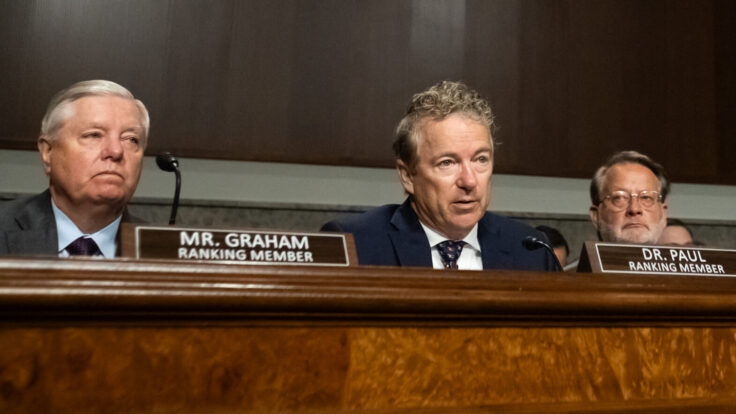
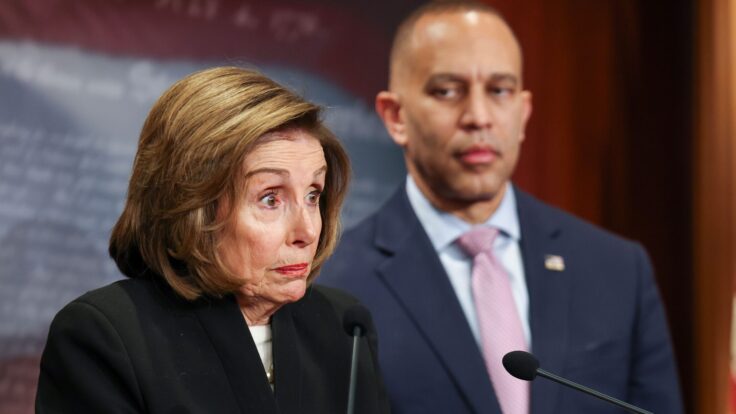
- Johnson’s party of one: It was a particularly rough week for the House G.O.P. conference. Once again, Mike Johnson avoided a government shutdown on Friday. But hell is still breaking loose, from Marjorie Taylor Greene filing a motion-to-vacate to Kay Granger stepping down as Approps chair and Mike Gallagher suddenly retiring from Congress—leaving an already imperiled House Republican majority with a one-vote margin.
Gallagher earned loads of praise from Republicans and Democrats alike for moving a consensus TikTok bill quickly through the chamber, only to have the Senate receive it with an eye roll. What’s clearly apparent is that the House that passed the first bill will not be the same House that receives a conference bill back from the Senate.
As for the Granger news: To give up such a high-status post before the end of her final term is unusual. But whatever factored into the retiring congresswoman’s decision, it sure seems she did a great big favor for Tom Cole, a Republican institutionalist who is the undisputed frontrunner to succeed her. It probably serves him to run for chair now, as opposed to after November when many of his fellow retiring institutionalists could be replaced with firebrands, both in the conference and House G.O.P. steering committee which plays a key role in committee chair decisions.
- Kim shot: Barrels of digital ink have already spilled in the day since the news broke that New Jersey’s first lady Tammy Murphy withdrew from the Senate race, bowing to the ascendant Democratic candidate Andy Kim and embattled incumbent Bob Menendez. Murphy had the backing of the state’s powerful players (including her husband, Gov. Phil Murphy), but Kim seems to have put the race to bed months ahead of the June primary. There is no state with such a powerful political machine, and this is the kind of come-from-nowhere victory that will be discussed for ages to come—up there with Thad Cochran’s 2014 Senate reelection and, albeit in a much larger arena, Obama’s defeat of the Clintons for the 2008 Democratic nomination.
|
 |
| Trump V.P. Red Flags & Biden’s Inside Edge |
| Exclusive new data from Echelon Insights, in partnership with Puck, identifies downballot enthusiasm for Democrats, more trouble for TikTok, and a veepstakes conundrum for Trump. |
|
|
|
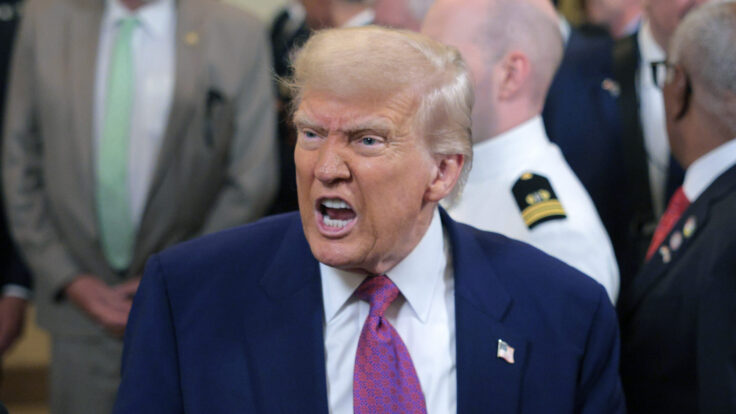
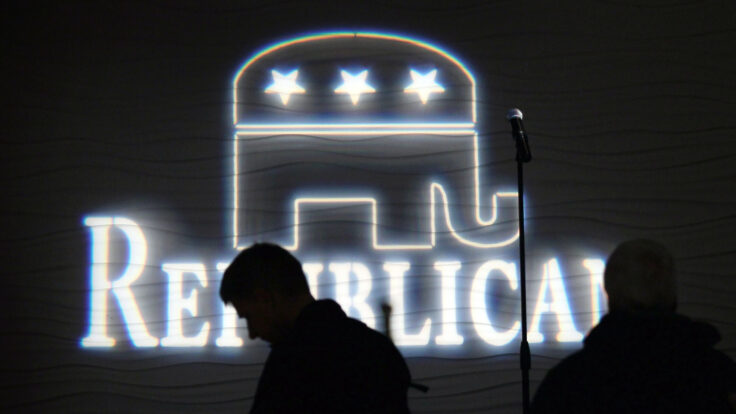
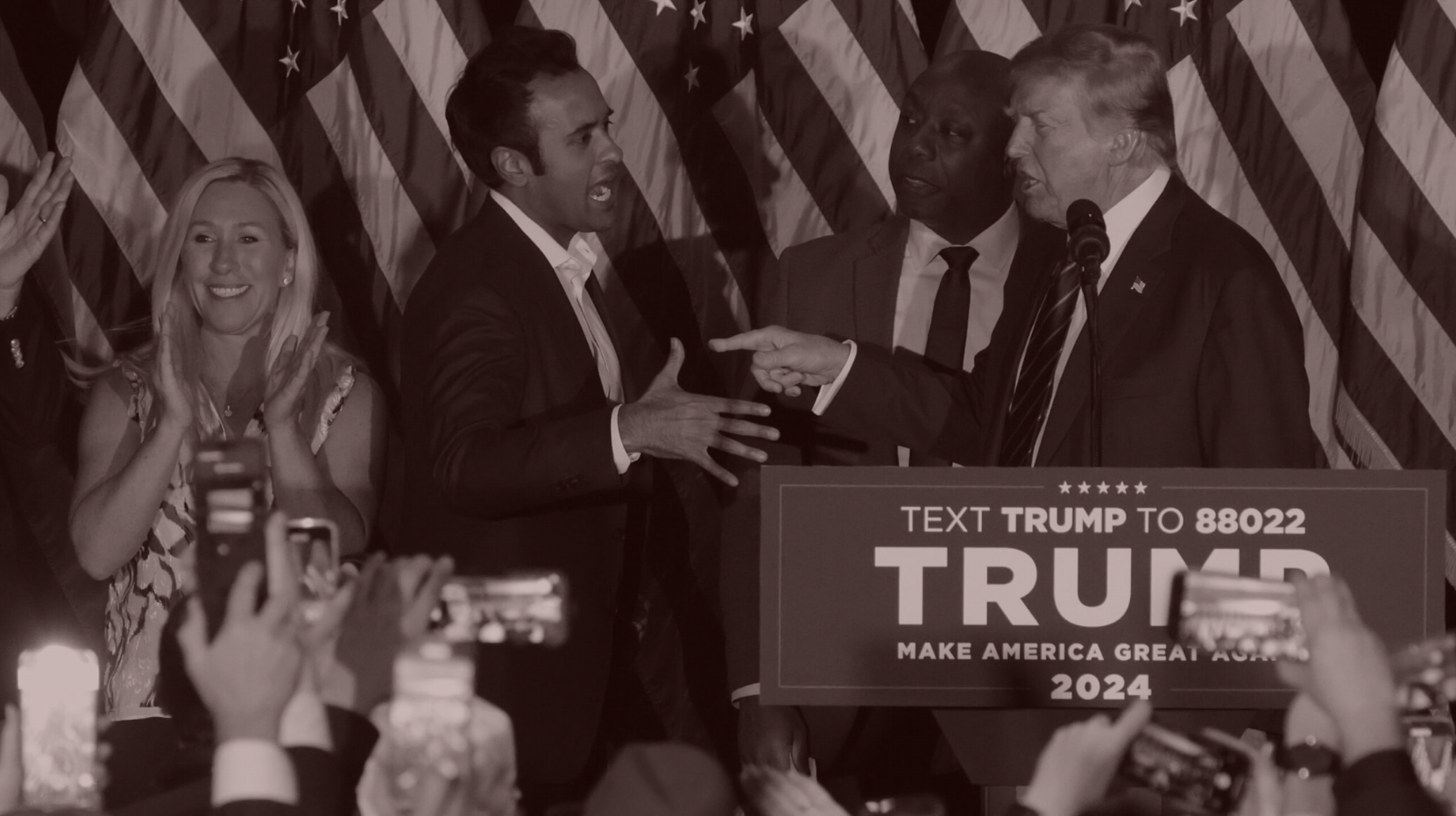
| Donald Trump is reportedly considering a handful of Capitol Hill insiders to become his running mate in 2024—Senators like Marco Rubio and J.D. Vance, and members of Congress including Byron Donalds and Elise Stefanik. But Republican voters want Trump to pick one of the G.O.P. candidates who ran against him for president, according to a new poll from Echelon Insights, which is partnering with Puck this year for exclusive analysis of the 2024 election. The online poll surveyed 1,006 likely voters, matched to the L2 voter file, between March 18-21. Echelon found that among likely G.O.P. voters and voters leaning Republican, their top pick for Trump’s running mate is entrepreneur and social media dilettante Vivek Ramaswamy, with 15 percent of voters naming him as their top choice when presented with a list of possible names.
Ramaswamy was followed on the list by Ron DeSantis at 13 percent and Nikki Haley at 9 percent. Their positioning among G.O.P. voters likely reflects their relative fame compared to some of Trump’s other options, given the media attention showered on his primary challengers over the last year. Ramaswamy was the top choice among self-described conservatives, G.O.P. voters without a college degree, and suburban women. DeSantis was the top choice among Republicans with a college degree, high-income voters, and younger Republicans between the ages of 18 and 34.
Trump, of course, is unlikely to pick either DeSantis or Haley, given his personal distaste for both of them, especially Haley. DeSantis also faces the constitutional roadblock of residing in Florida along with Trump, which would make the ticket ineligible to the state’s electors (a problem that would face Rubio and Donalds, both Floridians, as well). As for Ramaswamy, his thirst for public attention is probably a turnoff for Trump, and the former president is reportedly considering him for a cabinet post instead.
In the Echelon poll, the fourth most popular choice for Republicans was Tim Scott (8 percent), who also ran for the Republican nomination, but rarely criticized Trump on the campaign trail. Scott, the lone Black Republican in the U.S. Senate, hasn’t been coy about the fact that he wants the V.P. job, frequently appearing on cable news on Trump’s behalf since abandoning his own campaign. Scott was followed in fifth place by Ben Carson (7 percent), the former brain surgeon who was Trump’s Secretary of Health and Human Services.
Many of the other G.O.P. names reportedly being considered by Trump were afterthoughts in the poll. Rubio, for instance, was the top choice of only 3 percent of Republicans. Other options—like Vance, Sarah Huckabee Sanders, and Katie Britt—are Washington names but mostly unknown to the larger electorate. All of them had single digit support. |
|
|
| Echelon also checked how motivated the larger electorate is to vote in the presidential election, compared to voter interest in downballot races. As I’ve reported previously, with Biden facing an enthusiasm challenge with Democrats, some party strategists are hoping that voter interest in state and local elections could generate a “reverse coattails” effect that might help boost Biden at the top of the ticket in key states. Democrats in Arizona, for instance, are gathering signatures to add a measure protecting abortion rights to the ballot in November, and other competitive battleground states like Nevada and Pennsylvania will feature marquee Senate races that could supercharge turnout.
Overall, the poll found, voters in both parties are significantly more interested in voting in the presidential race: 65 percent overall said they are “extremely” motivated to vote for president, versus 48 percent saying the same for other races. “That all makes sense on its face—most people at a concert are there to see the headliner, not the opening act,” said Claire Considine, research director at Echelon.
But under the hood, the poll uncovered a bright red warning sign for Republican candidates not named Trump. Among Trump supporters, there was a pointed drop-off in motivation to vote in downballot races. In the head-to-head presidential race, 68 percent of Trump 2024 voters and 67 percent of Biden 2020 voters say they are “extremely motivated” to vote. In the down ballot question, though, the percentage of Republicans saying they are “extremely motivated” to vote in other races plummeted a full 23 points, down to just 45 percent. It only dropped 13 points among Biden supporters.
In other words, Biden voters are far more likely to vote for state and local offices than Trump voters, the results suggest. That dynamic has played out over and over again for several cycles now, with Democrats routinely winning regular and special elections up and down the ballot, with MAGA Republicans failing to show up—unless Trump’s name is actually on the ballot. |
|
|
| State of the Union addresses rarely impact presidential approval ratings in a dramatic way. After Biden’s address earlier this month, his approval ratings bumped up modestly, by around two points. The Echelon poll reflects why: More voters than not said that Biden’s speech was an overall success. Among likely voters in the poll, 47 percent said Biden’s SOTU Address was either “very” or “somewhat” successful. Only 35 percent of voters said the speech was “very” or “somewhat” unsuccessful.
But it remains to be seen whether Biden can capitalize on whatever post-SOTU momentum he had earlier in March. “There’s only been a small shift in the ballot, going from Trump +4 last month to Trump +2,” said Echelon co-founder Patrick Ruffini. “Right now, he’s mostly winning back soft disapprovers who were likely voting for him anyway, and we’ll see if he can translate these signs of momentum into movement on the ballot.”
The response to the speech was better than expected with some of the demographics that Biden has been struggling with: 72 percent of Black voters called Biden’s speech a success, as did 49 percent of independents and 55 percent of voters making under $50,000 a year. But younger voters—a continuing weak spot for Biden and his re-election chances—were less impressed. Only 41 percent of voters under 34 gave him positive reviews for SOTU, and only 36 percent of young voters said that Biden “effectively addressed key issues facing the U.S. recently.” Almost half of them—47 percent—said Biden did not effectively address key issues facing the U.S. recently.
The poll uncovered another useful data point, as politicians struggle to figure out how to communicate with the public in today’s scattershot media environment: 30 percent of voters said they watched the speech live, 33 percent did not, and 16 percent said they watched “some” but not all of the speech. But 20 percent of likely voters—a full-fifth of the electorate—said they caught up with the State of the Union through clips or highlights only after the event. |
|
|
| Finally, Echelon asked voters to weigh in the congressional push to ban TikTok or force a divestiture from the app’s Chinese owner, ByteDance. Support for a TikTok ban, or a forced sale, continues to have majority support, with 51 percent of likely voters supporting the legislation that overwhelmingly passed the House earlier this month. Only a third of Americans—33 percent—oppose a TikTok ban or sale.
Those results track with my piece last week analyzing the possible political fallout for Biden if he decides to move forward with a TikTok ban: Despite protests from corners of the progressive left and the libertarian right, banning TikTok is a winning political position with likely voters. The TikTok bill is popular with independents (50 percent), Trump supporters (66 percent), suburban voters (54 percent), as well as college-educated voters (51 percent) and non-college voters (50 percent) alike.
Democrats are a little more queasy about a possible TikTok ban, but only slightly: 44 percent of Biden supporters say they support the House legislation, as do 47 percent of registered Democratic primary voters. And the idea of a ban—predictably—is least popular with younger voters who use TikTok more than older Americans, with 53 percent of them opposing the bill. But, a third of likely voters between the ages of 18 and 34 said they actually support a TikTok ban or sale, undercutting the idea that devotion to TikTok is absolute among Gen Z voters. |
|
|
|
| FOUR STORIES WE’RE TALKING ABOUT |
 |
|
 |
|
 |
|
 |
| Hollywood Mailbag |
| Yellowstone rumblings, Elon’s no-show, and much more. |
| MATTHEW BELLONI |
|
|
|

|
 |
|
|
|
Need help? Review our FAQs
page or contact
us for assistance. For brand partnerships, email ads@puck.news.
|
|
You received this email because you signed up to receive emails from Puck, or as part of your Puck account associated with . To stop receiving this newsletter and/or manage all your email preferences, click here.
|
|
Puck is published by Heat Media LLC. 227 W 17th St New York, NY 10011.
|
|
|
|