 |
 |
|
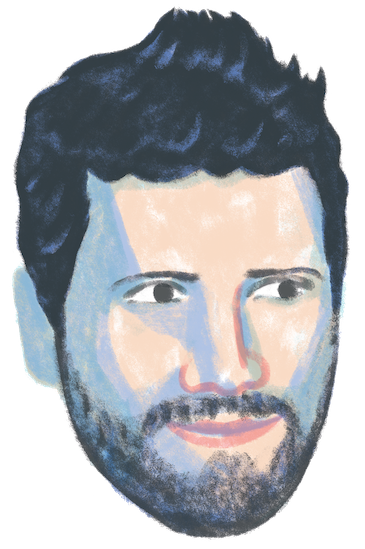
Happy holidays from an undisclosed location in Southeast Asia. I haven’t bumped into any crypto founders on the run, but I did run into a loyal Puck subscriber who managed to identify me from my author stipple at a museum in Saigon last week. Hey to him.
Before we get into the meat-and-potatoes of today’s edition, a few things that caught my eye over the last few days from afar:
- Sam Bankman-Fried may have finally given us some clarity yesterday regarding his decision to be extradited to the U.S., but it’s still not clear which campaign finance charges S.B.F. is facing from the Southern District of New York, or why. If you missed it, last week I walked through a few possibilities. I do think it holds up pretty well, one week later. The Times recently reported that various entities repped by Democratic super-lawyer Marc Elias are fielding inbound from prosecutors about the nature of the alleged straw donations. But we’ll learn more about the precise allegations as more and more people associated with S.B.F. get the S.D.N.Y. shoulder tap.
- You probably caught the drop of MacKenzie Scott’s long-awaited website for her philanthropic empire, now called Yield Giving, which will be highly scrutinized by aspiring grantees. But did you catch the very savvy statement from Bridgespan, defending the work they do for her? Bridgespan, after all, provides consultation to Scott and is also simultaneously one of her grantees, which has put them in the crosshairs of various rivals. But the Bain spin-off argues that the money it receives from MacKenzie has nothing to do with the work it does for MacKenzie.
- Elizabeth Warren’s declaration during the 2020 Democratic primary that she would not accept donations from Big Tech executives marked a turning point of sorts for the party’s relationship with Silicon Valley. Of course, hostility toward the Big Four is one of the few bipartisan traditions in Washington these days. Now, it’s Ron DeSantis who is making a show of pulling from the Warren playbook, per the Times, which reports he is considering not taking Big Tech donations, at least for his upcoming inauguration.
|
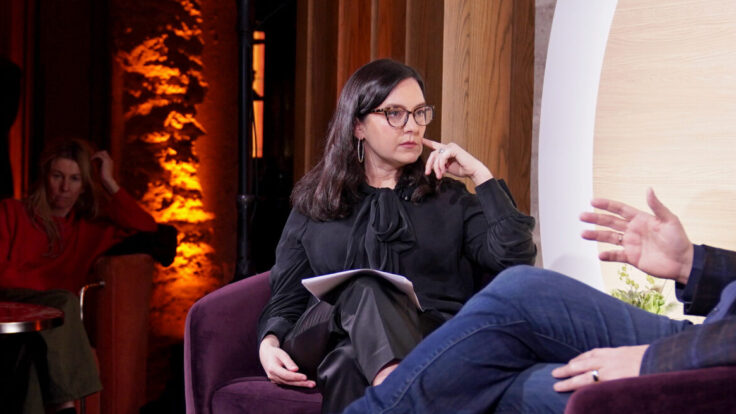
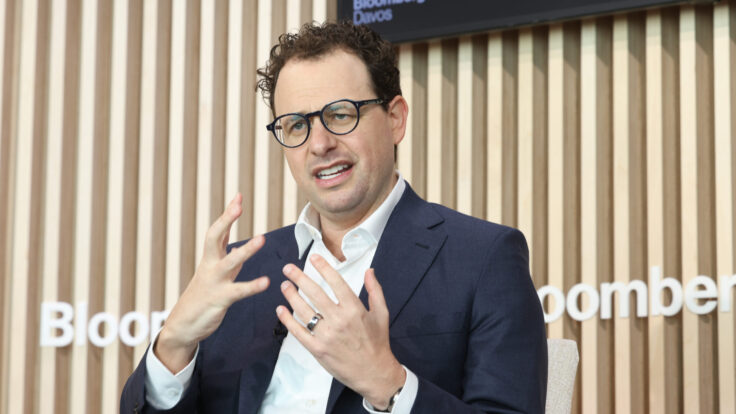
| Today, I’ve got a fascinating conversation with my Puck partner Peter Hamby, the political-media renaissance man who hosts our daily podcast, The Powers That Be, and the Snap original series Good Luck America. (He’s also going to be contributing to our new week-long politics newsletter, The Best & The Brightest, featuring Puck’s D.C. bureau of Julia Ioffe, Tina Nguyen, and Tara Palmeri, beginning next month. Stay tuned.)
Peter and I have a lot in common—we are both political reporters based on the West Coast, me in San Francisco, Peter in Los Angeles. We both operate in the tech universe—I cover Silicon Valley, Peter works for a Silicon Beach company. Peter and I also spent a little time together at CNN—and by a little time, I mean that he left about two weeks after I started. I still remember the shocked look on the faces of our colleagues when he announced that he was leaving his august position at the Cable News Network for something called Snapchat.
I was delighted to reconnect with Peter at Puck, and to get the opportunity to trade ideas about the way we understand politics and technology, and the ways in which our sometimes navel-gazing industry can be improved. Below, our conversation on the problems of modern partisan myopia, the Twitter echo chamber, out-of-touch campaign coverage, and the most underrated political narratives heading into 2024. |
|
|
| Back in 2013, my Puck partner Peter Hamby published a seminal study for Harvard’s Shorenstein Center that posited, in short, that social media had killed the “boys on the bus”—shorthand for the sort of old-school, ink-stained pack journalism as documented in Timothy Crouse’s seminal book of the same name. At the time, the media industry in general, and the legacy press corps in particular, was only beginning to grapple with the fallout of the 2012 election—the first presidential race in which Twitter wasn’t just a factor, but a virtual protagonist, itself.
I was just getting started in media at the time, and I remember reading Did Twitter Kill the Boys on the Bus? on an iPad in a bookstore in Houston, where I was beginning my career at the Houston Chronicle, before Peter and I first overlapped at CNN. And it still is, in many ways, an extraordinary prognosis of all the ways that social media would warp American politics, both on the campaign trail and in our living rooms. This past week I reached out to Peter, now my partner at Puck, to discuss what has and hasn’t changed in the decade since. |
| A MESSAGE FROM OUR SPONSOR |
| |
 |
| Why Cybersecurity Spending Could Be Poised for Growth
As more of our personal and professional lives move online, protecting sensitive data is critical. While other areas of the tech market slowed this year, cybersecurity earnings showed resilience amid a healthy amount of M&A activity.
Explore why we believe cybersecurity remains a powerful long-term theme.
|
|
|
| Teddy Schleifer: Peter, your 2013 study for Harvard’s Shorenstein Center about the problems of reporting-by-Twitter turned out to be incredibly prescient: I remember reading it before I started my first real reporting job in Texas, and it really shaped my thinking about the craft. Looking back now, nearly a decade later, how much of your critique holds up?
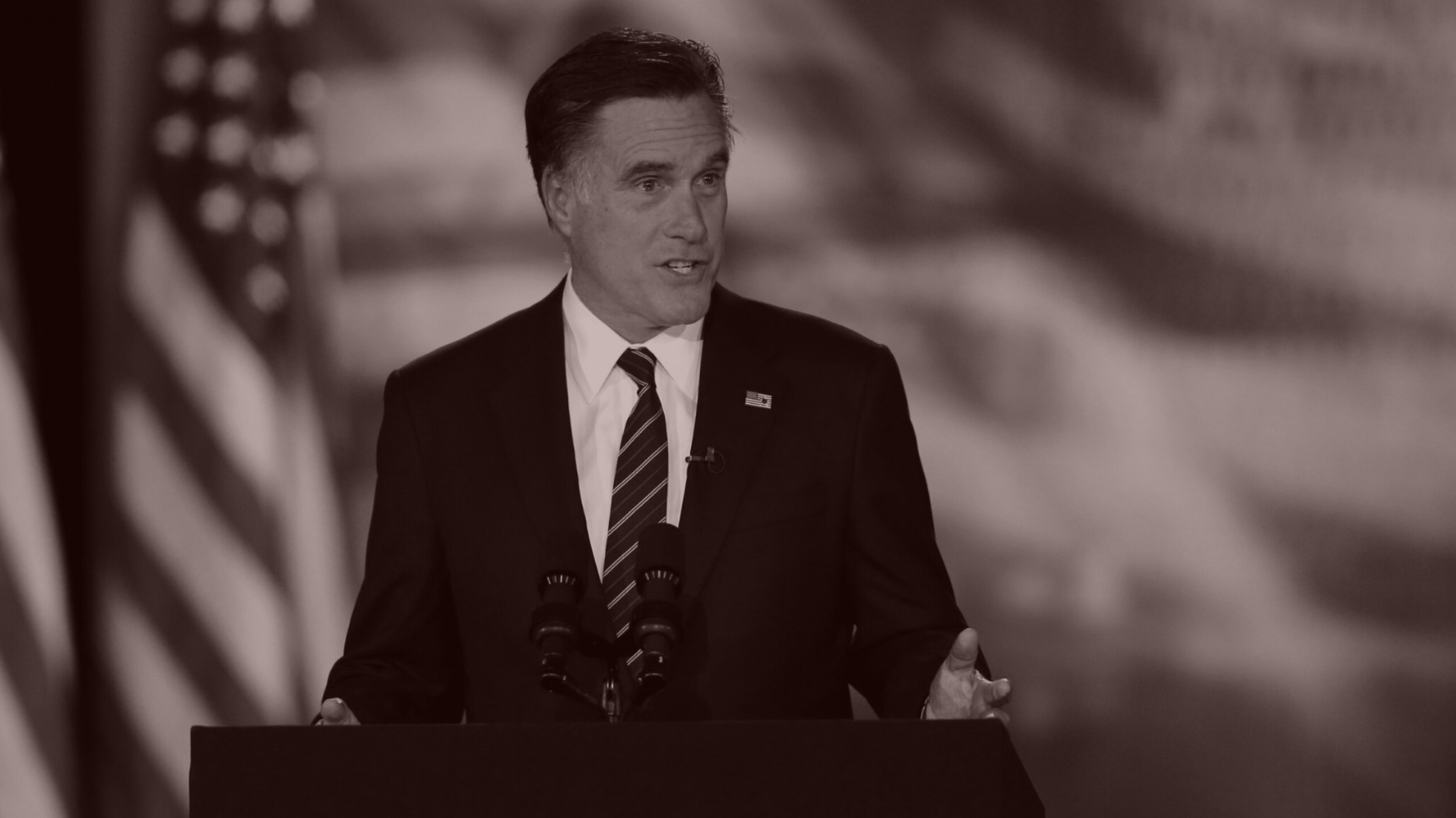
Peter Hamby: I didn’t realize it’s been almost a decade until you said that. I wrote that study after the 2012 campaign, which was the first presidential race in which social media and smartphones became the first screen for campaign staffers and members of the political press, overtaking print newspapers, TV news, even traditional websites. Voters weren’t totally there yet, but Washington was, and that was the year Twitter truly became the assignment desk for the media. That campaign, too, coincided with the great unraveling of ad-supported media. The demand for clicks collided with the dopamine of social media, and political reporters were the Cocaine Bear right in the middle of it. They absolutely feasted on Mitt Romney.
I gave the Shorenstein paper another scan recently, and I do think most of it holds up! Something David Carr told me about political reporters that year stands out: “Tweet less, dear colleagues,” Carr told me. “I unfollowed a lot of political reporters, because you are tweeting for your colleagues, you are not tweeting for me.” This is the quote that led me to become the founder and chairman emeritus of the “Twitter Isn’t Real Life” movement, which finally went mainstream during the Democratic primaries in 2019, when reporters figured out that working-class Black moms in South Carolina and suburban dads in Polk County weren’t wasting their days huffing polling data off an internet message board popular with political nerds and college grad reporters.
Too many reporters still haven’t learned to log off, and I do believe that 2012 was the year Twitter warped our day-to-day incentives for good. Publishing speed has won out over caution, attention over restraint, and fluff over seriousness. These behaviors were always endemic to campaign coverage—you can jump to my Roger Ailes riff on page 47 of the paper for more on that—but Twitter magnified them and thrust them into the full view of the American public. One of my big conclusions was that Twitter revealed the difference between good reporting, and reporting that just gets attention. Twitter unleashed a tsunami of gaffe reporting and so much pack-journalism ridiculousness—remember “Binders Full Of Women?”—that I almost felt bad for Romney, who was an absolutely perfect mismatch for the meme-ification of campaigns. Moments that were plainly just cringe or goofy were treated as outrageous or offensive. On top of that, reporters were suddenly expressing their personal political opinions, implicitly or explicitly, for the entire world to see in a way that news consumers hadn’t seen before.
Some conservatives, like Ben Shapiro, have said that the media’s superficial and unfair treatment of Romney in 2012 forever ruined the public’s trust in the press and allowed Donald Trump to skate through, four years later. I don’t agree with that. But I do think that 2012 did reputational damage to the political press and taught a younger generation of first-time reporters a bunch of bad lessons. That election exposed an unseriousness that hurt all of us moving forward. Before Trump was a Fake News crusader, he was a happy participant in the 2012 cycle—and he learned from it. Stunts like his birth certificate lie were like catnip for reporters, and four years later he was taking credulous journalists for rides in his helicopter and riding around with them on a Zamboni on Fifth Avenue. Click!
Maybe you can give me one way in which it hasn’t held up.
Here’s something that hasn’t held up: Not anticipating Donald Trump, I wrote that reporters should get smarter about process coverage, and dig deeper into how campaigns work, how they target and persuade voters. Some of that stuff continues to interest me. But in hindsight, that’s mostly something I was into, myself, as a political junkie. Do normies care? It took Trump’s victory in 2016 to reveal the actual, real-life, scary stakes of politics—something I and other political reporters had lost sight of—and I’m happy that obsessive process coverage is mostly dead, or just more irrelevant than it once was.
To that point, how confident are you on the cusp of the 2024 campaign that the media has learned anything from the mistakes of previous cycles? Not just with regard to Twitter, but with presidential campaign coverage as a whole?
I’m actually confident about the next cycle. I think the structural problems of political media are probably unfixable. But I think substantively, a lot of reporters are finally realizing that there’s a great distance between their keyboards and the sentiments of the voting public. The “Twitter Isn’t Real Life” mantra has been ratified many times over times since 2020: Biden’s primary win in 2020, Biden’s general election win later that year, the unexpected success of Democrats in these midterms, the general irrelevance of the Squad and (I think) the slowly withering influence of Trump over the G.O.P.
That’s been an important corrective to something I’ve been saying for a few years now, which is that the elite press has never been more out of touch with the tastes and opinions of the voting—and non-voting—public. We are bubble-dwellers, Teddy! As our partner Matt Belloni knows well, people like you and me love to watch and tweet about HBO’s Succession. But almost no one actually watches Succession. They do watch the NFL and Yellowstone and some show I’ve never heard of on CBS called Fire Country that apparently gets 8 million viewers per episode.
To some extent that’s true because of the types of people who are given fancy jobs in big newsrooms: People who are too often wealthy, white, well-educated and frankly just out of touch with regular people. How would you re-imagine political media coverage, if you could?
My grand idea is not very new and probably too expensive to pull off. I’ve written about this before, including in that Twitter paper, but newsrooms need to be distributed. Campaign reporters—and not just young TV network embeds, as I proudly was for CNN in 2008—shouldn’t just visit flyover states, they should move there. For, like, months. Years even. And not just to follow around political candidates, but to go grocery shopping, go to Starbucks, go to Trader Joe’s, go to church, hang out on campuses, eat at Buffalo Wild Wings once a week. Those reporters should speak up on conference calls with their editors about story selection, and their editors should listen to them. Anything to shake off the cultural and political assumptions that course through newsrooms in Washington and New York and make journalists look even more out of touch than we already are.
I don’t even mean that reporters should move to primary states or “red America” to post up in Walmart parking lots to “understand” voters. Another blue state would be fine, too. Just move to Milwaukee, or Tampa, or Hagerstown—wherever a majority of people don’t wake up every morning and look at Politico or MSNBC or even Puck. Understand that people get their news from podcasts, from memes, from YouTube and Snapchat and Instagram, from the radio, from the 23-year A.S.U. grad turning three stories a day for her local news station—and most of that news isn’t about Mayor Pete or Ron DeSantis. Once we in the national media figure out that politics isn’t an obsession for the vast majority of Americans who don’t read The New York Times, our coverage will be more relevant to readers and viewers, and less prone to electoral shockers like 2016 that make us look feckless. I’m sure you agree that your time writing for the Houston Chronicle made you appreciate what kind of stories land with readers, and which don’t.
One thing that has always struck me in your writing is that you’ve also been a major advocate for the view that many of the most interesting, and uncovered, stories in modern politics are actually stories about the Internet. Much of your reporting back at Vanity Fair was premised on the idea that we should take digital operatives much more seriously.
I think it’s important for reporters these days to not be too obsessed with the mechanics of a campaign. But that’s also because many of those tactics I used to cover have either been exposed as huckster hype, or they’ve been more fully incorporated into campaigns. When I was covering the digital side of campaigns, I’d say from 2008-2014, it was the era of The Victory Lab, Sasha Issenberg’s wonderful book about how tech-savvy campaign operatives were finding new ways to reach voters, using clever A/B tests and microtargeting. What’s changed since then is that a lot of those tactics have been folded into media campaigns writ large. A political campaign can target any audience segment—Catholic moms, for instance—and hit them with mail, broadcast ads, streaming ads, texts. Whatever it takes.
Some campaigns are definitely old school: Wealthy TV consultants win the day, and campaign managers still treat “digital” as an ugly stepchild, telling their millennial operatives to make TikToks and call it a day. But most campaigns are now buying audiences and reaching them on whatever screen they can. Trump’s re-election campaign in 2020, for instance, was actually pretty good about creating content for all platforms and making investments in data and digital. But the G.O.P. almost completely ceded the digital and social battlefield to Democrats this cycle, spending almost all their money on TV ads, at a time when even older voters are looking at their phones first before turning on the television. |
|
|
| I’ve always subscribed to the idea that to understand political decisions, reporters need M.B.A.s in the business of politics—how operatives get paid, for instance. That’s definitely a part of the story here.
OK, before I let you go—what’s the one 2024 storyline that you think is overrated, and one that you think is underrated?
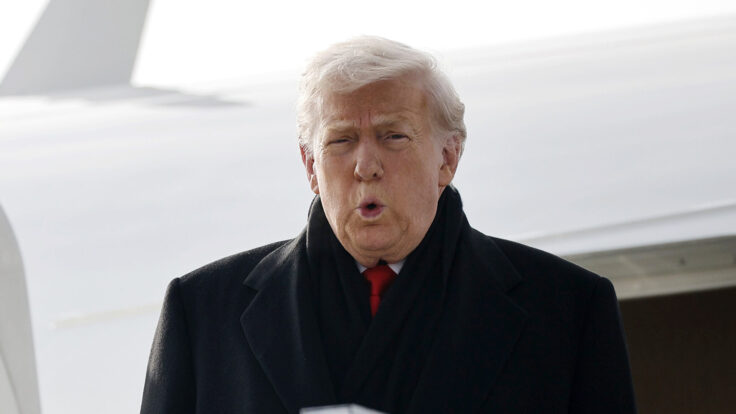
This might be a strange thing to say, but I think Donald Trump is generally overrated heading into 2024. The press is still addicted to him, sure, as is much of the Republican base. I’m not saying that he can’t win the Republican nomination—of course he can—but I was genuinely stunned at how little interest there was in his presidential announcement. I live in Los Angeles, where politics isn’t top of mind every day, and people I talked to that weekend literally had no idea he had announced—another reminder, perhaps, of the wide gulf between what the news covers and what the normie public sees. David Byler, an elections reporter at The Washington Post, tweeted out Google search data showing that Trump’s announcement generated almost no interest in the United States. Googlers were more interested in Thanksgiving cocktail ideas.
Shortly after Trump left office, I wrote a piece for Vanity Fair reflecting on my experience covering Sarah Palin for CNN, from the moment she was picked as John McCain’s running mate in Dayton through her flirtation with the Republican nomination in 2012. People forget: Palin was literally the biggest story in the world. She was a tabloid sensation, a Fox News contributor, a reality show star, a hero to the populist right-wing base, and heroin for reporters. Palin drew rapturous crowds that were only rivaled by Barack Obama and, later, Trump. And then, a few years later, no one cared.
Palin was never president, so her footprint is smaller than Trump’s, and certainly less sinister. But Trump’s attentional powers, like Palin’s, will one day fade. After the MAGA crowd got smoked in the midterms, it kind of seems like his influence has been too. Republican eyes are starting to look elsewhere. The next generation of Republican leaders will be Trumpy and nativist and anti-woke or whatever, but Trump himself might not be welcome at the party. As for general election voters, they moved on in 2020, and reminded him of the breakup in November.
The only fundamental rule of politics is that things change. Sometimes we reporters have a stubborn inability to see around the corner and be open to the prospect that future dynamics won’t actually look like current ones. We are just hopelessly addicted to whatever’s happening right now. That right there is a storyline that’s underrated. |
|
|
|
| FOUR STORIES WE’RE TALKING ABOUT |
 |
| Elon’s Legal Quagmire |
| Digging through the explosion of litigation stemming from Musk’s Twitter takeover. |
| ERIQ GARDNER |
|
 |
|
 |
|
 |
| Iger Expectations |
| On the odds Apple buys Disney, why the M.L.B. needs Netflix, and more. |
| DYLAN BYERS & JULIA ALEXANDER |
|
|
|
 |
|
|
|
Need help? Review our FAQs page or contact us for assistance. For brand partnerships, email ads@puck.news.
|
|
|
|
Puck is published by Heat Media LLC. 227 W 17th St New York, NY 10011.
|
|
|
|