Hello, and welcome back to The Best & The Brightest, your daily politics dispatch from Puck. It’s
foreign policy Thursday—after yet another TACO Tuesday—and I’m Julia Ioffe. A small programming note: I’ll be away next week for some toddler-friendly fun in the sun, but my wonderful colleagues will continue taking excellent care of you.
Tonight, meet the new guys, same as the old guys. For the past few weeks, I’ve been hearing
lots of anxious—and, let’s face it, angry—chatter around town that the Biden bros were making a comeback. National Security Action, founded in 2018 by Ben Rhodes and Jake Sullivan, has been emerging from hibernation, trying to help Democrats formulate a new foreign policy message ahead of the midterms and 2028. But not many people are welcoming their revival. After the twin disasters of Gaza and Biden’s decision to run for reelection, much of
the Democratic foreign policy world wants them to go away. But are they open to that message? After all, who in Washington is? Said one Democrat on the Hill, “They’re all canceled and they don’t realize it.”
Also mentioned in this issue: Ben Rhodes, Huma Abedin, Laura Loomer, Maher Bitar, Jake Sullivan, Hillary Clinton, Antony Blinken, Andrew
Albertson, Jon Finer, Joe Biden, Brett McGurk, Adam Schiff, Samantha Power, Donald Trump, Alex Soros, Amos Hochstein, Tulsi Gabbard, and more… |
|
|
|

| Abby Livingston
|
|
Groups backing Sen. John Cornyn and Texas Attorney General Ken
Paxton released competing polls on Thursday that showed two different snapshots of the race. The poll sponsored by Texans for a Conservative Majority, the big-spending super PAC supporting Cornyn’s reelection, found the senator essentially tied with Paxton, 47 percent to 46 percent, roughly three weeks out
from their expensive and notably unfriendly May 26 runoff. Paxton’s friends, Lone Star Liberty PAC, responded with their own survey that showed Paxton up 46 percent to 36 percent.
In Texas politics, history generally dictates that trouble looms anytime an incumbent is forced into a runoff. But the poll numbers reinforce what I’ve heard elsewhere: that
Cornyn, while endangered, is very much still in the hunt—a somewhat reassuring sign for Cornyn and his allies, who have outspent Team Paxton by roughly a 13-to-1 margin, according to some estimates. After a sluggish stretch, ongoing polling in the field should yield more surveys after this Mother’s Day weekend, according to a Texas G.O.P. source. Meanwhile, in a hypothetical November matchup, both Cornyn and Paxton trail their Democratic rival, James Talarico, by slim margins according to the
RCP averages. |
|
|
|
Many Democrats aren’t happy that Jake Sullivan and the other Biden bros who rode shotgun for
Barack and Joe’s foreign policy adventures are positioning to return to power: “The idea that the same foreign policy leadership that brought us the Afghanistan withdrawal and the cover-up of Biden’s decline should be in charge of staffing the next Democratic administration,” said one insider, “is tone deaf at best.” |
|
|
|
A month ago, a couple dozen Democratic foreign policy hands gathered for what is now fashionably called a
“convening” inside the Manhattan offices of Soros Fund Management. The meeting was organized by National Security Action, a group founded in 2018 by Obama deputy national security advisor Ben Rhodes and Hillary Clinton advisor Jake Sullivan, who together hoped to marshal the Democratic foreign policy community against Donald Trump in 2020. Since its inception, the organization has been funded
largely by Alex Soros, scion of the Soros empire and husband of Huma Abedin, Clinton’s right-hand woman. But after Sullivan went over to the Biden campaign and later became the president’s national security advisor—with N.S.A. member Jon Finer serving as his deputy—the group mostly went into hibernation. |
|
|
|
A MESSAGE FROM OUR SPONSOR |
When insurers delay approvals or require endless paperwork, patients are left waiting for care they need now. Addressing harmful corporate insurer practices can help ensure timely access to treatment and protect 24/7 care. See how. |
|
|
|
Now, more than a year into Trump’s second term, National Security Action is dusting itself off and
reformatting for a new, and more challenging, fight: formulating a foreign policy that will help Democrats take power in 2028. But many Democrats don’t think they should be leading this effort at all. “This is the Jake and Jon Show: Redux, and nobody I know is happy about it,” one former senior State Department official told me. “The idea that the same foreign policy leadership that brought us the Afghanistan withdrawal and the cover-up of Biden’s decline should be in charge of staffing the next
Democratic administration and determining its foreign policy is tone deaf at best.”
Sullivan, in particular, has become emblematic of the Democratic Party being out of step with its base on its most emotional foreign policy issue: Israel. At the group’s recent meeting in Manhattan, the attendees—most of whom had served in senior national security roles across the Biden and Obama administrations—were particularly divided over Biden’s decision to back Israel to the hilt, even as it laid
waste to Gaza. “I think Gaza explains the backlash to Jake almost entirely,” one participant in the meeting told me. (Both Sullivan and Finer declined to comment on the record. Rhodes did not respond to a request for comment.)
At one point, according to several people present, Rhodes, who was not part of the Biden administration and has been scathing in his criticism of it, put the Gaza question directly to Sullivan. He suggested that Sullivan needed to reckon with the stain of that
policy. But the fireworks many feared never went off. The room was full of old friends committed to working out their differences respectfully—and out of the public eye. “Ben can be very pointed and clear when he wants to be,” a second participant recalled, diplomatically. “But Jake was listening.” |
The Gaza confrontation was a moment that, for some in the room, perfectly encapsulated the tension at the
heart of Democratic politics. For all the rage at Biden, including among many in the party’s foreign policy universe, the former president has largely disappeared from public view. So it’s his loyal lieutenants who carry the burden of his soiled legacy in his stead.
During Trump’s first term, foreign policy Dems, ranging from Bernie acolytes to Clinton staffers, banded together to defeat the president. This time around, there’s a sense that these differences need to be
hashed out—and sooner rather than later. There’s also growing frustration that the party has drawn from the same rolodex of foreign policy staffers over and over for the past two decades, resisting new blood at the top despite claiming to be the party of younger voters. In particular, there’s a profound sense of fatigue with the so-called Biden bros: Sullivan, Finer, Antony Blinken, Amos Hochstein, and
Brett McGurk, who became the core of the former president’s foreign policy team.
As Biden’s term went on and disagreements over Afghanistan, Ukraine, and Gaza piled up, so did exasperation with the Biden bros. Many women in the field perceived them as arrogant and condescending. Hawks hated their unsatisfying baby-splitting on Ukraine; progressives were disgusted
that the White House had permitted a genocide in Gaza. Across the Democratic establishment, there were complaints about Biden’s “imperial N.S.C.” And at its head was Jake Sullivan.
Now that these men are finally out of power, though, many in the community want to turn the page on them—for good. Which is why the reemergence of National Security Action has been met, in some quarters, with skepticism at best. Many fear that N.S.A. is merely a vehicle for Sullivan & Co. to maintain their
status atop the Democratic foreign policy hierarchy, and to signal that they’ll be the ones staffing the next Democratic administration. |
|
|
|
A MESSAGE FROM OUR SPONSOR |
Prior authorizations and administrative hurdles can slow down critical care, forcing patients to wait while their health
hangs in the balance. Reforming insurer practices can help reduce delays and keep care moving when it matters most. Learn more. |
|
|
|
Naturally, that isn’t sitting well with peers who believe the Biden bros had their moment and blew it. “On
Gaza, I think Jake is entirely typical of a big part of the party establishment who haven’t taken in the extent of the change in domestic politics and the world,” said a third participant in last month’s meeting. Or as one Democrat on the Hill told me, “They’re all canceled and they don’t realize it.” |
Those like Blinken and McGurk, whose time in government is likely done, may be content to move on to the
higher calling of the private sector. But for those who are still young-ish and ambitious, like Sullivan, the idea that they are persona non grata is galling. “Is the notion that all those people are supposed to take a knee?” a fourth participant in April’s meeting snapped. “That doesn’t make sense. There should be a healthy new pipeline of people who didn’t serve. And there should be Biden people. There are people who served with distinction and who should have another
chance.”
Others in the organization understand that the world—and the party—have changed. “We have to recognize that the Biden administration’s policy is not where the Democratic Party is, and that there’s a lot of anger about what the policy was,” one person close to the organization confessed. “Being able to acknowledge that is an important part of reengaging and moving forward.”
With this in mind, the board brought in a new executive director last week, aiming to make N.S.A.
“less opaque, less elite, more engaging,” according to the person close to the organization. (Nobody, it’s worth noting, not even the various comms people working for N.S.A., would tell me who is on the organization’s board or confirm that the group’s funding comes from Soros.) The group’s new leader, announced Sunday in Axios, is Maher Bitar, a widely
respected and admired Democratic foreign policy hand who previously worked with Samantha Power at the U.N., served as a legal advisor on Capitol Hill during Trump’s first impeachment, and spearheaded the release of selected intelligence ahead of Russia’s full-scale invasion of Ukraine. Most recently, he served as national security advisor for Sen. Adam Schiff.
Bitar told me this week that he’s excited to build out an organization he thinks could
prove useful to Democrats running for office—and to move it in a new direction. “My priorities are to bring in a much broader set of voices so that folks are empowered to grow and become leaders,” he said. “I have my own extensive network of people on the Hill and people who have left government, as well as up-and-comers in academic spaces, people who’ve not always had a seat at the table—and they deserve to have one.” |
|
|
|
But Bitar, despite the near-unanimous admiration he commands in Democratic foreign policy circles, is a
fraught choice. For one thing, he too served on Biden’s imperial N.S.C. “Maher is genuinely well-intentioned and trying to use his arrival as a signal of openness to new ways of doing things,” said another participant in the New York meeting. “But it definitely says something about the community that they think Maher counts as new.” Others worry that Bitar, who is Palestinian American, is being used to launder the reputation of the Biden bros. Still others fear for him: He has
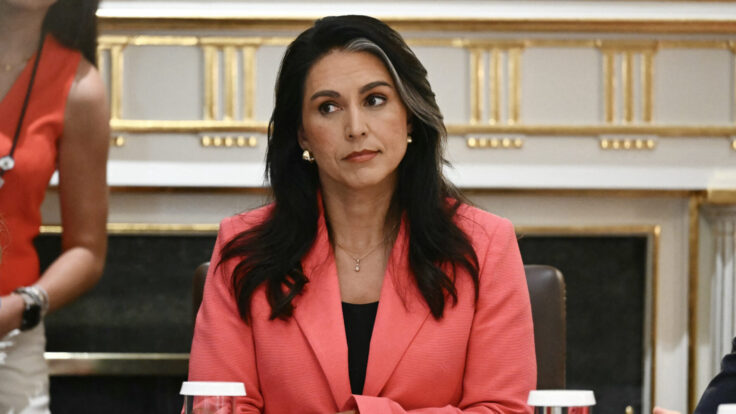
repeatedly been targeted by racist harassment campaigns. Last year, Tulsi Gabbard revoked Bitar’s security clearance after Laura Loomer accused him of being a
“jihadist.”
When I asked Bitar about this, he pushed back forcefully. “This implies that I’ve been asked for one reason and one reason only, and that’s my heritage, which I’m very proud of,” he said, bristling. The idea that he was being used, he said, “is cheapening my record and reducing me to some kind of token.” He added, “I am very conscious that people like me are not always at the table.” Maher, said the source close to the organization, “has worked on the toughest, thorniest
issues, and he’s always brought a thoughtful, humane approach to his work. It diminishes what Maher brings to the table and focuses predominantly on Jake when Jake is not the front man.”
In the end, the anxiety over Jake Sullivan’s continued dominance in Democratic foreign policy may overstate his influence. “There’s a lot of frustration with Jake and Jon—and even the frustration buys into their centrality,” said the third participant. There are other initiatives, like Andrew
Albertson’s Foreign Policy for America, that people believe have done a far better job recently at helping Democrats on messaging and at incubating new talent. “National Security Action feels bigger than it is,” this participant said. “I don’t see it as so large and overwhelming that it stifles other initiatives. And that’s already different from the past.”
It’s also extremely likely that an eventual Democratic nominee may deem all of these organizations irrelevant. Given the
backlash to Biden and his bros, it’s hard to imagine that the 2028 Democratic standard bearer will opt to recruit the usual foreign policy suspects. After all, a lot of the Obama-Biden national security people started as young, enthusiastic presidential-campaign volunteers themselves, gleefully upending the received wisdom of their elders. There’s no reason to think a new wave couldn’t sweep these people aside in turn. Not that they’ll go willingly. Said a second Hill Democrat, “Power is never
relinquished, it has to be taken—and right now, the legacy folks are holding it.” |
That’s all from me this week, friends. Enjoy the sunshine, and I’ll see you in two weeks. Until then, good
luck. Tomorrow will be worse.
Julia |
|
|
|
Join Emmy Award-winning journalist Peter Hamby, along with the team of expert journalists at Puck, as they let you in on the
conversations insiders are having across the four corners of power in America: Wall Street, Washington, Silicon Valley, and Hollywood. Presented in partnership with Audacy, new episodes publish daily, Monday through Friday. |
|
|
|
Unique and privileged insight into the private conversations taking place inside boardrooms and corner offices up and down Wall
Street, relayed by best-selling author, journalist, and former M&A senior banker William D. Cohan. |
|
|
|
Need help? Review our
FAQ page or contact us for assistance. For brand partnerships, email ads@puck.news.
You received this email because you signed up to receive emails from Puck, or as part of your Puck account associated with {{customer.email}}. To stop receiving this newsletter and/or manage all your email preferences, click here.
|
Puck is published by Heat Media LLC. 107 Greenwich St., New York, NY 10006 |
|
|
|
|