{{ 'now' | timezone: 'America/New_York' | date: '%b %d, %Y' }} |
|
|
|
Hello and welcome back to The Best & The Brightest. I’m Leigh Ann
Caldwell.
It’s yet another primary eve, with a series of high-profile races tomorrow that will measure Trump’s strength among Republicans. Can Rep. Thomas Massie overcome the MAGA opposition in Kentucky? And who will come out on top in Georgia’s three-way race for the Republican Senate nomination, where Trump didn’t endorse? Meanwhile, a House Democratic primary in Pennsylvania will test Gov. Josh Shapiro’s
influence. (There are primaries in Alabama, Oregon, and Idaho, too.)
In today’s issue, John Heilemann sits down with Obama strategist Dan Pfeiffer to handicap the midterms and evaluate whether Trump’s “I don’t think about Americans’ financial situation” gaffe will actually be the one to hurt him.
(Imagine if Obama said that.) Plus, Marianna takes the temperature of G.O.P. members who are suddenly a bit more hopeful about keeping their majority, and looks ahead to tomorrow’s showdown in Thomas Massie’s district.
Also mentioned in this issue: George W. Bush, Bill Clinton, Tucker Carlson, Megyn Kelly, Andrew Schulz, Joe Biden, Marco Rubio,
Jeb Bush, and… Pope Leo XIV. |
|
|
|

| Marianna Sotomayor
|
|
The G.O.P.’s rudderless hope: House Republicans are brimming with renewed optimism that
they can hold on to their majority, albeit with a little help from the Supreme Court. But if they do get lucky and keep the House for another term, what’s their agenda? Many Republican members looked at me in bewilderment when I asked this simple query. “That’s a very insightful question,” Rep. Nick LaLota said, and he wasn’t joking. “Nobody is asking what you would do six or more months from now. Everybody’s like, ‘What are you doing today?’”
Given the daily tug-of-war
over redistricting, it’s understandable why many House members joked that they’re just trying to put one foot in front of the other. Rep. Brian Fitzpatrick, one of the most vulnerable incumbents in the country, said that Republicans are mistakenly not talking about cost of living, but declined to offer many specifics beyond the broad observation.
There have been conversations in the G.O.P. leadership suite about what they could tackle next year, but I’m told those talks
are quite premature. In any case, when lawmakers act startled by the prospect of victory and are short on plans, it’s usually a sign that no one really believes they’ll hold on to power. Privately, Republicans acknowledge that voters have totally soured on Trump and their party, and with independents and Democrats riled up, they’re bracing for the worst. Why draft an agenda when you may not need it? |
|
|
|
Claude, the AI without ads A space to think. Anthropic keeps conversations with Claude ad-free: no sponsored links, no advertisers shaping answers, no paid product placements you didn't ask for. When you bring your hardest problem to an AI, you shouldn't have to wonder who it's working for. Learn more |
|
|
|
|
| Marianna Sotomayor
|
|
The Massie prognosis: Will Kentucky voters (and a handful of extremely
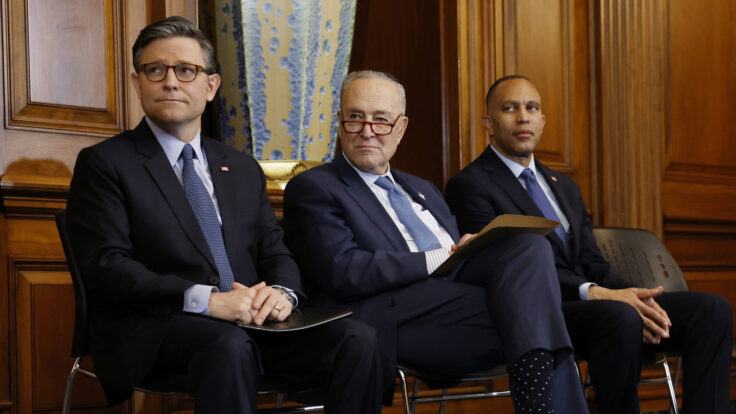
well-capitalized super PACs) do Trump and Mike Johnson a favor and unseat eight-term libertarian Rep. Thomas Massie in tomorrow night’s primary? Scores of House G.O.P. lawmakers, strategists, and leadership aides have predicted to me that Massie is not going to survive. And they won’t be sad to see him go: Massie often voted against the G.O.P. agenda during the past year—making him a reliable headache for Johnson, who needs every vote he
can to pass bills through his two-seat majority. Massie also joined House Democrats to compel the administration to release the Epstein files—the final nail in the coffin, I’m told.
The N.R.C.C., the House G.O.P.’s campaign arm, reliably helps incumbents in their primary races. But the full-court assault against Massie has kept them noticeably out of the race, I’ve learned. (The N.R.C.C. did not respond to a request for comment.)
Though Trump’s
favorables are at historic lows, the president can still draw blood, as demonstrated by Sen. Bill Cassidy’s decisive loss this weekend. Trump also endorsed all House G.O.P. incumbents in Texas except for Rep. Dan Crenshaw—who, you guessed it, ended up losing. Same goes for most of the Indiana state
senators who stood up to the president on redistricting.
We’ll see whether the pattern continues with Massie. Despite the record spending against him this cycle, Kentucky often defies the party mainstream by rewarding individualists. (See: Sen. Rand Paul.) After all, this isn’t Trump’s first call to oust Massie: The president often lambasted the congressman during his first term, but Massie ended up surviving his primary challengers.
|
|
|
|
And now on to the main event… |
|
|
|
Obama strategist and political soothsayer Dan Pfeiffer on Trump’s “financial situation”
gaffe, misunderstanding MAGA, and the enduring political superpower of being strong and wrong. |
|
|
|
Even if the Democratic Party faithful weren’t afflicted by a chronic case of collective bipolar disorder,
their wild-eyed oscillation between mania and depression is easy to understand given the welter of recent headlines. Until just shy of three weeks ago, everything seemed to be going their way: Donald Trump’s poll numbers were cratering due to a lethal combination of high and rising prices, broad disapproval of his war in Iran, his obsession with building a $1.4 billion White House ballroom, and an array of other beyond-bonkers fixations. Add to that Democrats’ consistent and
dramatic over-performance in special and off-year elections since Trump 2.0 began, plus Team Blue’s apparent ability to fight their rivals to a draw—or even come out slightly ahead—in the mid-decade redistricting wars.
Then, on April 29, the Supreme Court stepped in, administering its third and final blow in 15 years to the Voting Rights Act—and blasting Democratic optimism to smithereens. With its ruling, which allows the G.O.P. to redraw congressional maps to eliminate majority-minority
seats, SCOTUS opened the door to a slew of last-minute Republican redistricting efforts across the South. Just 10 days later, the Virginia Supreme Court struck down the just-passed referendum that would have allowed the state to redraw its map to give Democrats four new seats.
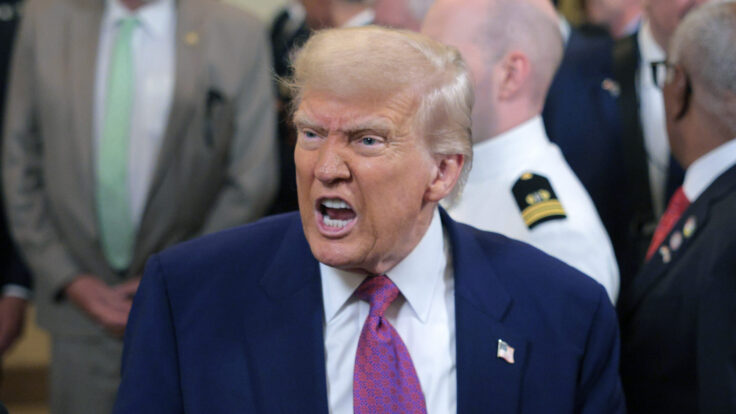
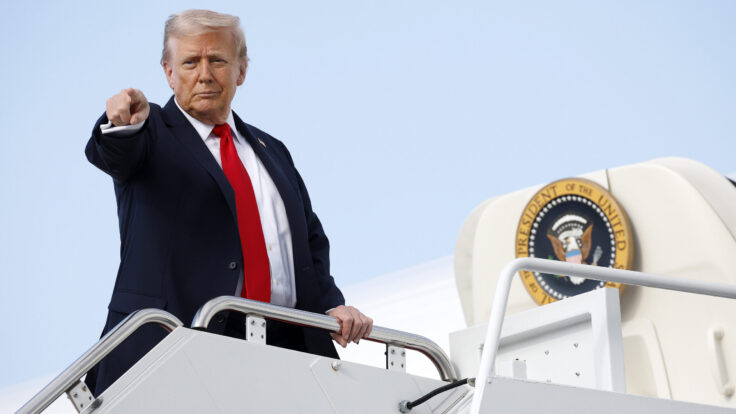
Yet even that one-two punch proved to be short-lived thanks to, you guessed it, Trump. The president’s on-camera remark last week as he set off for Beijing—that “I don’t think about Americans’ financial
situation”—had Democrats deliriously declaring this was, finally, the gaffe that would bring down MAGA. That was before The New York Times released a devastating new poll that found Trump’s overall approval rating at an all-time low of 37 percent; his support among independent
voters, young voters, and Latinos deeply underwater (–43, –57, and –51, respectively); and Democrats holding an 11-point lead with registered voters (14 with likely voters) over Republicans on the generic congressional ballot. |
|
|
|
Claude, the AI without ads A space to think. Anthropic keeps conversations with Claude ad-free: no sponsored links, no advertisers shaping answers, no paid product placements you didn't ask for. When you bring your hardest problem to an AI, you shouldn't have to wonder who it's working for. Learn more |
|
|
|
For going on 20 years, Dan Pfeiffer has been one of the handful of political pros whom I
reflexively turn to in maximum-whipsaw moments like this for an admittedly partisan but reliably clear-eyed, data-driven, reality-based perspective—first as communications director and then senior advisor in Barack Obama’s White House, then as a co-host of Pod Save America and author of the Message Box newsletter. So the day after Trump planted both of his beloved Florsheims
in his yap, I wrangled Dan to come on Impolitic to discuss how the mega-gaffe might impact the midterms, how the redistricting news has reshuffled Democrats’ House math, and the implications of Dan’s argument that Trump has suddenly, for the first time, been stripped of his political brand’s core attribute: strength. As always, this excerpt has been
edited for length and clarity; you can devour the whole enchilada here. |
John Heilemann: Let’s start with the obvious. How bad do
you think Trump’s “I don’t care about Americans’ financial situation” gaffe is?
Dan Pfeiffer: It is probably the most damaging thing said by a political candidate in my lifetime.
Certainly since, you’ll recall, John McCain saying in September 2008—at the outset of the financial crisis and the campaign against your former boss—“The fundamentals of the economy are
strong.”
It’s honestly worse than that. One is an inaccurate analysis of the economy. The other is a statement of what your priorities are on the most important issue of the day, six months before the midterm election. People voted for Trump even though they didn’t like him and didn’t love all of his policy ideas—they just wanted him to lower prices. The conclusion they’ve been coming to over the last 18 months is that he doesn’t
actually give a shit about their lives, their economic situation. And here he is saying it. It’s not just about Iran. The context of this answer is, keeping Iran from getting a nuclear weapon is more important than how much you pay at the gas [pump].
But it fits with everything else—his focus on tax cuts for billionaires, his focus on ballrooms and reflecting pools and crypto schemes. And the gaffes that matter most are the ones that fit with the narrative that voters want to believe.
This is an election based on high prices and a tough economy, and the president says he doesn’t care about it. That’s bad.
Given everything that’s happened this month with SCOTUS, the Voting Rights Act, and all the other redistricting news, plus all the numbers you’re seeing, where are you on the Democratic outlook for November?
A lot of times, the whipsawing in politics and the press and within the Democratic Party is over
marginalia—things that don’t really matter. But it’s fair to be whipsawed here, because in the past couple of weeks there was a structural change in the number of available seats [for Democrats]. If you go back to the Wednesday morning after the Virginia redistricting passed: Democrats have gained four seats. We’ve, at worst, fought to a draw in the redistricting wars, and Trump’s numbers are under 40. With all the economic numbers and everything else, you look at that and say, Democrats are on
a glide path to take the majority in the House by a pretty sizable margin. Three weeks later, the map looks very different. My assessment, as we sit here today, is that Democrats remain a favorite to take the House, but it’ll be by a significantly smaller margin than it would’ve been prior to the last three weeks.
Before the V.R.A. decision and the Virginia Supreme Court’s ruling, what did you think was a plausible scenario for how many seats Democrats could net in the
fall?
Between 25 and 30—that was my best-case scenario prior to these changes. Post-changes, I think the best-case scenario is 15 to 20. Republicans have essentially netted 11 or 12 seats, depending on how this all plays out, because of the Supreme Court ruling and the loss in Virginia. Now, Democrats can still pick up at least two seats in Virginia, so it’s all going to depend on the political environment. But Republicans have taken a bunch of
seats off the map—they’ve taken Democratic seats and turned them into Republican seats across the board. If the political environment improves, they don’t get all of those seats, because Democrats probably win maybe a seat or a couple of seats in Florida—there’s even a chance of some of them in the South. The world looks different today than it did before. But Democrats are, I think, still favored to win the House.
On every metric—the economy, inflation, the war, his numbers with
independents and other groups where he made gains in 2024, slippage even with his base, Democratic performance in special elections—the depth of the trouble that Trump and his party are in strikes me as kind of unprecedented. Have you ever seen a political environment more forbidding for a second-term incumbent?
No. This is certainly worse for Trump than it was in 2018. It is worse but close to what it was for George W. Bush in
2006. The wrong way to look at this is the number of seats gained in the end, because that’s not actually connected as much to the political environment as it is to what the map looks like. Obama lost 63 seats in 2010. Obama’s approval rating was in the high 40s heading into that election, and the reason we lost so many seats is because Democrats had two consecutive wave elections, and so when the tide went in, a bunch of people got left behind. When you look at the actual environment—how people
feel about the incumbent president—this is the worst one I can remember. Worse than Clinton in ’94, too. |
|
|
|
I said something earlier about signs of slippage with Trump’s base. Do you think the MAGA
foundation is cracking?
That’s a tricky question, because MAGA does not mean what a lot of people in the press think it means. We tend to think of it as this base of people—anti-immigration, populist, anti-elite—looking for a candidate who meets all of those things. In polling, MAGA means Trump supporter. So when you ask people to self-identify as MAGA Republicans, they’re saying, I am a Trump supporter. MAGA is anti-war, but 92 percent
of MAGA voters are for the war. No—92 percent of Trump’s hardcore base is for Trump’s war, and that’s not surprising.
There is definitely cracking on the elite side of the MAGA base. What is clear is that Trump is the organizing principle of this conflicting, cacophonous group of people that make up the Republican base, and when he leaves, in whatever form he leaves, that is going to splinter in many, many ways that will be quite messy for Republicans and entertaining for me in the 2028
Republican primary. The second piece is, is the MAGA base going to turn out? As of right now, they are not turning out in special elections at the rate Trump has depended on. That’s not surprising, because they’ve never really turned out without Trump on the ballot, but they seem even more deflated than they were in 2018. Which is also not surprising, because Trump’s a second-term president.
Tucker Carlson, Megyn Kelly, and other prominent MAGA media figures are now openly
criticizing Trump. How much does that matter?
That matters in two respects: It matters to the audience who listens, but it matters even more because the clips are showing up in the feeds of people who don’t really follow the news and don’t listen to those podcasts. So all you’re seeing is someone within Trump’s group attacking him, and that matters a lot.
The other thing I think is probably not discussed enough: It’s not just what MAGA
media figures are saying, it’s what MAGA-adjacent media figures are not saying. He was getting a lot of cultural support from people like the Nelk Boys, the Flagrant podcast, Andrew Schulz, the sort of MAGA-esque comedians, the Kill Tony people—and that just doesn’t exist anymore. Many of them have either turned on Trump, like Andrew Schulz has, or they now make fun of him like they used to make fun of Biden, and that is bad for Trump,
too.
That gets right into a piece you just posted on Message Box, which argues that all of a sudden and for the first time ever, Trump is losing his superpower: the perception of him as strong. I totally agree, but what’s your take on why it’s happening?
Trump has been elected because the one thing he truly understands about politics is that strength matters, and that the strongest candidate always wins. You can see it in how he
talks about his opponents—Little Marco, Sleepy Joe, Low-Energy Jeb. He even called the pope weak. This is how he understands politics. Much of Trump’s imagery, his dictator schtick—all of that is to evince strength. Trump does get it intuitively, which is why he does the third term stuff. He tries to bait Democrats into attacking him for being a strongman, because that also communicates strength to voters who feel uncertain in the world. In times of uncertainty, they go to
strength.
There’s the famous Bill Clinton quote after the 2004 election: People prefer strong and wrong to weak and right. On Inauguration Day 2025, something like two-thirds of American voters called Trump a strong leader—unbelievable, since some 20-some percent of those voters didn’t support him in the election. They still called him that. And that’s changed. He has been worn down by seeming ineffective, by probably falling asleep in meetings, by talking tough and then backing down, by
losing a war in a pretty humiliating way. Now majorities of voters, and significant majorities of independents, see Trump as weak, not strong.
That fundamentally changes the dynamic. Sometimes we think of strength as, can you defeat Iran? Can you stop MS-13 from coming to my community? Strength also means: Can you get shit done in Washington? Are you strong enough to take on the system? Trump has proven himself to not be able to take on the system, or not even try, and that makes him look
weak. That gives Democrats an opening in 2026 and 2028 to reclaim the mantle of strength. |
|
|
|
Join Emmy Award-winning journalist Peter Hamby, along with the team of expert journalists at Puck, as they let you in on the
conversations insiders are having across the four corners of power in America: Wall Street, Washington, Silicon Valley, and Hollywood. Presented in partnership with Audacy, new episodes publish daily, Monday through Friday. |
|
|
|
Need help? Review our
FAQ page or contact us for assistance. For brand partnerships, email ads@puck.news.
You received this email because you signed up to receive emails from Puck, or as part of your Puck account associated with {{customer.email}}. To stop receiving this newsletter and/or manage all your email preferences, click here.
|
Puck is published by Heat Media LLC. 107 Greenwich St., New York, NY 10006 |
|
|
|
|