{{ 'now' | timezone: 'America/New_York' | date: '%b %d, %Y' }} |
|
|
|
Hello and welcome back to The Best & The Brightest. I’m Leigh Ann
Caldwell.
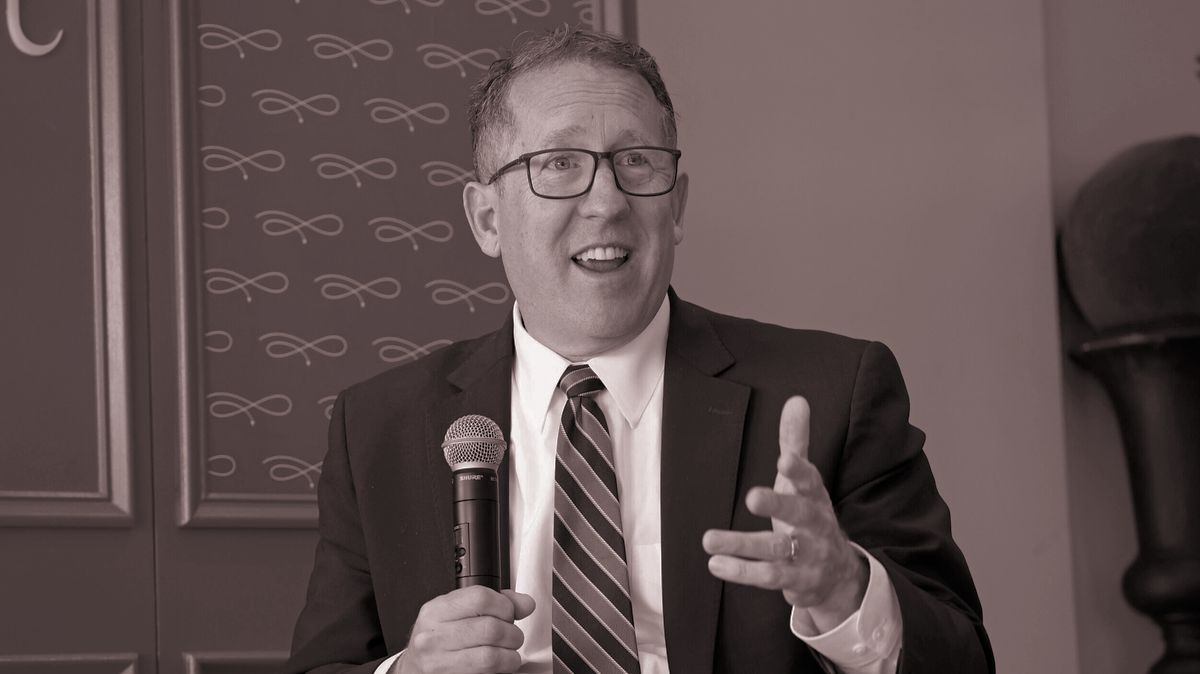
In today’s issue, I bring you my conversation with Rep. Adrian Smith, the Nebraska Republican who chairs the Ways and Means Trade subcommittee. We spoke at the latest Puck Power Breakfast, hosted by the American Chemistry Council. Smith is a pro-trade, anti-tariff Republican from a major agricultural-export state now scrambling to absorb the shock of President Trump’s tariffs. We discussed all that, of course, plus the gas tax,
Nebraska’s “blue dot,” and more. I also have new reporting on where Democrats stand on the gas tax (you may be surprised…) and new polling on how they’re performing in swing districts.
Also mentioned in this issue: Kristen McDonald Rivet, Gabe Vasquez, Emilia Sykes, Janelle Bynum, Mike Johnson, John Thune, Joe Biden, and more… |
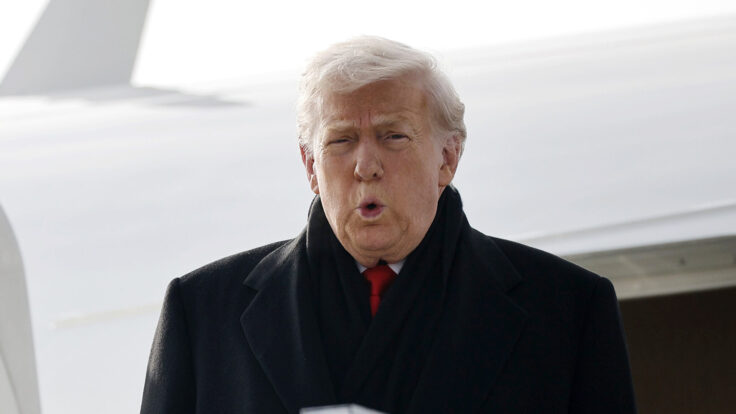
President Trump’s proposal to temporarily suspend the gas tax is stirring debate among
Republicans, who aren’t yet ready to bring it up for a vote. But Democrats from some swing districts are sounding more open to it than expected. During a panel discussion that I moderated for the Effective Governing Coalition this week, several House members from purple and light blue districts came out in favor of the idea as necessary relief for drivers.
Rep. Kristen McDonald Rivet of Michigan, for one, was supportive. When Gabe Vasquez of New Mexico
also embraced the gas tax holiday, Emilia Sykes of Ohio nodded along vigorously. Oregon Rep. Janelle Bynum was more equivocal. “The president is trying to put a Band-Aid on a bullet wound,” Bynum said. “A gallon of gas is up nearly $1.50 in Oregon since the start of the war—suspending the 18-cent-per-gallon gas tax is a fine step, but it falls far short of the relief Oregonians need.”
One House Democrat affiliated with the centrist New Democrat Coalition
told me the public support was surprising. It’s good politics, he acknowledged. Of course, there’s no guarantee that oil companies or gas station owners would pass the savings down to consumers, and the pause would leave a hole in the Highway Trust Fund, which helps pay for bridge and road repairs. According to the Bipartisan Policy Center, a five-month suspension of the gas tax through Election Day would reduce tax revenue by $17 billion, assuming that the diesel tax is also
suspended.
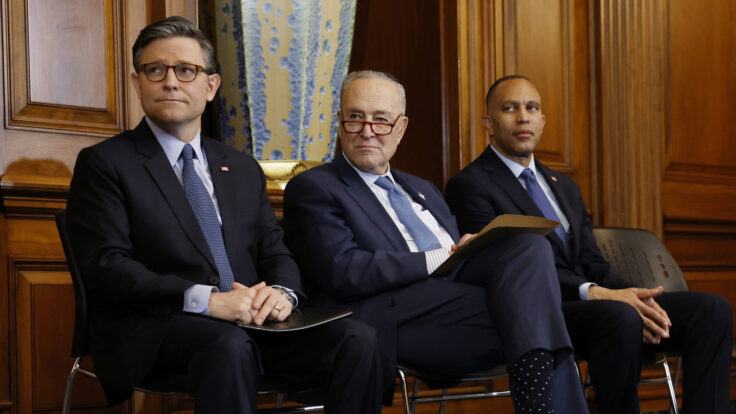
President Biden floated the same idea during the pandemic-era spike in gas prices, only to watch Republicans reject it. Now Republican leadership is being careful not to waylay Trump’s version. Speaker Mike Johnson has called it an “intriguing idea,” while Senate Majority Leader John Thune said he’s “willing … to hear the president’s arguments.” Whether leadership brings it up will likely be driven not by whether they have the
votes—with swing-district Democratic help, they might—but by the preferences of vulnerable Republicans facing reelection. |
|
|
|
A MESSAGE FROM OUR SPONSOR |
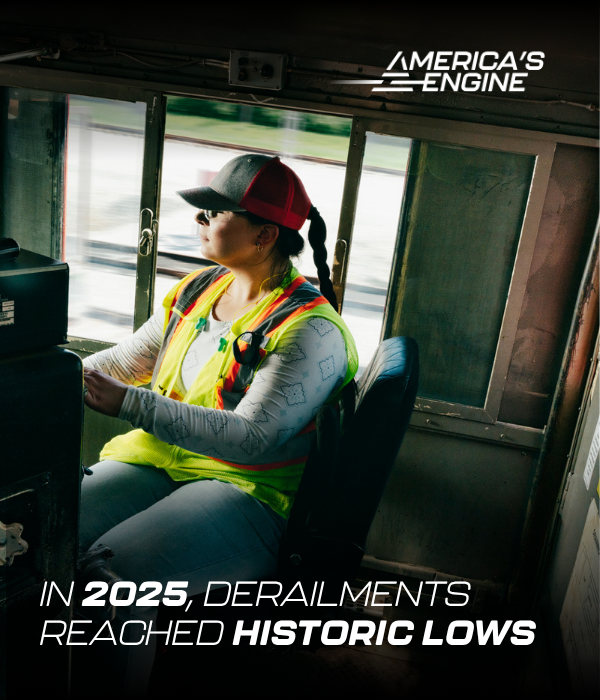
Freight Rail Safely Moves America Forward Safety is the foundation of America’s freight rail network—and 2025 was a record-breaking year. Federal data show the train accident rate fell 14%, with derailments reaching historic lows. These results are thanks to skilled railroaders working alongside advanced technology every day. Across 135,000 miles of track, millions of sensors and high‑speed imaging systems help detect issues early—building a safer, more resilient rail system that keeps America moving
into the future. Learn more at aar.org/freight-rail-safety/ |
|
|
|
A new poll of House battleground districts has good news, and warning signs, for Democrats. The
poll—conducted by Impact Research, shared with the New Democrat Coalition, and then provided to Puck—found Trump 11 points underwater among voters in battleground districts. That’s a shade better than his national approval rating, which is 16 points in the red in the RealClearPolitics
average—a reminder that control of Congress depends less on national mood than the whims of a handful of districts. Notably, the sample skewed Republican by three points.
Among independent and persuadable voters, Trump fared worse, with approval ratings of just 35 and 37 percent, respectively. But Democrats haven’t closed the deal. According to Impact
Research, they hold only a 16-point edge among independent likely voters, while 70 percent of independent voters remain undecided. That leaves a huge opportunity for Democrats to capture those voters, or turn them away. Overall, Democrats lead by just two points among likely voters in battleground districts, well within the poll’s 3.1-point margin of error. |
A dark-money political group called Lead Left
reported spending $175,000 in Texas’s 35th congressional district, a newly gerrymandered seat designed to displace Democratic Rep. Greg Casar. The funding behind Lead Left remains unclear, but Democrats suspect the group is a Republican effort aimed at propping up Democrat Maureen Galindo, a sex therapist and housing activist known to have
begun a sentence with, “All of the Jews who own Hollywood…,” as The New York Times’s Michelle Goldberg noted this week. Lead Left has also surfaced in Pennsylvania’s 7th district on behalf of Lamont McClure, widely viewed as the
weakest Democrat in a crowded primary.
There’s nothing new about dark-money groups trying to boost the weakest opposing candidate to primary victory ahead of a general election. What’s striking here is the possibility that a Republican-linked group is meddling in a district that was freshly redrawn to guarantee a Republican victory. Apparently, even aggressive gerrymandering no longer counts as a sure thing.
Now, time for Adrian Smith… |
|
|
|
Congressman Adrian Smith, one of three Republicans representing all of Nebraska, offers his
candid thoughts on Trump’s soybean diplomacy, the tariff backlash, his beef with Canada, the party’s “affordability” balancing act, and more. |
|
|
|
Somewhat awkwardly for this political moment, Rep. Adrian Smith is no fan of tariffs. His
very Republican district covers nearly the entirety of Nebraska, a rural state with more cattle than people and an economy deeply tied to agricultural exports. So when I sat down with the congressman at our latest Puck Power Breakfast, he tried to navigate one of the trickier balancing acts in contemporary Republican politics, being careful not to be too critical of President Trump while acknowledging tariffs’ downward
impact on his district’s farmers and ranchers.
Smith also expressed cautious optimism that Trump will reach a deal with Chinese President Xi Jinping in Beijing this week, and that the U.S.-Mexico-Canada trade agreement—up for review in July—will be renewed, provided Canada stops behaving badly. But he sounded skeptical of Trump’s proposal for suspending the gas tax through Election Day, saying he worries about “unintended consequences.” |
|
|
|
A MESSAGE FROM OUR SPONSOR |
Freight rail is investing in America’s future
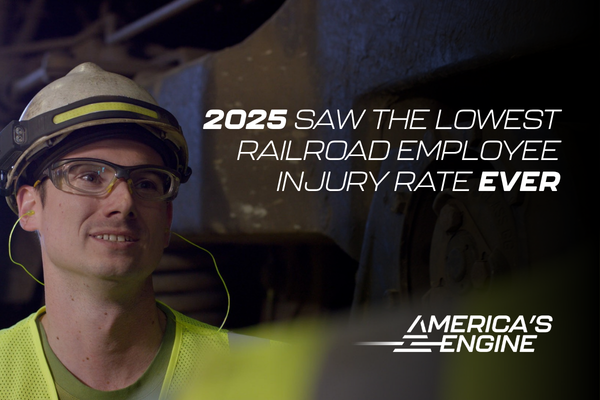
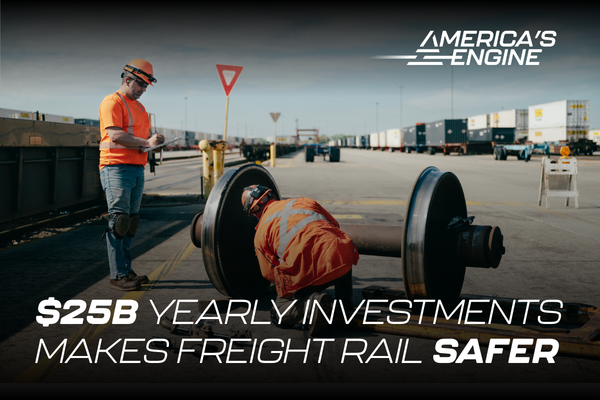
America’s Class I railroads invest $25 billion each year to strengthen the national rail network—driving historic safety gains. In 2025, equipment‑ and track‑caused accidents reached record lows, human‑factor incidents dropped nearly 20% year-over-year, and employee injury rates hit an all‑time low. Freight
rail's private investments upgrade critical infrastructure, expand workforce training, and accelerate safety innovations. From deploying advanced technologies and securing physical and digital networks to supporting first responders and local partners, freight rail is building a safer, faster, and more resilient supply chain. Learn more at aar.org/freight-rail-safety/ |
|
|
|
Rep. Smith joined me in Washington on Nebraska’s primary day—he told me he’d voted there before flying back
to D.C. (He won his own primary.) So we also dug into a very Nebraskan political quirk: the state’s “blue dot” Electoral College system, which apportions votes by congressional district rather than winner-takes-all. That became a central issue in the Democratic primary to replace his retiring G.O.P. compatriot, Rep. Don Bacon, who currently represents the dot. Our conversation has been edited for clarity and length. |
Leigh Ann Caldwell: The president is headed to
China to sit down with President Xi Jinping. Trade is going to be a huge component of these conversations. What do you want to come out of this meeting?
Rep. Adrian Smith: I like to point out that with trade, there’s no such thing as marking time. You are moving forward or you’re losing ground. I think we’ve been moving forward. I’m not a fan of tariffs, but we’ve seen a lot of concessions that other countries have been willing to make.
That’s pretty good moving forward.
What are your expectations? Are you looking for a new agreement with China, especially on agriculture?
I would certainly appreciate some announcements that they’ll buy more of our agricultural products. Of course, that’s only part of the issue. Getting them to follow through on all of that, as we’ve seen, can be a separate issue. [There was an] announcement a few months ago that China was buying
more soybeans—that took us back to about half of where we were before. So there’s a lot of room for improvement there. Fact of the matter is, they need our product, and we want to make sure it’s available on a regular basis, and build some prices, and hopefully bring some prosperity here to the home front. That’s been especially difficult in ag country.
What has the practical, real-life impact been for your ag producers?
Low crop
prices, commodity prices—it’s been painful for the row crops, especially in grain, soybeans, and corn, which obviously my constituents produce a lot of. That’s why, writ large, we want to grow markets for our products. China being a big consumer, we want to be able to have them as a customer but also make sure that they make good on their commitments.
Do you think the administration is effectively balancing its tariff trade policy with the affordability issues those same policies
have created for consumers?
We saw the shift away from tariffs, say, on coffee, cocoa, and bananas—not exactly domestically produced products. There were sensitivities there that led to the decision of, Let’s make sure we don’t drive up the cost of food here, especially when we don’t have some of these products here domestically. So there are supply chains writ large that I hope get more attention moving forward. And I think they
are.
American agriculture has done very well under USMCA [the U.S.-Mexico-Canada Agreement, which replaced NAFTA]. It was a huge achievement of President Trump’s first term—a Trump priority in the middle of a Pelosi speakership—and it got done. And if that can get done, we can do a lot of things.
But have the tariffs contributed to the affordability challenges facing Americans?
I think it’s a mixed bag.
Clearly there are various dynamics with various products and different countries. The reason I don’t like tariffs is the risk of adding costs. There are some different dynamics in different places, so we want to keep a close watch on all of that to make sure we’re not putting a huge new burden on consumers along the way. |
The USMCA review is coming up in July. Do you think there will be a 16-year renewal, or is it going
to limp along for another year?
We’ve seen quite a dichotomy between Mexico and Canada and their posture. Canada’s responses to President Trump—they would be well served to head in a different direction than what they’ve been doing. Mexico has been very engaging. For USMCA to really move forward in a positive way, all three countries need to engage. We can get there. That’s certainly my hope, but it’s going to require some diligence. |
|
|
|
Should the president offer any concessions to Canada and
Mexico?
When you look at Canada and Mexico’s access to our markets, especially compared to our access to Canadian markets—whether it’s dairy, wine, some other things—there’s room for Canada to grant us more access to their markets. Over time, we’ve seen Canada be very protectionist. With negotiations, the president has proven he wants to make a deal, and he’s willing to look at the push and pull across the board.
The president is
floating a gas tax holiday that Congress could vote on. Would you support it?
I would want to see the details. Disrupting the revenue that we know is important for maintaining and building roads—we want to be mindful of that, because there could be a significant effect. And I would want to make sure that consumers would actually feel some relief. I worry about unintended consequences, or efforts to do one thing and sometimes the opposite occurs.
I want to study that one a little further.
Republicans during the Biden administration were not fans of a gas tax holiday.
I would offer the same response. There are different dynamics in the world markets today versus a previous time. I like to remind my constituents that we shouldn’t be afraid to disagree and have a conversation. After all, our country was founded on disagreement, and many of our founders—not only did they
disagree, some of them didn’t like each other, and yet they still came together and delivered us a pretty good work product that we draw on every day.
Should the president have come to Congress and asked to legislate tariffs, rather than do it through the executive, which was ultimately overturned?
Statutorily, there’s some room for the president to act with executive authority. Obviously, he went further than what the court said
he could do. For durable policy that lasts beyond the president’s term of office, Congress will need to vote. Other countries have also suggested that for them to give us their best offer, Congress would need to vote on it. There are a lot of good reasons, in addition to constitutional issues, that Congress would vote on this. It’s not a snapping of the fingers. It’s learning what many of these concessions are from other countries, which we’ve been finding out about over the past year and a
half.
Do you think Congress will vote on any sort of tariffs moving forward during this administration?
My own personal speculation is that there will be votes. I’ve been communicating, Hey, let’s take some of the wins that we know have already been generated, and let’s codify things moving forward. That would send a great message overall. On tax, we were able to accommodate many of the president’s priorities—it turns out
that no tax on overtime has been generating some good results, rewarding work, and workers out there get some relief.
There was a contentious Democratic primary in Nebraska to replace Congressman Don Bacon in the Omaha region. Nebraska is one of two states that awards Electoral College votes by congressional district in presidential elections, rather than winner-takes-all. That Omaha district is known as the “blue dot” in presidential years for that reason. Do you think that blue
dot is in jeopardy, and should the legislature get rid of it and do winner-takes-all?
I think all states should be the same, one way or the other—either everyone [awards electoral votes] by congressional district, or no one. Nebraska has chosen to be a little bit different. It hasn’t delivered too much in terms of presidential candidates paying more attention to that Omaha district. The argument can be made that it actually reduces the priority
of Nebraska’s five electoral votes. I do have a bias on that. |
|
|
|
Join Emmy Award-winning journalist Peter Hamby, along with the team of expert journalists at Puck, as they let you in on the
conversations insiders are having across the four corners of power in America: Wall Street, Washington, Silicon Valley, and Hollywood. Presented in partnership with Audacy, new episodes publish daily, Monday through Friday. |
|
|
|
Unique and privileged insight into the private conversations taking place inside boardrooms and corner offices up and down Wall
Street, relayed by best-selling author, journalist, and former M&A senior banker William D. Cohan. |
|
|
|
Need help? Review our
FAQ page or contact us for assistance. For brand partnerships, email ads@puck.news.
You received this email because you signed up to receive emails from Puck, or as part of your Puck account associated with {{customer.email}}. To stop receiving this newsletter and/or manage all your email preferences, click here.
|
Puck is published by Heat Media LLC. 107 Greenwich St., New York, NY 10006 |
|
|
|
|