{{ 'now' | timezone: 'America/New_York' | date: '%b %d, %Y' }} |
|
|
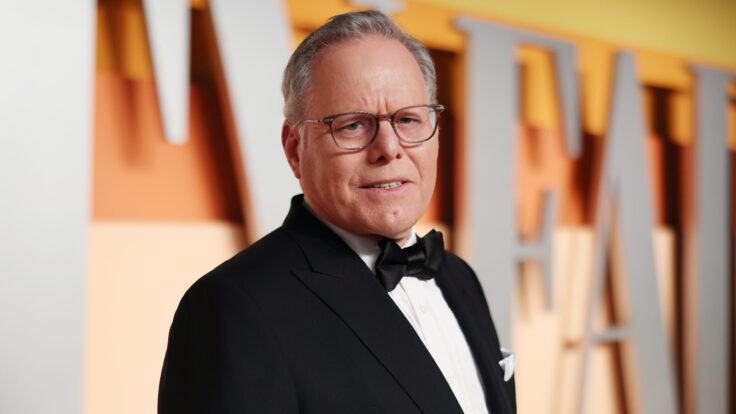
Welcome to Dry Powder. I’m Bill Cohan. While we wait to see whether David
Zaslav has been able to gin up a legitimate auction for Warner Bros. Discovery—“preliminary” bids are due tomorrow—I want to return to one of my favorite topics: whether we’re heading for another correction in the financial markets, and whether history offers us any guidance. Naturally, there is rampant conversation about this topic across the industry right now.
But first… |
-
Our BTC, our selves: A quick update on the goings on at Michael Saylor’s Strategy Inc., formerly known as Microstrategy. It’s been a rough three months: Saylor now owns nearly 650,000 Bitcoin, up nearly 50,000 BTC since last we checked in with him, in July. On November 17, he purchased another 8,178 BTC at a total price of $836 million, or
an average price of $102,225 per coin. His Bitcoin is now worth $60.2 billion while the market capitalization of Strategy is just $59.2 billion—and the stock is down 50 percent in the last six months and 43 percent in the last three. BTC itself is down 14 percent in the past month. That’s not the scenario Saylor was banking on, obviously. He thought he was
creating a Bitcoin flywheel that would continue to value Strategy well in excess of the value of his Bitcoin.
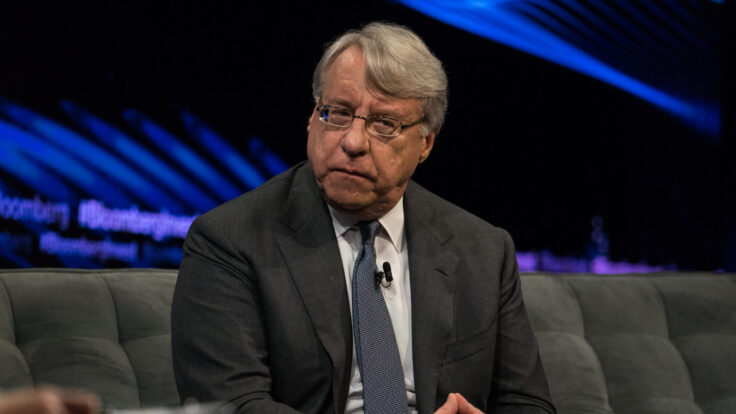
You will recall that Jim Chanos thought differently. He announced his short position in the company back in May, with the premise that Strategy’s market cap had risen way too far beyond the value of Saylor’s BTC holdings. In July, when I wrote about Chanos’s move, Strategy’s enterprise value was nearly $140 billion. Now it’s $75 billion. And Chanos has closed out
his short position—at a tasty profit, I’m sure.
After all, he started shorting Strategy when the ratio of its enterprise value to the value of its Bitcoin was around 2.3x. Now it’s fallen to 1.25x. So Chanos wins this round, but will Saylor win the war? He’s still predicting BTC will reach $13 million per coin by 2045. He’s got 20 years and $12.9 million of value to go. - A quick word on… Larry Summers: I have to confess that I did not have
Larry’s shocking correspondence with Jeffrey Epstein on my bingo card. I wrote my very first Vanity Fair profile, way back in 2009, on Larry when he was Barack Obama’s first director of the National Economic Council. I visited him twice at the White House, and we’ve had many, many conversations over the years about the Federal Reserve, the economy, and Wall Street. This is not the ending he envisioned, I am certain. (See the excellent
reporting in The Harvard Crimson for the full story.)
Larry is now “pulling back.” He stepped down from the board of OpenAI and is probably going to hunker down for a while. He has also canceled what was going to be, today, another engaging appearance at the Economic Club of New York, with Glenn Hubbard.
One of my longtime correspondents summed up the situation well: “Pretty crazy that someone so smart can be so stupid.”
|
And finally, a little local news for many of you from my partner Ian Krietzberg… |
|
|

| Ian Krietzberg
|
|
- A.I. takes on the
Upper East Side: On Monday, Leading the Future, a super PAC loaded with $100 million in funding from the likes of Andreessen Horowitz and OpenAI executive Greg Brockman, announced a multimillion-dollar campaign against New York State Assemblyman Alex Bores, who is running to succeed Rep. Jerry Nadler as congressman for most of the Upper East Side, Upper West Side, and Midtown Manhattan. (His competition in the crowded Democratic primary
field includes John F. Kennedy’s grandson, social media gadfly Jack Schlossberg.) Bores, of course, became persona non grata in Silicon Valley after authoring New York’s newly passed Responsible A.I. Safety and Education Act—a bill that Leading the Future described as “exactly the type of ideological and politically motivated
legislation that would handcuff not only New York’s, but the entire country’s, ability to lead on A.I. jobs and innovation.”
When I gave Bores a call, he said he wasn’t surprised to be targeted. “They were signaling for a while that they wanted to spend a lot of money against anyone who wanted to put forward reasonable A.I. regulation,” he told me, noting that he worked with all the major A.I. labs to incorporate their feedback on the bill. Alas, Bores said, a subset of the tech industry
just “doesn’t believe in the legitimacy of regulation, period.”
|
|
|
Now, on to the main event… |
|
|
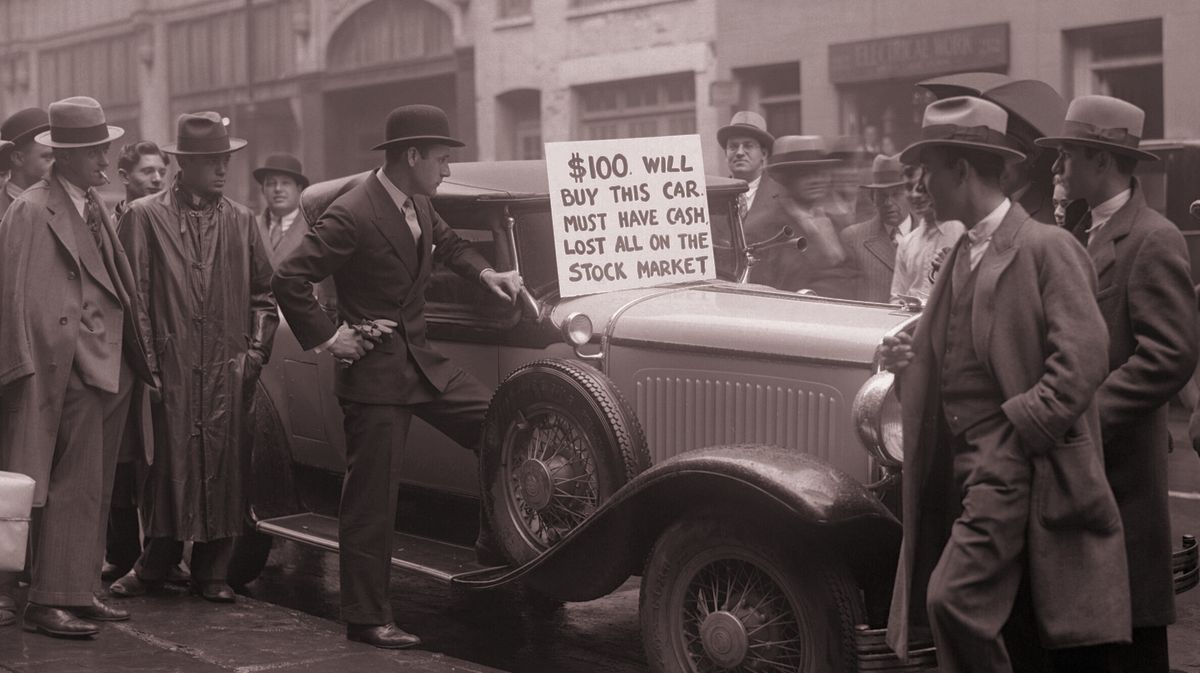
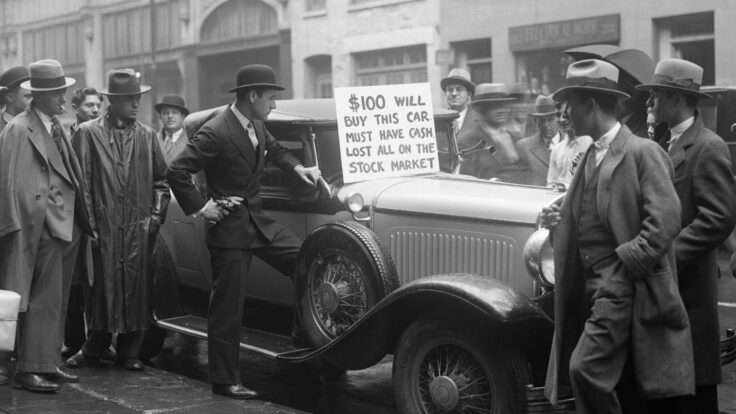
Financial history doesn’t repeat itself, but it does often rhyme. Amid a speculative frenzy,
deregulation, trade wars, and a handful of megacaps propping up the markets, some of Wall Street’s brightest minds wonder whether 2026 might resemble 1929. |
|
|
No one rings a bell at the top of the market and declares that it’s been a nice run, so it’s time to get out.
But there’s no denying that the stock market is very frothy these days. (As usual, this is not investment advice.) Both the narrow equity market index (the Dow Jones Industrial Average) and the broader indices (the Nasdaq and the S&P 500) are at, or near, their all-time highs, and have been steadily climbing week after week, month after month, despite the slight pullback this week. And this is not just a Trump II phenomenon, as the president likes to claim. This era of
irrational exuberance began at least five years ago, when the Federal Reserve stepped into the Covid fray and resumed its policies of quantitative easing, which boosted the bond market and restored confidence in the stock market. (And if you take a longer view, it’s been going on since the aftermath of the 2008 financial crisis, and maybe even as far back as 1982, when the equity markets really took off after decades of stagnation.) Since March 2020—when Tom Hanks got Covid
while filming in Australia and the world shut down—the D.J.I.A. is up 63 percent. During the same period, the Nasdaq is up 165 percent. The S&P 500 is up 126 percent.
There has also been a significant rally in the market for the riskiest high-yield bonds, or so-called junk bonds. During the aftermath of Liberation Day, in April, the yield on the junk bond index spiked to 8.5 percent. It’s now nearly 200 basis points lower, at 6.8 percent. In other words, we’re back to being very
comfortable with taking risks.
But there have been plenty of warning signs that trouble is ahead, as I’ve been noting recently—including talk of private credit cockroaches from Jamie Dimon, and the even more
evocative cockroaches in the coal mine from Howard Marks. On a recent episode of Bloomberg’s Odd Lots podcast, DoubleLine Capital founder and bond king Jeffrey Gundlach warned of growing risks in both the debt and equity markets. He suggested that the $1.7 trillion private credit market, which has been
ablaze for years now, is rife with “garbage lending.” He then offered a comment that aligned with my own recent reporting. “The next big crisis in the financial markets is going to be private credit,” Gundlach said. “It has the same trappings as subprime mortgage repackaging had back in 2006.”
As for the equity markets, Gundlach didn’t mince words there, either. “The market is incredibly speculative, and speculative markets always go to insanely high levels,” he warned, citing in
particular his concerns about the seemingly out-of-control speculation in both A.I. and its attendant data centers. He said he doesn’t see many good investment options and is shifting into cash, taking a page from the legendary Warren Buffett’s playbook. Berkshire Hathaway now has nearly $400 billion socked away in cash and short-term investments—a record—just as Buffett is stepping back from his company and turning it over to his chosen successor, Greg
Abel. (What Abel should do with all that cash will be a topic for another day.)
So, what to do? Keep riding the wave or hunker down in the relative safety of cash, Treasuries, gold, or, gulp, maybe even Bitcoin? (Alas, the latter has had a rough month, falling 15 percent, to around $91,000 per coin.) Fortunately, as I discovered in reading our friend Andrew Ross Sorkin’s excellent new book, 1929, this is not a new
debate. So, return with me, if you will, to a similar discussion about the risks, real or imagined, that surrounded the stock market back in September 1929. |
On the concerned side was Roger Babson, whom The New York
Times described back then as a “statistician.” He was more than that, of course—a graduate of M.I.T., an economist, and an entrepreneur. He founded several colleges, including the eponymous Babson College, outside of Boston, that is renowned for graduating leading entrepreneurs.
Babson had grown increasingly worried about the growing stock market bubble in the years leading up to his September 5, 1929, speech at the 16th annual National Business Conference, in Wellesley. “I repeat
what I said at this time last year and the year before,” he said, “that sooner or later a crash is coming which will take in the leading stocks and cause a decline of from 60 to 80 points in the Dow Jones Barometer.” He continued: “Fair weather cannot always continue. The economic cycle is in progress today, as it was in the past. The Federal Reserve System has put the banks in a strong position, but it has not changed human nature. More people are borrowing and speculating today than ever in
our history. Sooner or later a crash is coming, and it may be terrific. Wise are those investors who now get out of debt and reef their sails.” Shades of Gundlach?
Notably, in a parallel to today’s Magnificent Seven (or 10), Babson highlighted that the D.J.I.A. was being driven by the performance of a mere 40 or so of the 1,200 stocks listed on the New York Stock Exchange. If the performance of those 40 stocks was removed from the index, he argued, “we find that about one-half of the
remaining stocks have declined during the past year. This means that a great many people have lost money as well as made money.”
He ended the speech on a particularly grim note: “Some day the time is coming when the market will begin to slide off, sellers will exceed buyers, and paper profits will begin to disappear. Then there will immediately be a stampede to save what paper profits then exist. Investment trusts will first begin to sell. They have so broadly advertised their paper
profits that they will be very anxious to cash in on them.” Once the selling starts, he hypothesized, “there may be a stampede for selling which will exceed anything that the stock exchange has ever witnessed.”
Did the audience heed Babson’s admonition? Of course not. Soon after his speech at Wellesley, the Yale economist Irving Fisher sought to refute Babson’s prediction of a near-term stock market crash. “Stock prices are not too high and Wall Street
will not experience anything in the nature of a crash,” he averred.
Then Fisher launched into a shtick that now sounds like a precursor of the Elon Musk worldview. “We are living in an age of increasing prosperity and consequent increasing earning power of corporations and individuals,” he declared. “This is due in large measure to mass production and inventions such as the world never before has witnessed. The rapidity with which worthwhile inventions are brought out is
the result of the tremendous research laboratories of our great industrial concerns. Application of these inventions to industry means greatly enhanced earning power. This is a new and tremendously powerful factor in the industrial world and one which never before existed.” Stock dividends were increasing, he said, because corporate earnings were growing “rapidly,” and stocks, he predicted, would become no more risky than high-grade bonds. Imagine that!
Anyway, we all know who won this
little debate. A month later, the markets cratered, ushering in the Great Depression and a period of economic hardship (exacerbated by tariffs, of course, and the Fed’s tight money policies) that lasted from 1929 well into World War II. I don’t know if we’re headed for something like that again. But I do know that financial crises, on average, occur once every 20 years. And the last one was 17 years ago. |
I also know that Sorkin has been expressing concern when asked about the current parallels to 1929. So let’s
give him nearly the last word, from the literal last page of his book. There, he wrote that, ultimately, the “story” of 1929 was about human nature: “No matter how many warnings are issued or how many laws are written, people will find new ways to believe that the good times can last forever. They will dress up hope as certainty. And in that collective fever, humanity will again and again lose its head. The enduring lesson is not that booms can be prevented or that busts can be fully averted. It
is that we need to remember how easily we forget. The antidote to irrational exuberance is not regulation by itself, nor skepticism, but humility—the humility to know that no system is foolproof, no market fully rational, and no generation exempt. The greater the heights of our certainty, the longer and harder we fall.” I couldn’t agree with him more.
We’re living in an era when all the guardrails have come down. When was the last time you heard the words “Securities and Exchange
Commission” or “Commodity Futures Trading Commission” in connection with any real enforcement? The regulators have tuned out, and animal spirits are running wild. And no one complains (even if they object or are seriously worried) because, after all, who doesn’t love a party? And who dares question the ultimate authority in the White House for fear of him turning the power of the federal government on them? If you doubt me, just take a look at the
guest list for last night’s “formal dinner” honoring M.B.S.
So the markets just carry on unabated, unchecked, with the Mag 7-10 pushing higher and higher, as if somehow a $4.6 trillion market capitalization for Nvidia or a $1.3 trillion valuation for Tesla were justified by their fundamentals. Again, not investment advice, but I can’t help but think we’re closer to Roger Babson’s prophecy than Irving Fisher’s. |
|
|
Join Puck’s chief political columnist, John Heilemann, as he roams the corridors of power and influence in America on this
twice-weekly interview show, taking you beyond the headlines with the people who shape our culture: icons and up-and-comers, incumbents and insurgents, moguls and machers in the overlapping worlds of politics, entertainment, tech, business, sports, media, and beyond. The conversations are rich and revealing, unrehearsed and unexpected… and reliably impolitic. A Puck-Audacy joint, new episodes drop every Wednesday and Friday. |
|
|
Puck’s daily political newsletter from Washington on what’s really happening in this town, from the White House to the Pentagon
to Capitol Hill, K Street, and the campaign trail. |
|
|
Need help? Review our
FAQ page or contact us for assistance. For brand partnerships, email ads@puck.news.
You received this email because you signed up to receive emails from Puck, or as part of your Puck account associated with {{customer.email}}. To stop receiving this newsletter and/or manage all your email preferences, click here. |
Puck is published by Heat Media LLC. 107 Greenwich St., New York, NY 10006 |
|
|
|