{{ 'now' | timezone: 'America/New_York' | date: '%b %d, %Y' }} |
|
|
Happy Sunday and welcome to The Best & The Brightest. I’m Leigh Ann
Caldwell.
I’m back in Washington after spending a few days in South Carolina, at the beach, and a few more showing my nephew, a rising senior, some colleges. I’ll be back tomorrow with an update from the nation’s capital. In the meantime, Julia Ioffe takes the lead today with notes on the aftermath of the Trump–Putin summit in Anchorage last week. Plus, below the fold, we’re sharing her recent conversation with Puck’s brilliant
A.I. correspondent, Ian Krietzberg, about the administration’s push to introduce A.I. tools across federal agencies, and the inevitable implications for both national security and the U.S. taxpayer.
Here’s Julia… |
|
|

| Julia Ioffe
|
|
- Putin’s poison pills:
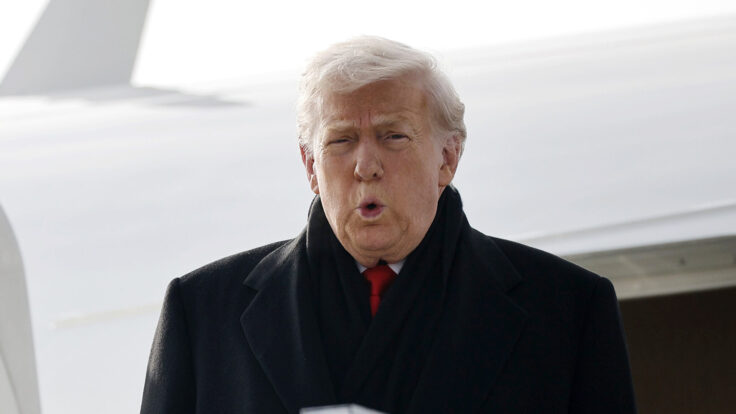
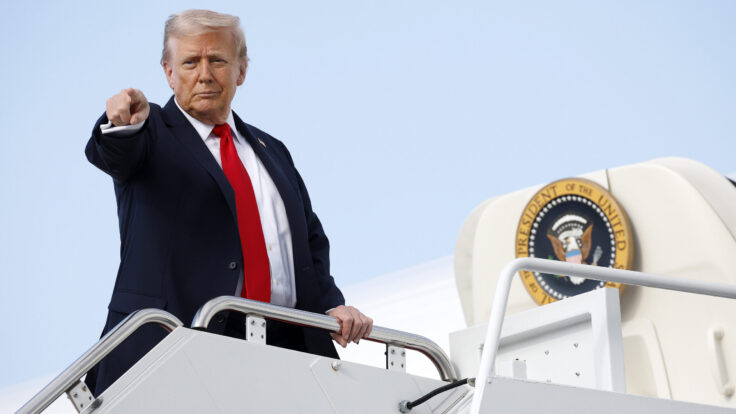
It’s been two days since Donald Trump clapped for the I.C.C.-indicted Vladimir Putin as he strode down a red carpet, rolled out by uniformed American troops on their knees in front of the Russian presidential jet—images that played on a loop across Kremlin media. And yet, that was hardly the only consequence of Trump’s poorly
choreographed summit in Anchorage.
By Trump’s own admission, one of the first demands he dropped was a ceasefire, which would have given Ukraine badly needed time to breathe and fulfilled First Lady Melania Trump’s desire
for Ukrainian children to stop being murdered, at least temporarily. On the flight to Alaska, Trump had told Fox News he’d walk if he didn’t get his way, but apparently he wanted a deal so badly he changed his mind. He also conceded that Ukraine would have to relinquish territory to Russia, including in the heavily fortified northern Donbas that Russia has been unable to secure militarily,
despite actively fighting for it since 2014.
That part of Russia’s reported demands was not a surprise, nor was Putin’s reported insistence that Ukraine formally drop its NATO bid, and
that any security guarantees Ukraine does receive should involve Russian allies China and Belarus in addition to Ukraine’s Western allies. (You can imagine how well China and Belarus will guarantee Ukraine’s security, and in whose favor they’d adjudicate purported violations of the peace.) He also reportedly demanded that the U.S. recognize Crimea as part of Russia and lift its sanctions.
These are poison pills, and Putin knows that. That’s why, at the press conference following the
summit, he said that he hoped Ukraine and the Europeans wouldn’t scuttle with their “intrigues” the “understanding” he’d purportedly reached with Trump. Zelensky is coming to Washington to meet with Trump on Monday. He will be rolling at least six deep, backed by Keir Starmer, Emmanuel Macron,
Ursula von der Leyen, Alexander Stubb, and Friedrich Merz—that is, the very Europeans whose “intrigues” would include any reasonable attempts to bring Trump back into alignment with America’s actual allies.
Prediction: The Monday meeting will result in Trump waddling back over to their side, at least partially; indeed, the very reason for the get-together is that—as the whole world knows by now—the last person to talk to Trump wins. Trump
will try his utmost to manifest a Putin-Zelensky-Trump trilateral on Friday, as is being reported, but will likely be frustrated on that front, too, putting his Nobel Peace Prize just out of reach.
|
|
|
And now, Julia’s chat with Ian… |
|
|
A candid conversation about what it means to potentially introduce novel A.I. tools across
the federal government, what’s in it for the U.S. taxpayer, and, of course, the long game for Sam Altman and OpenAI. |
|
|
|
| Julia Ioffe
|

| Ian Krietzberg
|
|
|
|
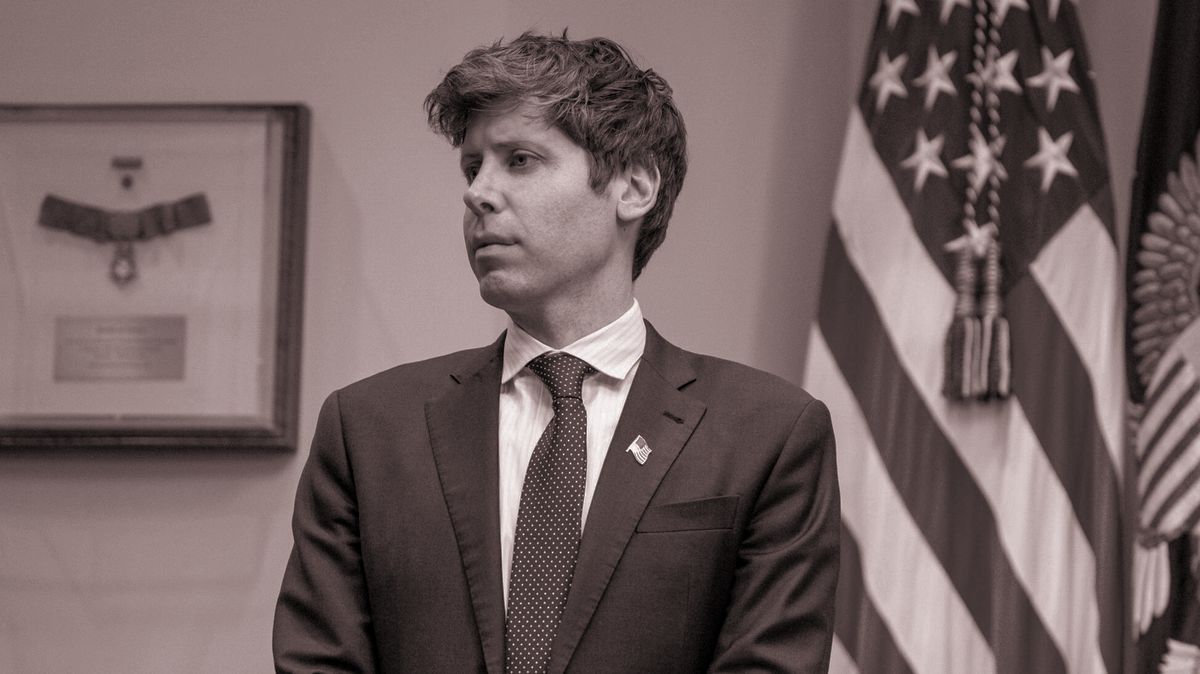
It’s been a busy summer for Sam Altman in Washington—first with the launch of the OpenAI for
Government initiative in June, and now a new partnership with the General Services Administration to get an enterprise version of ChatGPT into the hands of federal workers for essentially no cost (at least for the first year). As for what exactly these deals entail, and what they mean for the U.S. taxpayer, well, that’s all a bit vague—something
to do with “revolutionizing employee and citizen experiences” and “reimagining how we deliver mission-critical services,” per a statement from the acting G.S.A. administrator. But as the Russian saying goes, the only free cheese is in a mousetrap, so perhaps the more pertinent question is: What’s in it for OpenAI?
Meanwhile, these not-terribly-secure tools are being introduced into a government that’s already regularly embarrassed by data breaches, whether through its contracted Big Tech
partners like Microsoft, questionable Signal chats, or just the occasional sensitive documents lying around in the hotel printer. (We are not, despite claims to the contrary,
“currently clean on OPSEC.”) If ChatGPT winds up shepherding your taxes through a freshly depopulated I.R.S., I’m sure the Russians and Chinese would be very interested in the data.
For more on the Trump administration’s adventures with A.I., I sat down with my colleague Ian Krietzberg
on The Powers That Be this week for what I admit was a very frightening conversation. The following has been edited and condensed for clarity, or you can listen to the whole thing here. |
Julia Ioffe: I wanted to talk to you about this news that the U.S. General
Services Administration is basically getting ChatGPT for free. Am I reading that right?
Ian Krietzberg: That might be a slight exaggeration. Last week, the G.S.A. announced the addition of several chatbots from the leading A.I. companies—Claude from Anthropic, Gemini from Google, and, of course, ChatGPT from OpenAI—to its Multiple Award Schedule, which enables government agencies across the country to essentially purchase these
technologies and tools. Shortly after they announced that addition, OpenAI said that they’re offering access to ChatGPT Enterprise for $1 per agency for the first year. I don’t know what happens after the first year—presumably some sort of discount will remain in place—but the dollar-a-year is where the “basically free” is coming in.
Even if they charge full price, OpenAI is still operating at a loss. So while they’re now operating at a more significant loss, it’s not like it’s
the difference between profitability or not. These tools are enormously expensive, so what you have is an apparent gesture of goodwill. They want to develop a muscle memory, especially among government agencies. They want to become key to the operation, and for them, it’s worth the cost.
How else do you think Sam Altman is justifying this expense, given that OpenAI is still not profitable?
Sam Altman was recently on
CNBC saying that there are ways for them to become profitable sooner than they’d expected. But they’re not going to do that, because it’s more important to keep investing in chips (more money for Nvidia), which is why they keep operating at massive losses. But getting people to actually use these things is where the payoff is for them: A) It’s a lot of data access, and data is gold here; and B) what they’re trying to do is reshape, to a degree, the internet and communications
technologies.
Think about how Google shaped the internet in the first place. There’s muscle memory around Google search. “Google” became a verb. And even amid this current shake-up, and concerns about privacy and A.I. search engines, Google search still dominates the search market. When people think internet, they think Google. In order for OpenAI to accomplish what they would like to accomplish, they need people to think about them the same way—and when it comes to the
government side of adoption, that’s an even more important game.
There’s certainly a close relationship between some of these leading A.I. companies and the Trump administration. And the way that regulation, or deregulation, around A.I. is phrased and pushed is like, It’s great. It’s perfect for all your use cases. Keep not regulating us. We’ll give it to you for massive discounts. They’re building this ecosystem where they want to be the go-to.
Sam Altman has
really done an interesting pivot. He was quite pro–Democratic Party. Then he had this very public so-called soul-searching, where he looked into his own soul and saw Donald Trump. From what I’ve heard, he’s just really good at playing this game. Do you think this is going to work, or is this going to be a misstep for him?
I guess it depends. In the current political environment, assuming things go well, I don’t think this hurts. But political
environments and administrations change. And sentiment about how A.I. should be approached also changes. We saw that with the jump from Biden to Trump, and what we’re seeing in the G.S.A.—making these things available is in line with Trump’s A.I. Action Plan, which is a heavy push for adoption. The problem is that these tools are not robust or reliable. They fail in unpredictable, unexpected ways, and this happens kind of regularly. Model output is biased based on its training
data, and we often don’t have insight into that data. So things could go poorly when government agencies adopt these tools uncritically. |
Problem-Solving
in Reverse
|
What do the U.S. government and, ultimately, we as the taxpayers and citizens of this country get out
of this? Are we going to lose even more of our critical, very sensitive data to, for example, hacker groups or nation-state actors who are competitors?
The security side is a real area of concern for national security and cybersecurity researchers, because what organizations are familiar with, when they think about I.T. and software, is software as it existed before generative A.I. The assumption about what’s safe to use and what isn’t is based
on an older model. So what we’re talking about now with generative A.I., beyond these other issues of reliability, bias, and transparency, is the concern around security. Agencies and governments shouldn’t look at the fact that a model is on an approved list of vendors and be like, Great, I can start using it.
Every agency functions differently. Every agency has different needs and security requirements, and inputting certain types of data into these systems could be very risky.
For instance, it’s not clear how they’re setting this up to mitigate the risk of data leaks or prompt injection attacks. The cybersecurity implications of widespread A.I. deployment are vast, and it’s not easy to use them securely—unless you’re thinking really hard about, what problem am I, the agency, attempting to solve? Where is this fitting into it? How is this protected? What data is going in, and what data is coming out? Is this local? Is this in the cloud? How secure is the
cloud?
What are some uses of ChatGPT that would work for the government?
I really hope that no agency is using ChatGPT for anything. The general use cases thrown out by the G.S.A. were for administrative stuff, which seems like it could be innocuous. They noted streamlining back-office processes. You hear certain words a lot when you talk about use cases for A.I., and “streamline” is one of them. But what would they actually be
streamlining?
All of this stuff is very vague. I feel like if they could be specific, they would be. But they’re not trying to solve specific problems. They’re not going from the problem to a solution. Instead, they’re talking about the potential to “revolutionize employee and citizen experiences.” I’m not sure what that means, but the only ways I can imagine that going are poorly. |
|
|
The industry’s go-to source for unflinching reporting on the trillion-dollar business of artificial intelligence - perhaps the
single most important technology of our time. Ian Krietzberg, the powerhouse journalist behind The Deep View, delivers twice-weekly insights into the latest dealmaking and breakthroughs in A.I., and how the intersecting worlds of finance, entertainment, media, and politics are being transformed in its wake. |
|
|
Join Puck’s chief political columnist, John Heilemann, as he roams the corridors of power and influence in America on this
twice-weekly interview show, taking you beyond the headlines with the people who shape our culture: icons and up-and-comers, incumbents and insurgents, moguls and machers in the overlapping worlds of politics, entertainment, tech, business, sports, media, and beyond. The conversations are rich and revealing, unrehearsed and unexpected… and reliably impolitic. A Puck-Audacy joint, new episodes drop every Wednesday and Friday. |
|
|
Need help? Review our FAQ page or contact us for assistance. For brand partnerships, email ads@puck.news. You received this email because you signed up to receive emails from Puck, or as part of your Puck account associated with {{customer.email}}. To stop receiving this newsletter and/or manage all your email preferences,
click here. |
Puck is published by Heat Media LLC. 107 Greenwich St, New York, NY 10006 |
|
|
|