{{ 'now' | timezone: 'America/New_York' | date: '%b %d, %Y' }}
|
|
|
Hello, and welcome back to The Best & The Brightest, your daily political dispatch. I’m
Julia Ioffe and it’s foreign policy Thursday.
It’s been two weeks since the Trump- Putin summit in Anchorage, and while U.S.-Russia relations are largely unchanged, one very informed source in Moscow offered a little more nuance. “Even though nothing concrete has been achieved, the quality of the communication is now completely different,” this person told me. And that might be underselling it…
In tonight’s issue, a look at whether
the summit has, in fact, forged a new understanding between the Kremlin and the White House—and what that might mean for the prospect of Americans once again doing business in Russia and, of course, the fate of Ukraine.
🎟️ Programming note: A reminder to Puck members that Abby Livingston will host our Puck Live event in D.C. on September 2, from 5 to 8 p.m. ET, presented by the Modern Ag Alliance. She’ll chat with the chair of the House Committee on Agriculture,
Glenn “GT” Thompson, about the latest rumblings around the Capitol. You can RSVP by clicking here.
And up first, here’s Abby with the latest on the Senate fallout from the C.D.C. shake-up…
|
|
|
 |
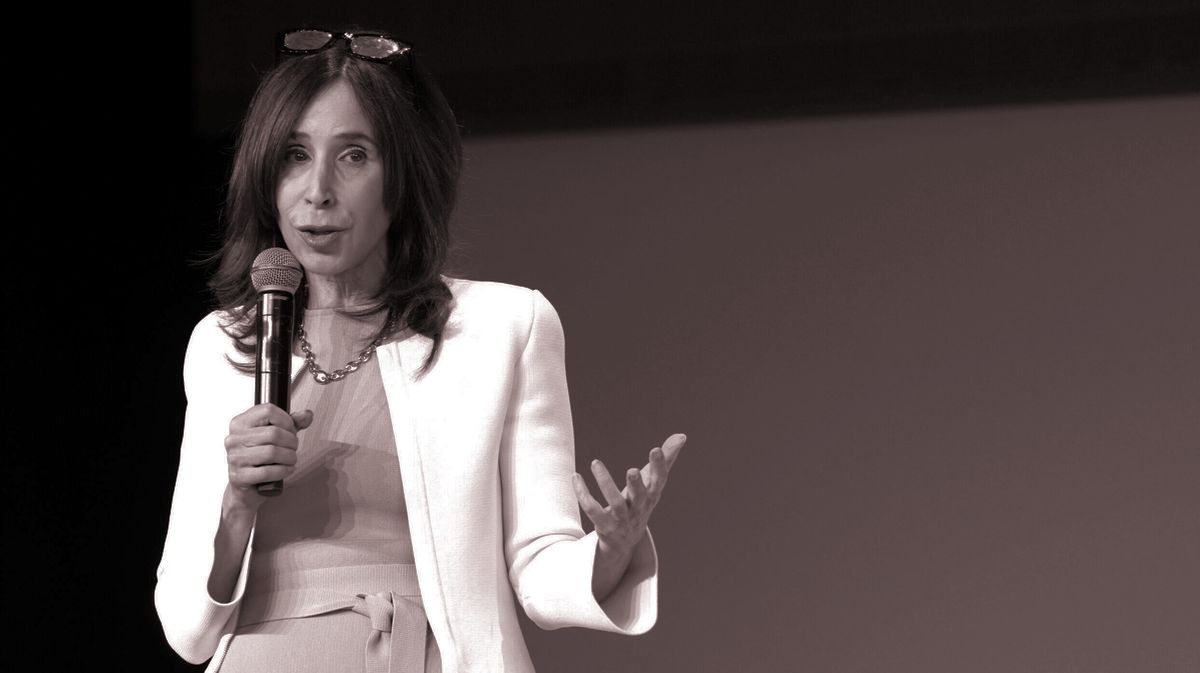
Abby Livingston |
|
- Bedlam at the C.D.C.:
It’s been a whirlwind 24 hours at the nation’s top public health agency, after R.F.K. Jr. announced the firing of Susan Monarez, the C.D.C.’s Trump-appointed and Senate-confirmed director, over Kennedy’s crusade to restrict access to vaccines. Monarez subsequently hired the high-powered lawyers Mark Zaid and Abbe Lowell, who argued that only the president could fire her—which he swiftly did. Meanwhile,
there was a mass exodus of senior leadership at the agency, with at least four top officials resigning in protest.The drama will likely spread to Capitol Hill. Bill Cassidy, the HELP chairman who cast a tortured vote to confirm Kennedy after securing assurances that he would not
disrupt federal vaccine policy, was one of the few Hill Republicans to rally to Monarez’s side. He said that the C.D.C.’s vaccine prevention panel meeting, on September 18, “should not occur until significant oversight has been conducted. If the meeting proceeds, any recommendations made should be rejected as lacking legitimacy given the seriousness of the allegations and the current turmoil in C.D.C. leadership.” (Cassidy announced earlier this month that he will run for a third
term.)Meanwhile, it’s possible that some of the chaos could have electoral consequences in Georgia, given that the C.D.C. is a massive employer in the Atlanta area. Incumbent Senator Jon Ossoff is the only Democrat running in the state, which Trump won, and he weighed in on the fracas immediately—calling Monarez’s firing “more evidence that putting a quack like Bobby Kennedy in charge of public health was a grave error,” and that it underscored the importance of which
party controls the chamber. (Kennedy was confirmed by two votes.)
Obviously, there is palpable rage among C.D.C. employees and people close to them. But none of the Republican or Democratic operatives that I spoke to were ready to predict political damage in Georgia. After all, issues like the One Big Beautiful Bill, tariffs, and inflation may prove more decisive a year from now. However, as one G.O.P. operative remarked, pollsters will certainly want to ask about the C.D.C.
shake-up the next time they’re in the field in Georgia.
|
|
|
And now, the main event...
|
|
|
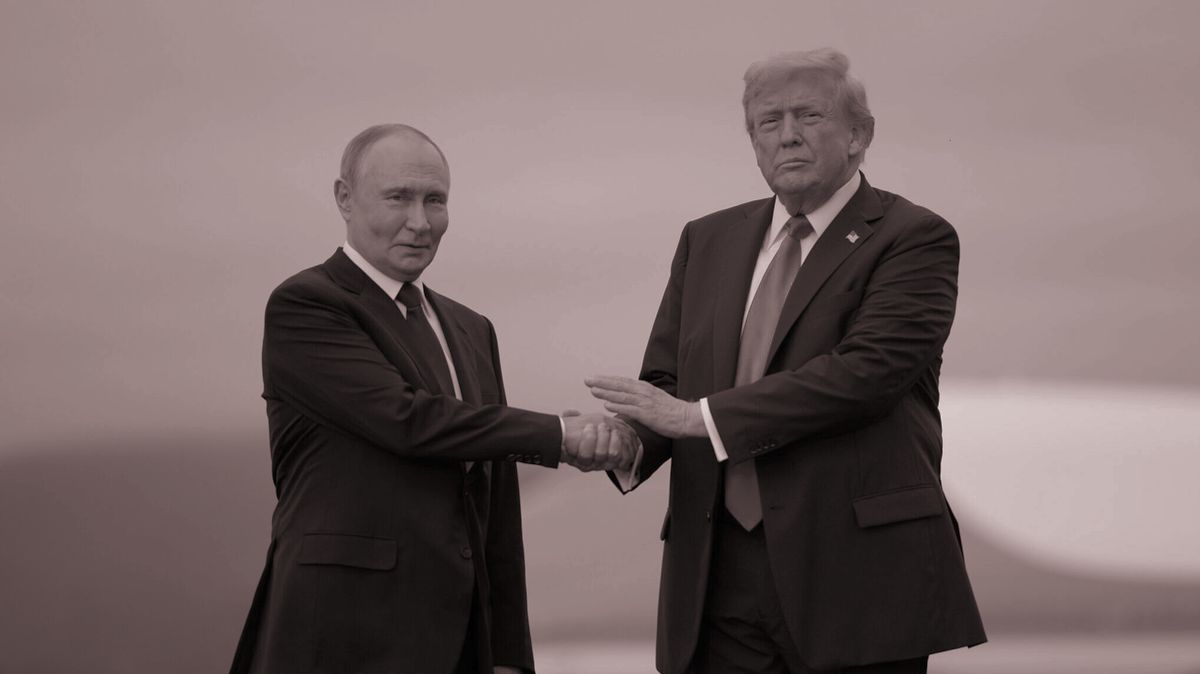
U.S.-Russia relations are largely unchanged, and the future of Ukraine is just as uncertain,
following the Trump-Putin photo op in Alaska. Meanwhile, among the Russian elite, there is an obvious eagerness to get the “Ukrainian crisis” over with so they can get back to the real business of making money.
|
|
|
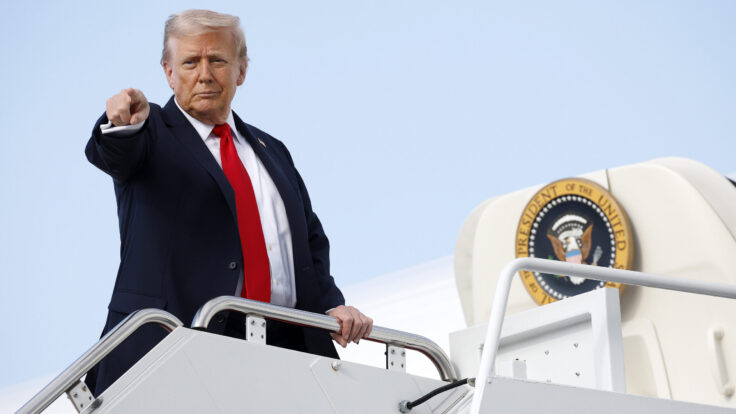
It’s been two weeks since Donald Trump welcomed Vladimir Putin into the
United States on a red carpet laid out for him by uniformed American troops on their hands and knees. Trump had gone into the August 15 summit in Anchorage wanting a ceasefire, or at least some progress toward halting a war he’d boasted he could end in 24 hours. But he walked out without any real results. Indeed, the two deliverables his administration announced—“Article 5–like protections” for Ukraine, and a trilateral meeting between Trump, Putin, and Zelensky—fell
apart within days, shot down by Russian Foreign Minister Sergey Lavrov. So what did the Anchorage summit accomplish?
It depends whom you ask. As seen from Moscow, it was a huge success. The photo op was great for the Kremlin, of course, as was the general image of the Russian and American presidents meeting as equals—two giants deciding the fate of Ukraine and Europe. Putin has long coveted this form of validation, and insisted that the American president was the
only other interlocutor he needed to resolve the so-called “Ukrainian crisis,” as the Russians call their invasion. Meanwhile, Kremlin propaganda channels celebrated the summit as the end of Russia’s isolation. After all, it was Washington that had led the charge, in February 2022, to turn the world, or at least the West, against Moscow. Now Washington was inviting Moscow onto American soil to state its case.
But one very informed source in Moscow put it a bit more subtly. The summit was
important not only because the Russian and American presidents talked, but also because of how they talked. “Even though nothing concrete has been achieved, the quality of the communication is now completely different,” this person told me. “The Alaska meeting was a success, because Putin was able to speak to the U.S. president about the root causes of the conflict, and he listened and understood them, even if he didn’t accept them.”
This would be a massive departure from how the
Biden administration had dealt with Putin. “This was the first time that the American president wanted to hear what was important to Russia and why,” the source said. “The attitude used to be, ‘Oh, those Russian savages are talking—and let them!’ This time, the Americans wanted to understand why the Russians think this and how we can deal with them constructively.”
|
Putin has always demanded respect from the West, and the fact that he finally seems to have gotten it from
Trump has done a lot to soothe inflamed tempers in Moscow. Both Putin and his representatives—like Lavrov and foreign affairs advisor Yuri Ushakov—were satisfied with how the Americans treated them. And it wasn’t just Trump, who very clearly admires Putin for his muscular, iron-fist style of governing.
Other Trump officials also made good impressions, including special envoy Steve Witkoff—who the source said was well received “both in his interest in
expanding relations, and in exploring partnerships for investments.” The source went on: “People trust him. He is not a fraud. He isn’t a professional name-dropper. This is a person who means what he says, and it’s very clear that what is said to him makes it to the president. That is no small thing.”
Apparently it didn’t matter that Witkoff had little expertise in, or even knowledge of, Russia, Ukraine, or the region. The source contrasted Witkoff favorably with Tom
Graham, the former State Department official and Russia expert at the Council on Foreign Relations who, during the last administration, traveled to Moscow and positioned himself as a potential backchannel, but clearly lacked buy-in from the White House. Witkoff, on the contrary, was actually speaking for the president of the United States. The source conceded that he wasn’t about to invite him to give a lecture on Russian history or even Russian-American relations. “But you can sense
that he has real authority,” this person said, calling Witkoff a “gifted negotiator” who “can deliver the message to the president in a way that he’ll hear it.” (Witkoff’s statement that Russia had agreed to “Article 5–like protections,” the source admitted, was “an oversimplification.”)
Even Marco Rubio, the onetime Russia hawk who has slammed Putin as a war criminal in the past, pleasantly surprised the Russians in Anchorage, according to the source, who said the
delegation was happy with his “constructive” tone. In the fall of 2022, Biden’s national security advisor Jake Sullivan had warned about the “catastrophic consequences” for Moscow should it use a nuclear weapon in Ukraine. But Rubio, per the source, didn’t “tell Russian counterparts what catastrophic consequences will befall them if they don’t
submit to America’s will. Instead, he talked about how to exit this confrontation.”
So this person was very, if cautiously, optimistic that the summit marked the beginning of more productive communications between the Kremlin and the White House. Indeed, the source pointed out, there are now low-level talks happening between Moscow and Kyiv, and though Putin still loathes Zelensky and sees him as illegitimate, he may be able to work around that if there’s actually something for him to
sign. “I’m sure that the absence of legitimate status won’t be an insurmountable barrier,” said the source. (Of course, that can also be the pretext that whatever is signed can be ripped up: If it was signed by an illegitimate president, why would it be a legitimate document?)
|
There is an obvious eagerness on the Russian side to get the “Ukrainian crisis” over with so they can get to
the real business of making money. In fact, the only real, tangible outcome of the Anchorage summit was Putin’s signing of a decree that would allow Exxon Mobil back into the Sakhalin-1 oil venture in the Russian Far East. That was a big deal, and not only because Putin signed a decree in 2022 allowing his buddy Igor
Sechin, who runs the Russian state oil giant Rosneft, to seize Exxon’s 30 percent stake in the venture. It was also monumental because both the Kremlin and White House allowed representatives from Rosneft and Exxon to meet in secret and sniff each other out. (Given the level of U.S. sanctions, Exxon had to procure a special waiver from the Treasury Department to meet with their Russian counterparts.)
This is something Putin—whose old friends used to describe him in his K.G.B. era as “a specialist in human relations”—has long dangled in front of Trump. (When Trump was pressing Ukraine on a minerals deal, Putin said, Hey,
we have rare earth minerals, too!) Trump, to be fair, has made no secret of his desire to be bribed and bought. But for all of Putin’s posturing about Russia even deigning to allow American businesses to work and profit there, Russia needs these investments far more than the U.S. does.
The Russian economy isn’t doing very well. I wrote two years ago about how Putin was able to artificially
stimulate the Russian economy with military spending on both the production of equipment and large payments to countrymen willing to join the fight. Even as unprecedented sanctions kicked in, the Russian economy roared on, growing faster than the economies of the Western countries that had sanctioned it.
But economists had always warned that this was unsustainable, and their prophecies seem to be
coming true. Economic growth slowed to a sudden crawl: 1.4 percent growth in the first quarter of 2025, down from 4.5 percent in the last quarter of last year. It slowed
still further to 1.1 percent in the second quarter. Now that the Kremlin has flooded the country with cash, inflation is running at about 9 percent, officially, though experts believe the true figure is much higher. The Russian central bank has set interest rates at a whopping 21 percent, strangling businesses that are now begging Elvira Nabiullina, the country’s central bank chief, to lower rates. There are labor shortages. The country’s national wealth fund is
slowly being drained of its liquid assets.
On top of that, Ukrainian drone strikes have gotten more efficient at hitting not just Russian oil refineries, but also the parts that are difficult and expensive to repair. As of this month, some 13 percent of Russian oil production has reportedly been taken offline, and Russian gas prices
have risen 45 percent so far this year—despite the fact that global crude prices have slumped. The result is that Russia, a global energy powerhouse, is now rationing gasoline in Crimea and parts of Siberia. “Sanctions aren’t a silver bullet, but they’re absolutely creating huge economic challenges,” said Dmitri Alperovitch, head of the Silverado Policy Accelerator. It’s one reason that Putin wants American equipment and technology in exchange for allowing Exxon to drill in
Sakhalin again.
But given the hostile and dangerous business climate in Russia, American businesses aren’t exactly clamoring to be let back into the Russian market—especially after they’ve had their assets expropriated and seen prominent American businesspeople jailed. “I don’t think there’s a big appetite for business to go into Russia,” said
Alperovitch, himself a successful businessman who co-founded CrowdStrike. “Plus sanctions are good for U.S. energy producers, including in the L.N.G. sector.” Why would they want to compete with the Russians?
|
So where does that leave us? With the status quo, at least for now, and everyone has something to show for
it. Trump, for his part, can show the country that he is at least doing something. He may not get his Nobel Peace Prize, but his elaborate simulacrum of diplomacy creates the sense of movement and action—and that he’s doing something that no one has thought to try before. True, there are very good reasons no one tried before, but theater—and being an iconoclast—has been vital to Trump’s popularity with his base.
Meanwhile, Zelensky got to rally European leaders together—before,
that was Biden’s role—and keep them buying American weapons and sending them to Ukraine. The U.S. is still sharing intelligence with Ukraine, and sanctions on Russia are still in place, at least for now. More importantly, though, Trump may have finally realized that there’s not going to be a quick deal with Putin, after all. As one D.C. foreign policy insider familiar with the administration’s thinking put it, “If the Alaska summit finally showed Trump that Putin isn’t serious about peace,
that’s good. That’s progress.”
|
That’s all from me, friends. Enjoy your Labor Day weekend. I’m off next week, but I’ll see you back here in
two weeks. Until then, good night. Tomorrow will be worse.
Julia
|
|
|
Unique and privileged insight into the private conversations taking place inside boardrooms and corner offices up and down Wall
Street, relayed by best-selling author, journalist, and former M&A senior banker William D. Cohan.
|
|
|
Join Puck’s chief political columnist, John Heilemann, as he roams the corridors of power and influence in America on this
twice-weekly interview show, taking you beyond the headlines with the people who shape our culture: icons and up-and-comers, incumbents and insurgents, moguls and machers in the overlapping worlds of politics, entertainment, tech, business, sports, media, and beyond. The conversations are rich and revealing, unrehearsed and unexpected… and reliably impolitic. A Puck-Audacy joint, new episodes drop every Wednesday and Friday.
|
|
|
Need help? Review our FAQ page or contact us for assistance. For brand partnerships, email ads@puck.news.
You received this email because you signed up to receive emails from Puck, or as part of your Puck account associated with {{customer.email}}. To stop receiving this newsletter and/or manage all your email preferences,
click here.
|
Puck is published by Heat Media LLC. 107 Greenwich St, New York, NY 10006
|
|
|
|