 |
|
Hello, and welcome back to The Best & The Brightest, your daily politics dispatch from the nation’s capital. This is your Tuesday foreign policy edition. I’m Julia Ioffe.
Before we get to the meat and potatoes of today’s letter—who is Vladimir Putin rooting for in the U.S. presidential election?—and as we wait on Hamas and the Israeli government to stop sending mixed messages and actually agree on the Biden ceasefire proposal, I have a couple more Russia-related items. Herewith…
- First, the good news: Things are looking mighty grim for Gazprom, Russia’s state natural gas monopoly, according to a new report commissioned by the company. Most of Gazprom’s export infrastructure was directed toward Europe, and we know what happened with that in the spring of 2022 when Putin decided to invade Ukraine. According to the report, by 2035, exports to Europe are expected to be less than a third of their pre-war levels, and the difference is unlikely to be made up by increased exports to China and India. In part, that’s because Russia hasn’t developed its L.N.G. technology and still uses pipelines, and those take forever and a half to construct. Moscow and Beijing are currently negotiating a gas pipeline to China, but it wouldn’t be completed until at least 2030. On top of that, China has been very good at extracting lower prices from Russia, which is limited in where it can sell its commodities. So one of the main engines of the Russian federal budget has been hobbled by Western sanctions—and is unlikely to bounce back anytime soon.
- Second, the bad news: If Russian gas has been hard to reroute to new clients, that has not been the case with Russian oil. Russia has quickly amassed a massive shadow fleet that has been ferrying Russian crude to China and India, which are more than happy to gobble up the discounted oil. Oil revenue flowing into the Russian budget jumped almost 50 percent in May. (The revenue would be even higher, Bloomberg notes, if the Kremlin weren’t paying massive subsidies to the oil industry.) Despite the G7 oil cap on Russian Urals crude, its price is now about $75 a barrel, $15 above the cap. That also means the price gap between Urals and Brent, which has traditionally been more expensive than Russian oil, is narrowing—which means the discount Moscow’s clients can demand is shrinking, too. More money for the Kremlin’s coffers.
And while the U.S. Treasury has been slowly adding these shadow vessels to its sanctions list, it’s been caught flat-footed by the speed with which Moscow has innovated around these limitations. (Bloomberg’s Julian Lee, by the way, has been doing consistently excellent reporting on how the shadow fleet works, including how and where they unload their cargo onto new, empty ships. His latest story has a great satellite image of two ships lined up next to each other in the Riau Archipelago, just east of Singapore, as an oil transfer happens.)
- Third, the grim news: BBC’s Russian service and Mediazona (the news organization founded by Pussy Riot) have been tracking verifiable Russian casualties since the full-scale invasion of Ukraine began. Now, they’ve produced a truly stunning investigation documenting the human toll of taking the not-strategic town of Bakhmut last spring. The “meat grinder” in Bakhmut claimed the lives of over 19,500 Russian men, most of them convicts. That makes it the deadliest battle for Russian troops since World War II. It also highlights an impotant cultural element. While Ukraine is relying (or trying to) on modern, Western weaponry, Russia has fallen back on its tried and true, traditional military strategy: clogging the enemy’s war machine with human corpses. Read the investigation. It’s absolutely fascinating.
|
| And now, here’s Abby Livingston with the latest from the Hill… |
| Dems’ Vegas Odds & The G.O.P. Gap |
|
| Democrats love to brag about the current class of Senate incumbents up for reelection—Tammy Baldwin, Sherrod Brown, Bob Casey, Jon Tester, etcetera—but the deck is stacked against them given the sheer volume of seats that the party must defend (eight, after ceding West Virginia). Plus, this is the first time all of these senators have appeared on a ballot opposite Donald Trump—a real test of split-ticket voting.
Several of these senators did exactly what they were supposed to do ahead of an election year, i.e. raise money and book ads. Even so, toxic political winds and voter realignments have felled plenty of talented politicians of late. For now, here’s how the Dems are making the most of a gloomy map:
- Dems’ money bomb: So far, Democrats have deployed millions more in ad dollars across five of these races—Nevada, Montana, Ohio, Pennsylvania, and Wisconsin—according to data from Ad Impact. While the gap isn’t insurmountable in Montana (a $2 million Democratic advantage) and Ohio ($12 million), Democrats have booked a whopping $53.5 million in Nevada against the G.O.P.’s $5.4 million. Remember, Democrats tend to book their reservations earlier to secure lower rates, while Republicans (and especially outside groups) often wait longer to double-down on their bets. So we should see Republicans pulling closer over the coming weeks and months.
- The Vegas odds: Ohio’s Brown and Nevada’s Jacky Rosen have booked an astonishing volume of individual advertising that will have outsize impact in their states. Brown has $44.5 million reserved—one reason Democrats haven’t written off the three-term incumbent’s campaign—while Rosen has booked $21.8 million in Nevada.
Rosen, after all, needs to get ahead of an inventory challenge. The Vegas media market will be overloaded next fall by the presidential race, three House races, and two Senate campaigns. It’s an open question whether there will be any ad space left on Jeopardy! after a certain point.
Republicans, meanwhile, have a lineup of candidates with the potential to self-fund, and so we might soon see overnight cash infusions to these campaigns. Wisconsin’s Eric Hovde put at least $8 million into his campaign, while Brown’s Republican opponent Bernie Moreno loaned $4.5 million to his campaign during his competitive primary (according to first-quarter F.E.C. reports). But so far, self-funders have not had a consequential impact in the spending wars, per available data. The question heading into the fall will be whether the Democratic obsession with candidate fundraising and bargain ad rates can overcome the G.O.P.’s structural advantage with this year’s election map.
|
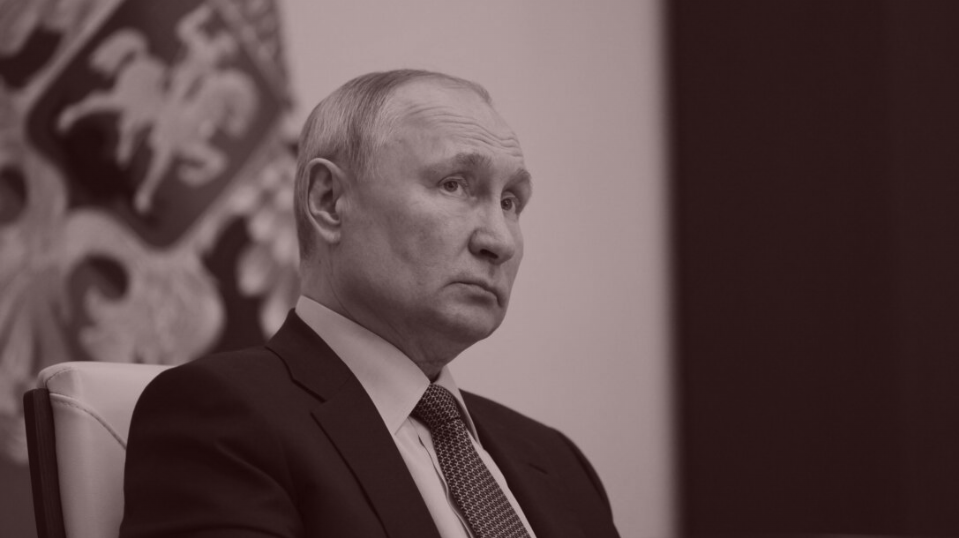 |
| Vladimir Putin, Swing Voter |
| Unlike in 2016, and despite Trump’s affinity for strongmen, there’s no consensus inside the Kremlin over which of the two U.S. presidential candidates—the predictable antagonist or the geopolitical wild card—would be better for Putin’s Russia. |
|
|
|
| Last week, Vladimir Putin hosted a noticeably smaller, more isolated St. Petersburg Economic Forum. Once upon a time, when Russia was still open to the West, the annual event was Putin’s chance to show off not just his hometown, a restored imperial jewel box, but all of the ways his country’s modern economy had become an integral part of the First World. It was the elite event of the year, where representatives from the biggest global companies would rub elbows with top Kremlin brass and foreign diplomats and officials. Now, for the third time since Russia launched its full-scale invasion of Ukraine, Putin hosted a conference much changed. Gone were the Western oilmen and bankers, the European diplomats and American television cameras. Gone, too, were many of the local journalists who used to cover the event as a Russian Davos. Most of them are in exile, many having been charged with crimes against the state.
Putin, of course, tried to put a positive spin on the diminished caliber of this year’s forum. He spoke at length about the booming Russian economy—Russians were now eating more meat than ever, he bragged, weirdly—and how it was now leading the Global South, which, Putin claimed, was leaving the First World in the dust. It’s true that the Russian economy is growing, fueled by the Kremlin’s manic focus on the war in Ukraine, and the cameras panning across those listening to Putin’s interminable, statistic-laden speech showed a very diverse audience. There were attendees from Africa, the Middle East, Asia, and Latin America. In fact, Putin shared the stage with Zimbabwe’s president Emmerson Mnangagwa and Bolivian leader Luis Arce. It was a clear return to Moscow’s old Soviet allegiances, when Russian allies were scattered across the Third World. And though it’s not what Putin prefers—he was, for the first two decades of his reign, absolutely adamant that Russia was a First World, European power and that its place was among the nations of Europe—it is what the moment requires. Necessity, and sanctions, make for vintage bedfellows.
And yet, for all the pomp, one attendee told me that it was mostly a domestic affair, with Russian companies showing up to flaunt their wares and inventions, like Zhenya the plumber—a robot that recites cheesy Soviet poetry while gesticulating randomly. There was no big Chinese presence; fewer African and Latin American countries sent delegations than the Kremlin wanted viewers to believe; and even the Central Asian countries—most of them former Soviet republics that Putin has courted heavily—weren’t as well represented as this attendee would have expected. But hey, at least the Taliban came. “The level [of the conference] is falling, of course; interest is falling,” this person told me upon their return to Moscow. “The president’s entourage is trying to maintain the appearance of activity and people’s presence [at the forum], but it’s not really working.”
There was one very interesting event at the forum, however: a televised, on-the-record roundtable with a handful of foreign journalists, including Reuters’s Middle East editor Samia Nakhoul, who, Putin was delighted to learn, had been seriously injured during the American invasion of Iraq in 2003. Nakhoul asked Putin a straightforward question: Whom would he prefer to win the 2024 U.S. presidential race, Donald Trump or Joe Biden?
“I’ve already said—everyone took my comment about Mr. Biden as mockery and saw in it some kind of hidden jab at President Biden, but he really is a politician of the old school, and the fact that he didn’t like it and started attacking me, that’s exactly what I thought would happen,” Putin smirked, poking the table for emphasis. “That means I’m right: he’s predictable. All of it only confirms our thinking.”
Putin was referring to his comment, in February, that he prefers Biden because the incumbent was “more experienced” and “more predictable”—a remark that everyone among the Moscow elite interpreted as dunking on the American president. “It was political trolling,” a source close to the Kremlin told me. Another informed Moscow source added, “Putin’s comment was tongue-in-cheek.”
But, in the grand scheme of things, “It’s all the same to us,” Putin said in St. Petersburg of the American presidential race. “Whether we think that anything will change in terms of Russian policy in America, we don’t think so.” |
|
|
| Of course, that’s not quite true. On one hand, Russian state TV has been following the American presidential race closely. (In watching hours of this dreck, I was reminded, to my delight, that the Russian expression for running “neck and neck” is running “nostril to nostril.”) The Kremlin’s reporters and anchors are constantly mocking and accentuating Biden’s age while breathlessly touting what they see as the unfairness of Trump’s felony conviction. While answering Nakhoul’s question in St. Petersburg, Putin also waxed positively indignant about how American courts had become political weapons against Trump. (Surely, Putin wouldn’t know anything about a dependent judiciary going after political enemies.) It was evidence, Putin said, of how the United States was self-immolating, burning itself “down to the roots.” (Putin’s angry rant on Trump’s behalf was somewhat belied by the fact that he was smiling slyly the whole time.)
The official propaganda line is very clear: Trump is a victim of a leftist, globalist elite bent on sinking his candidacy so that Biden can maintain his grip on power and continue pursuing his disastrous policies: purposely flooding the country with dirty migrants, empowering the radicals and the gays, and making sure Russia doesn’t fulfill its historic mission in Ukraine. (The Kremlin channels are even giddily parroting right-wing theories that Biden regularly takes performance-enhancing drugs and will do so again for the June 27 debate with Trump.)
From my conversations with sources in Moscow, however, the picture seems a little muddier—and a little closer to what Putin told the journalists in St. Petersburg. It’s clear that no one likes Biden. From the Kremlin’s perspective, he is so anti-Russia that he’s willing to sacrifice every single Ukrainian on the pyre. This, after all, is someone who is allowing Ukraine to use American missiles to target Russian territory and has made Russia the most sanctioned country in the history of the world. It doesn’t help that Biden has repeatedly called Putin a “killer” and a “war criminal.” “It’s not very pleasant to deal with someone who called you a killer, of course,” the source close to the Kremlin told me. “In American political culture, you call me a name, then everyone forgets it the next day. With us, if you called me names, I’ll remember it till the end of my days.” Naturally, the source said, “in the Kremlin, they’re obviously rooting for Trump. But they’re practical people, so if Biden wins, okay, they’ll deal with Biden.”
This is not 2016, people in Moscow emphasized. Eight years ago, the choice was between Hillary Clinton—whom Moscow knew as “a broad with balls,” which is not a compliment in Russian, and whom Putin publicly accused of directly interfering in Russian domestic affairs—and Trump, who had never held elected office and was constantly praising Putin on the campaign trail. The choice then was quite clear: the useful idiot fronting the G.O.P.
This time around, though, Russia is presented with a wholly different choice: two men who have each served one term in the White House, during which they took diametrically opposed rhetorical lines toward Moscow while both arming Ukraine and sanctioning Russia. Trump, in other words, is no longer a blank slate. Nor can his praise of Putin and Russia be guaranteed to translate into concretely pro-Russian policy. “Because Trump is such an isolationist, he could completely cut off aid to Ukraine or cut support for NATO,” the source close to the Kremlin said. “That all attracts people in the Kremlin to him.” But, then again, he might not.
He might, like he did while he was in office, praise Putin and side with him publicly over U.S. intelligence agencies, while sending Javelins to Kyiv and kicking scores of Russian spies out of America. “In 2016, the Kremlin had a clear preference: Trump,” said the informed Moscow source. “Today, the preference is against Biden. But even here, you can’t say that Trump won’t be worse than Biden, because Trump is impulsive and no one here knows who his foreign policy advisors are. Personally, I have a feeling that he doesn’t have them.” More recently, Trump deeply disappointed his Moscow admirers when he reversed himself and cleared Mike Johnson’s way to pass a $61 billion aid package for Ukraine. “You can’t depend on him for anything,” the source, who has publicly weighed in for Trump, said bitterly. “He didn’t do anything to stop it. He’s only motivated by self-interest.”
Also, now that Trump has shown his protectionist bona fides, some in the Russian elite are skeptical that he will be all that friendly toward Russia economically. “Serious people understand perfectly well that Trump won’t be a cakewalk, because he has a massive business lobby behind him that doesn’t need a powerful Russia,” said one source from Dmitry Medvedev’s circle. “No one expects manna from heaven.” |
|
|
| Along with concern over Trump’s mercurial nature, people in Moscow also expressed profound skepticism about Trump’s policy proposals. Trump and people around him have bragged that, should he win in November, he will use his unique powers of persuasion to bring Volodymyr Zelensky and Putin to the table and, yada yada yada, we’ll have peace in Ukraine. Art of the deal! More recently, Trump boasted that he will secure the release of jailed Wall Street Journal reporter Evan Gershkovich simply because of the strength of his personal relationship with Putin. “Vladimir Putin, president of Russia, will do that for me, but not for anyone else,” Trump wrote on Truth Social. “WE WILL BE PAYING NOTHING!”
Once again, Trump was yada yada-ing the best part, the details. How would he get Zelensky and Putin, neither of whom want to negotiate an end to the war, in the same room, let alone on the same page? What would he offer them? What would be in the deal? How much territory would Ukraine have to give up? And how would he get Putin to release Gershkovich? Would he be able to get the German government to release F.S.B. killer Vadim Krasikov, which they have already balked at? What would Germany get in return?
For what it’s worth, no one in Moscow is buying it. “I don’t think Trump will manage to do it,” the source from Medvedev’s circle told me. “He tried to do it with North Korea, hugged them close, wrote them love letters, and what did it get him?” Moreover, how, exactly, would he organize these negotiations? “I remember the State Department under him, there were empty hallways for years,” the source said. “He won’t be able to do this, that’s absolutely clear. No one believes it.”
“There’s interest but also worry that he can, without the right preparation or consultations, present a plan and when Moscow says ‘no,’ he might take certain rash steps—to which Moscow will have to respond,” the informed source said of Trump’s vague Ukraine-deal reveries. “There’s concern that he might decide that he wants to do something quickly and if Russia doesn’t cooperate, it will put us on a path of escalation and military conflict.” The source went on, “People in Moscow think Biden is ineffective. They don’t expect anything good from him, but they also know he won’t knowingly go toward nuclear escalation. He has some centers of restraint. But in relation to Trump, there is no such certitude.”
As for the Gershkovich proposal—if one can even call it that—my sources were similarly skeptical. “Putin wants Krasikov,” the source close to the Kremlin said. “Whoever can get him Krasikov, that’s who’ll get Gershkovich. If Trump can organize it, then Trump will get him. If Democrats do it, then they’ll get him. In any case, it has to go through Germany. And what Germany gets for it is the hardest part of it. It’s understandably hard to sell it to Germans.” The informed source in Moscow, meanwhile, sounded positively befuddled: “In Moscow, they don’t know what Trump really means and what he intends to do.” |
|
|
| That’s all from me, friends. Yada yada yada, tomorrow will be worse.
Julia |
|
|
|
| FOUR STORIES WE’RE TALKING ABOUT |
 |
|
 |
| Profit & Kloss |
| On Karlie Kloss’s foray into magazine publishing. |
| LAUREN SHERMAN |
|
 |
|
 |
|
|
|

|
 |
|
|
|
Need help? Review our FAQs
page or contact
us for assistance. For brand partnerships, email ads@puck.news.
|
|
You received this email because you signed up to receive emails from Puck, or as part of your Puck account associated with . To stop receiving this newsletter and/or manage all your email preferences, click here.
|
|
Puck is published by Heat Media LLC. 227 W 17th St New York, NY 10011.
|
|
|
|