 |
|
Welcome back to The Best & The Brightest. I’m Peter Hamby.
Tonight, our new poll in partnership with Echelon Insights reveals a series of complex and nuanced findings: A large majority of politics-weary Americans are nevertheless planning to tune in to the upcoming presidential debate on CNN as voters in both parties consider leaving the presidential ballot blank in November—all while worrying that Donald Trump might try to subvert the Constitution if he wins a second term.
Programming note: On July 10 in D.C., I’m moderating a special panel on voter trends heading into the 2024 election, focusing on the critical importance of older voters—in particular, women over the age of 50, a demographic that represents the largest group of swing voters. We’ll also dig into additional insights from our exclusive polling partnership with Echelon. I’ll be joined by Kristen Soltis Anderson from Echelon, Margie Omero from GBAO, and Nancy LeaMond from the AARP. Puck subscribers can sign up here. Email Fritz@puck.news with any questions.
And now, here’s Abby Livingston on the action in New York…
|
|
|
Democrats are betting big on the suburban congressional districts around New York City to close the gap with Republicans in the state, and the gamble might pay off. According to campaign finance reports, several Democratic challengers are outraising Republican incumbents. Which means Republicans are probably more than a little grateful for the distraction of the blistering Democratic internecine warfare around Jamaal Bowman. Here’s what’s going on in the state, which could determine control of Congress next year…
- The spread: From April to early June, according to newly filed campaign finance reports, Democratic challengers outraised House Republicans Mike Lawler, Anthony D’Esposito, and Marc Molinaro. Molinaro’s Democratic challenger, Josh Riley, now has almost twice as much cash on hand. Lawler’s total is also lagging, while D’Esposito is hanging on to his war chest advantage, for now.
Republican incumbent Brandon Williams is doing a bit better, having narrowly outraised his top Democratic opponent, DeWitt Councilwoman Sarah Klee Hood, who is spending big in a competitive primary. On the Democratic side, in New York’s only competitive Democratic-held district, Pat Ryan has only expanded his financial advantage cycle-to-cycle. Notably, this filing period includes the two weeks following Donald Trump’s conviction on May 30. Skimming the Republican reports reveals they did indeed have busy fundraising around that time, but it was not the windfall claimed by the Trump campaign.
- Knives out for Bowman: Of course, the real intrigue in New York politics right now is the umbrage surrounding Congressman Jamaal Bowman’s reelection. Led by the American Israel Public Affairs Committee (AIPAC), pro-Israel outside groups are dumping millions into ousting Bowman, an Israel critic, in favor of George Latimer, a prominent local official. The growing animus within the national party has taken a very personal turn: Last week, ex-Rep. Mondaire Jones endorsed Latimer over his former colleague, a move that did not sit well with Squad members Cori Bush and Summer Lee, along with Barbara Lee, according to Semafor.
Then, over the weekend, on Marc Lamont Hill’s podcast, Bowman accused district neighbor Ritchie Torres of taking a pro-Israel stand to “gain political power for himself toward an ultimate objective,” possibly a Senate run. Torres replied via Twitter that Bowman’s “opinion of me is worse than a rubber stamp—it leaves no impression, much like his legislative record.” On Sunday, A.O.C. told her 13 million followers on X that there was something suspicious about the big money behind Latimer: “People everywhere need to understand how disgusting and abnormal it is for special interests to dump nearly $15 million to unseat a member of Congress in a primary. This is corruption…”
Hillary Clinton, who lives in Chappaqua, has endorsed Latimer, of course. Massachusetts Senator Elizabeth Warren, meanwhile, has backed Bowman. To sum up: This primary can’t be over soon enough for Democrats.
|
 |
| ATLiens |
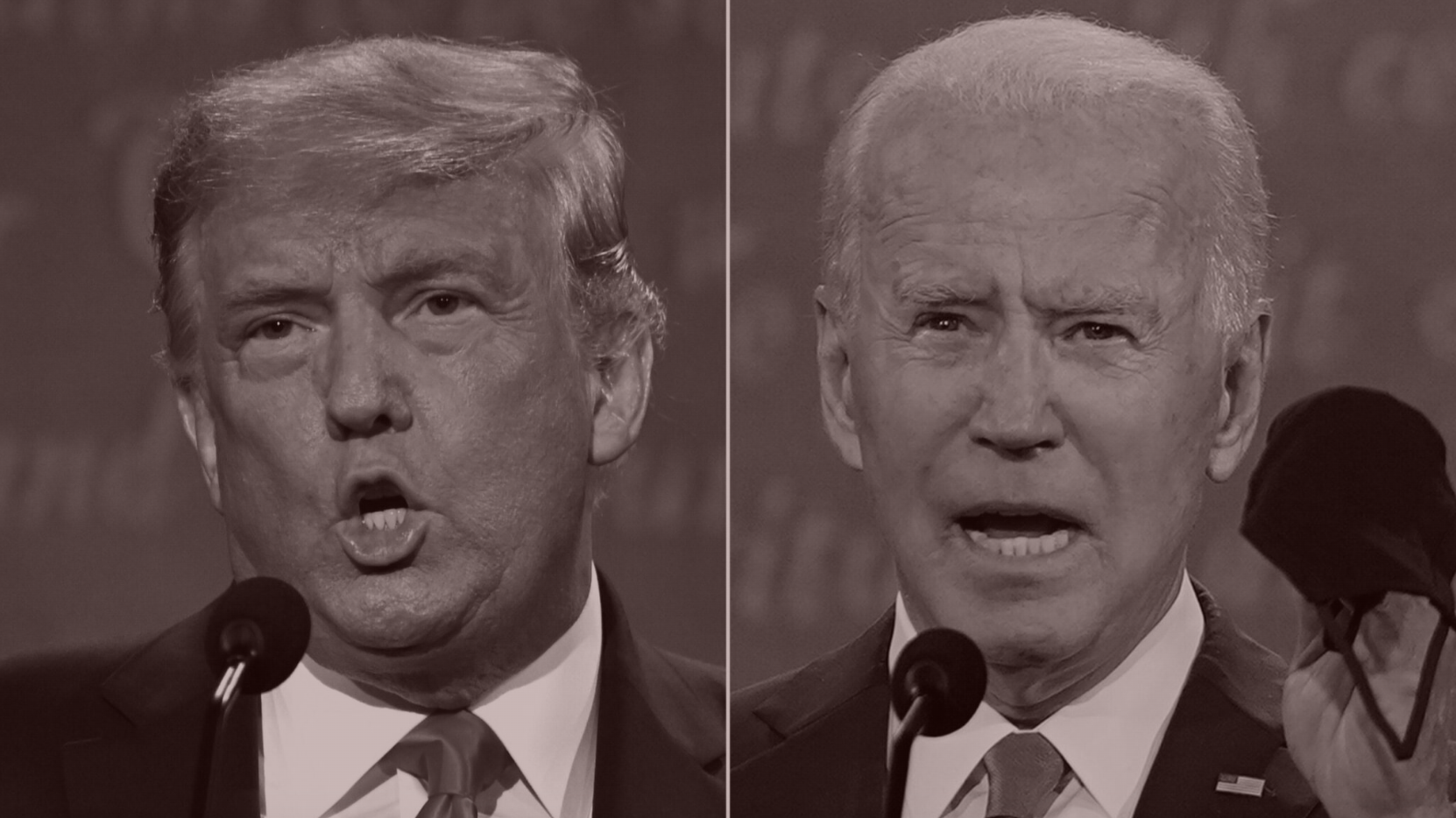
| Next week’s CNN debate will be the first and perhaps only mass-media event where millions of Americans are forced to engage with the dismal reality of the looming election. Surprisingly, perhaps, for a race in which so many voters are tuned out, a majority say they’re going to tune in. |
|
|
|
| The anticlimax of the Biden-Trump election has been defined by emotions ranging from disinterest to fear to outright hostility. There are disillusioned young people, “double haters,” and large portions of the population who just want politics to go away, even as they vent about the cost of gas, the screaming matches in Congress, and the uninspiring choices on the ballot. The race is playing out across a fragmented media landscape the likes of which we have never seen, confounding strategists in both parties who are desperate to reach voters and get them to care. Meanwhile, our screens are full of frivolous and misleading video clips, partisan news, sophomoric protestors, and YouTubers and podcasters masquerading as expert analysts. But what’s actually reaching voters? A segment on the Today show, or a deceptively edited TikTok posted by an overseas mischief-maker? Anyone pretending to know what’s actually moving the needle with voters is lying to you.
All of this is why the stakes for the presidential debate on June 27—hosted by CNN in Atlanta—are so high. It is unquestionably the first and may be the only mass-media event where millions of Americans can engage with the candidates and the campaign. It’s also worth remembering that one or both of the candidates could easily skip out on the penciled-in second date in September if things don’t go their way.
Surprisingly, perhaps, for an election in which so many voters are tuned out or distracted, a majority of Americans say they’re actually going to tune in. According to a new poll from Echelon Insights, which is partnering with Puck in 2024 for analysis of key election trends, 63 percent of likely voters say they’re planning to watch the 90-minute exchange moderated by CNN’s Jake Tapper and Dana Bash. That data portends a TV ratings bonanza for CNN. It also suggests there’s a real appetite to see these two candidates—who occupy distinct media universes and deal in alternative facts—forced, for one night at least, to confront each other on the same physical plane.
The network laid down the debate rules over the weekend, most notably the fact that microphones will be muted when the other candidate is speaking in an attempt by the network to control timing and “ensure a civilized discussion,” a rare phenomenon when Trump is behind a podium. CNN also announced qualifying guidelines that, so far, have prohibited independent candidate Robert F. Kennedy Jr. from appearing in the debate. He’s close to the 15 percent polling threshold, but hasn’t secured ballot access in enough states to meet CNN’s requirements. Whether Kennedy makes the stage or not, the Echelon poll found that a healthy majority of voters (56 percent) want him to be included. Only 27 percent of voters said Kennedy should be excluded. Kennedy, meanwhile, has filed a complaint with the Federal Election Commission calling CNN’s rules illegal.
The poll, which surveyed 1,013 likely voters from June 10-12, found the presidential race essentially tied, with Biden leading Trump by a single point, 48-47. In a multi-way race with candidates like Kennedy factored in, Trump narrowly leads Biden, 43-42. That reflects what other polls have shown following Trump’s criminal conviction in New York: The race is basically a jump ball, with Biden making an incremental gain, according to the FiveThirtyEight polling average.
If this first debate is going to change the trajectory for either candidate, the deciding factor may come down to voter expectations. For months, Trump has been asserting that Biden is too feeble to debate, demanding he take a drug test beforehand, speculating he might fall over, and insisting he and Biden should be required to stand throughout the debate. Trump doesn’t operate by traditional political rules, but his attacks on “Sleepy Joe” are pretty much the exact opposite of what a disciplined campaign typically does before a presidential debate. Normally, of course, you raise expectations for your opponent while lowering them for yourself. Trump is doing the inverse. Asked who will perform better in the debate, 45 percent of voters said Trump and only 37 percent said Biden.
Biden has benefitted from low expectations in key moments throughout his presidency, going back to his primary campaign in 2020, when most pundits left him for dead. He fumbled the Inflation Reduction Act, until he didn’t. In 2022, his dismal job approval rating and the pressures of inflation were supposed to doom his party in the midterms. That didn’t happen. And questions about Biden’s age and mental fitness were temporarily sidelined after he vanquished the low expectations around his State of the Union Address in January. If Trump keeps promising that Biden will be a zombie in Atlanta, voters might reward the president just for completing a sentence or two. |
|
|
| Even as most voters say they’re paying more attention to the presidential race and promising to watch the debate, the poll found evidence that voters remain underwhelmed by the candidates. A large majority of voters (83 percent) said they’re either “extremely” or “very motivated” to vote in November, on par with what they said in the summer in 2020, before an election that saw historic voter turnout. What’s more, self-described Democrats are now just as motivated to vote as Republicans—a departure from polls even just a few months ago that showed G.O.P. enthusiasm outpacing that of Democrats.
But while Democratic voters may be waking up as the election approaches, Biden still has to close the deal with many of them. Other polls—notably, a New York Times and Siena College poll in May—found that Democratic Senate candidates in several key battleground states are outpolling Biden at the top of the ticket. That raises the unusual scenario of ticket-splitters influencing the vote in November. In other words, someone in Nevada might vote for Democratic Sen. Jacky Rosen, but check the box for Trump at the top of the ballot. I know that seems unlikely in these polarized times, but it can have an effect on the margins with independent voters in core battlegrounds like Arizona, Pennsylvania, or Wisconsin, where Democrats like Ruben Gallego, Bob Casey, and Tammy Baldwin are more popular than Biden.
Another possibility? There might be voters who cast votes for their party in Senate, House, and local races, but leave the top of the ballot blank as a protest against the two unpopular presidential nominees. This could be true for both parties. Young progressives might refuse to vote for Biden, while moderate Republicans might be pining for Nikki Haley. Strikingly, the Echelon poll found that almost a third of the electorate—29 percent—said they were either “very” or “somewhat likely” to leave the top of the ballot blank come November. “That’s really a wow number,” said Echelon founding partner Patrick Ruffini. “It’s doubtful that this many voters will actually undervote at the top of the ticket, but it does speak to how uniquely disillusioned Americans are with this rematch.”
The bad news there for Biden? Young voters, Black voters, and Hispanic voters were more likely than other subgroups to say they’re thinking about leaving the top of the ballot blank. The hopeful spin for Joe? I wrote about the concept of “reverse coattails” last year: the idea that Democrats will show up to vote for local and congressional races, and, even if they aren’t thrilled about Biden, they’ll still vote for him in the end because he’s a Democrat, and he’s better than Trump. To me, that seems much more likely than a down-ballot Democratic voter opting for Trump or leaving the presidential ballot line blank. But we’ll see in November.
Echelon found that Republicans are suffering from the exact opposite problem: Their voters are more excited to vote for Trump than they are for G.O.P. Senate and House candidates. “That speaks to a down-ballot motivation gap that House and Senate Republicans need to fill over the next four months,” Ruffini told me. “Chaos on the Hill and badmouthing of congressional leadership by Trump has taken its toll with Republican voters. While the question in 2016 and 2020 was by how much down-ballot Republicans would overperform Trump, many would now be content to match his current performance in the swing states.” |
|
|
| Ominously, while voters continue to rate the economy and the cost of living as their most important issues, the poll found that the vast majority of voters “are concerned about violence or riots occurring after the election,” regardless of who wins. Only 25 percent of American voters said they aren’t worried about post-election violence.
Most voters also believe that if Trump wins, he will try to hold on to the presidency come the next election in 2028. Trump, of course, would be constitutionally ineligible to run for president again, but 56 percent of voters said he will try to hold on to power nonetheless. On top of that, 48 percent of voters said Trump might also “try to select the next president by means outside of the electoral process.”
In simpler terms, most voters seem pretty aware of the possibility that Trump might try to unravel the foundations of American democracy if he wins again. But that idea, as scary as it sounds, might not be frightening enough to help Democrats beat him. After all, the race between Trump and Biden is still a toss-up. “The problem for the Biden campaign isn’t that their message about Trump being a threat to democracy and a convicted felon isn’t breaking through,” Ruffini said. “It’s that it is breaking through, but it’s still a tied race at best for them. A crucial bloc of voters are willing to believe the worst about Trump and still vote for him.” |
|
|
|
| FOUR STORIES WE’RE TALKING ABOUT |
|
|
|

|
 |
|
|
|
Need help? Review our FAQs
page or contact
us for assistance. For brand partnerships, email ads@puck.news.
|
|
You received this email because you signed up to receive emails from Puck, or as part of your Puck account associated with . To stop receiving this newsletter and/or manage all your email preferences, click here.
|
|
Puck is published by Heat Media LLC. 227 W 17th St New York, NY 10011.
|
|
|
|