 |
 |
| Good evening, I'm William D. Cohan. |
| Welcome to all the new subscribers who have joined Puck this summer. And thanks for reading Dry Powder, covering the inside story of what’s really happening on Wall Street. If you are enjoying these private emails, please consider sharing Puck’s subscription link with a friend.
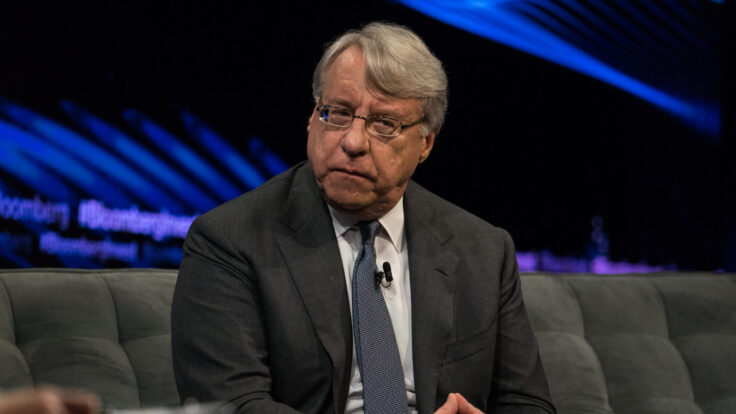
On Wednesday, I deciphered Dan Loeb’s punch list for Bob Chapek, which includes, among other things, potentially spinning ESPN. Today, I turn my attention to Jay Powell doing his best Paul Volcker impression at Jackson Hole, Elon Musk’s next ploy against Twitter, and whether someone—anyone?—will buy Peloton and put John Foley out of his misery.
Back on Wednesday,
Bill |
|
|
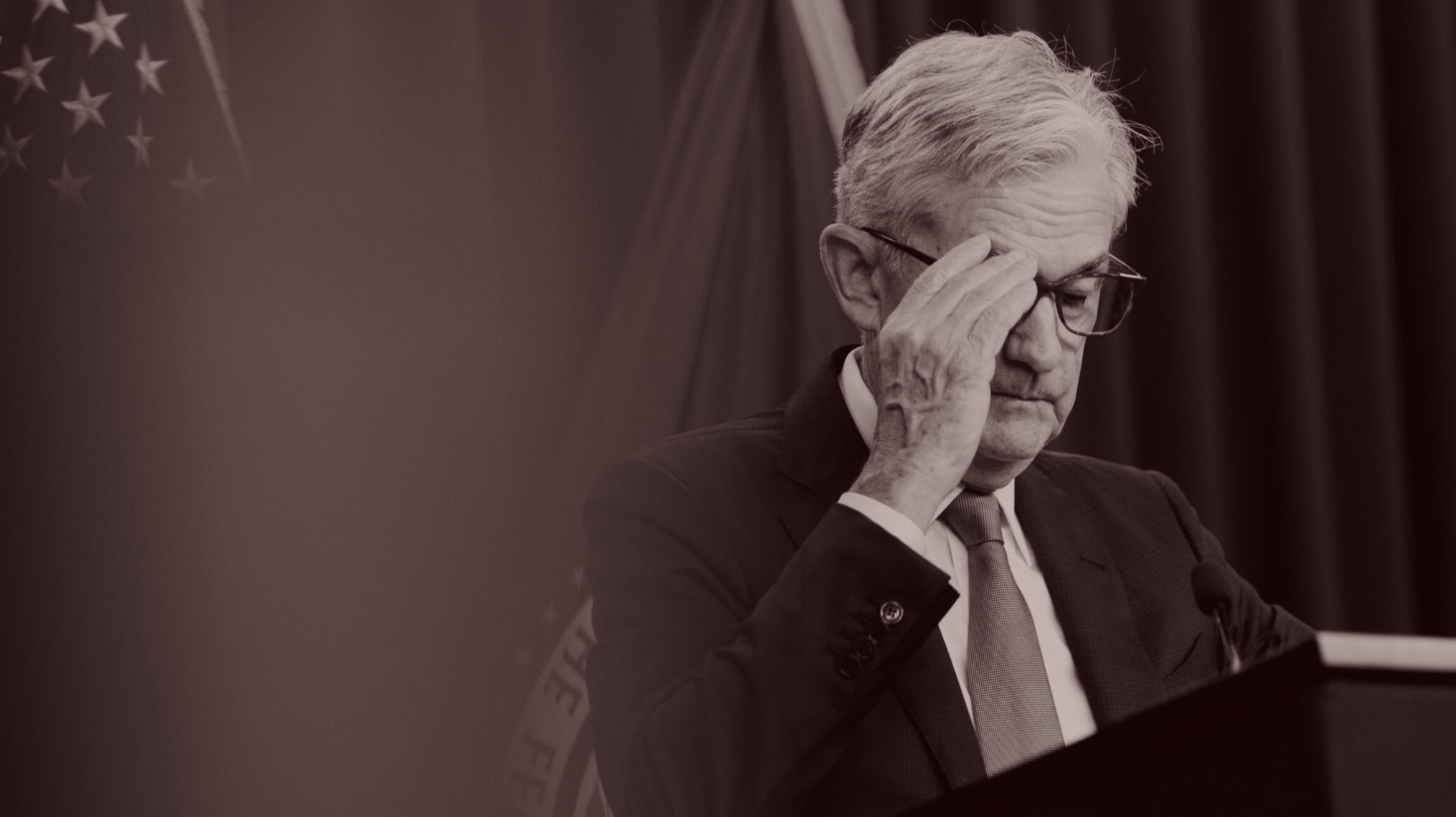
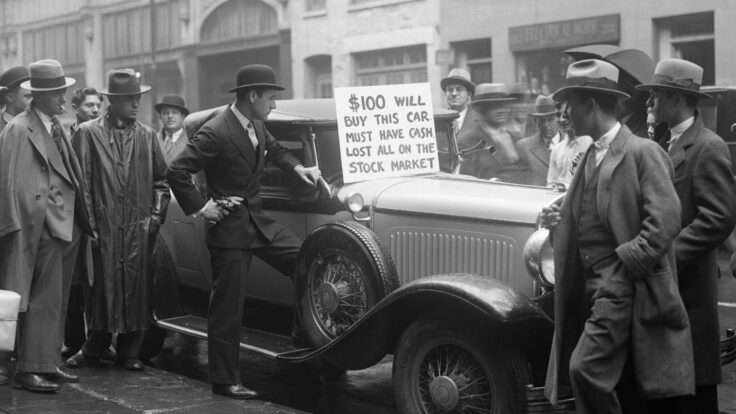
| As much as I enjoyed the recent late summer stock-market rally—and I did, believe me—I knew in my gut that it was pretty much a chimera. Ask around on Wall Street and you’ll hear variations of the same observation. Sure, there was some optimism that Fed chair Jay Powell might have foamed the runway with his last two interest rate hikes, which probably helps explain why the market got so far ahead of itself these past two months.But there can be no “soft landing” so long as inflation is running at an annual rate of around 8.5 percent. With the Fed Funds rate at a target of 2.25 percent to 2.5 percent, real interest rates are still negative, by a factor of around 600 basis points. In other words, if Powell & Co. want to really tame inflation, he is going to have to take up the mantle of his Carter-era predecessor, Paul Volcker, who famously declared that “the standard of living of the average American has to decline.”
Powell is more of a politician than Volker ever was, but the basic facts of our current predicament leave few other options. Yes, the price of inputs like oil and grain may “normalize” over time, especially if the war in Ukraine can be brought to an end. (Though as my Puck partner Julia Ioffe noted in a superb piece this week, Putin has his hands full.) But inflation can’t get back to the Fed’s stated target of 2 percent unless, and until, real interest rates are positive, meaning that the annual interest rate paid on Treasury securities—our safest investment—has to be greater than the annual rate of inflation, otherwise investors lose ground materially.
That’s where we are now. And based on Powell’s comments in Jackson Hole, he’s signaling to the market that he understands that and intends to do something about it. Better late than never, I suppose. In his remarks, Powell acknowledged that the Fed would stay vigilant on this mission and that there might be some pain as a result, across the whole economy, as borrowing will be more expensive and harder to come by in all likelihood, and certainly as compared to the boom years that are now ending. |
| ADVERTISEMENT |
 |
| Facebook is taking action to keep its platform safeWe spent $16 billion to enhance safety and security across our platforms over the past 6 years. That’s enough to build 7 pro stadiums.
And it's just one example of the work we’re doing to create safer connections.
Learn more about our work ahead. |
|
|
| To illustrate the market’s recent folly, look at my favorite high-yield bond index, which essentially tracks whether or not investors are getting paid for the risks they are taking. Back in the old days, when Mike Milken created the junk-bond market, the average yield on a junk-bond was north of 10 percent—and that was before the warrants were attached as a sweetener to reward investors for the risks they were taking. (Milken would often pocket these warrants instead of passing them on to investors. He later spent time in prison for his misdeeds before attempting to resurrect his reputation by becoming a philanthropist and thought leader.) Well, that was before the Fed embarked on its zero interest-rate policy, ZIRP, and investors lost their minds. Last September, the yield on the average junk bond was under 4 percent.That was beyond absurd. As the Fed started reversing course on ZIRP, earlier this year, the yield started to move back to something that more closely resembled a proper reward for the risks being assumed. In early July, the yield on the average junk bond was getting closer to 9 percent, around where it should be, frankly, in a sane market. That meant a considerable amount of pain for the investors who bought when the yield was 4 percent. But I’m not shedding a tear for them, they got what they deserved. (This is not investment advice.)
Then the July and August rally in both stocks and bonds came to pass, thanks to the foolish belief by investors that somehow the Fed’s few interest rate increases so far would be sufficient to tame inflation. By mid August, the yield had retreated back nearly 200 basis points, to 7.2 percent, a forceful rally that once again proved ill-advised. These days, a week or so later, the yield has backed up to 7.8 percent—more pain for high-yield investors who are failing to understand what needs to happen here to get the chi returned to the risk-reward balance. Investors in the stock market got slapped in the face again on Friday in the wake of Powell’s short speech in Jackson Hole, with most stock indices falling more than 3 percent on the day, including the Dow Jones Industrial Average, which fell more than 1,000 points.
Powell does seem determined this time. And I think he means it, unlike the last time he started to raise interest rates in 2018 and then got taken to Donald Trump’s woodshed (whatever happened at their private dinner in February 2019?) and then reversed course, cutting the very interest rates he had started to raise. This time feels different. Joe Biden gave Powell his second term. He’s not going to get a third, so he’s freed up to do what he thinks needs to be done rather than what Trump wanted him to do. There’s also no question anymore that he missed the boat on inflation. It was never the “transient” idyll that he was hoping for but rather the very real phenomenon that his onetime rival for the Fed job, Larry Summers, observed. Powell now has to deal with it and figure out a way to get inflation back down to 2 percent without resorting to the kinds of heart-stopping drastic measures that Volker undertook.
Powell is in a difficult spot for sure. He can afford to stay vigilant on rate raising as long as the Fed Funds rate is at the target range of 2.5 percent. The Fed will probably raise interest rates 75 basis points at its meeting next month, if only to remind the financial markets who is in charge here and that the minders are pretty serious about getting inflation in check.
The real dilemma for the Fed, however, will arrive a year or so from now if inflation still hasn’t been tamed and short-term interest rates are much higher. We’ll then see if Powell has the gumption and political will to really clamp down on the American economy. “While higher interest rates, slower growth, and softer labor market conditions will bring down inflation, they will also bring some pain to households and businesses,” Powell noted at Jackson Hole, sounding a bit like Volcker. “These are the unfortunate costs of reducing inflation. But a failure to restore price stability would mean far greater pain.”
That’s the battle now raging among economists across the land these days: What’s worse, high inflation or high interest rates? We’re likely to find out the answer soon. |
|
|
| I wouldn’t be surprised if Elon Musk’s lawyers at Skadden are slapping themselves silly after two developments seemed to break in their favor this week. On Tuesday, Twitter’s ex-security chief, Peiter Zatko, filed an 84-page whistleblower complaint with the S.E.C., accusing the company of fraud and negligence. Then on Thursday, Kathleen McCormick—the Delaware chancellor overseeing Twitter’s lawsuit seeking to hold Musk to his $44 billion purchase agreement—asked the social media company to provide more data pertaining to its spam account issues. At least one person reached out to inquire whether I am still sticking by my prediction that Elon will likely settle with Twitter for something in the neighborhood of $5 billion.I’m sorry, but the Twitter whistleblower and McCormick’s data request strike me as mere sideshows to the indisputable fact that on April 25, Elon Musk, the world’s richest man, signed a heavily negotiated merger agreement requiring that he pay Twitter shareholders $54.20 in cash, for a total of $44 billion. Like any professionally crafted merger agreement, the buyer had several ways to get out of it, assuming there was something that amounted to a material adverse change in the financial condition of the company, or something cropped up that looked like it would lead to a material adverse change in the business. Having a change of heart or childish hissy fit is not a good enough reason to back out of a signed merger agreement, as Elon will no doubt discover in the Chancery Court in Delaware come October.
This is not a trivial matter. The lawsuit between Elon and Twitter goes to the much larger issue of accountability, an idea that we as a society seem to be struggling mightily with these days. Once upon a time, when I was growing up, politicians who deceived us, broke the law, or behaved immorally—Richard Nixon for one—got some measure of comeuppance for their atrocious behavior. Nixon’s pardon wasn’t the same as justice for what he did, but his resignation and removal from office expunged the cancer and allowed the nation to move on. We don’t seem to want to do that anymore. Trump, as usual, seems to be able to get away with anything and everything he does wrong and, despite his innumerable sins, is poised to once again become the Republican presidential nominee in 2024. But I digress.
A similar moment for the principle of accountability is at stake in the Delaware courtroom. We can't lose the hard-fought legal principle that a contract is a binding, fully negotiated agreement between two parties, unless the two parties agree on a different solution. Elon, regardless of his wealth, has to be ordered to close the Twitter deal. If not, what’s the point of a merger agreement, or any contract for that matter? Elon will lose in Delaware because he must lose for the rule of law to have any shred of meaning left.
As I’ve written before, it will be after Elon loses the ruling in Delaware that real negotiation between him and Twitter will start. He doesn’t want to buy Twitter and Twitter doesn’t want to be bought by him, as compelling as the $54.20 a share still looks to Twitter shareholders. (Twitter stock is trading around $40 these days, some 25 percent below the price that Elon agreed contractually to pay for the company.) $5 billion still seems like the right settlement price to me. It’s more than the $1 billion that Elon thinks he could pay to walk away, for various reasons that no longer apply, and less than the $13 billion difference between the market value of Twitter now and Elon’s $44 billion offer. The worst outcome here, by far, will be if Elon Musk actually buys Twitter, because that will mark the end of the company’s relevance. Come to think of it, that might not be such a bad outcome after all. |
| ADVERTISEMENT |
 |
|
|
| Will Anybody Buy Peloton? |
|
| Well, Peloton got clobbered again on Thursday after announcing yet another miserable quarter. Its newish C.E.O., Barry McCarthy, arrived with Zaz-like mojo—offering to slash costs and right the ship. Now he’s promising a slew of new changes, such as raising prices, cutting jobs, selling its bikes on Amazon and closing a number of stores.As much as I admire McCarthy for his out-of-the-box thinking regarding raising capital when he was the C.F.O. of Spotify—for more on what McCarthy did for Spotify, I recommend Dakin Campbell’s excellent new book, Going Public—I am sorry to say that I never understood his selection as the man to dig Peloton out of its huge hole. When you cut through it all, Peloton was a fitness fad that went crazy during the pandemic and then crashed back to earth in a big way, like almost every other fitness craze has done since the beginning of time. Even though John Foley, Peloton’s founder, promised that its snazzy bikes and treadmills created a valuable and unique interactive media experience for its members, and that its streaming platform made Peloton some kind of tech company, the whole concept was widely overhyped and way too expensive to be sustainable (which is probably why Peloton has warehouses full of unsold stationary bikes). Foley’s belief that somehow this community of fitness buffs would hang out together socially at Peloton parties was equally far-fetched. In truth, Peloton was just another example of the Wall Street I.P.O. hype machine going once again into massive overdrive.
At its peak, Peloton was worth nearly $50 billion—about as much as America’s three largest airlines, combined. Today, Peloton’s market value is $3.5 billion, a decrease of 93 percent. McCarthy has done little that has worked to stanch the bleeding. Since he took over in February, Peloton’s stock is down roughly 70 percent, in part because the damage at Peloton was worse than most everyone thought and because McCarthy, frankly, was an odd choice for C.E.O. Every company, including Peloton, can use some creative thinking when it comes to raising capital. But a lack of capital does not appear to be Peloton’s most pressing problem. As of March 31, its latest public filing, the company had net debt of nearly zero, although in its fiscal fourth quarter it had negative cash flow of $412 million. McCarthy is telling investors that Peloton will return to positive cash flow in the second half of fiscal year 2023. Moving inventory, reinvigorating sales and re-establishing the brand are far more pressing issues.
The best answer for Peloton remains a sale of the company, ideally to Apple, which can marry the company’s products with its own health offerings. Or perhaps Amazon, which has entered the healthcare space. Despite everything, Peloton still has terrific brand equity, but that's a depleting asset. The sooner McCarthy and the Peloton board decide to put the company up for sale, the better.
Otherwise, it’s in for a long struggle, as McCarthy himself acknowledged in an allegorical August 25 letter to shareholders. “In high school” he wrote, “I spent three summer months working on a cargo ship. After midnight on my second voyage, I was asleep when the alarm for general quarters woke me. My reporting station was on the bridge. Fear is a great motivator. I dressed while I ran. The 720 ft ship was doing 27 knots and the helm was hard alee. The ship was keeling sharply to starboard and the steel hull was shuddering. The captain was trying to turn the ship around, but a ship that big, going that fast, takes miles and miles to change direction. We saved two mens’ lives that night. They’d been lost at sea, in the Mediterranean, for several days. A fortunate, happy ending.”
Peloton, he concluded, “is like that cargo ship. We’ve sounded the alarm for general quarters. Everyone’s at their station. We continue to add new inputs to evolve our go to market strategy to restore growth. When will the ship respond is the question.” |
|
|
|
| FOUR STORIES WE'RE TALKING ABOUT |
 |
| Trump's Black Swan |
| Notes on Dr. Oz's entropy, the Jackson Hole strategy mixer, & Carville's next act. |
| TARA PAMERI |
|
 |
| Zaz’s Iron Throne |
| Matt and Peter dissect how WBD's ruthless cost cutting impacts the Thrones franchise. |
| PETER HAMBY & MATTHEW BELLONI |
|
 |
|
 |
| The MoviePass Revival |
| The money-incinerating subscription phenomenon is back with a new business model. |
| MATTHEW BELLONI |
|
|
|
 |
|
|
| You received this message because you signed up to receive emails from PuckWas this email forwarded to you?
Sign up for Puck here
Sent to
Unsubscribe
Interested in exploring our newsletter offerings?
Manage your preferences
Puck is published by Heat Media LLC
227 W 17th St
New York, NY 10011
For support, just reply to this e-mail
For brand partnerships, email ads@puck.news |
|
|