{{ 'now' | timezone: 'America/New_York' | date: '%b %d, %Y' }}
|
|
|
Welcome back to Dry Powder. I’m Bill Cohan.
It’s been a
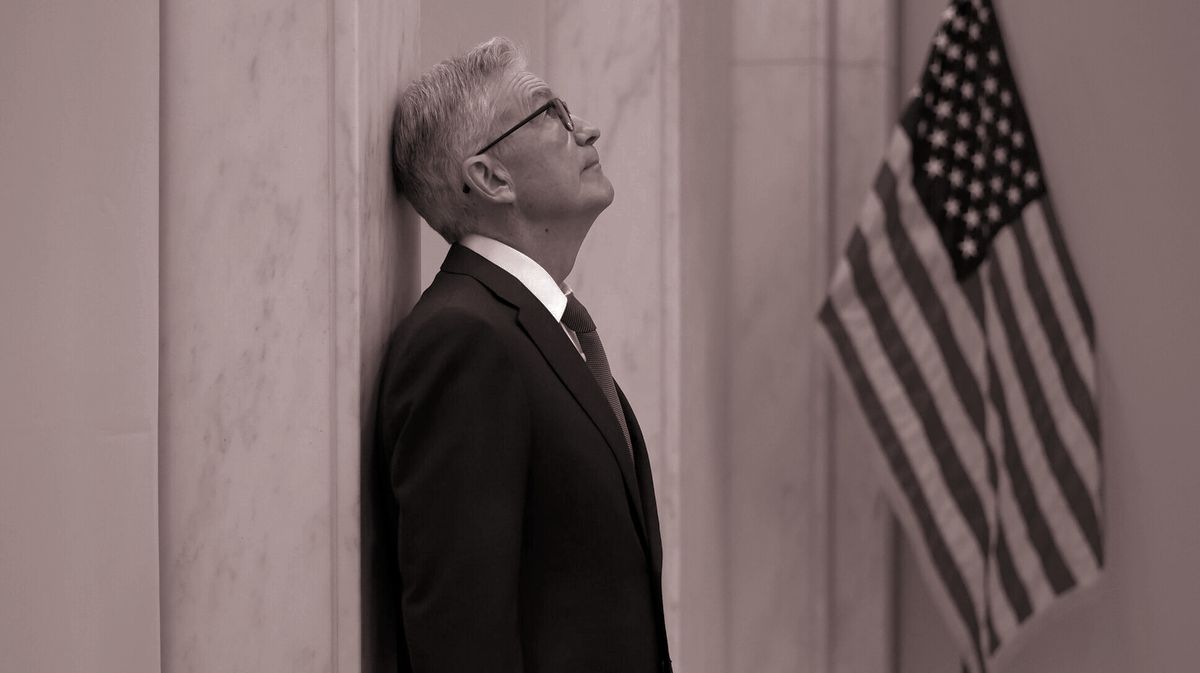
rocky summer for Jay Powell, the chairman of the Federal Reserve, with Donald Trump calling him schoolyard names and threatening to fire him despite not having the authority as president to do so. Powell has stoically ignored Trump’s taunts and demands to lower interest rates, but that has only amped up anticipation for the Fed chair’s speech this Friday in Jackson Hole. Today, I’ll game out Powell’s options, look at how Wall Street is absorbing the drama, and
try to delve, as best I can, into Trump’s motives.
But first…
|
-
Chamath returns to the SPAC casino: Over the last few days, my timeline has been filled with the news that O.G. SPAC merchant and All-In podcast co-host Chamath Palihapitiya had reentered the fray with something called American Exceptionalism Acquisition Corp. (You can’t make this stuff up…) American Exceptionalism is hoping to raise $250 million by selling 25 million shares at $10 each, and will have two years to find a merger partner. It’s the usual
SPAC economics, along with the fact that Chamath, as chairman, gets his equity stake basically for free. According to Chamath, the brain trust behind American Exceptionalism has no preconceived notions about its future merger target, but he allowed that the focus would be on “energy production, A.I., decentralized finance, and defense.”There are, however, a few interesting twists within this enterprise. First, the sole underwriter, who will get a fee of nearly $8 million, is not among the top
20 SPAC underwriters. Instead, Chamath is working with Santander, the big Spanish bank. The other oddity is that Chamath has enlisted, as corporate counsel, both Wachtell Lipton and Davis Polk, two fancy Wall Street law firms that also are rarely involved with SPACs.
Chamath’s SPAC prospectus includes a warning that “the investment will entail substantial risk including the possibility of total loss.” Chamath further warned that if retail investors do lose their shirts, the
expectation is that “they will embody the adage from President Trump that there can be ‘no crying in the casino.’”
That’s a bit rich, given Chamath’s record in the SPAC space. His other SPAC deals—including Opendoor (down 65 percent from its debut), Clover Health (down 74 percent), and the pièce de résistance, Virgin Galactic (down 99 percent)—speak for themselves. Chamath, of course, hasn’t suffered. His net worth is estimated to be as high as $2 billion, largely because
investors have been foolish enough to follow him through the doors of the SPAC casino. Have investors finally wised up? I’m not holding my breath. (This is not investment advice.)
- S.B.F. resurfaces: Meanwhile, it looks like Sam Bankman-Fried has a proposed court date—the week of November 3—for a hearing to appeal his 20-year sentence for fraud, conspiracy, and money laundering. He also
pinned to the top of his X account—“SBF’s words. Shared by a friend”—a copy of the testimony he planned to give before Congress in December 2022. (He was arrested instead.) The pinned post highlights a section blaming Sullivan & Cromwell, the powerful Wall Street law firm, for forcing him to file FTX for bankruptcy.I’ve always thought Sam’s eagerness to blame S&C was a risky
legal strategy, particularly if he’s angling for a pardon from Trump. Not only is S&C one of Trump’s law firms now, but a former S&C partner, Jay Clayton, was appointed this week, full-time, to the position of U.S. Attorney for the Southern District of New York. Clayton, you will recall, was also the chairman of the S.E.C. during Trump I. Good luck!
|
|
|
A MESSAGE FROM OUR SPONSOR
|
DESIRE MORE
Peerless
refinement. Uncompromising capability. Range Rover is the natural choice for those who lead by example.
EXPLORE
|
|
|
And a quick word from my partner Eriq Gardner regarding David Ellison’s latest joy of Paramount
ownership…
|
|
|
 |
Eriq Gardner |
|
- Ellison’s ‘Top Gun’
screenwriter suit: David Ellison expected to inherit plenty of legal headaches with Paramount, but a dispute over who really wrote Top Gun: Maverick—which Skydance helped finance and produce—was probably not near the top of the list. (I’d love to see his face when Paramount’s lawyers explain why the company currently faces some 20,000 asbestos claims from shipyard workers, dating back to its previous ownership of Westinghouse.) Still, for a new studio boss with
visions of another Top Gun sequel, this case is worth watching.The plaintiff, Shaun Gray, happens to be the cousin of Eric Singer, one of seven credited screenwriters on Maverick. Gray claims he ghostwrote key scenes, including the opening action sequence, and deserves a co-writing credit. On August 8, Judge Jed Rakoff
allowed Gray’s copyright infringement claim to move forward, though he tossed the more ambitious bid for co-ownership of the Tom Cruise franchise. Gray is represented by Marc Toberoff, who has made a career out of giving studios grief on the I.P. front. Singer, meanwhile, hasn’t said much publicly about his cousin’s claims, but he retained the
prominent entertainment litigator Michael Plonsker, who’s been cooperating with Paramount.
Paramount is now countersuing, accusing Gray of hiding his behind-the-scenes role so he could later “shake down” the studio. That’s a standard counterattack to this type of lawsuit. More interesting is the studio’s effort to access a 2023 Writers Guild investigation into the authorship of Maverick, which was conducted after Gray claimed he was pushed to stay silent during
an earlier credit arbitration. Paramount believes that evidence collected during the probe may contradict Gray’s version of events.
The WGA, represented by Anthony Segall, is pushing back—invoking attorney-client privilege and warning that disclosures would undercut the guild’s ability to enforce its collective bargaining agreement. The WGA never moved forward on any claim that Paramount violated the C.B.A. by not crediting Gray, but nevertheless, the guild now wants to
shield communications with Gray and others related to that inquiry.
Paramount says the WGA is trying to carve out something resembling a “union relations privilege.” Judge Rakoff has yet to rule on Paramount’s push for documents and the WGA’s bold privilege assertions. This one’s far from over.
|
|
|
And now, on to the main event…
|
|
|
As Wall Street waits with bated breath for Jay Powell’s latest interest rate smoke signals
to emerge this Friday at the annual Wyoming confab, we may be missing the larger story about mispriced risk in the economy.
|
|
|
The pressure is certainly ratcheting up on Jay Powell, the chairman of the Federal Reserve,
ahead of the annual Jackson Hole Economic Policy Symposium commencing on Thursday. This year, the three-day gathering—attended by Fed board members, central bankers, academics, and economists from around the world—will focus on “Labor Markets in Transition: Demographics, Productivity, and Macroeconomic Policy.” Powell will give his speech, with the bone-dry title “Economic Outlook and Framework Review,” on Friday morning. Another highlight will be Saturday’s panel discussion featuring
Christine Lagarde, head of the European Central Bank, and Andrew Bailey, governor of the Bank of England.
But all eyes will be on Powell, as Wall Street and the wider world look for a signal about how he intends to address short-term interest rates, which he will reveal at the September meeting of the Federal Reserve Board. The consensus among Wall Street economists seems to be that, on Friday, Powell will foreshadow a 25-basis-point cut in the federal
funds rate. The Fed, of course, has not cut its short-term interest rate targets since last December, when it cut rates by another 25 basis points following a 50-basis-point cut in September and a 25-basis-point cut in November. So far in 2025, the Fed has kept its target rate steady, in the 4.25 to 4.5 percent range.
The Fed, which has a dual mandate to keep inflation low (in the 2 percent range) and employment high, is in a difficult position. The slowing job market, as evidenced by the
infamous Bureau of Labor Statistics numbers that cost Erika McEntarfer her job, might suggest that lower interest rates are warranted to help stimulate the economy. And yet Trump’s erratic tariff policy, which acts as a sales tax on American consumers, is clearly driving up the cost of domestic and imported manufactured goods.
The ongoing threat of inflation caused by tariffs must also be looming large in the minds of the U.S. central bankers—especially
since it seemed as though, by the end of the Biden administration, inflation was finally being brought under control. If Trump had just stayed the course, Powell very well could have continued the rate-cutting pattern he pursued during the fourth quarter of 2024, and would probably not be in Trump’s doghouse. Instead, he’s turned cautious—rightly so—awaiting the consequences of the tariff scheme.
|
|
|
A MESSAGE FROM OUR SPONSOR
|
DESIRE MORE
Peerless
refinement. Uncompromising capability. Range Rover is the natural choice for those who lead by example.
EXPLORE
|
|
|
Naturally, Powell’s caution has infuriated Trump, who has essentially issued a fatwa on the
guy—despite having appointed him during his first term—and rarely misses an opportunity to lambaste him. In June, Trump urged Powell to cut interest rates by 100 basis points, writing in a Truth Social post to “go for a full point, Rocket Fuel!” He’s called Powell a “fool” and a “numbskull,” blamed him for overbudget office renovations, and warned that his “termination could not come fast enough”—ignoring the fact that the president can’t fire the Fed chair, and that the Fed chair does not
unilaterally set interest rate policy, though the office wields enormous influence over the 12-member committee that does determine rates.
“The stakes are high,” the economists at Evercore ISI wrote to investors leading up to the Jackson Hole meeting. Duh.
|
It’s obvious why Trump, who has spent a lifetime borrowing money, wants to lower interest rates. Thanks in
large part to Trump I and Trump II, the national debt is $37 trillion these days. With the government’s blended cost of capital at around 5 percent, the annual debt service is around $1.85 trillion, which is about equal to the expected federal budget deficit for fiscal 2025. Trump’s Big Beautiful Bill is expected to add another $4 trillion to the national debt over the next decade. Lowering the cost of money will obviously lower the annual interest payments on all that debt, and,
presumably, the annual budget deficits.
Complicating matters, of course, are the signals already coming from the financial markets: They’re running white hot, with equity markets—the S&P 500, Nasdaq, and Dow Jones Industrial Average—at, or near, all-time highs for reasons that continue to defy logic. But since no one rings a bell at the top of the market, this is the way it always happens. It’s only in retrospect, after the correction occurs, that investors look back in wonder and ask,
How could we have been so stupid, yet again?
It’s also clear that risk is again being mispriced in the market. Investment-grade corporate credit spreads are at their tightest levels compared to the U.S. Treasuries since 1998, and have only gotten tighter as the year has progressed. The investment-grade spreads spiked to around 118 basis points after the so-called Liberation Day on April 2, but have contracted to around 75 basis points since then. The high-yield bond index bolted
up to an average yield of 8.5 percent after Liberation Day, but is back to an average yield of 6.7 percent. It’s not the craziness of summer 2021, when the high-yield index was below 4 percent, but it’s still pretty nuts.
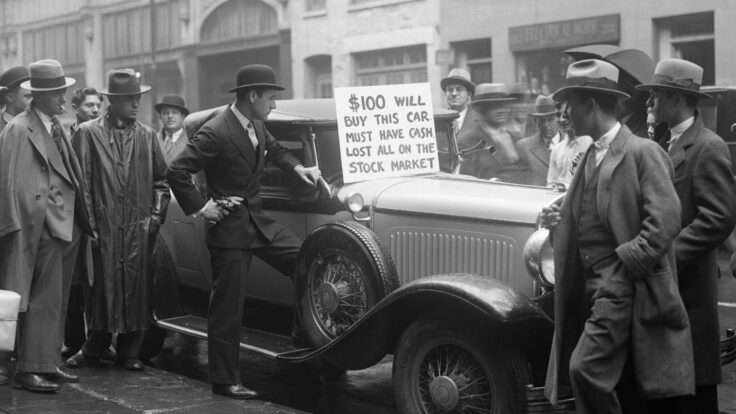
It’s my experience—having lived through one market correction after another since I got my first job on Wall Street, one month before the Crash of 1987—that nothing good happens when credit investors misprice risk to this extent. I remember when Gary
Cohn, then the president of Goldman Sachs, explained to me how he and others at Goldman concluded that risk was being mispriced across the credit spectrum during the summer of 2007. Other banks failed to notice, but Goldman did, and took action—shorting the credit markets—making a fortune while the rest of Wall Street tanked, exacerbating the 2008 financial crisis.
|
“A Soap Opera That’s Never Going to
End”
|
In short, it’s not the least bit clear to me why we need the interest rate cut that Trump is so desperate
for. On Monday, Richard Clarida, a former Fed vice chairman who is now a global economic advisor to PIMCO, the bond behemoth, told Reuters, “The Powell I know wants to be data dependent, and not make a decision before he has to. If they do cut in September, there will be a lively communication discussion. What are we communicating? Is this ‘one and wait’? The first of five or six? Even if they want to cut, the communication could be a challenge.”
Justin
Wolfers, a professor of economics and public policy at the University of Michigan, told me that Powell has been right to wait and see what the effect of the tariffs would be before deciding the direction of short-term interest rates. “That was clearly the right thing to say in February, and the right thing to say in March, and even the right thing to say in early April,” Wolfers told me. “Then we got Liberation Day seven days later, followed by TACO Day 90 days later, followed by a
re-TACO, followed by Liberation Day the Sequel, and now followed by loose talk of 100 percent, 200 percent, 300 percent tariffs on silicon. At this point, it feels like a soap opera that’s never going to end.”
Regarding Powell’s much-anticipated speech this Friday, Wolfers and I agreed that, however unlikely, the Fed chair would do well to reassure Americans that he’ll continue to stand strong for the Fed’s independence, and also remind us all that he alone does
not set interest rate policy. “Whether we cut rates in September or December honestly doesn’t matter that much, as long as they get there eventually,” Wolfers said. “This speech is the best set piece that Powell has to respond to recent questions about their independence.” (Today, Trump’s attack on the Fed continued as he demanded that board governor Lisa Cook resign, based on unsubstantiated allegations of mortgage fraud.)
When I brought up the question of
Powell’s successor, Wolfers said that there shouldn’t be cause for panic, even if Trump appoints a clown, as he just did with E.J. Antoni as the new head of the Bureau of Labor Statistics. “When people ask me, Should we freak out?, one answer is: The Fed chair is one of 12 votes,” Wolfers said. “The other 11 are serious economists, and there’s no reason the chair has to be a strong voice. My hope is that if he appoints a similar
lunatic as chair of the Fed, the other 11 will decide that simply means he gets to sit at the head of the table, bang the gavel, and vote however he wants, but that he has no outsize influence on policy.”
|
|
|
Ace media reporter Dylan Byers brings readers into the C-suite as he chronicles the biggest stories in the industry: the future
of cable news in the streaming era, the transformation of legacy publishers, the tech giants remaking the market, and all the egos involved.
|
|
|
Join Emmy Award-winning journalist Peter Hamby, along with the team of expert journalists at Puck, as they let you in on the
conversations insiders are having across the four corners of power in America: Wall Street, Washington, Silicon Valley, and Hollywood. Presented in partnership with Audacy, new episodes publish daily, Monday through Friday.
|
|
|
Need help? Review our FAQ page or contact us for assistance. For brand partnerships, email ads@puck.news.
You received this email because you signed up to receive emails from Puck, or as part of your Puck account associated with {{customer.email}}. To stop receiving this newsletter and/or manage all your email preferences, click here.
|
Puck is published by Heat Media LLC. 107 Greenwich St, New York, NY 10006
|
|
|
|