 |
|
Aloha, rahajeng peteng, and welcome back to The Best & The Brightest: Impolitic, coming at you tonight from the City of Angels, my hometown, where this evening’s cultural offerings include two must-see performances taking place at almost exactly the same time: Dodgers versus Mets at Chavez Ravine and Joni Mitchell at the Hollywood Bowl. Question: How the hell does a true-blue Dodger fan (with a giant soft spot for the Mets) and an inveterate worshiper of Joni’s genius square that temporal circle? Answer: either cloning or teleportation. I’ll let you know which path I pick.
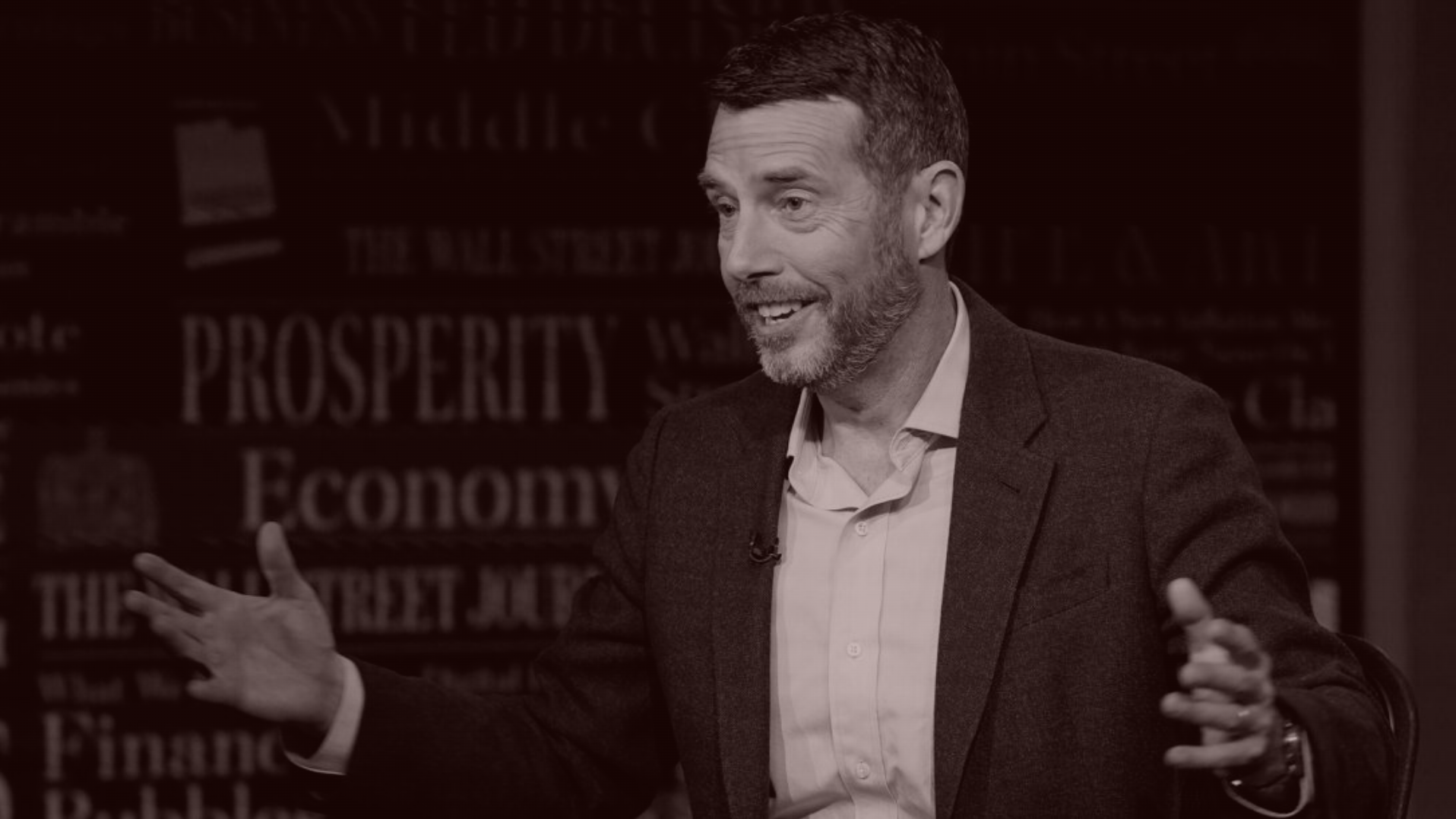
In tonight’s column: excerpts from a rare long-form interview with David Plouffe, the legendary strategist whose role in electing and reelecting Barack Obama was indispensable and who is now firmly in the cockpit of Kamala Harris’s cruising vessel alongside campaign chair (and former Plouffe protégé) Jen O’Malley Dillon. The interview was for tomorrow’s episode of Impolitic With John Heilemann; the full monty will post in the morning, and you can find it right here. But in the meantime, we’ve excerpted some of the tastiest morsels for tonight’s column. If the election is of any interest to you at all, hahahaha, you’re gonna want to read on and then download the pod ASAP tomorrow.
But first…
🎧 Essential listening: Even before I got around to gabbing with Plouffe on Friday, the podcast had been firing on all cylinders, cranking out a pair of shows illuminating different aspects of the final stages of this nail-biting, nerve-wracking, surrealistic circus otherwise known as the 2024 presidential election. On Wednesday’s episode, Beltway journalistic power couple Peter Baker of The New York Times and Susan Glasser of The New Yorker joined me to assess Trump’s threat to use military force against the citizens of these United States whom he’s dubbed “the enemy within,” other assorted constitutional depredations, and the end of the G.O.P. as we know it.
Then, on Friday’s show, I engaged in what’s become a personal tradition: having a good long chat with Michigan Democratic Congresswoman Debbie Dingell, who discussed the razor’s-edge race between Harris and Trump for the Wolverine State’s 15 crucial electoral votes—and how Kamala could and should go about sealing the deal with its complex and nuanced collection of voters, for whom Dingell has as sure a fingertip feel as anyone in politics.
|
 |
| Kamala Before the Storm |
| As pre-election Democratic bedwetting reaches clinical levels, Harris senior advisor David Plouffe joins John Heilemann to provide a full-spectrum data corrective: how the campaign is microtargeting in battleground states, why McLaughlin is wrong about Harris’s ceiling, and when to ignore Nate Silver. |
|
|
|
| Last week in this space, as the tremors of Democratic electoral trepidation became so palpable that you could practically measure them on the Richter scale, I attempted to get ahead of the eruption of panic that has become as reliable a quadrennial ritual as the Al Smith dinner—only sweatier, more cacophonous, less easily ignored. I may not be the brightest bulb in the chandelier, but I’m not a moron (okay, not a total moron), so I was under no illusions that my effort to inject a semblance of level-headed rationality and even-keeled perspective into the political ether would have any effect whatever on the freak-out that was clearly about to commence. But even I didn’t anticipate the ferocity of 2024’s burst of blue-state bedwetting—a paroxysm of piddle that makes past episodes of this kind look like a mere sprinkle of tinkle.
Given the rapid and metastasizing sights and sounds of hair-trigger Democrats across the country reacting—i.e., over-reacting—to every flutter in the polling averages (regardless of their statistical insignificance or predictive irrelevance), or to cable-news chyrons designed precisely to scare the shit out of viewers, or to often apocryphal anecdotes peddled by friends and foes alike, I decided it was time roll out the most authoritative voice on these matters that I could wrangle and see if he could succeed where I have failed: in talking sense to you people.
Thus it came to pass that I found myself having a chunky talk on Friday with David Plouffe for an episode of Impolitic With John Heilemann. Plouffe, of course, is the legendary Democratic operative who served as campaign manager of Barack Obama’s 2008 White House bid and senior strategist for his 2012 reelection effort. As it happens, he is also, for better or worse, the man who introduced and perhaps permanently implanted the term “bedwetter” in America’s political vernacular.
It’s fair to say and surely worth noting that, in the fractious, bitchy, and bare-knuckled business of political consulting, Plouffe is viewed from both sides of the partisan aisle with something close to universal respect, at times bordering on reverence. His reputation derives from a quasi-Vulcan, mile-wide streak of clear-eyed, rigorous hyper-rationality and devotion to empirical data. Those qualities have in the past allowed him to maintain a kind of laser-like focus on what is actually required to win elections with the highest degrees of difficulty and the most staggering stakes imaginable, under the sort of crushing pressure that, in the geologic realm, turns carbon into diamonds.
And so it was hardly surprising that the announcement in early August, not long after Kamala Harris took Joe Biden’s place as the presumptive Democratic nominee, that Plouffe was suiting up for Team K, joining forces once again with his former protégé and current Harris campaign chair Jen O’Malley Dillon, filled Democrats far and wide with a sense of pervasive calm, profound reassurance, and no small amount of glee.
But now, as we head into the final two-week sprint to Election Day, the emotions of the summer have been replaced by fear and loathing. And while Plouffe says he understands why his allies are so wigged out and wobbly, he also has much to say about the state of the race—about why he believes Harris has a higher ceiling in the battleground states than Trump, how most of the public polling you’re obsessed with is so worthless he doesn’t even bother to look at it, what he and his colleagues are seeing in the early-vote numbers that buoys their optimism, and why Trump’s apparent exhaustion signals that “something really funky” is going on with the former president. (As always, these excerpts have been lightly edited and condensed; be sure to check out the full podcast interview when it drops tomorrow morning, here.) |
|
|
| John Heilemann: Last week we saw your candidate, not so long ago the candidate of joy, adopt a harder-edged, more contrast-driven message that’s also reflected in your advertising—labeling Trump as “unstable, unhinged, and unchecked.” Obviously, that’s about raising the stakes of the election in the final two weeks, but talk to me about the strategy behind the shift and the voters you’re targeting with that message.
David Plouffe: Let’s rewind the tape a little bit. When Kamala Harris became the nominee, Donald Trump had six- or seven-point leads against her [in the battleground states]. So we spent a bunch of time basically catching up, and I think we find ourselves—and we’ve been here for some time now—in what is basically a tied race. There are very few voters left who haven’t decided who to vote for or whether to vote at all, but there’s enough of them to decide the election. Obviously, she still smiles out there and has a good time, which is something Donald Trump doesn’t do, but raising the stakes is important because we have to raise the risks of a second Trump term. He’s more unstable, he’s more unhinged, he has a desire for unchecked power—Project 2025 is his manifesto for that. We want people in the final throes of deciding who to vote for to know about her, how she’ll help them, how she sees the world, but also [to focus on] the risk of Trump.
In our research, it’s clear this is something that voters who have yet to decide have grave concerns about. They say a couple of things that are interesting: People are, like, [Biden was old], but Trump is really old, too. And he seems like he’s losing his way, he doesn’t make a lot of sense, and that worries us. So for us, that can’t just be something we all laugh at. We’ve got to raise the stakes: Do you really want this unstable person making decisions about our economic policy and health care policy and foreign policy?
You just talked about two different subsets of voters: those who haven’t decided who to vote for, and those who haven’t decided whether to vote. Now, you know way more about the data on this than I ever will, but my sense from the research is that the second group—the people deciding between Harris and the couch or Trump and the couch—is bigger than the first group, who are deciding between Harris and Trump. Correct?
Every state’s a little bit different. But in each of the seven battleground states [Arizona, Georgia, Michigan, Nevada, North Carolina, Pennsylvania, and Wisconsin] there’s at least 4 percent who are still trying to decide who to vote for between the two of them. And then both campaigns have people who are going to vote for them if they vote, but who haven’t firmly decided yet [whether or not to vote]—that’s where the ground operation and smart use of the candidate comes in. And we think we have the advantage there.
I had a Zoom last night with some of my old Obama colleagues, many of whom are out now in the battleground states, to ask all our former colleagues to sign up to go into the battlegrounds. To a person, and these are people with a lot of presidential campaign experience, they were saying they think door knocking will be more important in this race than we’ve ever seen because the campaign got started late and there are a lot of people out there still trying to figure out who to vote for or whether to vote, but it’s a mix. In every state, we’ve got turnout targets and Trump has turnout targets, but I think we’re better equipped to reach them because we actually have a ground game.
But the bottom line is, yes, there are still a bunch of genuine undecided voters going, “Hmmmm, Harris or Trump? Harris or Trump…”—even though you gotta wonder, What the fuck is wrong with these people?
Yes! I see them in focus groups every day. |
|
|
| On Dan Pfeiffer’s podcast the other day, you said two things you’ve said to me countless times: that a), you totally ignore all national polls and only pay attention to battleground-state polls; and b), most public polling is “horseshit.” So how does that apply to forecasting models like Nate Silver’s? I mention his specifically because, after a month straight where it had Harris as the narrow favorite, it now has Trump as the 51.0 to 48.8 percent favorite, giving Democrats yet another reason to freak out.
We have our own data. Just like a consumer company makes decisions about customer retention and acquisition based on their own data, that’s what we’re doing. Our data is our window into the race, and it shows that the race has been really close since mid-September.
Right, and I love that you’ve been telling Dems to pay no attention to any poll that has Harris—or Trump—up by 4 points because it’s a garbage poll. Would you like to tell folks to stop paying attention to Nate Silver?
Nate would be the first to tell you that if his model shows somebody with a 51 percent chance of winning, that means 49 percent of the time they lose the race. Also, all of these models are still based on public polls. And I’ll tell you, there was a period of time post-debate when we saw public polls that had us with a lead that we didn’t see [in our data]. My guess, John, is that between now and Election Day, in Nate Silver’s model, the 538 model, there’ll be some days we’re up and some days we’re down, but this is a dead-heat race.
I think the Trump campaign would admit that, too. I’m cautiously confident because, number one, I think we have a higher ceiling, meaning we’re more likely to get 49.5 or 50 percent of the vote in more states [that he is]. Number two, Trump is more reliant on first-time voters and irregular voters, and in the early voting data we’re seeing so far, there’s no suggestion they are turning out a bunch of irregular voters. In fact, in every battleground, I think, we’ve got more irregular voters than he does.
So no army of incels showing up to vote early?
Maybe they’ll show up on Election Day, but so far there’s no sign that they are marauding at early vote locations. So I think Trump is probably closer to a ceiling than we are, but this is very close. And what I want to do is to be honest about that—and be clear that, to the extent Democrats thought we were sailing to a victory here, that’s not the case and it never was. |
|
|
| However flawed the public polling is, it affirms your basic point about how close the race is. But data and anecdotal evidence suggests Trump may have a little bit of momentum as we come down to the wire. Do you see any signs of that in any of the battleground states in your data?
No. What I think is happening is that, while there were public polls showing Kamala Harris with an outsize lead, generally they were based on Trump being down at 43, 44, 45— so he was taking a haircut post-debate. But we really didn’t ever see [him that low]. Trump is gonna get 47 or 48 percent of the vote. But we see no sign of Trump momentum.
One place where others do see the race shifting in Trump’s favor is in Michigan, Wisconsin, and Pennsylvania. Recently there have been press reports about Democrats like [Michigan Senate candidate] Elissa Slotkin and [Wisconsin Senate incumbent] Tammy Baldwin saying their polling shows Harris behind in their states. So setting aside Trump momentum, do you see any signs of Harris erosion in the Blue Wall states?
No. What we see in the Blue Wall states is that Trump had a big lead and we kept cutting into it—some of that was him coming down, a lot of it was us going up, and this race has basically been 48-48, 48-47 in those states for some time. When we look under the hood, what matters is what happens when 100 percent of the vote is being allocated. How are those undecided voters likely to break? Who’s got an advantage on turnout in various turnout scenarios? We like our position, but listen, I’ve also heard this week there’s polling in some of those states—not ours, but in Senate races—that has us with a larger lead than we are seeing ourselves. So we have to tune that out and just go by our own data.
Another source of concern for Democrats are the polls, most recently in The New York Times, that show Harris underperforming with Black voters—especially Black men—and Hispanic voters. How real is that? How worrisome? And can it be fixed between now and Election Day?
Let’s start with Trump’s weaknesses. His deficit with college-educated women is just massive, and that’s a huge part of the electorate. You look at what might happen with women under 29, who vote at much higher levels than men under 29, historically: the gap is 40 to 45 points. So we’ve got a lot of strengths. And, in any race, you’ve got some places where you’re doing better than history suggests and places where you have challenges.
So let’s look at the Latino vote. Most of the coverage is based on national surveys. But even if you’re doing an oversample, you’re making a decision about where that vote stands nationally among 500 people; it’s insanity. For example, Trump is going to win the vote among [the Latino] cohort in Florida, but as it relates to 270 electoral votes, that’s not a factor for us. What matters is what’s going to happen with Hispanic voters in Nevada and Arizona, and we really like where we are right now. What’s going to happen with the Puerto Rican community in Pennsylvania? We like where we are.
With Black men, obviously, Trump is going to do better in some polls than he did in 2020, and we don’t deny there’s going to be a fight there. But what matters is whether we get to the number we need when you put all the voting cohorts in the bushel together. We feel we have a pathway to do that, for sure.
You mentioned having demographic strengths. Here are some others: more money, more boots on the ground, and a more vibrant candidate. Whereas last week you had Trump doing a DJ set for 39 minutes onstage; canceling a podcast interview due to exhaustion; and then going on Dan Bongino’s podcast, saying that Harvey Weinstein got “schlonged” and looking like a total wreck—worse than even you and me, which is saying something. As a quantitative guy, can you measure how much having a better candidate gets you? A point or two?
In this close of a campaign, particularly a presidential campaign … candidate performance matters a great deal. The Trump campaign will say no one in the campaign said he’s exhausted, but it’s linked to a Trump campaign official. He’s been canceling things. Now, I’ve been part of a lot of presidential campaigns; it’s a big decision to decide to do something, so when you decide to do something and then you cancel it, something really funky is going on. He’s exhausted. And, look, these things are exhausting. I’m a lot younger than he is, and I’m exhausted. But he’s the candidate, auditioning to become the president of the United States, the toughest job in the world. I think voters now are, like, Well, he would be the oldest guy ever to hold the office. He’s saying unhinged stuff. And now he’s exhausted. Is he really up for the job?
The other thing is turnout, which is a combination of best operation, best data, best resources, best volunteers. But what really gives all of that energy is the candidate closing well. That gets more volunteers out. That might get some of those tough-to-get voters to say, She’s taking the fight to them; I like that. Sometimes it’s not policy-based; it can be based on performance and energy. And she’s out there campaigning hard, having fun, going into tough [venues] like Fox News. So I think we have a chance to close much stronger. And listen, in the research we’re seeing, voters say they’re thinking about the fact that he seems tired and unstable—you know, the [lies about immigrants eating] cats and dogs. But it’s beyond that. He gave a 30-second answer on Fox and Friends about Kamala Harris not liking cows, and how all of the cows will go away. That kind of stuff just doesn’t help him, you know? |
|
|
| John McLaughlin, one of Trump’s pollsters, did an interview with my colleague Tara Palmeri and disputed your argument that Harris has a higher ceiling than Trump. His argument is that because Biden is so unpopular, Harris is so tied to Biden, and the national mood is so sour, Trump is gonna outperform his 2016, 2020 vote share easily, and by a lot.
My guess is that what John is basing that on is a message argument, an atmospheric argument. But my confidence is based more on looking at who the undecided voters are. Data these days is incredibly rich and sophisticated. For example, if John Heilemann is going to vote for Kamala Harris, I look at the undecided voters and ask, Do they look more like John Heilemann or John McLaughlin? In every state, they look more like John Heilemann. I don’t want to overstate this; it’s not like undecided voters are going to break 90-10 [for us]. Everything we’re seeing would suggest a razor-thin race that could be decided by less than a point. But we think more of the undecided voters who are likely to vote look more like our voters than Trump’s. And we’re confident that we’ll ultimately turn out the voters we need.
The right track, wrong track numbers are what they are. We have to deal with that. But I think Kamala Harris has done a good job of presenting herself as a new candidate. As she said to Bret Baier, her presidency is not going to be a continuation of Joe Biden’s. I think voters are willing to give her some room there, because they know that a vice president comes in and does exactly what the president does. And I still think at the end of the day, Trump getting to 50 in reality in all of the states he needs to get there is harder [than it is for Harris], but that doesn’t mean he’s not going to get to 48, 48 and a half. It wouldn’t surprise me if we have states that are 50 to 49, 49.8 to 49.2.
I know for a lot of Democrats, it’s like, How can he be doing this well? Why isn’t this a landslide? I hear it every day. But if you paid attention to the last two presidential elections, [you know that] this is just the reality we’re living in. This is going to be really close—uncomfortably close. |
|
|
|
| FOUR STORIES WE’RE TALKING ABOUT |
 |
|
 |
| A Condé Crisis |
| Unpacking the D.E.I. crisis at Condé Nast. |
| LAUREN SHERMAN |
|
 |
| NFL Media Beef |
| Why are the league’s network partners so furious? |
| JOHN OURAND |
|
 |
|
|
|

|
 |
|
|
|
Need help? Review our FAQs
page or contact
us for assistance. For brand partnerships, email ads@puck.news.
|
|
You received this email because you signed up to receive emails from Puck, or as part of your Puck account associated with . To stop receiving this newsletter and/or manage all your email preferences, click here.
|
|
Puck is published by Heat Media LLC. 227 W 17th St New York, NY 10011.
|
|
|
|