 |
|
Happy Sunday, and welcome back to Dry Powder.
|
|
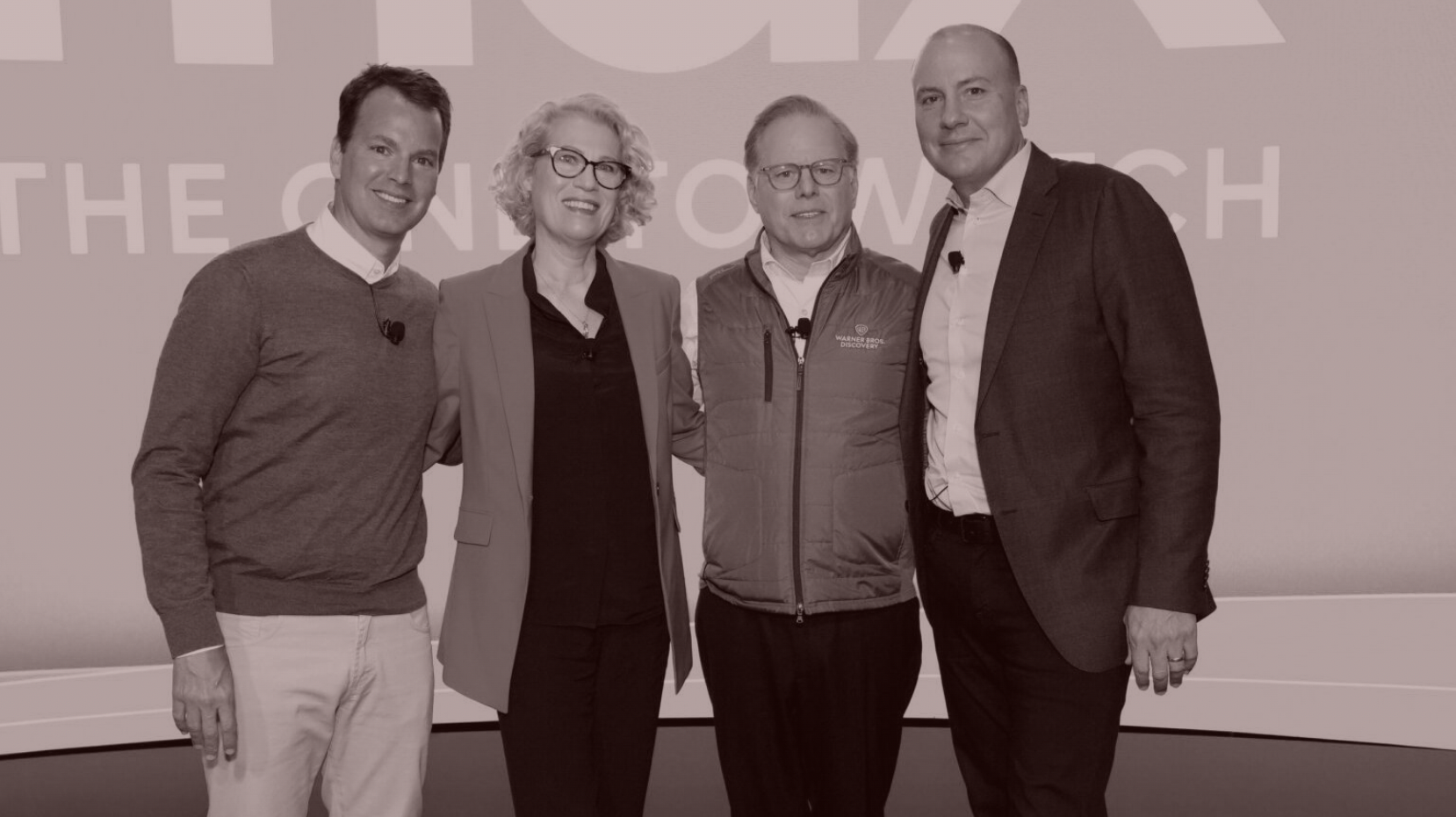
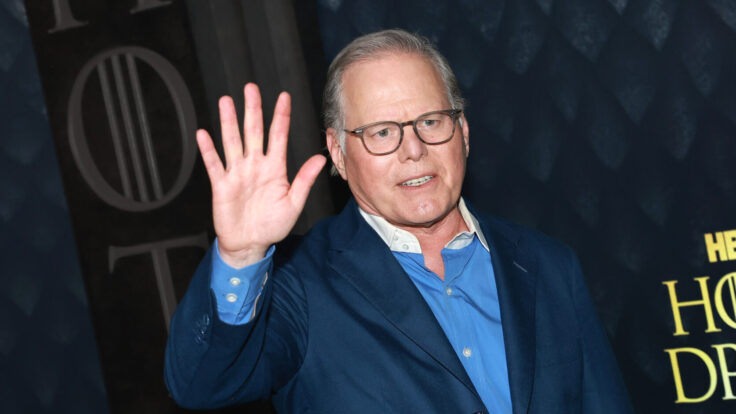
Only time will tell if the decision by David Zaslav & Co. to drop the iconic “HBO” from “HBO Max” will help the streamer achieve mass market appeal, become a true Netflix competitor, and pay down WBD’s 45 billion of net debt. But there’s reason to believe it could. Today, a look at the surprising history and logic behind the rebrand, a nod to new Commanders buyer Josh Harris (and the NFL’s enduring diversity problem), and an attempt to make sense of Elon’s soul-crushing BBC interview.
|
|
|
| Last Sunday, I had to pour one out for the rapidly de-accessionizing Ron Perelman. This week, I’m pouring one out for HBO, or at least the standalone HBO brand, which was launched in Manhattan in and around 1972 by the cable pioneer Chuck Dolan, and has been folded by our friend David Zazlav into a new mega-streamer, “Max,” combining all of the entertainment assets of Warner Bros. and Discovery, like some sort of one-year anniversary memento for their blockbuster merger.
During Wednesday’s rollout, Zaz & Co. tried to put a good face on what Max is and will supposedly become, with the implication being that the new, everything-to-all-people brand—combining the likes of White Lotus alongside MILF Manor—will get Warner Bros. Discovery to places that HBO Max alone could not go. We’ll see, of course. The market didn’t seem to love the change, with the WBD stock falling more than 7 percent since the announcement, although it is still up 44 percent so far this year.
Blessedly, Zaz decided to make it relatively seamless for HBO Max subscribers by not requiring a new payment or price point for access to the Discovery+ library when the transition becomes effective on May 23. The real trick will be convincing current subscribers of the slightly more downmarket D+, which costs about a third of the price of HBO Max, to upgrade to Max or at least to the discounted ad-supported Max tier. Interestingly, you can currently subscribe to a full year of Max at a 22 percent discount to the monthly payment option, which suggests that Zaz is happy to sacrifice short term margins for greater lifetime value.
There have been plenty of Easter Eggs on the path to this decision. For instance, in March, both Bloomberg and The Wrap reported that top WBD executives had come to a conclusion that “the HBO name turns off many potential subscribers”—that it was perhaps too rarefied, too liberal, too John Oliver and too Bill Maher for the mass audience that Zaz needs, and wants to attract, to compete with Netflix while also continuing to pay down WBD’s $45 billion of net debt. The numbers, alas, do seem to bear this out. For all the hype and Twitter chatter around last Sunday’s blockbuster Succession episode—and it was superb—the show only attracted 2.5 million viewers. The far more banal season five premiere of Yellowstone racked up something like 12 million viewers.
But, no surprise, I liked most everything the HBO name stood for and I will miss it. Under the leadership of Richard Plepler (who stepped down shortly after AT&T took over TimeWarner) and Casey Bloys (who has continued on as Chairman and C.E.O., a recently bequeathed title, under the new regime), HBO generated hit after hit. Not just Succession (for which I had a brief stint as a consultant during the first season) of course, but also The Wire, The Sopranos, Game of Thrones, etcetera. And that’s just what HBO was allowed to make under the pre-AT&T regime and the post-AT&T regime. Once upon a time, no surprise, HBO saw every good script out there. It had the first crack at House of Cards, which became the breakthrough dramatic series for Netflix. But the TimeWarner executives decided not to compete for it after Netflix came to the table with a guaranteed two-year run, and without seeing how the pilot performed first.
There are probably 15 more examples where this happened. Even though HBO was making money hand over fist—something like $2.5 billion of EBITDA a year—it was part of a big company, loaded down with debt. The financial realities became the driving force.
In fact, if you return to the now-infamous June 2018 town hall conversation between Plepler and John Stankey, the current C.E.O. of AT&T who was then merely the architect of what became the disastrous AT&T-TimeWarner deal—among other disastrous AT&T deals—you can see the DNA of what has become Max and the foretelling of the demise of HBO. During that memorable exchange, Stankey spoke about the need for HBO to find a much bigger audience. “The challenge is,” Stankey said, “[that] not 100 percent of the customers expose themselves to the HBO brand. And so in this world of what I just talked about—marginal cost structures, direct to consumer, the virtuous cycle of having information about consumers and data—we’ve got to move beyond 35 [percent] and 45 [percent] penetration to have this become a much more common product... We need to figure out how we expand the aperture of it without losing the quality.” Stankey wanted “more frequent engagement” at HBO, not once a week, but an hour a day. “We’ve got to think about how, over time, we start to build that brand so that it’s broad enough to make that happen,” he said.
For his part, Plepler didn’t disagree with his new boss, at least on that point. He said he’d be more concerned if people weren’t beating down HBO’s door to do high-quality projects with the brand. “There’s a surfeit of talent at the door that wants to work here,” he said. “And the unfortunate thing for us—and just to respond to this for a minute—is we’ve said before ‘We never want to be in a position that we have to say no to what we want to say yes to.’ And we have had to say no to what we want to say yes to. And the textbook example of that unfortunate constraint is a show like House of Cards, which was in this company.”
Plepler then asked Stankey what he meant by “expanding the aperture” at HBO. Did Stankey think HBO could continue to “curate ever-broader content” or was he thinking that HBO needed to reach beyond its “core definition of success” for “other kinds of content?”
Stankey didn’t want to answer Plepler’s question directly. But he did give a hint of his thinking, which is pretty darn close to Zaz’s own Max vision. “We’re going to have to provide the ability for customers to navigate out of [HBO] into other types of content that might not be germane to what you have in your business today,” he said. “...Are there unique brands within that one platform under an umbrella? Does the customer navigate through them in different ways? Do each of them have different monetization models? It’s entirely possible. But I don’t think there are going to be 15 apps sitting in somebody’s phone or in their environment or on their TV set at home that they’re just going to navigate around over the long haul. I’m talking five years from now.”
On May 23, it’ll be about five years to the day since Stankey and Plepler had that fateful conversation on the stage of the HBO Theater, on the 15th floor of the HBO headquarters in Midtown Manhattan, across from Bryant Park. Plepler’s hope that HBO would never have to pass on great projects never came to pass, a victim of one AT&T corporate snafu after another that ultimately led to WBD getting saddled with $55 billion of AT&T debt a year ago. Then, as now, HBO is stuck with the bill. |
|
|
| Good for Josh Harris, the Apollo Global Management co-founder turned sports franchise manager, for scooping up the Washington Commanders after Jeff Bezos backed off, as my partner Teddy Schleifer reported earlier this week. Sure, Josh still needs approval from 24 of the other 32 NFL team owners, but that shouldn’t be difficult given that Harris’s offer of $6 billion is a whopping 29 percent increase over the previous highest price paid for an NFL franchise, when the Walton family nabbed the Denver Broncos for $4.65 billion last year—itself more than double the prior record, when hedge fund manager David Tepper paid $2.22 billion in 2018 for the Carolina Panthers. Like waterfront property in Palm Beach, the value of many sports assets has been increasing practically exponentially.
Of course, the Harris bid also highlights, once again, that there are still no Black majority owners of a NFL franchise, despite the fact that some 70 percent of the players in the NFL are Black. (Harris’s investment group includes Magic Johnson for a minority stake.) Robert Smith, the private-equity mogul, was thought to be a bidder for the Broncos. But even with a net worth of around $9 billion, Smith was no match for Walton, who, with a net worth of around $65 billion, is the wealthiest NFL owner.
Indeed, there are only two team owners of color in the NFL: Shahid Khan, who owns the Jacksonville Jaguars, and Kim Pegula, who along with her husband, Terry Pegula, owns the Buffalo Bills. Khan, with a net worth of around $7 billion, is the owner of Flex-N-Gate Corporation, an auto parts manufacturer. He was born in Lahore, Pakistan and moved to the United States at the age of 16 to attend the University of Illinois. Terry Pegula is a fracking billionaire, with a net worth of around $8 billion. His second wife, Kim, was born in Seoul, South Korea, and was adopted by an American family, the Kerrs, when she was five years old. The Pegulas live in Boca Raton, and own a variety of other Buffalo area sports franchises, including the Buffalo Sabres hockey team and the Rochester Americans hockey team. (Their daughter, Jessica Pegula, is one of the highest ranked female tennis players in the world.)
All the other NFL owners are either extremely rich white men or are their wives and children, who inherited the club upon their deaths, such as Sheila Ford Hamp, the principal owner of the Detroit Lions and Ford family scion, or Virginia Halas McCaskey, the principal owner of the Chicago Bears and daughter of the late player-turned-owner George Halas. (One NFL team, the Green Bay Packers, has been owned by a large group of diverse shareholders rather than a single individual or family since its founding 100 years ago. That unusual structure has led to a cost-consciousness that frustrated Aaron Rodgers during the past few years and will likely facilitate his departure to the Jets, owned by J&J scion Woody Johnson.) So, you know, good for the NFL and its ability to make its franchises more and more valuable. But, let’s face it, the league still has a lot of wood to chop when it comes to solving its diversity problems at the ownership and coaching levels.
As for Harris, owning sports teams is certainly one of his passions. He is also the principal owner of the Philadelphia 76ers and New Jersey Devils and has a small stake in the Pittsburgh Steelers, which he will have to divest in order to buy the Commanders. In 2017, he and David Blitzer, a partner at the Blackstone Group, consolidated their sports-ownership interests into Harris Blitzer Sports and Entertainment. But Harris also remains very much in the private-equity business, even if he is no longer at Apollo following his failed bid to get control of the company in the wake of Leon Black’s defenestration.
After he left Apollo last year, Harris moved more or less full time to Miami, where he started a new private-equity and private-credit firm, 26North, with some $5 billion of money to manage—an impressive sum for a first fund, although not shocking given Harris’s investing track record and experience at Apollo. 26North is portraying itself as “a next-generation alternative asset management firm that aims to generate compelling returns across asset classes and capital structures for its partners.” Clearly, Harris, 58, is not done—despite having a net worth of around $6 billion—and seems to be gearing up for a serious new phase of wealth appreciation. |
|
|
| Some people are describing Elon Musk’s recent interview with the BBC as soul-baring, but it was more like soul-crushing, if you ask me. The guy has a bad case of verbal diarrhea and would be wise to start saying and sharing less. (For instance, on Friday morning, he made a puerile joke about the French novelist Honoré de Balzac that maybe a tenth-grader would find slightly amusing, assuming he or she knew who Balzac was.) Of course, you don’t spend $24 billion of your own money to then wildly overpay for Twitter if you don’t plan to use it as your own personal ball of yarn. And use it, and abuse it, he has for the past six months.
Incredibly, if what Musk said in the impromptu BBC interview is to be believed, it seems he wants us to feel sorry for him. He said he only completed the Twitter deal because he figured—correctly, I hasten to add—that he would have lost the Delaware court case brought by Twitter in order to force him to buy the company for $44 billion as he consented to do when he signed the merger agreement in April. I can certainly understand why he wanted to get out of the deal: it was lousy from the start and one he never should have made.
But he should have reached that conclusion before he signed the merger agreement, not after. That decision has cost him the $24 billion of equity he invested, plus the $7 billion of equity that his 18 or so rich friends also invested in the deal in addition to some percentage—currently around 50 percent—of the $13 billion that the Wall Street banks, led by Morgan Stanley and Bank of America, underwrote to support the deal that they have not yet been able to sell to investors (without perfecting a huge loss). So, all and all, a total financial disaster, one of the worst LBOs in Wall Street history, at least on a time-adjusted basis.
For fans of schadenfreude, Elon’s Twitter has also been a bonanza. The “pain level has been extremely high, this hasn't been some kind of party,” he told the BBC, adding that “It’s not been boring. It’s been quite a rollercoaster” and “really quite a stressful situation over the last several months.” He lamented that he sometimes sleeps in the Twitter office, on a couch in the library “that nobody goes to.” That’s likely because he was like a neutron bomb exploding through the headquarters of Twitter—renamed Titter in another sophomoric display by Elon last week—when he took over the company, reducing the headcount to around 1,500, from 8,000. He conceded that he could not do the firings himself, face-to-face. “I wouldn’t say it was uncaring,” he said of the firings. “If the whole ship sinks, then nobody’s got a job.”
In the BBC interview, Elon did shed a little light on how the company is doing financially. “We could be profitable, or to be more precise, cash flow positive this quarter if things keep going well,” he said. “I think almost all advertisers have come back or said they are going to come back.” There’s a lot of use of the subjunctive voice in these statements. So who knows? Twitter is a private company and does not have to file financial statements with the Securities and Exchange Commission. Its debt is privately held by the big Wall Street banks. He probably needs to tell the banks how Twitter is doing financially but whether he does that, and how often, is unknown. (I’d be a happy recipient of the latest Twitter financials, guys. You can send ‘em over. Thanks.)
Nevertheless, Elon also admitted in the BBC interview that he would sell Twitter if the right person came along with the right offer. Indeed, he’d be wise to sell and get back to focusing on the things that he is much better at doing, such as running his electric car and reusable rocket companies. Alas, the equity in his Twitter LBO is long gone, and there is little hope of it being recovered, even as he lays out his ambitions to turn Twitter into a financial services company. Not that it matters of course. Elon is still one of the world’s richest people, with a net worth of around $180 billion, up some $43 billion so far this year. If anyone can afford to lose $24 billion in six months, it’s him. |
|
|
|
| FOUR STORIES WE’RE TALKING ABOUT |
 |
| Fox’s Fall Guys |
| On the Fox News anchors at the heart of the $1.6 billion defamation lawsuit. |
| DYLAN BYERS |
|
 |
| Gavin’s DiFi Pickle |
| Calls for Feinstein to retire have put the California governor in political bind. |
| TARA PALMERI |
|
 |
| D.C. TikTok Fears |
| A candid conversation with the chair of the Senate Intelligence Committee. |
| JULIA IOFFE |
|
 |
|
|
|
|
|
 |
|
|
|
Need help? Review our FAQs
page or contact
us for assistance. For brand partnerships, email ads@puck.news.
|
|
|
|
Puck is published by Heat Media LLC. 227 W 17th St New York, NY 10011.
|
|
|
|