 |
|
Welcome back to Dry Powder. I’m Bill Cohan.
|
|
Investment banker Michael Klein always seems to end up embroiled in this or that drama. He was wrapped up in the Credit Suisse mess, of course. And now he finds himself caught between the Saudis and the Senate, with a possible and serious threat of imprisonment in the Middle East hanging over his head. In today’s issue, the latest chapters from Klein’s life.
But first, an update from my partner Eriq Gardner on whether the new Disney-Fox-Warner Bros. sports streamer could face an antitrust challenge…
- The sports streamer antitrust dilemma: The streaming partnership between Disney, Fox, and Warner Bros. Discovery has stirred considerable excitement—be sure to check out my new colleague John Ourand’s insights—though I’m surprised by the relative silence surrounding the legality of this new venture. Allow me a bold prediction: Within the next two years, I foresee the Justice Department launching an antitrust investigation.
Sure, some are heralding this as Hulu 2.0 (or Spulu, tout court!), but I’m hearing that sports leagues are concerned that these media behemoths might collude to suppress the cost of sports broadcasting rights. Moreover, there are apprehensions about consumer pricing. No one would expect regulators to allow these companies to merge, but if you think a partnership will be overlooked, check out how the D.O.J. reacted to the “Northeast Alliance” from JetBlue and American Airlines.
In other words, even if this partnership is merely a newfangled iteration of the team-up that once led to Hulu, it could still trigger antitrust scrutiny. Want to know where Disney’s lawyers will be on Thursday? At a federal courthouse in San Jose, California, where they’ll seek to dismiss a putative class action tied to the company’s control of both Hulu and ESPN, along with purportedly anticompetitive carriage agreements that allegedly led to price hikes in the streaming live pay television market. Back in September, a judge looked at Disney’s role as both a content supplier and distributor in the sports arena and allowed the case to proceed. Given last week’s major announcement, the situation has only become more delicate, and it will be interesting to hear if the new deal gets mentioned at Thursday’s hearing. —Eriq Gardner
|
 |
| Life & Times of Michael Klein |
| The fascinating and shocking but not surprising story of how a generationally talented banker found himself in the Senate’s crosshairs. |
|
|
|
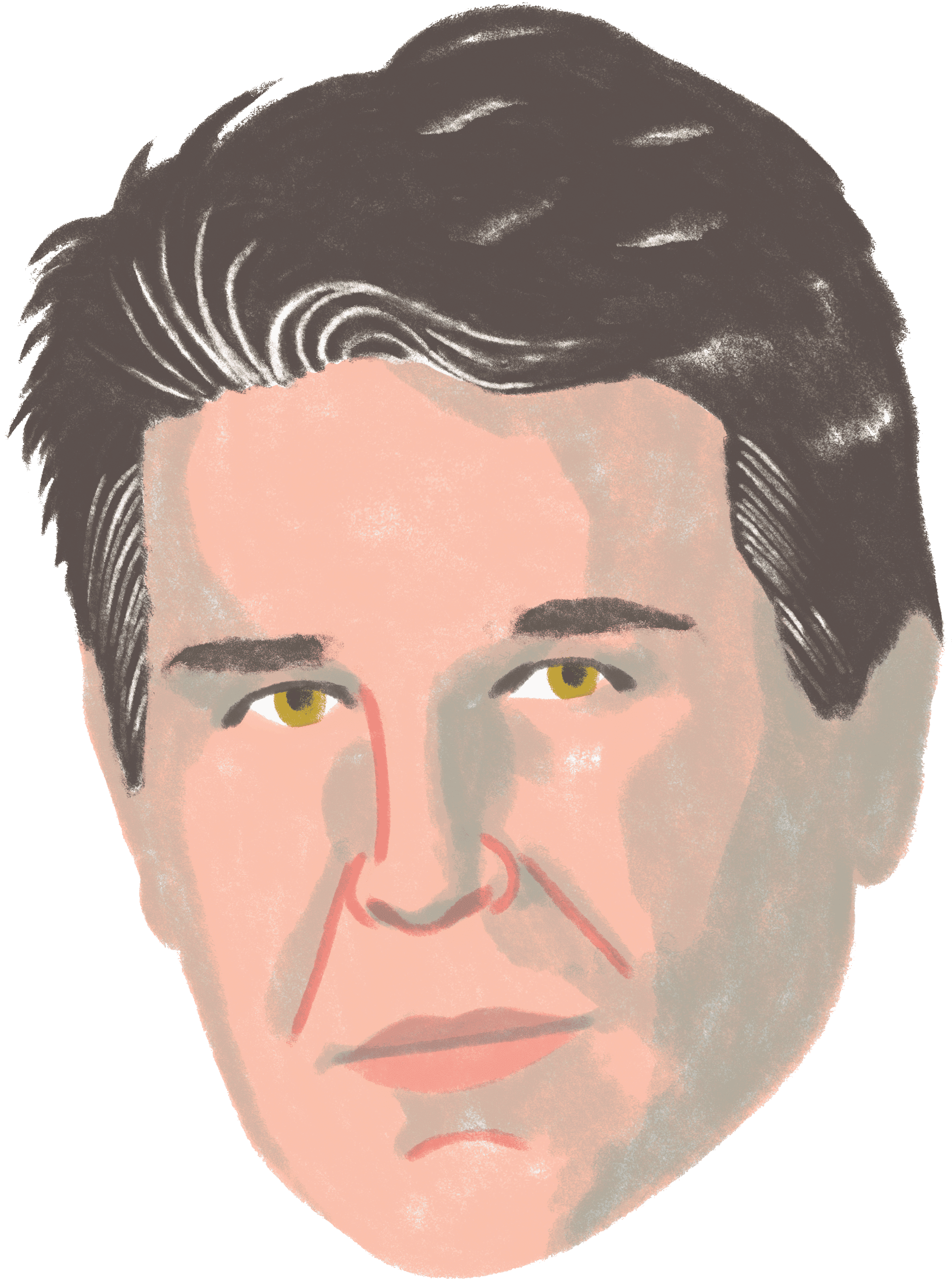
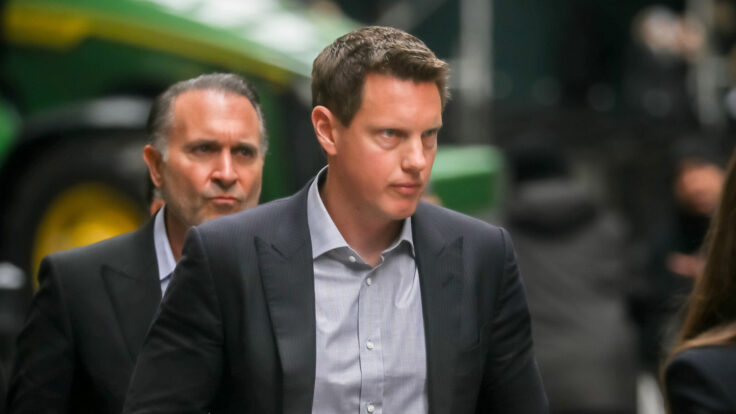
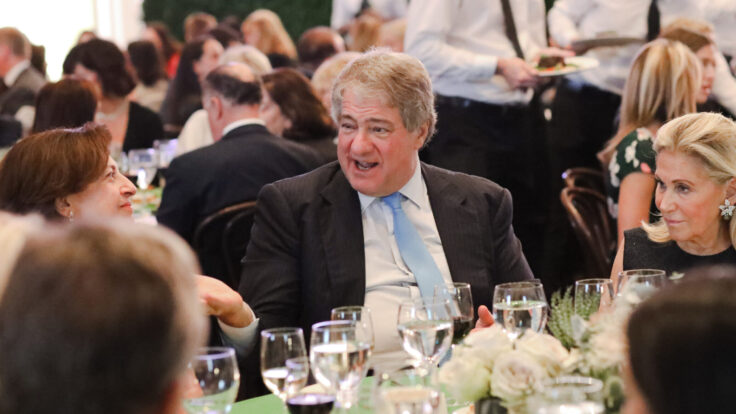
| Michael Klein is one of those investment bankers that most people have never heard of, but IYKYK. Klein, after all, has been a certified bigwig since his days at Citigroup, back when it was the powerhouse on Wall Street. He’s advised on any number of high-profile deals, including Barclays’ acquisition of some of the Lehman Brothers assets; IHS’s merger with Markit; and the creation of Dow-DuPont. Now, at 57, he is the proprietor of his own shop, a boutique investment bank and advisory firm named M. Klein & Company, and has his hands in virtually all the dealflow, often in both creative and controversial ways.
For instance, starting in 2018, Klein became infatuated with the now-dead SPAC mania. Through a shell company called Churchill Capital Corporation—he’s an Anglophile, like many of these guys—Klein raised $7 billion and “sponsored” seven different SPACs. His most well-known SPAC deal, Churchill Capital IV, ended up merging with Lucid Motors, the electric car manufacturer, in July 2021, at a valuation of $14 billion. It’s now trading for around $8 billion, down 89 percent from its high in November 2021. He also raised $690 million for another Churchill fund that he merged with Clarivate Analytics, in May 2019. Its value is around $6.2 billion these days, down one-third since the merger.
Around the same time that he became SPAC crazy, Klein was somehow invited to join the board of Credit Suisse, the ailing Swiss bank. I never quite understood why Credit Suisse allowed a rival banker into its boardroom, but Klein has his fans. Shortly thereafter, however, a series of strange events transpired. In October 2022, Klein announced that he was leaving the board because he was advising the bank on the spinoff of CS First Boston, marking its exit from the investment banking business some 40 years after it started by buying First Boston. Klein had advocated for the idea of exiting the investment-banking business while on the CS board and was getting a $10 million M&A fee for his advice. And then, a year ago, Credit Suisse announced that it was buying M. Klein & Co. for $175 million: $75 million in cash and $100 million in a note convertible into CS First Boston, should the spinoff come to fruition.
In the meantime, Klein was named C.E.O. of banking at Credit Suisse, and C.E.O. of its Americas operation; he would also join the bank’s executive committee. Klein was also named as the C.E.O.-designate of CS First Boston, if and when it was spun off. It was an extraordinary feat of dealmaking choreography, and quite a turn of events for Klein and the boutique he started after getting booted from Citigroup, in the wake of a power struggle, in July 2008, with a severance package of around $43 million.
Or at least, so it seemed at the time. In March 2023, the troubled Credit Suisse announced it was selling itself to Swiss rival UBS, in a government-orchestrated pseudo bailout, for $3.2 billion—a fraction of what it was once worth and ending the bank’s 167-year run. Not only was Credit Suisse dead, but so was the idea of spinning off CS First Boston with Klein as C.E.O.—as, too, was the idea of Credit Suisse buying M. Klein & Co. Klein negotiated a $20 million breakup fee, but opted not to collect it, according to his spokesman. |
|
|
| Undeterred, three months later, Klein found himself in the middle of one of the most controversial deals of all time: the proposed combination of the Saudis’ LIV Golf with the PGA Tour. It certainly was not the biggest deal of 2023, but it was definitely one of the most eyebrow-raising, especially since Klein was representing Saudi Arabia’s Public Investment Fund, or PIF, and its powerful leader, Yasir Al-Rumayyan, who had pretty much engineered the deal and had PIF underwriting at least a $2 billion investment, and probably more, if the merger ever gets consummated. (Klein has represented PIF on and off since 2017.)
Now, his association with PIF has put Klein in the middle of a serious confrontation with the U.S. Senate, which is investigating the proposed merger through its Committee on Homeland Security and Governmental Affairs and its Permanent Subcommittee on Investigations. The subcommittee, chaired by Connecticut Senator Richard Blumenthal, sent a letter to Klein, as well as three professional firms—Teneo, the advisory and P.R. firm; McKinsey, the global consultancy; and BCG, a McKinsey rival—seeking documents related to Klein’s role in advising PIF on the deal. Blumenthal sent the letter in August, and asked that Klein respond by September 6.
It has all turned into quite a saga, one that far surpasses any of the mishegoss with Credit Suisse. After Klein failed to voluntarily comply with Blumenthal’s document request, on November 2, the subcommittee issued subpoenas for the documents, with a December 4 deadline. On November 30, PIF essentially sued Klein and the others in a Riyadh court seeking to prevent them from complying with the Senate subpoenas. Blumenthal extended the deadline for compliance to January 3, then to January 12 after the consultants informed Blumenthal that the Saudis had enjoined them, preliminarily, from complying. The deadline then got extended again until February 2, and a public hearing was set for February 6.
The Saudi suit and Klein’s failure to comply with the Senate’s subpoenas has led to a most unusual situation: a client suing its financial adviser to prevent his compliance with a U.S. government subpoena involving a U.S. entity. It’s one of the most bizarre twists in recent dealmaking history, and certainly in Klein’s career. But here we are. |
|
|
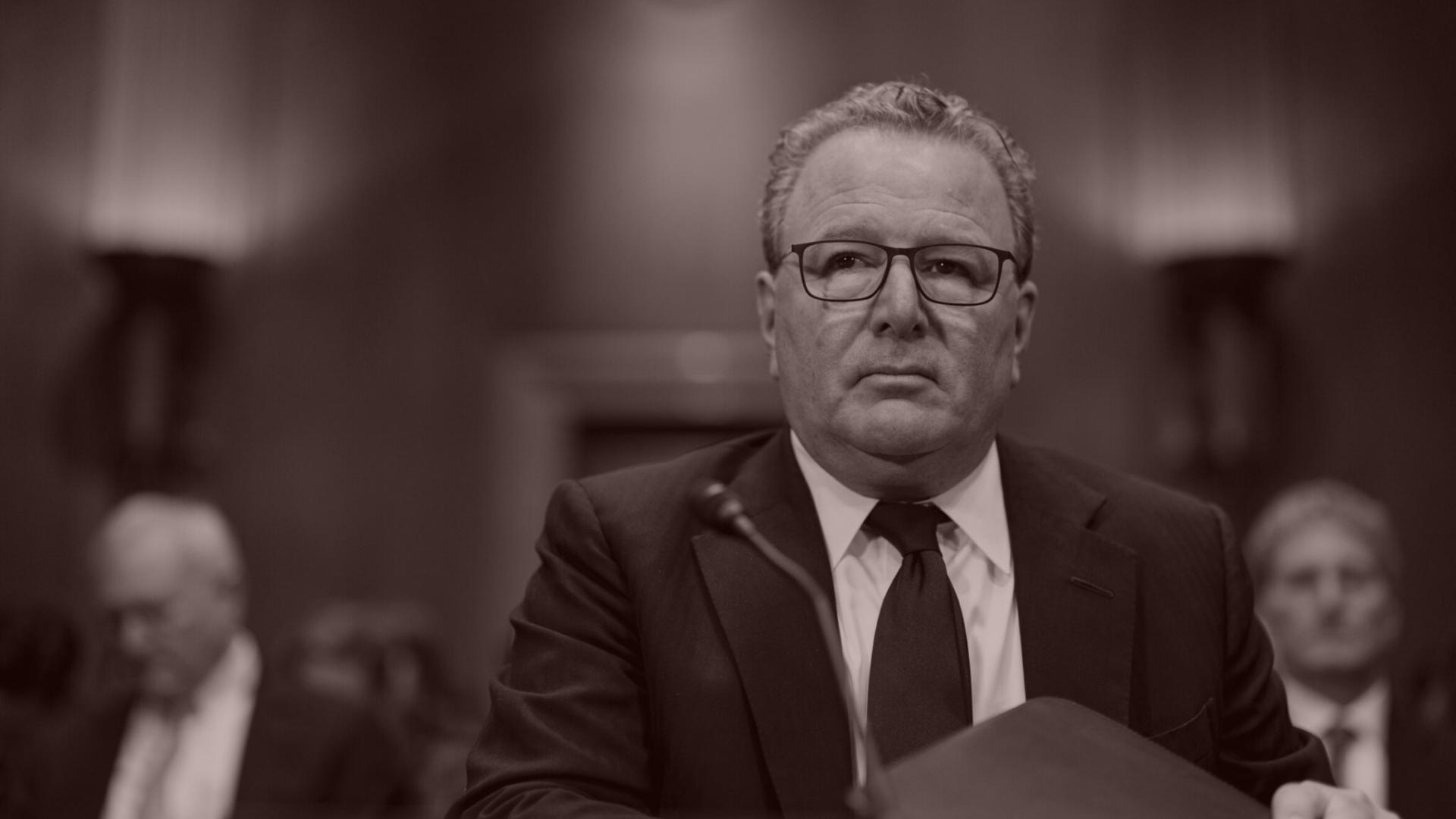
| On the afternoon of February 6, Blumenthal went ahead with the scheduled public hearing, inviting Klein and his compatriots from Teneo, McKinsey, and BCG to explain why they had not complied with the subcommittee’s subpoenas. The hearing didn’t attract much attention, but it should have. The issues raised were deeply troubling.
Blumenthal came out firing, saying the four consultants’ failure to comply with the subcommittee’s subpoenas was “unprecedented” and a violation of federal law. “Saudi Arabia claims that these are just innocuous commercial investments, including investments in sports,” he fumed. “But in its own courts, it argues that it’s classified material pertaining to state national security interests. It simply can’t have it both ways. We are seeking United States documents from United States companies about United States investments, U.S.-focused strategies, and United States institutions.” Blumenthal admitted that he “was surprised to learn” that Saudis were arguing in Saudi court that the documents requested by the subcommittee were secret, and sharing them with the U.S. Senate would pose an “imminent threat” to Saudi sovereignty.
Then, Blumenthal turned to PIF’s remarkable lawsuit against Klein’s firm seeking to prevent it from complying with the subpoena, even threatening to imprison his Saudi-based employees should they comply with U.S. demands. Klein, for his part, said he had asked the Saudi court to allow him to comply with the subpoena. “The matter is not yet fully adjudicated, but I am informed that it will be in the near future,” he told the subcommittee. “The Saudi court order is serious and exposes us—myself and my employees—to not just civil penalties, but criminal penalties that include—as I understand it—potentially 20 years’ imprisonment.” He said he could not risk that outcome by complying with the subpoena.
Klein, it should be noted, was unfailingly polite in his prepared testimony and in response to senators’ questions. At one point, he said, diplomatically, that his firm has “worked to be a constructive participant in the path to cooperation between the PGA Tour and the PIF” and that he had produced some 2,200 documents in response to the subcommittee’s request, although Blumenthal was quick to point out that most of these documents were public, or news stories, and thus of little use to the committee.
Sen. Laphonza Butler, of California, then asked the four men my favorite question of the hearing: “Do you normally retain clients that sue you?” Klein said it was a “very fair question” before admitting it was “aberrant behavior for a client and, quite frankly, for the PIF, who has historically been a client that has operated with best practices of governance with us.” She was understandably incredulous that Klein and his colleagues would, in effect, defend the actions of a client who sued them and threatened their employees. “They have displayed not normal, out-of-character behavior, and aggressive behavior toward you. … I wonder what is actually going on here, because I’ve not seen a U.S. business choose a foreign, any client, foreign or otherwise, that would behave so aggressively toward your overall bottom line.”
Sen. Maggie Hassan, of New Hampshire, then jumped into the fray and asked the four men whether they intended to comply with the subpoena, even if the Saudi ruling goes against them. Klein responded with the subjunctive tense. “Thank you for the question,” he said. “We are complying. We intend to comply fully, and we intend to continue to press all avenues to ensure our full compliance.” Unconvinced, Hassan pushed him again for an answer. Klein equivocated a second time, to which Hassan responded with obvious frustration. “By refusing to respond to this committee’s subpoena and request for legal justification for your refusal, your firms appear to have placed your loyalties to Saudi Arabia above your loyalty to the United States of America, our national security, and the principles of transparency.” |
|
|
| On one level, I understand why the Blumenthal hearing didn’t register with the public or the mainstream media, especially in the current political climate. But it is truly unprecedented for these four private, generally respected advisers to ignore a subpoena from a Senate committee for fear of pissing off a client that had sued them to prevent the disclosure of information about a U.S. entity. They are obviously trying to walk a fine line: They have a contractual obligation to the Saudi Public Investment Fund that they are trying to fulfill while also seeking to comply with a legal requirement from the U.S. Senate, all while dealing with a lawsuit in Riyadh and hoping to prevent their Saudi-based employees from being dipped in acid.
Even Klein ended up admitting how surreal things had become for him and his firm. “I agree with you,” he told Blumenthal. “This is extraordinarily troubling, troubling for us and unprecedented, and it does give great pause for thought. We have a responsibility as a transactional adviser to complete the work we’ve done for commitments we’ve made. In addition, we look very carefully at the actions of the PIF over the length of our relationship. And as I indicated, … this is an aberrant situation. It is intensely troubling, and we share your concern.”
This one isn’t over, not by a long shot. And Klein, who declined my request to elaborate on his appearance before the subcommittee, is right about at least one thing: It is intensely troubling. But will the dispute with the Senate affect his investment-banking business? At the moment, despite the hearing, the controversy remains well under the radar. I doubt most of Klein’s clients are aware of the flap. And if they are, they probably understand that Klein is in a tight spot, with little room to maneuver. But no banker, let alone one as politically savvy as Michael Klein, wants to be held in contempt of Congress. I expect some sort of compromise will be reached, and soon, even though all four men agreed to come back and appear before Blumenthal’s committee if, and when, he asks them to do so. |
|
|
|
| FOUR STORIES WE’RE TALKING ABOUT |
 |
|
 |
|
 |
|
 |
| Do or D.E.I. |
| A searing rejoinder to D.E.I. backlash. |
| BARATUNDE THURSTON |
|
|
|
|
|
 |
|
|
|
Need help? Review our FAQs
page or contact
us for assistance. For brand partnerships, email ads@puck.news.
|
|
You received this email because you signed up to receive emails from Puck, or as part of your Puck account associated with . To stop receiving this newsletter and/or manage all your email preferences, click here.
|
|
Puck is published by Heat Media LLC. 227 W 17th St New York, NY 10011.
|
|
|
|