Welcome to The Hidden Layer. I’m Ian Krietzberg.
To no one’s surprise, it
looks like a federal preemption of state A.I. laws is back on the table once again. I’ll be on the lookout for a fresh Trump executive order on that subject—I’m told it’s supposed to land this week. Today, though, I’ve got some news on A.I.-based brain recircuiting. Plus, a look at Perplexity’s mounting legal troubles and an a16z-funded seed round for an A.I.-powered federal procurement platform.
Also mentioned in this issue: Anton
Arkhipov, the Allen Institute, Omar Ahmed, Pryzm, David Sacks, David Ulevitch, Perplexity, Pete Hegseth, Nick LaRovere, Jesse Dwyer, and more… |
Three Things You
Should Know…
|
-
Perplexity’s legal troubles: Even within a very litigious industry, Perplexity has been attracting a lot of legal attention. Last week, the A.I. search startup was hit with two nearly identical copyright lawsuits, filed by the same law firm, from the Chicago Tribune and The New York Times. The latter is a follow-up action from the Times, which had furnished Perplexity with a cease-and-desist order a year ago.
Of course, Perplexity has
already been slapped with similar copyright lawsuits from Dow Jones, Reddit, and the New York Post. Wired and Forbes, for their part, have accused the company of violating data-scraping rules—which prompted an investigation over the summer by Amazon Web Services. (Jesse Dwyer, Perplexity’s head of communications, told me in a
statement that “publishers have been suing new tech companies for a hundred years, starting with radio, TV, the internet, social media, and now A.I. Fortunately it’s never worked, or we’d all be talking about this by telegraph.”)
Both lawsuits accuse Perplexity of committing “massive” copyright infringement by crawling, scraping, copying, and distributing material owned by the plaintiffs. The suits here go after Perplexity’s core claim to fame—it summarizes links so you don’t have to
scroll through them. Digital publishers, for obvious reasons, have been somewhere between pissed off and scared shitless by these and similar offerings since A.I. search first appeared. “What Perplexity characterizes as ‘gathering’ involves copying publishers’ content and combining it with a Large Language Model to produce lengthy and expressive output derived from copyrighted content that is owned by others,” both suits read.
The two lawsuits also accuse the startup of trademark
violations. According to the complaints, Perplexity’s A.I. technology, like all L.L.M.s, produces false information that it attributes to such sources as the Tribune or the Times. The suits further note the reputational risk created by random omissions from A.I.-generated summaries of articles that are, likewise, sourced to the Tribune or the Times. - The government’s middle-bots: Pryzm, a startup offering an
A.I.-powered procurement platform for government contractors, today closed a $12.2 million seed round led by Andreessen Horowitz’s American Dynamism fund. The round puts Pryzm’s total funding slightly north of $15 million. Founded by veterans of Palantir and Lockheed Martin, Pryzm’s mission boils down to offering faster, more effective government procurement, which it hopes to enable by fusing public information with private data in a secure, A.I.-powered platform.
According to the
founders’ vision, potential customers can leverage a vast amount of data and real-time insights to better position themselves to win and retain various government contracts. Similarly, government workers can use Pryzm to solicit the best available contractors. “We believe their platform will redefine how the government collaborates with private industry to strengthen our technological edge,” David Ulevitch, an a16z general partner, said in a statement.
Nick
LaRovere, the C.E.O. and co-founder of Pryzm, told me that the startup is already working with the Department of Defense and is on contract with the Defense Innovation Unit. He added that Pryzm’s efforts have been helped along by Secretary of Defense Pete Hegseth’s recent push for sweeping,
“commercial-first” procurement reforms at the Pentagon. (Pryzm recently secured FedRAMP High and Impact Level Five authorizations, meaning it can handle highly sensitive data from the D.O.D.) LaRovere described “enormous demand” for Pryzm’s platform and noted that he’s seeing “over 400 percent net revenue retention”—meaning Pryzm’s initial customers are significantly expanding their use of the platform. He declined to share details on the company’s latest valuation. - One rule, incoming: After tremendous backlash and back and forth, President Trump said on Monday that he’s planning to sign an executive order this week that will establish “one rule” for the regulation of A.I. Echoing language that has been flowing from the Valley for months, he wrote in a post that this is the only way the U.S. can
maintain its technological edge. “We are beating ALL COUNTRIES at this point in the race, but that won’t last long if we are going to have 50 States, many of them bad actors, involved in RULES and the APPROVAL PROCESS,” he wrote. (My apologies for the scream caps. I’m just trying to be a dutiful reporter…) Notably, Trump’s push to protect America’s lead in A.I. is coming just as he’s giving Nvidia permission to
sell its H200 chips in China, provided the U.S. gets a 25 percent cut.
It’s not yet clear what this order will look like, or how much it will differ from the leaked draft of a presumably similar executive
order that I reported on last month. David Sacks, Trump’s A.I. and crypto czar, wrote in a post that this preemption is merely “an attempt to settle a question of jurisdiction.” Deploying the same arguments as every industry that ever wanted to save money on lobbying, he said the U.S. “can’t afford” to have a “patchwork” of state regulatory regimes.
Still,
the legal theory that the White House seems to be relying on here—that state A.I. laws would interfere with interstate commerce—is shaky at best. This all comes after multiple failures by congressional Republicans to wedge preemption language into must-pass legislation—a move
opposed by hundreds of lawmakers—and despite repeated pushback from prominent members of Trump’s own party, including Florida Gov. Ron DeSantis. Some 36 state attorneys general, meanwhile, have publicly
opposed the federal government preempting state laws.
|
Deal of the Week:
IBM’s Acquisition
|
On Monday, IBM announced an agreement to acquire Confluent, a data streaming platform, in an
all-cash deal that would value the company at $11 billion. It’s the latest attempt by IBM, which risks falling behind relatively recent entrants in the A.I. race, to strengthen its hand: IBM previously acquired software maker Apptio for $4.6 billion in 2023, and cloud software company HashiCorp for $6.4 billion in 2024. Shares of Confluent surged nearly 30 percent on Monday following the announcement, getting right up to the premium ($31 per share) that IBM paid.
And now for the main
event… |
|
|
One of the most promising new developments in neuroscience is the ability to digitally
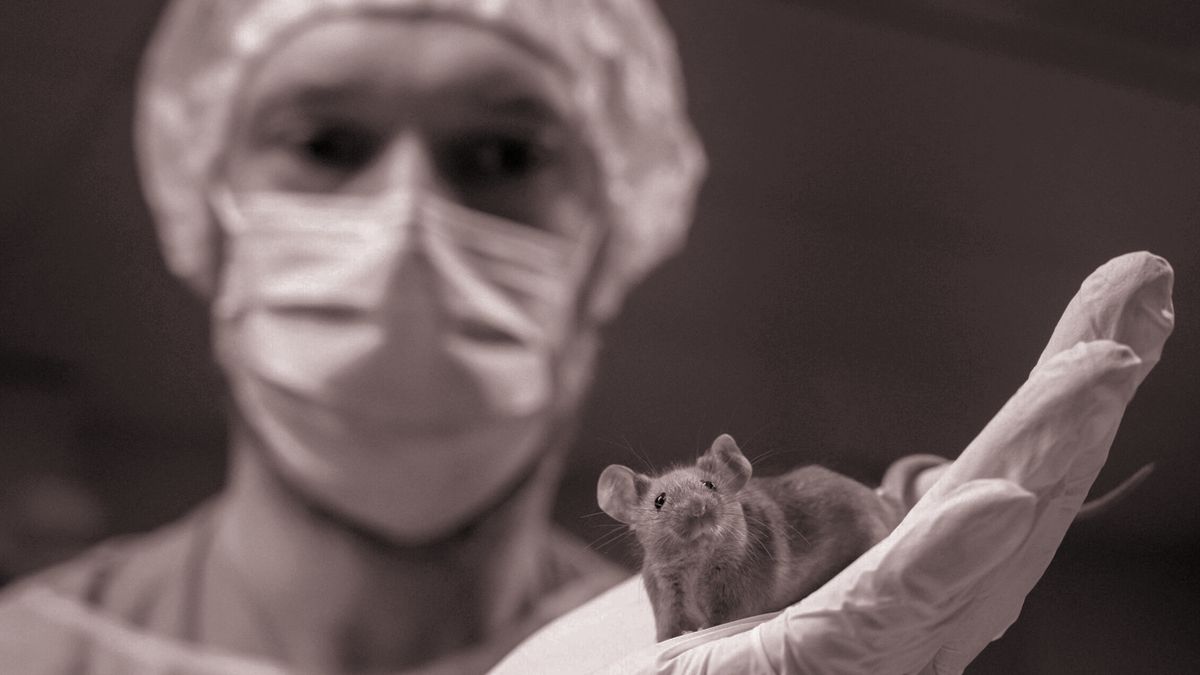
simulate mice brains—a technology that not only offers a glimpse into the black box of the human mind, but also how to build a better A.I. |
|
|
Everyone is entitled to their own version of happiness, and Dr. Anton Arkhipov has spent the
past 12 years at the Allen Institute working to digitally replicate tens of thousands of miles of mouse brain circuitry. Last month, his team successfully created a digital simulation of a mouse brain cortex, which the Allen Institute heralded as “one of the largest and most detailed simulations” of an animal brain ever. Arkhipov described the achievement as a major milestone along a “very long and complicated path toward being able to simulate the brain in all its glorious complexity.” (The
work builds on Europe’s Blue Brain Project.)
The researchers began by collecting a “huge amount” of physiological data, Arkhipov told me, and integrating it with their brain-modeling and neuron -simulating software on one of the most powerful supercomputers in the world, Japan’s Fugaku. The entire mouse brain has around 70 million neurons; the cortex that the Allen
Institute is simulating has around 10 million. (Full human brains have roughly 86 billion neurons; human cortices have around 21 billion neurons.)
The point of this endeavor, Arkhipov explained, is to better understand the ways in which brain cells actively communicate with one another. He described the success as barely “scratching the surface,” noting that while it provides a proof of concept that larger-scale models are possible, there’s still a lot more work needed to get there. “None
of this … is the end,” he said. “It’s more like the beginning.” The promise of brain simulations is that we can use them to conduct the kinds of research and experiments that are difficult or even impossible to conduct physically. Ultimately, scientists hope to learn what happens in the brain before and during the advancement of certain neurological disorders, so they can safely test various interventions.
But according to a
paper detailing the project, the researchers also have an additional goal in mind: Better models of the brain might offer a road map to building more efficient A.I. algorithms. After all, one great distinction between artificial intelligence and the real thing is that the human brain operates on around 20 watts of power. For its part, A.I. requires gigawatts upon gigawatts to even
shallowly mimic what a teenager can do with the caloric power of a Kit Kat. |
“Ridiculously Complicated”
|
Much of the promise here is fuzzy. After all, while the human brain resembles a computer in some very
superficial ways—both rely on electrical impulses, and, sure, neurons have on and off states—it is also endlessly more complicated, with brain activity affected by innumerable genetic, chemical, and enzymatic factors. But even giant, full-scale brain simulations are not the end-all, be-all of computational neuroscience, according to Dr. Omar Ahmed, a professor of neuroscience at the University of Michigan.
The trouble, he told me, is that all those elements that we
haven’t yet learned about the brain obviously can’t go into a brain simulation. “This is a great snapshot of what we already understand,” he said. “What is under the hood and unknown is still unknown and not being simulated.” Because of this, a simulation might produce the same recorded outputs of a real brain, but for a different reason. The scale of the unknowns at play here is such that it’s almost impossible to tell whether a simulation is offering a truly novel insight or simply
approximating an expected outcome.
When I asked Arkhipov about this dynamic, he offered me a quote from the physicist Richard Feynman: “What I cannot create, I do not understand. That’s exactly what we’re trying to do,” he said. “You probably cannot claim you understand something unless you can build a relatively accurate model of it.” Still, he acknowledged, such models could themselves become so complex that they surpass the limits of the human mind—which, at
least as far as understanding goes, gets us right back to where we started.
Ahmed said that the work the Allen Institute is doing, specifically in brain data collection, is incredibly important in advancing the field. But he reiterated that these simulations are just one more tool in a very large, complex toolbox—one that also includes deep learning algorithms, which are increasingly being used to simulate neural behavior and model brain activity. “I think there’s amazing progress being made, but these are very challenging questions, and there’s not one solution set,” Ahmed said. “Why is the brain the final frontier on Earth? It’s that ridiculously complicated, and we need to throw the kitchen sink and keep throwing the kitchen sink. Then one day, perhaps, we’ll be ready to actually make sense of the output of a massive-scale computational
simulation. Are we there yet? No, but I think we just have to keep going along the same trajectory.”
It’s work that he expects must continue in a similar fashion for the next several decades, if not longer. “Right now, we just don’t know all the beautiful algorithms that the brain uses that are, frankly, far more optimal for speedy, flexible computation than any A.I. currently is,” he added. “We know a lot, but not everything, and these models are still incomplete.” |
That’s all for today. I’ll see you on Thursday.
Ian |
|
|
Join Emmy Award-winning journalist Peter Hamby, along with the team of expert journalists at Puck, as they let you in on the
conversations insiders are having across the four corners of power in America: Wall Street, Washington, Silicon Valley, and Hollywood. Presented in partnership with Audacy, new episodes publish daily, Monday through Friday. |
|
|
A professional-grade rundown on the business of sports from John Ourand, the industry’s preeminent journalist, covering the
leagues, players, agencies, media deals, and the egos fueling it all. |
|
|
Need help? Review our
FAQ page or contact us for assistance. For brand partnerships, email ads@puck.news.
You received this email because you signed up to receive emails from Puck, or as part of your Puck account associated with {{customer.email}}. To stop receiving this newsletter and/or manage all your email preferences, click here. |
Puck is published by Heat Media LLC. 107 Greenwich St., New York, NY 10006 |
|
|
|