{{ 'now' | timezone: 'America/New_York' | date: '%b %d, %Y' }} |
|
|
Hello and welcome back to The Best & The Brightest. I’m Leigh Ann
Caldwell.
It was another tense day in Washington. Federal officials are celebrating their takeover of the city, and residents are increasingly riled up. Earlier today, J.D. Vance, Pete Hegseth, and Stephen Miller visited Union Station for a photo op with National Guard troops, and were met with protests and profane heckling encouraging Vance to
find a couch. Miller, in response, declared himself “glad” that the “crazy communists” were there, because they had “inspired” him and his fellow officials to send “thousands
more resources” to D.C.
Meanwhile, the Texas House just approved their new congressional maps, kicking off the next chapter of a drama that has captivated the political world, and might see five Democrats gerrymandered out of the House. It’s an inflection point in the redistricting wars writ large: The battlefield is now shifting from the courts to state legislatures, and other states—Missouri, Indiana, Illinois, and Florida—are all debating whether to redraw their districts,
too. California’s Gavin Newsom has proposed new statewide maps to offset the loss of House seats in Texas, and I have plenty of fresh details about the fight below the fold.
Before jumping in, a reminder that Abby Livingston will be in D.C. on Tuesday, September 2, for our Puck Live event, presented by the Modern Ag Alliance. She’ll chat with Glenn “GT” Thompson, the chair of the House Agriculture Committee, in a special
conversation beginning at 5 p.m. ET. Puck subscribers, of course, are invited to attend. We’ll release more information in the coming days, but you can already RSVP by clicking here. I’ll see you there.
Okay, let’s get started… |
- D.O.J.
blows its Epstein deadline: The Department of Justice had until yesterday to turn over its Epstein-related files to the House Oversight Committee. That didn’t happen. Instead, the D.O.J. is telling chairman James Comer that the committee will receive a batch of files on Friday, but there’s been little additional guidance about what information will be released.
Meanwhile, the F.B.I. tapped Missouri
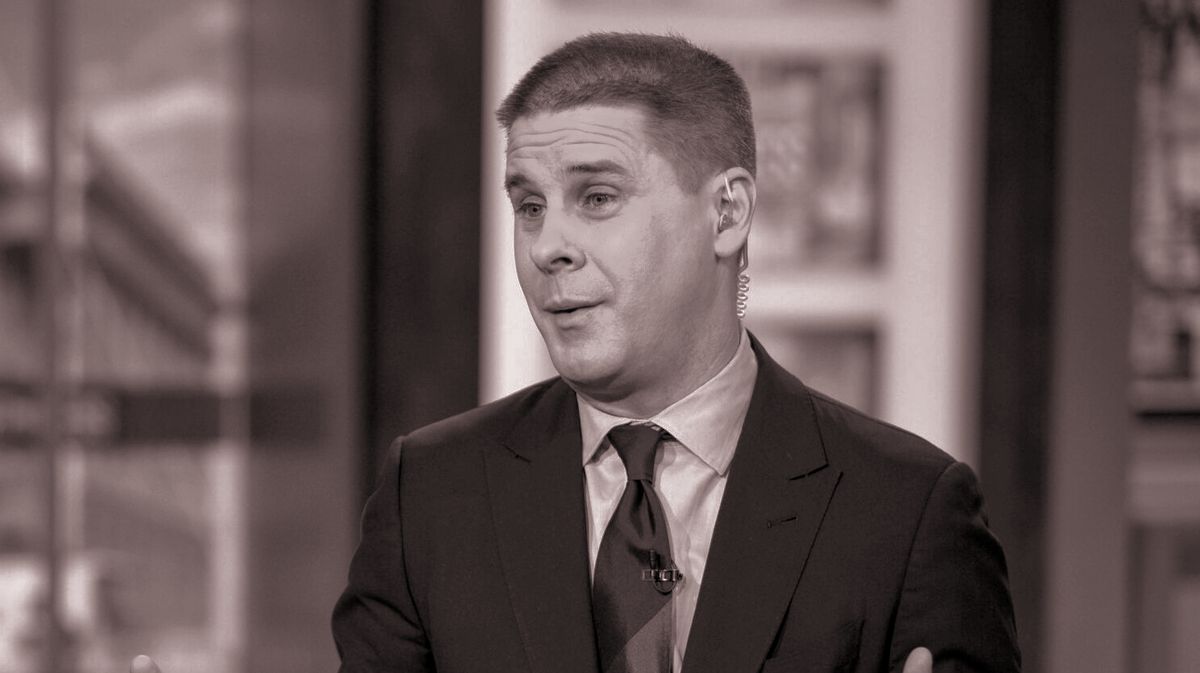
A.G. Andrew Bailey to be the department’s new co-deputy director—an odd layering of its current deputy director, Dan Bongino, who frequently podcasted about the alleged Epstein cover-up for a far-right audience, and has clashed with Attorney General Pam Bondi over the D.O.J.’s handling of the case in recent months. The White House has urged Bongino not to resign—partly because of his popularity with the base, but also because they seem
anxious about what he might say if he returned to podcasting. One Republican source close to Bailey told me it’s hard to see Bongino sticking around much longer. - G.O.P. schadenfreude: A Times piece by Shane Goldmacher, which analyzed the extent of the Democrats’ “voter
registration crisis,” made the rounds in MAGAworld today. Goldmacher reported a decline of about 2.1 million voters, between the 2020 and 2024 elections, across the 30 states that track registration by party. He called it a “stampede away from the Democratic Party” throughout red, blue, and battleground states alike.
Naturally, Republicans gleefully tweeted out the story—which also pointed out that Republicans gained 2.4 million registered voters over the same period. Trump pollster
Tony Fabrizio pronounced it “very thoughtful,” and right-wing troll Alex Bruesewitz reposted it twice before turning to angsty posts about Cracker Barrel’s “woke” overhaul. - Senate
spending wars: In response to the administration’s repeated disregard for spending laws, the Senate Appropriations Committee has written guardrails into its funding bills. My friend Carl Hulse at The New York Times broke the news today, which doesn’t come as a total surprise: Democrats have demanded this check
on Republicans as a prerequisite to their participation in the funding process, and Sen. Susan Collins, the chair of the committee, has been working to find ways to protect the process. Carl noted that the language in the bill directly states that spending must be used for specified purposes, but it’s far from clear whether the House will accept the guidelines.
|
|
|
With California preparing to neutralize the Texas gerrymander, the White House is ramping up
its pressure campaign in Indiana, where few Republicans want to redistrict—but even fewer want to make enemies of President Trump. |
|
|
Even before California Governor Gavin Newsom launched his redistricting
counterattack in earnest last week, Nancy Pelosi, in a closed-door caucus meeting earlier this summer, urged House Democrats to pony up for a state ballot initiative that she estimated would cost $75 million to $100 million to win, according to a Democratic strategist briefed on her plea—a fair price, she argued, for flipping at least five competitive seats. It’s the same case she’s been making in numerous calls with top donors, according to a person close to
Pelosi who was familiar with the conversations—although they don’t need much convincing. “It’s not a matter of if they’ll donate, but how much,” this person said.
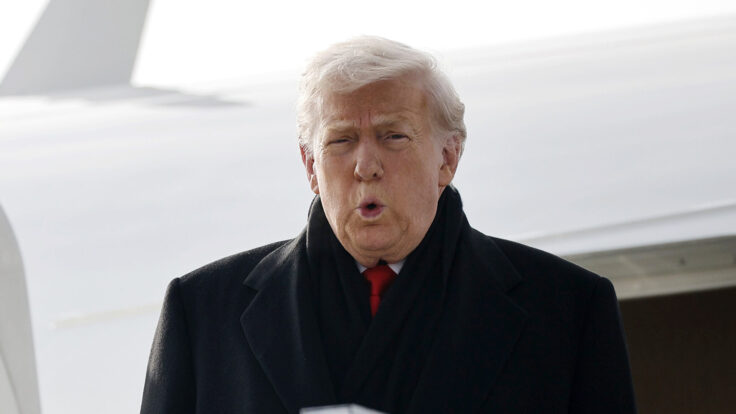
But while House Democrats are more fired up than they’ve been in a long time—“The attitude is 218 or bust,” one Democratic strategist told me—they’re up against a president that’s every bit as motivated to keep his party’s control of the chamber. Even if California succeeds in countering Texas’s new congressional map,
which is expected to be signed into law by the end of the week, Donald Trump has backup plans in other red states, including Missouri, Indiana, and Florida.
Not all of them, of course, have been as accommodating as the Lone Star State. Most troublesome for the White House right now is Indiana, where Trump is seeking two new G.O.P. seats but very few Republicans are in favor of redistricting: not the Indiana Republican Party, nor a majority of the state legislature.
Indeed, despite their public messages of support over the past 24 hours, I’m told that the seven Republicans in the state’s U.S. House delegation would prefer not to redistrict, either. But the White House persuasion campaign has been intense, with some Hoosiers even complaining to the state attorney general about
alleged robocalls, which may be illegal. (A person familiar with the calls insisted they were, in fact, live humans on the line, which is not illegal in the state.)
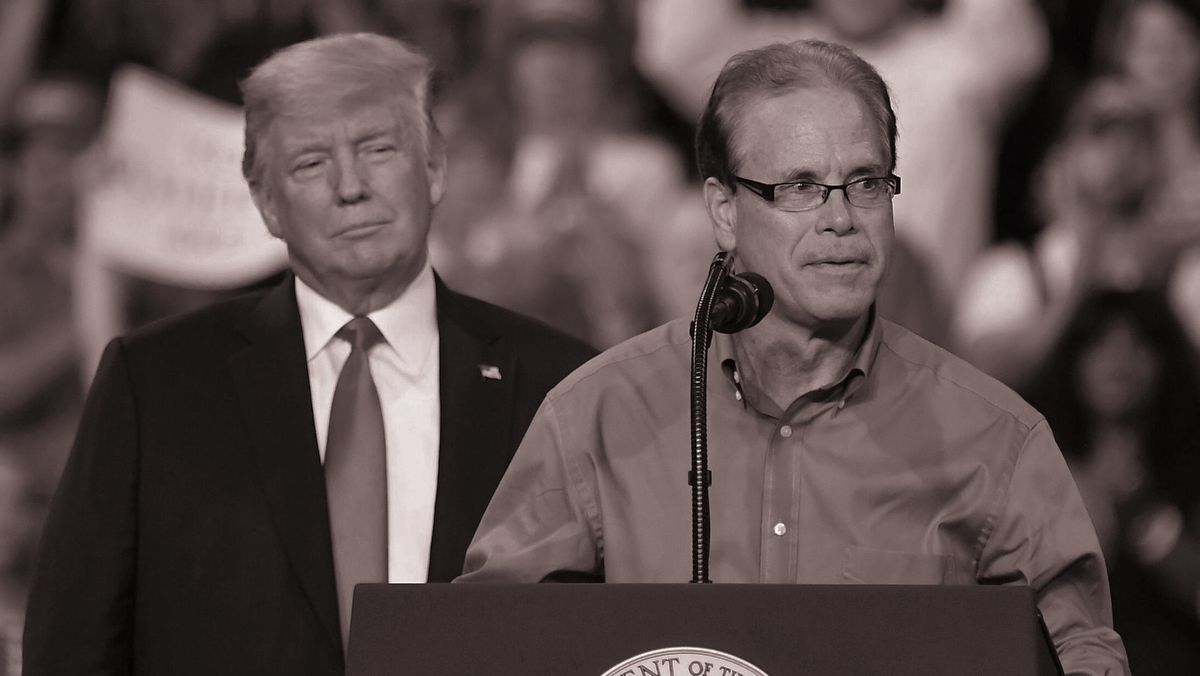
In any case, the onus is currently on Gov. Mike Braun, who would have to call the legislature back for an emergency session if they were to vote before 2026. Braun, I’m told by multiple Indiana Republicans, isn’t interested in doing that, given that state lawmakers aren’t on board. But he’s getting an
immense amount of pressure from the White House, including a recent visit by Vice President J.D. Vance. Meanwhile, three Indiana Republicans told me, Braun is worried that Trump won’t approve his requests for major state priorities—including a desperately needed Medicaid waiver, and the implementation of toll roads to help cover the state’s budget shortfall—if he doesn’t accede to the president’s demands. He’s “between a rock and a hard place,” one of the sources
said.
The White House is also turning the screws on Indiana’s state and federal lawmakers, encouraging them to be team players. Alex Meyer, the director of intergovernmental affairs at the White House, has been working the phones of state legislators, while White House political director Matt Brasseaux is taking the congressional delegation, reassuring them that their districts will be safe with the new maps and that only the two new Republican
districts will be a more competitive shade of red.
The Trump team is offering carrots as well as sticks, encouraging Republicans to be team players and get on board; as everyone knows, Trump rewards loyalty, including with endorsements. “I’m optimistic in the president and his advisors’ ability to persuade them,” a person familiar with the White House operation told me. “On the congressional level, the president has been very interested in bringing back incumbents
that are good soldiers. Certainly, I think this would demonstrate your commitment to the cause, whether you’re a state or congressional legislator.” Turning Point USA’s Charlie Kirk was more direct, threatening to support primaries against any Republicans in the state legislature who don’t get on board. Every member of the U.S. House delegation came out in
support of the effort this week.
Everywhere, the gerrymandering arms race appears to be accelerating. The Texas House approved their new maps today; the legislation now heads to the State Senate, which is expected to vote on Thursday. Ohio is set to move soon, too—albeit because of a years-old state Supreme Court ruling, and not White House pressure, but the White House does want Ohio Republicans to find three Republican seats in their new maps. Missouri is likely to eliminate one of its
two Democratic seats, and Republicans in Florida could try to gain another three seats. “California doing what it did has made some other states want to proactively redraw their lines in response,” said Adam Kincaid, the executive director of the National Republican Redistricting Trust, which is aiding the White House and Republican states in the effort. |
Well-Funded
on the Western Front
|
Meanwhile, it’s gotten weird in California, as some former anti-gerrymandering preachers have rapidly
transformed into redistricting crusaders. No less a gerrymandering critic than former President Barack Obama has endorsed the effort to pass Proposition 50, the ballot initiative that would temporarily—for three elections—bypass the state’s independent redistricting commission to create new maps. Obama called this a “responsible approach.” The proposed maps were drawn to pick up five seats while keeping key Black and Hispanic constituencies happy. Critically, they enjoy the
backing of the House Congressional Black and Hispanic Caucuses.
The broader campaign behind Prop 50 is massive and already well-funded. Newsom has contributed $10 million from his gubernatorial PAC, according to a Democratic strategist; campaign contributions haven’t yet been made public. House Majority PAC, the super PAC to elect House Democrats, is the second-highest contributor as of now, and has also contributed millions. And California donor Bill
Bloomfield, himself a leading funder and advocate for independent redistricting, cut a seven-figure check and will donate more “if necessary,” he told me in an interview. “Donald Trump is making a power grab for the House of Representatives,” he said. “I’m not going to sit back on this.”
The state’s Democratic professional class is getting in on the action, too. The pro-redistricting effort is being staffed with top California political operatives, including David
Binder, Sean Clegg, and Addisu Demissie, along with Newsom’s deputy chief of staff Lindsey Cobia and communications advisor Nathan Click. California unions, including the SEIU, AFL-CIO, and the California Teachers Association are on board, along with Planned Parenthood’s California political wing.
A new poll out this morning shows that California voters could very well pass this gerrymander. The
poll was commissioned by Newsom and conducted by Binder, but clocks 57 percent support in the state—up from 51 percent in July, potentially showing momentum ahead of the November vote. Not surprising, perhaps, considering Trump sent ICE, the National Guard, and the Marines into Los Angeles earlier this year—all of which Bloomfield predicted would put Californians
in the mood to push back.
Of course, there are plenty of Golden Staters rallying against the redistricting cause, too. Charles Munger Jr., another wealthy proponent of nonpartisan redistricting, has come out in opposition; Bloomfield said he’s reached out to Munger, encouraging him to fight the Texas effort instead, but hasn’t heard back. The League of
Women Voters has also come out against Newsom, calling gerrymandering “a threat to democracy.” Former House Speaker Kevin McCarthy promised to raise $100 million to fight the ballot initiative as soon as the proposed map was released and former Governor Arnold Schwarzenegger recently called gerrymandering “evil.”
|
|
|
Join Emmy Award-winning journalist Peter Hamby, along with the team of expert journalists at Puck, as they let you in on the
conversations insiders are having across the four corners of power in America: Wall Street, Washington, Silicon Valley, and Hollywood. Presented in partnership with Audacy, new episodes publish daily, Monday through Friday. |
|
|
Unique and privileged insight into the private conversations taking place inside boardrooms and corner offices up and down Wall
Street, relayed by best-selling author, journalist, and former M&A senior banker William D. Cohan. |
|
|
Need help? Review our FAQ page or contact us for assistance. For brand partnerships, email ads@puck.news. You received this email because you signed up to receive emails from Puck, or as part of your Puck account associated with {{customer.email}}. To stop receiving this newsletter and/or manage all your email preferences,
click here. |
Puck is published by Heat Media LLC. 107 Greenwich St, New York, NY 10006 |
|
|
|