{{ 'now' | timezone: 'America/New_York' | date: '%b %d, %Y' }}
|
|
|
Welcome back to The Best & The Brightest, I’m Leigh Ann Caldwell. Somehow it’s
only the second week of the year?
The news is coming fast and furious. I’m hearing from K Street that the Senate’s version of the crypto market structure bill will be released late tonight, with the Senate Banking Committee expected to mark it up on Thursday. Meanwhile, everyone in Washington and on Wall Street is bracing for the Supreme Court to rule on the legality of Trump’s tariffs, which could happen as early as Wednesday.
In tonight’s issue, news and
notes on the Justice Department’s investigation into Federal Reserve Chair Jerome Powell and why Democrats’ Senate map just got a little better. Plus, below the fold, Abby Livingston takes a look at three California congressional races that you are definitely interested in—even if you didn’t know if yet.
Also today, we’re trying out a new feature that I’m calling “Overheard on K Street,” featuring premium-grade intel from lobbyist sources—both on the
record and anonymous!—about the chatter coursing through the public affairs trade and what’s really happening in the industry. And there’s no better place to start than with the drama surrounding the Powell probe.
Mentioned in this issue: David Axelrod, Howard Berman, Ken Calvert, Saikat Chakrabarti, Adrienne Elrod, Jon Favreau, French Hill, Jonah
Hill, Young Kim, Mike Johnson, Ron Klain, Daniel Lurie, Jake Levine, Jim Messina, Alexandria Ocasio-Cortez, Christine Pelosi, Nancy Pelosi, Ben Rhodes, Brad Sherman, Tommy Vietor, Henry Waxman, and many more…
But first…
|
- The
Powell overreach: The Justice Department’s criminal investigation into Jerome Powell, the chairman of the Federal Reserve, has unnerved Wall Street: The dollar softened today, signaling serious concerns about the continued independence of America’s central bank. More surprisingly, perhaps, the administration’s transparent attempt to bully Powell has also upset Republicans—and not just the usual suspects, like Sens. Thom Tillis and Lisa Murkowski. Sen.
Kevin Cramer, a member of the Banking Committee, also came to Powell’s defense, as did Rep. French Hill, the top Republican on the House Financial Services Committee. Even Senate Majority Leader John Thune was exasperated, telling reporters the allegations “better be real and better be serious.”When Trump attempted
to fire Federal Reserve governor Lisa Cook last year—the Supreme Court will hear her case in the coming weeks—one senior Senate Republican aide told me that interfering with the Fed could be a red line for Senate Republicans. It wasn’t then, as it turned out… but it might be now. Tillis, for one, has threatened to hold up Trump’s Fed nominees until the matter is resolved, potentially blocking the confirmation of Powell’s successor.
As a senior Republican aide
told me, most senators will presumably express their misgivings to Trump privately—typically the more effective and certainly the safest way to influence the president. So the true extent of the outrage is likely much wider.
- Democrats’ Senate map just got even better…: Former Alaska Rep. Mary Peltola announced this morning that she’s running for Senate against Republican incumbent Dan Sullivan. Peltola had
been vacillating between running for Senate or for the open governor seat, so it was a surprise to most of Washington that she chose to stay in town—a major coup for Senate Minority Leader Chuck Schumer, but also a sign of how friendly the national Democrats think this election cycle will be for them. In her announcement video, Peltola dismissed party affiliation in rosy red Alaska and offered some Trumpian flair: “It’s about time Alaskans teach the rest of the country what
Alaska First—and really, what America First—looks like.”Peltola and Sen. Lisa Murkowski are close friends—the two endorsed each other when they were on the ballot together in 2022. But Murkowski endorsed Sullivan today, telling Alaska Public Media he is necessary “to figure out how we’re going to keep the majority.” Peltola won a special election in 2022 after Rep. Don Young, who’d held the state’s sole House seat for 49 years, passed away. She lost to Republican
Nick Begich III—of the Alaska Begiches—in 2024 by 2.5 points when Trump was on the ballot. It’s going to be a very difficult race, and perhaps unwinnable, but it might force national Republicans to spend some money in yet another state they’d prefer not to.
|
“I’d say people are pretty unsettled by it. Between this, attacking defense contractors, private equity, and
banks, everyone is wondering what the hell is going on. And now [Trump] is calling Elizabeth Warren. It’s insane.”
—A financial services lobbyist, when asked what firms are saying about the D.O.J. investigation into Powell, which the Fed chair described as a flimsy “pretext” for the White House to exert control over the central bank. (And yes, Trump did call Warren today after she gave a speech criticizing the president for “driving up costs” for
families.)
And now, here’s Abby…
|
|
|
Nancy Pelosi’s retirement in San Francisco, an Obama alum’s generational challenge in L.A.,
and a redrawn Orange County could end careers and launch new California stars.
|
|
|
There are many forces weighing on the 2026 midterm map—gerrymandering, high-profile retirements, generational
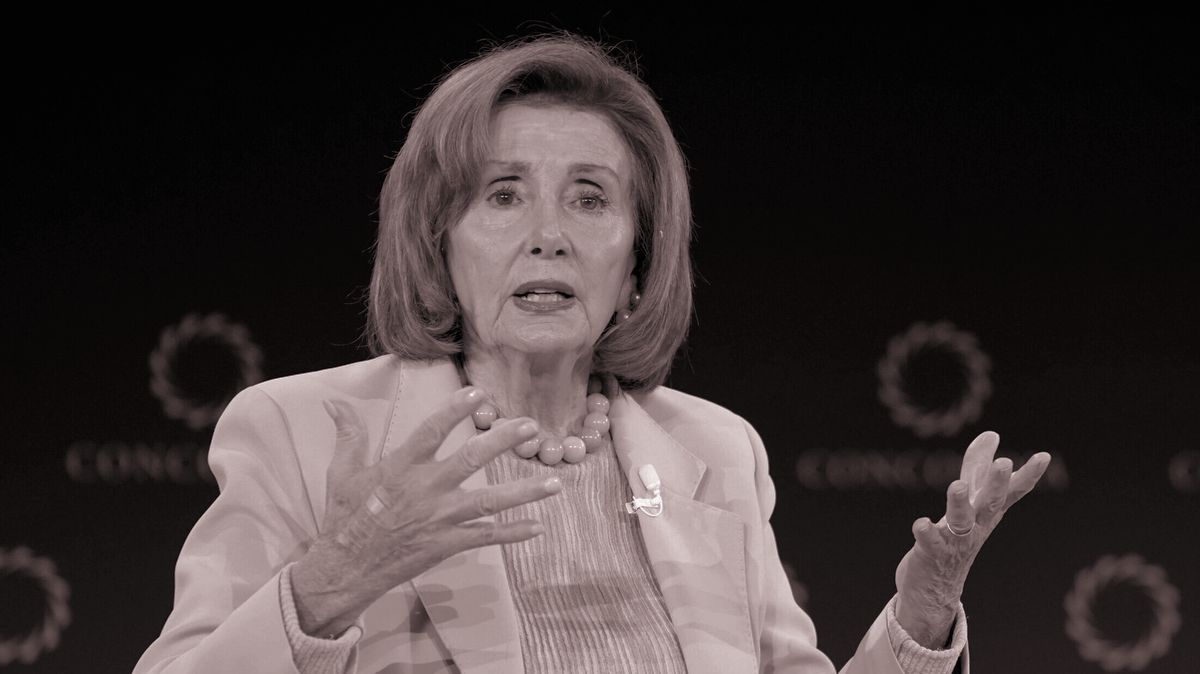
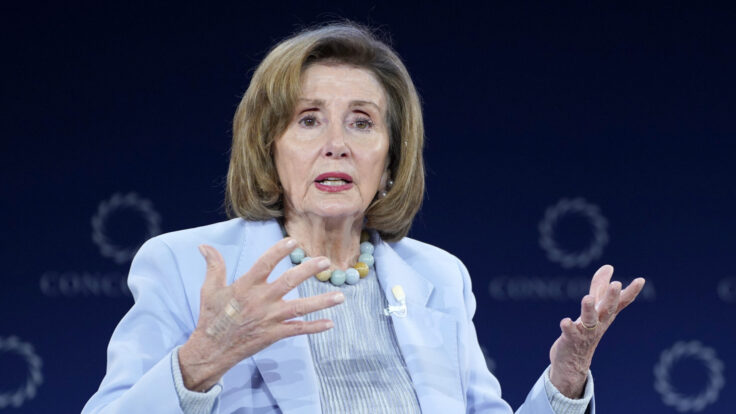
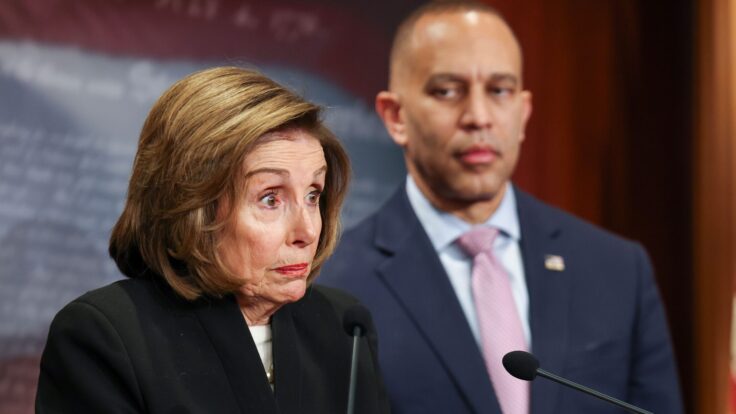
political warfare—and California’s dealing with them all. And few congressional battles will be as dramatic as the primary to replace Nancy Pelosi, whose exit from the House next year will kick off a messy transfer of power on her home turf. Pelosi’s daughter, Christine, who was long considered a possible successor, is running instead for state Senate—seeking the seat currently occupied by Scott Weiner, another longtime Pelosi-successor
darkhorse who is running to replace her. Meanwhile, national observers are also paying attention to Saikat Chakrabarti, who once served as chief of staff to erstwhile Pelosi nemesis Alexandria Ocasio-Cortez. As California Democratic consultant Michael Trujillo told me recently, “In San Francisco, politics is a donnybrook.”
Chakrabarti’s candidacy is particularly interesting. The 40-year-old activist was executive
director of Justice Democrats when, in 2018, the progressive group helped a then-unknown A.O.C. topple incumbent Joe Crowley in Queens, taking Pelosi’s heir apparent off the board. After the election, Chakrabarti followed A.O.C. to Washington and ran her office during her provocative first eight months in the House, back when she engaged in open political warfare with Pelosi that included
staging a sit-in at her office. An early engineer at Stripe, Chakrabarti has a near-limitless capacity to self-fund, and had already dumped $750,000 into his campaign as of
September 30.
Naturally, Pelosi will loom large in the race. It did not go unnoticed in California that both Weiner and Chakrabarti launched their campaigns before the former speaker had announced her retirement, though Pelosi herself hasn’t mentioned the slight. Afterward, she told NBC News that it was not her “current plan” to endorse anyone in the race. But
one contender who has made a point of building goodwill with Pelosi allies is Connie Chan, who serves on the San Francisco Board of Supervisors. Chan announced her run after the Prop 50 race was over, giving Pelosi space to gracefully announce her retirement; her name repeatedly came up in my conversations as someone to keep an eye on.
As for what it will take to win, Bay Area operators stressed to me that San Francisco isn’t quite as progressive as its national
reputation. The city’s new-ish mayor, Daniel Lurie, is a popular moderate Democrat focused on law and order, while the tech crowd, or at least its most visible leaders, has taken a rightward turn. All the leading candidates fall along similar ideological lines—the biggest bone of contention so far has been the Israel-Gaza conflict, and Weiner joined Chakrabarti and Chan in calling Israel’s conduct in the territory a “genocide” last week, after stumbling on the topic at a recent
candidate forum. So the race may end up being more about coalition building, first and foremost with labor, and secondarily, among LGBTQ groups and the Asian American community.
|
Meanwhile, a generational fight is unfolding in West Los Angeles between Brad Sherman and
Jake Levine—who argues it’s time for a change, and also happens to be the son of long-retired Congressman Mel Levine. Sherman, now in his 15th term, represents California’s 32nd district, which encompasses the residential communities of the television and film industry, including a slice of the San Fernando Valley, then hops Mulholland into Bel Air, Brentwood, the fire-ravaged Pacific Palisades, and Malibu.
On policy, Sherman is best known as an Israel
hawk, and with his C.P.A. background, he has had a hand in financial regulation. Despite his seniority, Sherman has been unable to secure the Democratic leadership slot on the House Foreign Affairs Committee, but he has political strengths that may not be obvious to House Democratic caucus insiders. Cross-country commute notwithstanding, he’s kept close ties to his district and is a longtime presence in the Valley. And he’s got a formidable war chest, having reported $4.3 million in cash on hand
this fall.
In addition to donations from the standard corporate PACs and investment firms, Sherman enjoys some Hollywood support given the makeup of his district (though the industry’s participation has so far been minimal in this race). WME partner Nancy Josephson and MPCA president Brad Krevoy count among his donors, and he’s got an endorsement from the theatrical stage employees union, IATSE.
Everyone I spoke to in Los Angeles has mentioned the
bald congressman’s campaign trademark—passing out Brad Sherman combs—as well as the nastiness of his 2012 reelection race against fellow Democratic Rep. Howard Berman after redistricting left them competing for the same turf. That race was known around the Hill simply as “Berman–Sherman,” and Berman, a Washington and Southern California powerbroker, was formidable. Sherman
prevailed by over 20 points after a late-campaign debate spiraled into a cringey near-fistfight.
If there was any doubt about lingering fury from that race, Berman donated to Levine on the very day he launched his campaign—and in the two months between then and the fall fundraising deadline, Levine has raised about $700,000. Levine also enjoys support from other retired California
political powerhouses, including former House Intel Ranking Member Jane Harman and former Energy & Commerce Chair Henry Waxman.
Levine, who came up on the Obama 2008 campaign and worked on climate issues in both the Obama and Biden administrations, also has notable backers within that world, including David Axelrod, Carol Browner, Adrienne Elrod, Ron
Klain, Jim Messina, Peter Rouse, and Tommy Vietor—all of whom have donated money. Vietor also joined Jon Favreau and Ben Rhodes in headlining an October fundraiser for Levine, which was hosted by Murphy Brown creator Diane English and entertainment lawyer Jim Gilio. Actor Jonah Hill has also donated.
|
The Gerrymander Nightmare
|
On the other side of the aisle, redistricting has unleashed a horror show for House Republicans in
California’s 40th district, where Reps. Young Kim and Ken Calvert are now running against each other in a newly drawn safe Republican district. “It sucks because they’re both good members,” said a House G.O.P. consultant. Other Republicans have described the race as “really ugly,” “scorched earth,” and “hell on wheels.” Thanks to the state’s jungle primary system, the pain is expected to last all the way to November.
The race has already forced other
members to take sides with their pocketbooks. Twenty-two House Republicans have donated to Kim’s campaign since the new map was released, and 18 have donated to Calvert’s. Six Republicans—including Speaker Mike Johnson and House Financial Services Chairman French Hill—opted to split the baby and donated to both members.
Kim is a ferocious competitor who flipped a Democratic district in 2020 and has faced a tough reelection every cycle since.
She’s now ahead in cash on hand, with $4.8 million raised to Calvert’s $3 million. Both Republicans, however, are “really impressive fundraisers,” the House G.O.P. consultant said. “Some people, when they’re stressed, go to the gym. Young makes fundraising calls. She’s a fucking machine. And Ken has been doing this for so long, he has everything lined up.” Indeed, Calvert has become a magnet for money over his 16 terms. He is now a defense appropriations cardinal, with enormous sway over
spending decisions affecting Southern California defense contractors—the latest multitrillion-dollar industry, alongside private equity and the credit card business, to find itself in the crosshairs of Donald Trump.
|
|
|
Join Emmy Award-winning journalist Peter Hamby, along with the team of expert journalists at Puck, as they let you in on the
conversations insiders are having across the four corners of power in America: Wall Street, Washington, Silicon Valley, and Hollywood. Presented in partnership with Audacy, new episodes publish daily, Monday through Friday.
|
|
|
The industry’s go-to source for unflinching reporting on the trillion-dollar business of artificial intelligence - perhaps the
single most important technology of our time. Ian Krietzberg, the powerhouse journalist behind The Deep View, delivers twice-weekly insights into the latest dealmaking and breakthroughs in A.I., and how the intersecting worlds of finance, entertainment, media, and politics are being transformed in its wake.
|
|
|
Need help? Review our
FAQ page or contact us for assistance. For brand partnerships, email ads@puck.news.
You received this email because you signed up to receive emails from Puck, or as part of your Puck account associated with {{customer.email}}. To stop receiving this newsletter and/or manage all your email preferences, click here.
|
Puck is published by Heat Media LLC. 107 Greenwich St., New York, NY 10006
|
|
|
|